


Colin Niland makes the case for keeping engineering, extrusion, cladding, glass, testing and site follow-up connected through the façade process. The practical benefit is less about buying from one catalogue than reducing the gaps where performance intent can be lost between design and installation.

Façade delivery is usually divided among system suppliers, extruders, glass processors, engineers, fabricators, installers and testing laboratories. Niland’s argument is that many project problems appear in the gaps between those roles rather than inside any one product. His preferred model connects the work from early concept through engineering, specification, fabrication support, testing, installation review and post-completion follow-up. The claim is not that every façade should become a proprietary package. It is that a supplier able to remain involved across several stages can preserve more of the original performance intent as a design passes from drawings to procurement and finally onto the building.
That continuity begins before a product is selected. Niland describes an aluminium supply chain that can include standard façade systems, cladding, glass and bespoke extrusion dies, allowing a project-specific profile to be developed when an off-the-shelf section is not appropriate. The important part is the connection to engineering. Wind-load calculations, mullion checks, span information and façade-performance review can be developed alongside the physical components rather than after a fabricator has already committed to a solution. Where a new condition needs verification, the same process can move into laboratory testing before it becomes a site problem.
Engineering and testing before tender
Niland places testing inside the design sequence rather than at the end of it. He refers to access to AS 4284 façade testing, AS 2047 testing, impact and acoustic work, cyclonic impact assessment and external laboratories where other test standards are required. In-house engineering can support wind and mullion calculations, while project-specific testing can provide evidence before a system is written into a specification and tendered. The value of that sequence is traceability: the design requirement, calculation, tested assembly and eventually installed façade can be compared against one another instead of existing as separate packages with different assumptions.
The same approach continues after tender. Niland describes technical support flowing from architects and engineers to the installer and then back to site inspection at completion. That final check matters because a compliant design and a tested sample do not guarantee that the built condition matches either one. Fixing centres, brackets, sealants, panel orientation and interfaces can all change during delivery. A supplier that remains invested through installation can identify whether the product was used within the conditions under which it was engineered and tested, and can close the loop with quality documentation and warranty requirements.
Longer spans can reduce work at the fixing line
Project examples show how seemingly small product decisions can alter installation effort. At Glen Huntley Station, Niland describes a linear aluminium cladding system deliberately engineered as a more robust profile with longer spanning capability. Increasing the span reduces the number of fixings and support points, which can in turn reduce installation time and the amount of secondary material required. The façade benefit is therefore not only the appearance of the finished linear surface. The section geometry has been used to move work out of the fixing line and simplify the number of repeated site operations.
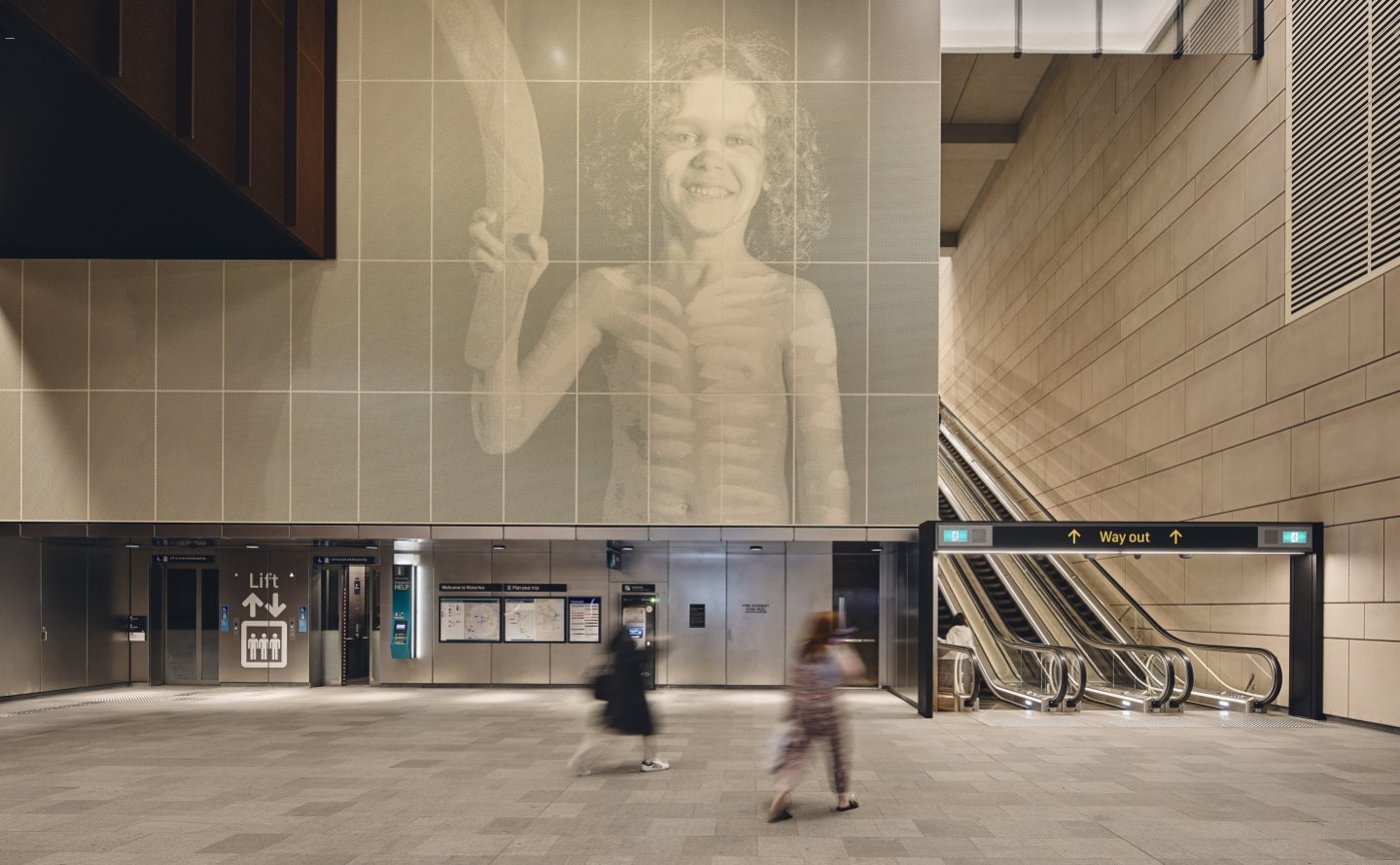
Waterloo Metro Station pushes more work into prefabrication. Niland describes a perforated and folded cassette system that was engineered and manufactured before reaching site, with quality checks undertaken both at the supplier and again before installation. The deck identifies the work as a bespoke “By Design” application developed with the artist, architect and client. What matters editorially is the delivery logic: the perforation, fold geometry and cassette assembly were resolved upstream so the installed façade arrived as a controlled component rather than a collection of site-made adjustments.
One envelope still contains different systems
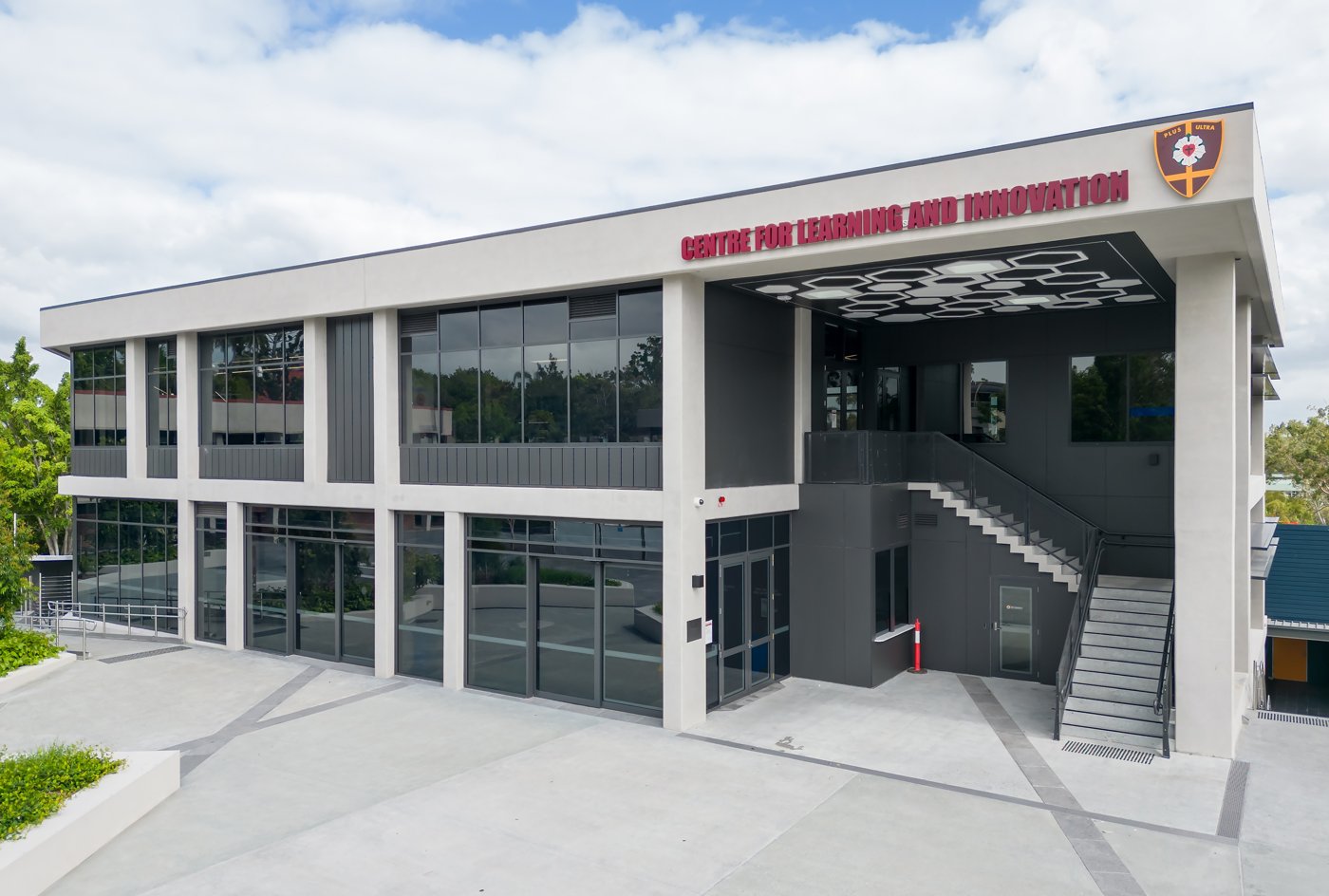
An integrated supply model does not remove the need to coordinate unlike materials. Niland uses St Peters Lutheran College as an example in which aluminium façade elements were combined with glass and supported by calculations for the complete elevation. The point is that Section J requirements, wind loads, mullion capacity and cladding geometry cannot be isolated from one another simply because different products sit in different catalogues. A façade only performs as installed, so glass, framing, cladding and their support conditions need to be resolved against the same project criteria.
At Luminaire in Queensland, the same principle appears in the vertical direction. Niland refers to full-height slab-to-slab conditions, Section J requirements and wind-load calculations, with battens engineered and tested to span between double-height fixing points. The visible architectural element is straightforward, but its support spacing is a structural and installation decision. Extending the span changes the number and location of connections, so it has to be supported by calculation and testing rather than treated as an aesthetic substitution late in procurement.

Innovation is useful when it removes a recurring defect
Niland closes with development work around cassette panels. One direction uses embossed panels as a way to vary the surface without abandoning a repeatable folded system. Another looks at unitised cassette panels with support on all four edges, in part to address oil canning, the visible waviness that can occur in large metal sheets. He also refers to work on thermally breaking this type of cassette arrangement. The projects are still presented as development rather than universal solutions, but they illustrate the advantage of linking engineering, fabrication and testing: a recurring façade defect can be treated as a system problem rather than left for an installer to disguise on site.
The broader lesson is that “one supplier” is most useful when it means continuity of technical responsibility rather than simply consolidation of purchasing. Façades are vulnerable to handovers because calculations, tested configurations, fabricated components and installed details can drift apart as a project changes hands. Niland’s examples show a delivery model that tries to keep those stages visible to one another. Early engineering reduces uncertainty before tender; prefabrication moves complex work into controlled conditions; testing establishes evidence; and site follow-up checks whether the final façade still resembles the system that was designed. The value lies in closing the gaps between those steps.