


Michael Lette connects façade design freedom with the less visible disciplines of early coordination, offsite manufacture and testing. The value of formed steel, he argues, lies in making complex geometry repeatable enough to install quickly and verify before it reaches site.
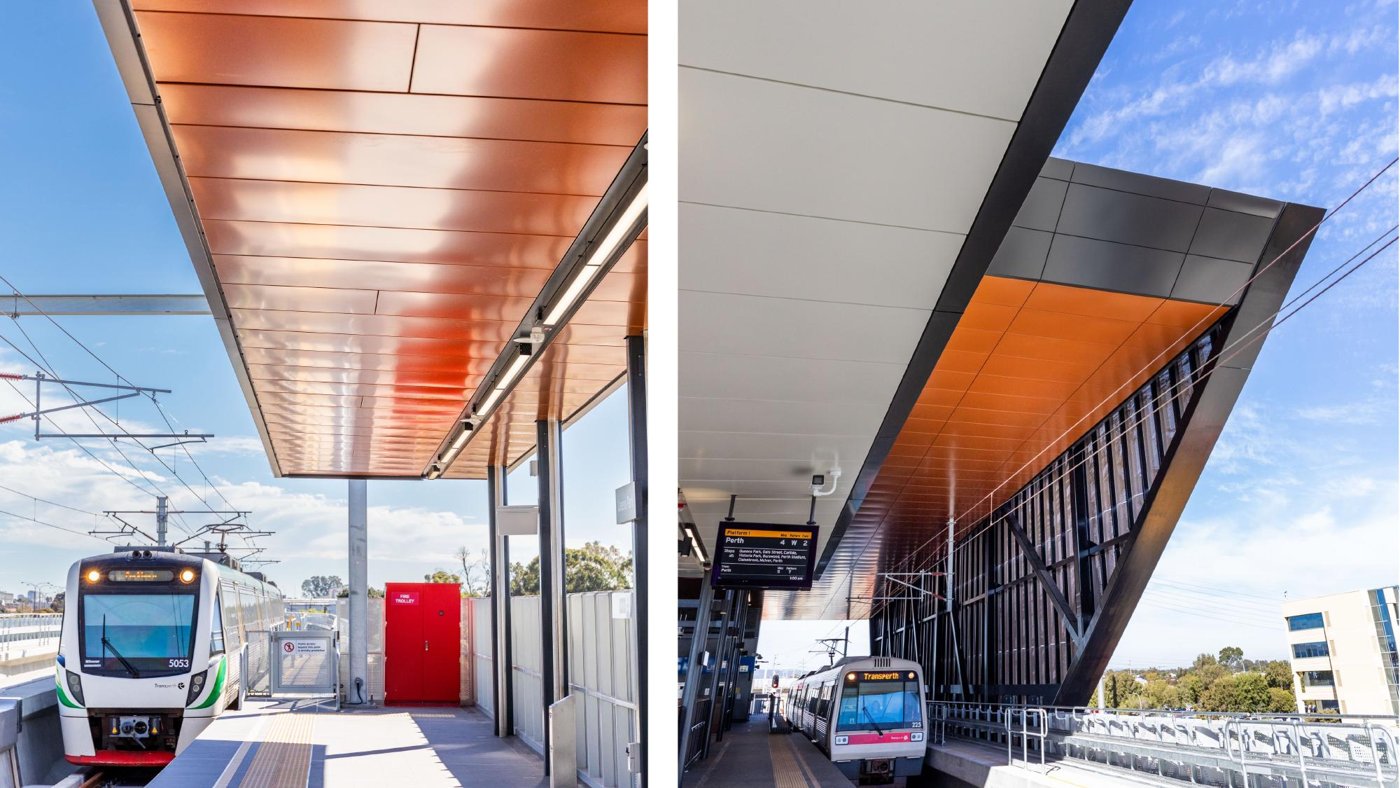
Steel façade systems are often discussed as a choice of profile, colour or span, but Michael Lette places the more important decisions earlier. Construction teams face labour shortages, higher expectations for documented compliance and growing architectural ambition at once, a combination that rewards systems able to move work off site into controlled manufacture, but only if the design is coordinated before fabrication starts. The useful question, for Lette, is not whether steel can be folded into an expressive form, but whether that form can be described accurately enough to manufacture repeatedly, integrate its services and fixings, install with a small crew and still carry test evidence for the conditions it will face.
Early engagement changes where complexity is resolved. Rather than leaving penetrations, junctions, lighting, cameras and signage to be cut or improvised after panels arrive, the openings and interfaces can be coordinated in the digital model and formed in the factory, an approach Lette illustrates with rail and airport projects. Controlled offsite work shortens enclosure programmes, reduces exposure to weather and limits the number of trades modifying the same façade zone. The benefit is not simply speed: each decision transferred into a repeatable process removes a site variable that would otherwise have to be inspected, rectified or accepted as a tolerance.
Robotic panel manufacture, he argues, converts digital information into predictable physical output, in his example, panels move through automated forming in well under a minute, with tight dimensional control. That precision matters because façade quality is cumulative: a small error repeated over a long elevation becomes a visible misalignment, inconsistent folds make joints wander, and site adjustment can undermine the clean geometry that made a system attractive in the first place. Its value lies less in the spectacle of automation than in protecting repeatability across many units.
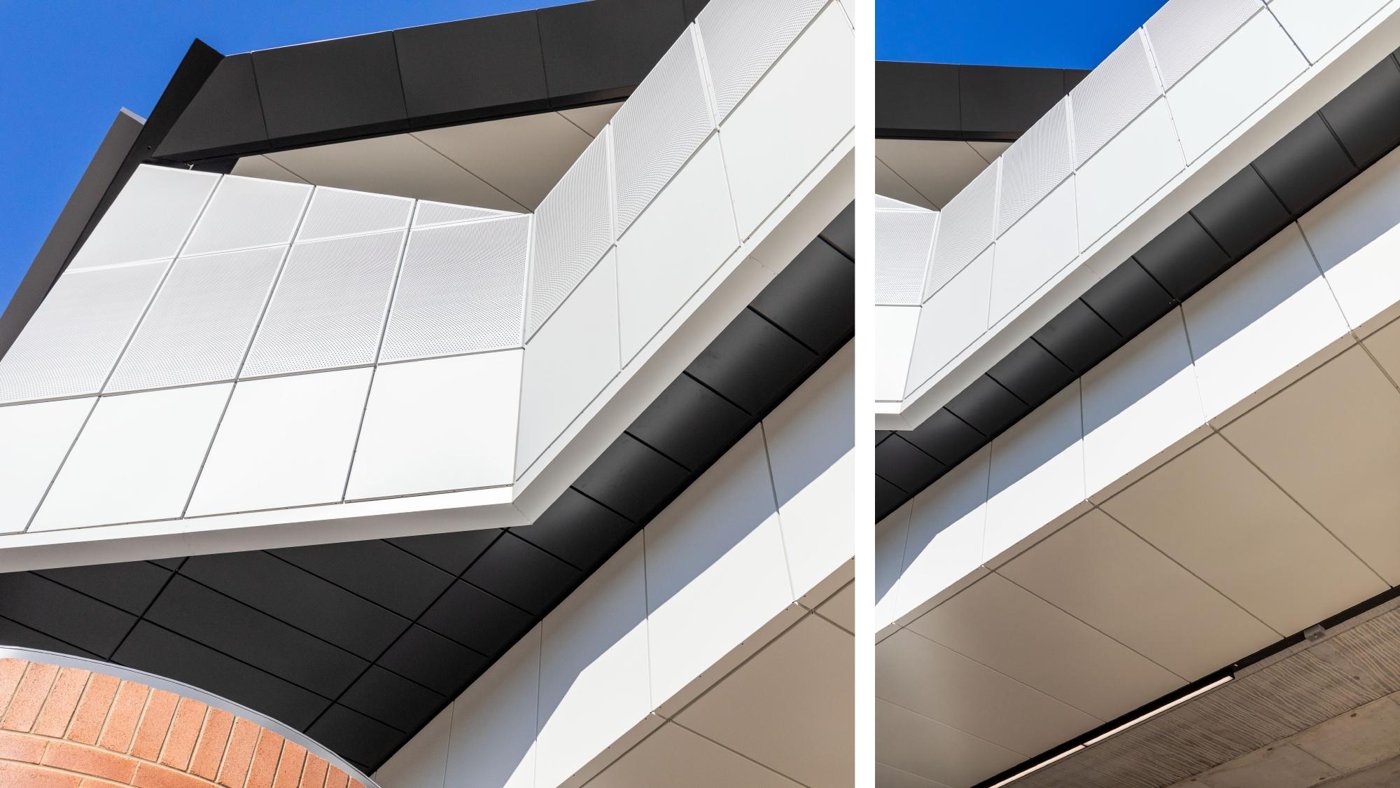
The AZURE system shows how that precision can support more than cladding: panels can carry service paths and openings for wayfinding, lighting and equipment while keeping a continuous architectural surface. Lette also emphasises replaceability and accessible fixings, the façade detailed so individual components can be removed without dismantling a whole run. That matters especially in transport settings, where impact, heavy use and changing technology make future access likely; a refined finish is worth little if the system cannot be maintained after the first photographs are taken.
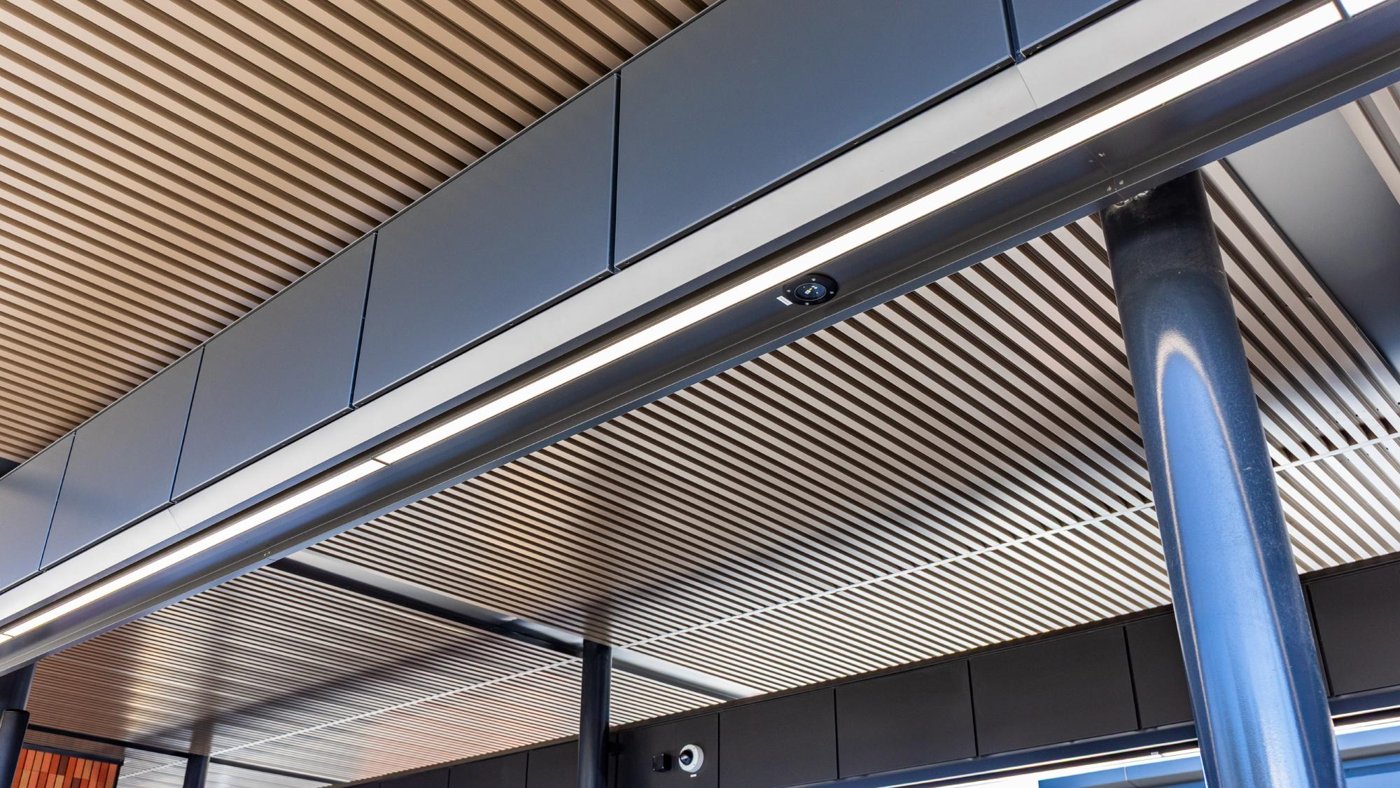
Design freedom also comes from structural efficiency. At ARAMAX on The Shed at the University of Tasmania, long-span steel profiles work as both architecture and structure, with clear spans of around twenty metres that reduce the need for secondary supports, and custom roll-forming can introduce curves and tapers without abandoning a repeatable profile. Lette is not arguing that every complex façade should be steel, but showing how a high-strength sheet can be folded, perforated or profiled so that geometry, structure and finish do several jobs at once, strongest when the design emerges from what the process can do reliably.
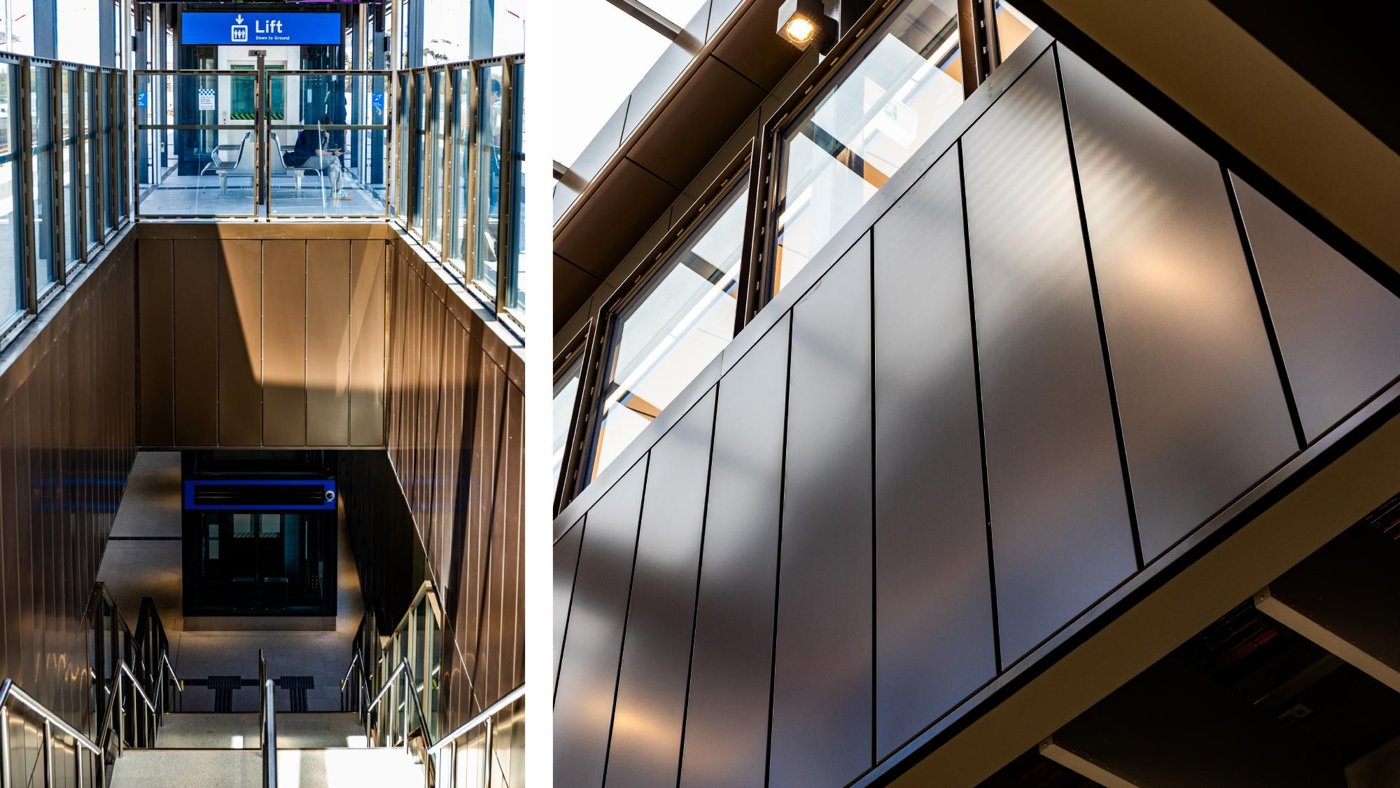
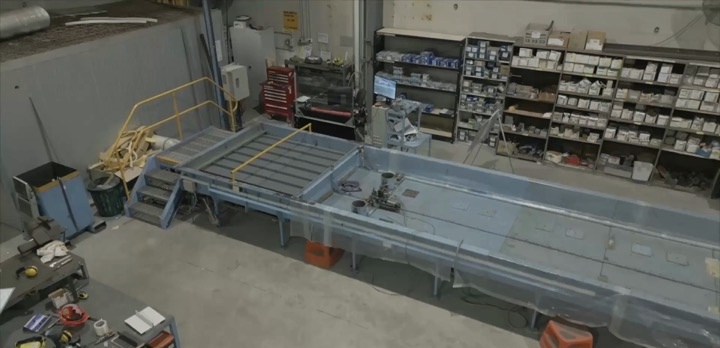
Manufacturing confidence, though, is incomplete without performance evidence. Lette describes a testing regime at BlueScope’s Minchinbury facility covering structural loading, fasteners and connections, weatherproofing, fire and cyclonic conditions; full-system weather testing to AS 4284 matters because façades tend to fail at joints and interfaces rather than mid-sheet. On the Armadale and Byford rail work, impact testing drove a heavy timber projectile of around 107 kilograms, fitted with a steel face, into the panels, not to reproduce routine use but to show that panels near public areas can tolerate severe impact without an unsafe failure.
Lette’s three themes, speed, design freedom and compliance, are not independent selling points but reinforce one another when the façade is conceived as a manufacturing system: early coordination resolves geometry and services digitally, controlled production makes them repeatable, longer spans reduce secondary work, and testing proves the assembly performs. The risk comes when one link is separated from the others, architectural freedom pursued without a feasible production method, or standard product data assumed to cover a project-specific configuration. Treated this way, offsite manufacture is less a way to move labour than a way to make the façade more deterministic.