Nikos Kolintzas presented Flexbrick, which takes the centuries-old Catalan vault and turns it into a prefabricated ceramic fabric: terracotta held in a stainless steel mesh, folded onto pallets, rolled out dry on site at 25 kilograms a square metre, and hung as a second skin over façades, roofs and pavements alike.
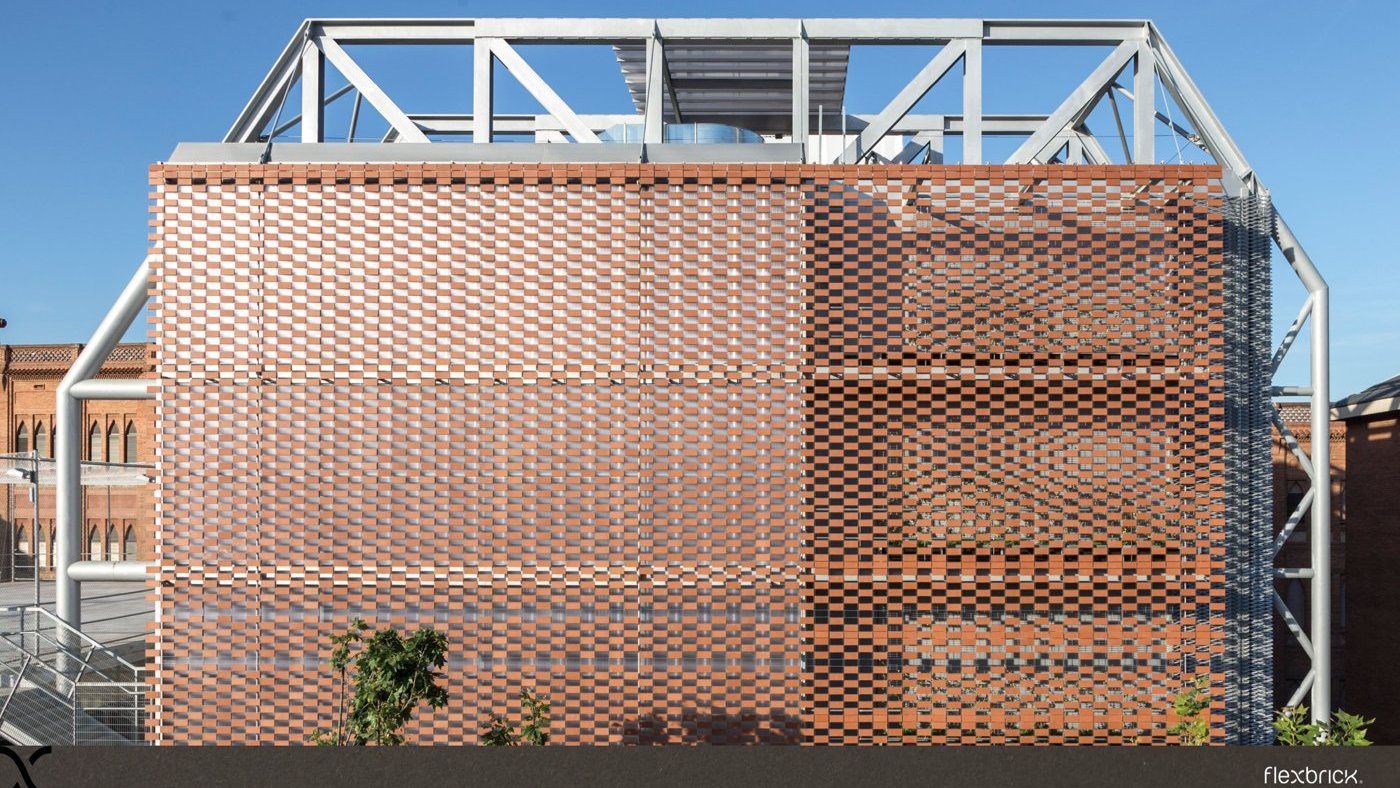
Kolintzas came from an Athens company specialising in architectural materials, to present a second-skin system that goes on façades, pavements and roofs alike. Its claim is design freedom without giving up technical performance, and the inspiration is old: the Catalan vault, where layered flat bricks form self-supporting arches. The question the system asks of it is what would happen if, instead of laying bricks one at a time, you could lift a large prefabricated sheet into place. The answer is best understood as a ceramic fabric, hung from a layer at the top.
Underneath is a piece of hardware. A stainless steel 316 mesh takes inserted pieces of terracotta, or of other materials; the load is carried at the top on the mesh guide; and vertical wind rails, fixed slot to slot, support the panel and resist wind load, with the mesh clamped onto them. Modules are typically 130 centimetres wide and run up to about 25 metres long. They fix to concrete or to steel, they can be curved, and they turn precise corners. The pattern is open too: the density of the fill, and therefore how much light and view comes through, is whatever the architect draws, which is where the claim of design freedom actually comes from.
Installation is where the economics sit. The modules arrive folded on pallets, which cuts transport cost and emissions, and roll out on site, dry-assembled, lifted by crane and fixed at the top, with limited disruption and no wet trades. The system weighs about 25 kilograms per square metre at roughly 50 per cent fill, light enough to go onto an existing building and easy to handle on a scaffold. A short film of one job made the point better than the numbers: a metal substructure goes up, and the modules are simply rolled out over the roof and down the façade.
Sustainability, he argued, runs on several axes. The ceramic tiles are made in Barcelona in a factory next to a landfill, so production runs on biogas. The two materials, 316 stainless steel and terracotta, are both durable and fully recyclable, which is why he asked people to think less about the day of installation and more about what the building looks like, and is worth, in fifty years. The company behind the system has more than sixty years of history, a presence in thirty countries, over 280 projects and around 120,000 square metres built.
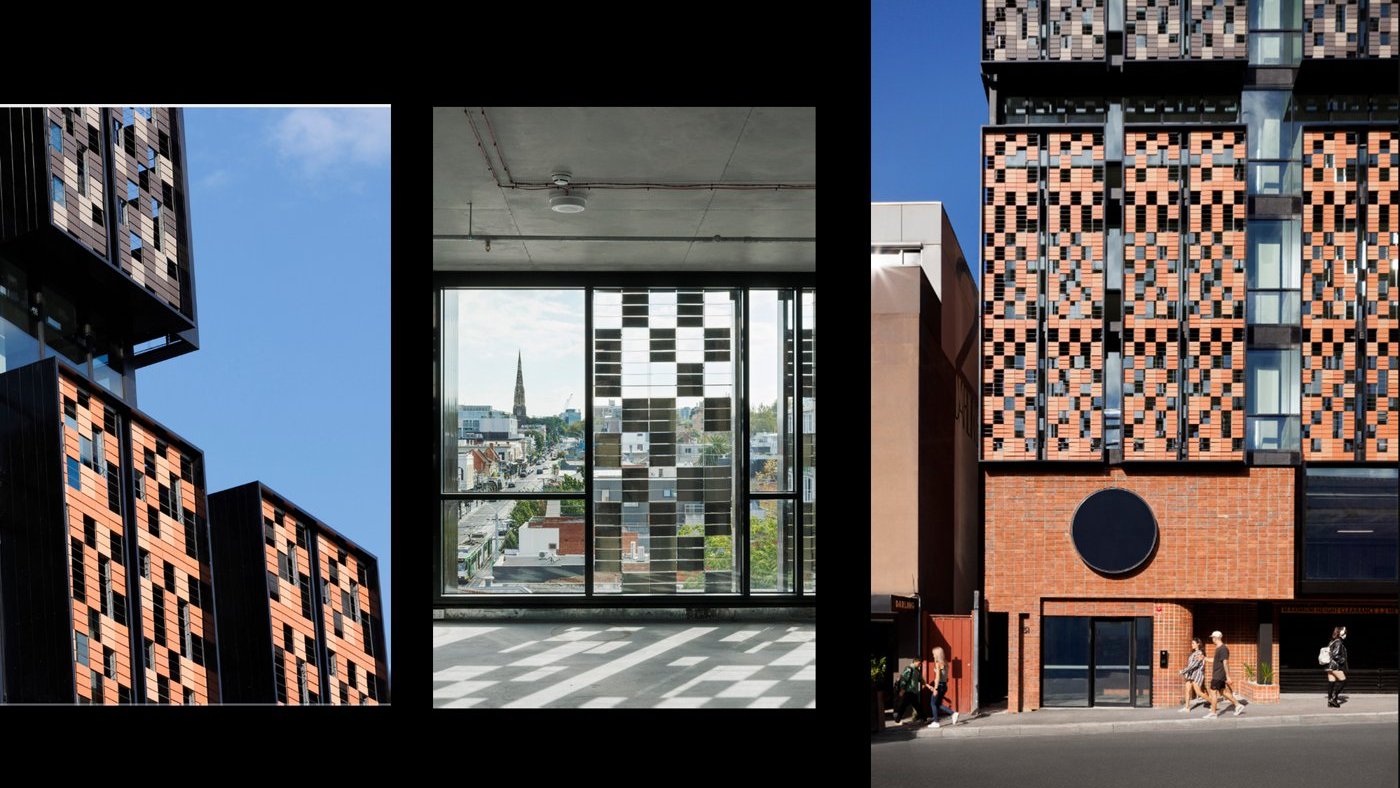
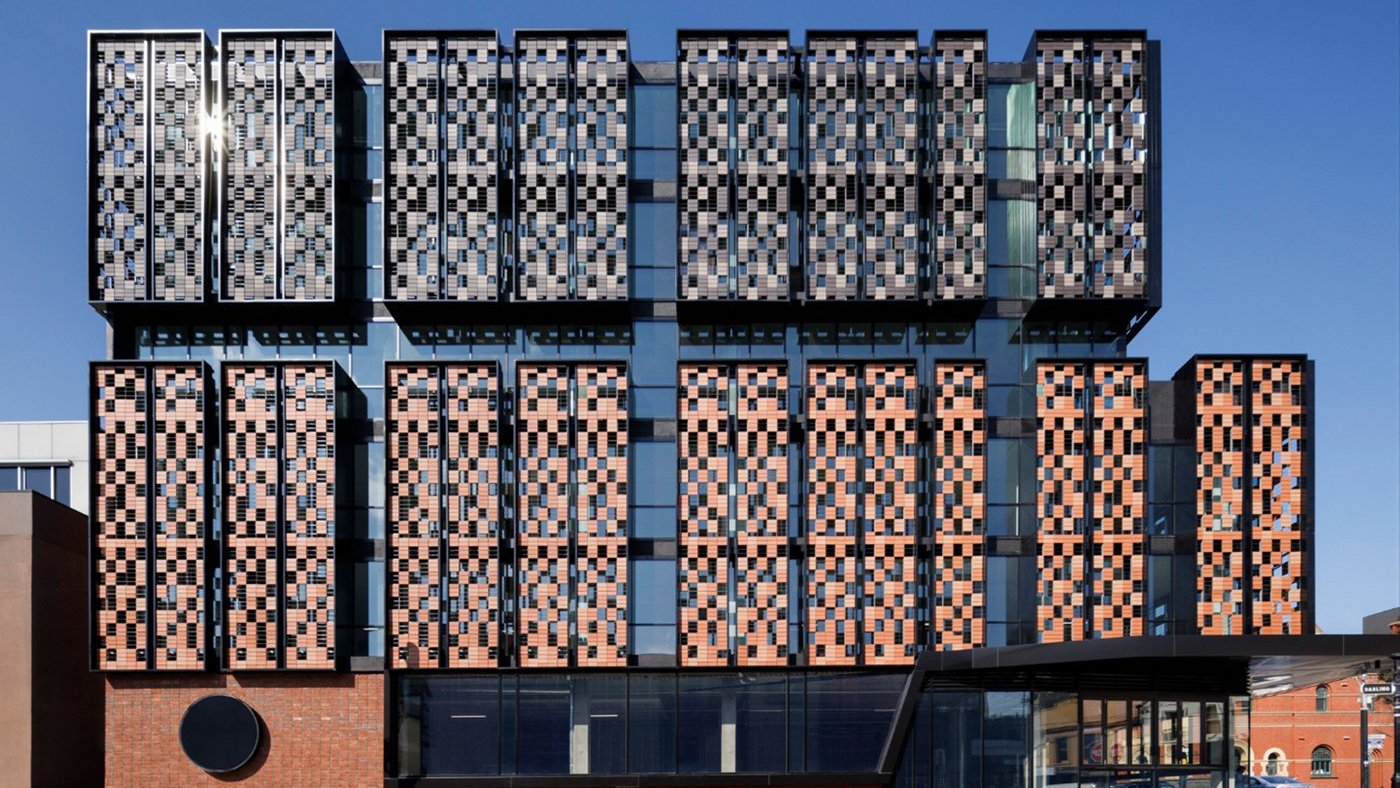
The projects showed the range. On Toorak Road in Australia the pattern was drawn from an old post office nearby, and the screen gives shade and ventilation without taking the view out, with the vertical patterning read differently from the street and from inside. A London car park in glazed terracotta takes a cross-shaped pattern referencing one of the city’s symbols, shading the structure while letting light through, and being a public building it had to be fire resistant. His own favourite wraps a house in Barcelona from façade to roof and back to façade again in one continuous glazed terracotta surface, which reads as visual continuity with everything around it. The limit, he suggested, is not the system but what someone chooses to draw with it.