Patrick Beul follows terracotta from a deep German clay pit to finished architecture, extruded, glazed and fired until it will outlast the building it clads, and closes with three Cypriot projects where the same panels answer questions of identity, performance and belonging.
Most people, Beul suggests, look at a ceramic façade and see a building. He would rather they still saw the clay. His argument is a journey from earth to architecture, following a single material through the industrial processes that turn a raw geological deposit into a panel engineered to hang on a tower for decades, and, he insists, to look the same at the end of that time as on the day it went up.
Earth, and why the clay matters
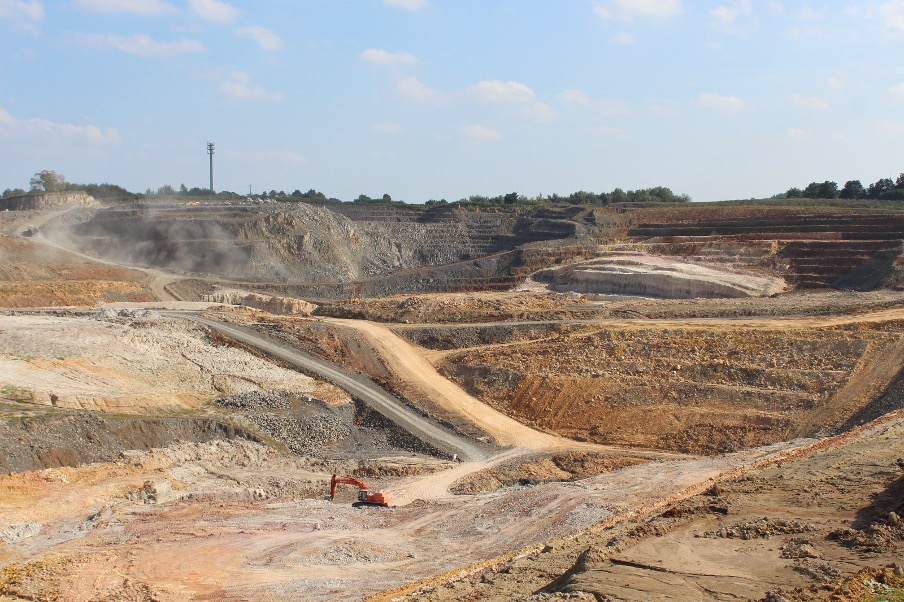
The journey starts in a clay pit in Germany, roughly 80 metres deep and around 80 million years old, a deposit Beul rates as the best in the country for chemical reasons, most of which is exported to Italy and Spain and re-sold as their ceramics. His company keeps it, using this clay alone, at full strength, for its material. The reason is what happens in the fire. Because the deposit sits in a volcanic area, it can be burned at higher temperatures, at which the mix densifies and sinters, the particles melting together into something harder and more resistant than a softer clay could ever become.
Transformation
From the pit, the process is almost entirely automated. The clay is extruded through a die, so a panel can take nearly any profile; a liquid glass glaze is then applied by an airless spray on a conveyor line, both for colour and for protection. The panels travel through a kiln about 100 metres long that reaches 1,200°C, the point at which stone melts, a journey of some four hours, after which robots take over: an autonomous forklift moves the panels through the plant, cutting stations trim them to size at a tolerance of about a millimetre, and the finished pieces are palletised and shipped worldwide. It is the sintering, Beul argues, that makes the panel durable enough to be thought of in the terms of the terracotta army, two thousand years, easily. The practical consequence is that the material does not change: a panel held as attic stock and swapped in after twenty years will match the ones that have faced the sun the whole time, because the glaze, not the exposure, decides the surface.
Colour is only part of the story
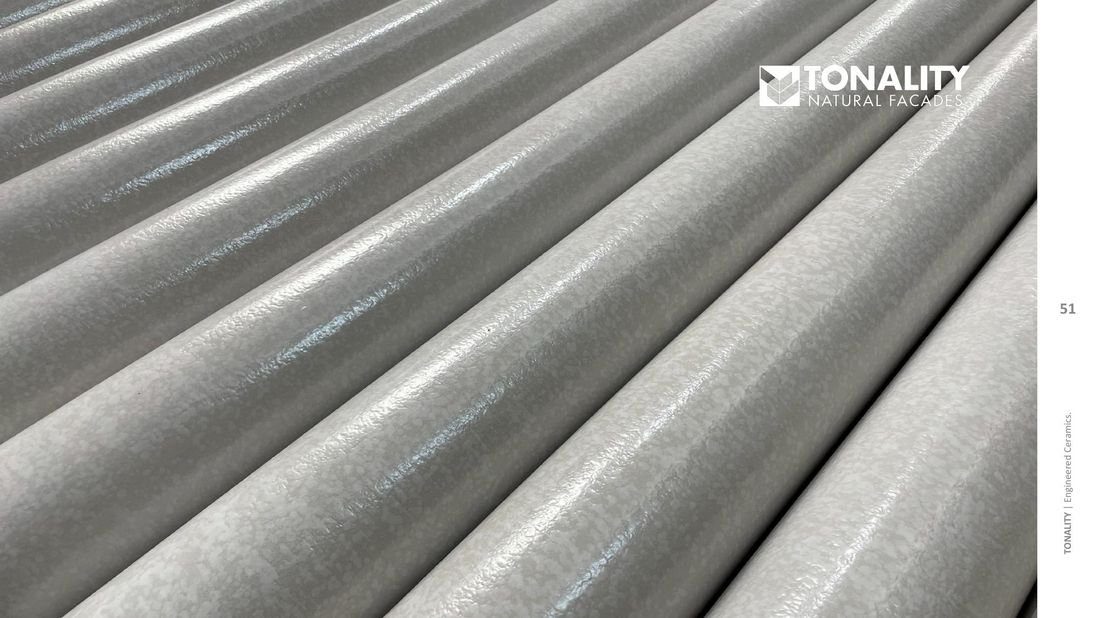
That glaze is also where the design freedom lives. Conversations with architects, Beul notes, always circle the same three things, colour and shade, texture and geometry, light and reflection, and extrusion plus glazing covers all of them. He runs through the range: sophisticated and subtle profiles; transparent, shine-through glazes where the clay shimmers beneath a coloured film; thick textured glazes that bury it completely; "vinaigrette" effects where one glaze fights another across the surface; matte, satin and deep-gloss finishes; metal, copper and flip-flop glazes that shift colour between the ridge and the valley of a tile. The point is not any single effect but that all of them can be combined on the same durable body.
The same material, different cultures
The applications, Beul observes, are the same but different, same material, different architecture and different climates. He points to a data centre in Toronto clad twenty years ago that still looks new; to the practice's largest projects, in Kazakhstan, where a single façade runs to roughly 100,000 square metres and the panels endure swings from around plus fifty in the day to minus fifty at night, the kind of freeze-thaw punishment that shatters a softer, more absorbent tile; and to a residential tower at 570 Fulton in Brooklyn, where different reds and greys, depths and widths were cut to settle the building into New York's brick-and-metal grain. That last one he frames as belonging, the material disappearing into its context rather than announcing itself.
Three Cypriot stories
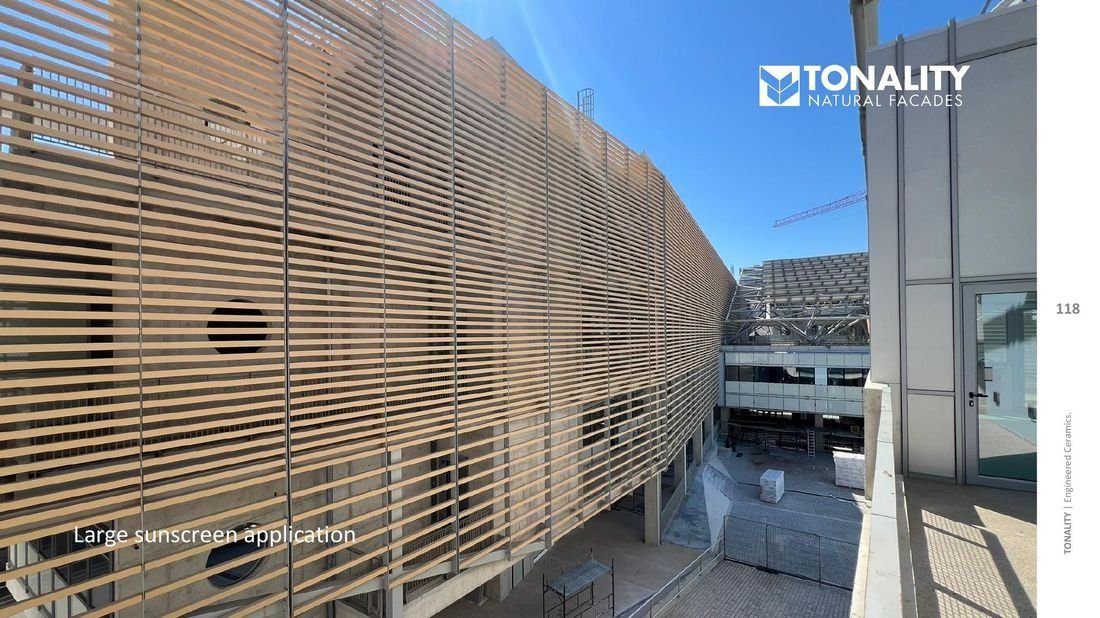
The same three ideas, identity, performance and belonging, organise the Cyprus work. Identity is the Institute of Biology at the University of Cyprus in Nicosia, where the architect did not pick a colour from a catalogue but sent a piece of Cypriot limestone and asked for it to be matched; the building carries roughly 1,500 square metres of rainscreen cladding and around five kilometres of sunscreen baguettes, mostly two-metre lengths in a 100-by-100-millimetre section.
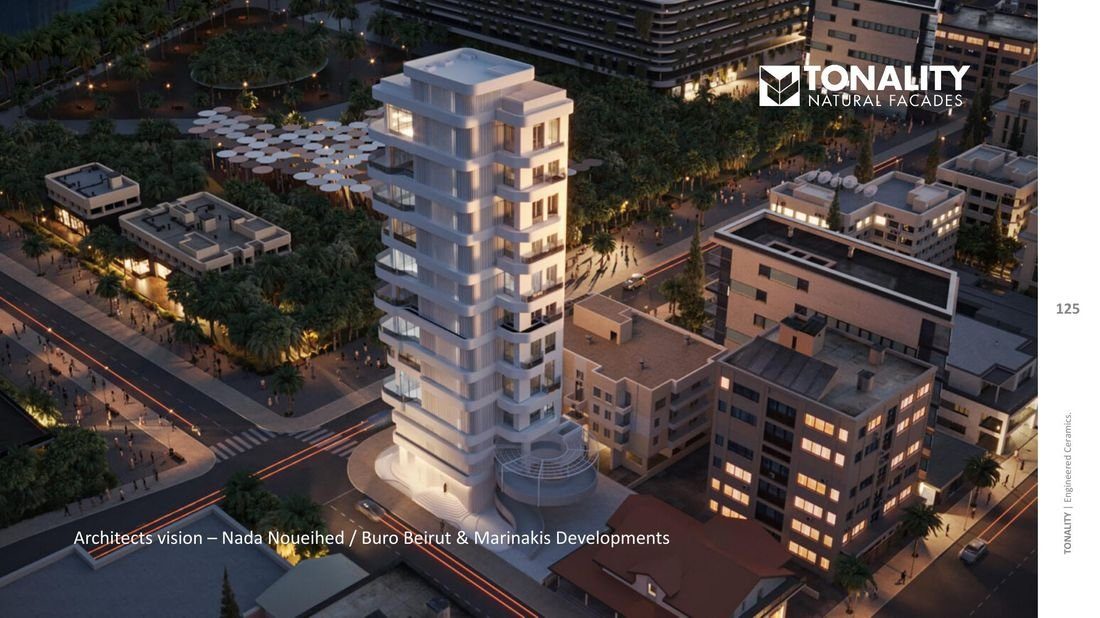
Performance is Marigate Tower in Larnaca, a 65-metre residential high-rise in a coastal setting of extreme sun and high wind loads, still in installation behind its scaffold, a case Beul offers as evidence that the panels suit a tower, not just a low-rise, precisely because durability and resistance are why the material tends to be chosen in the first place.
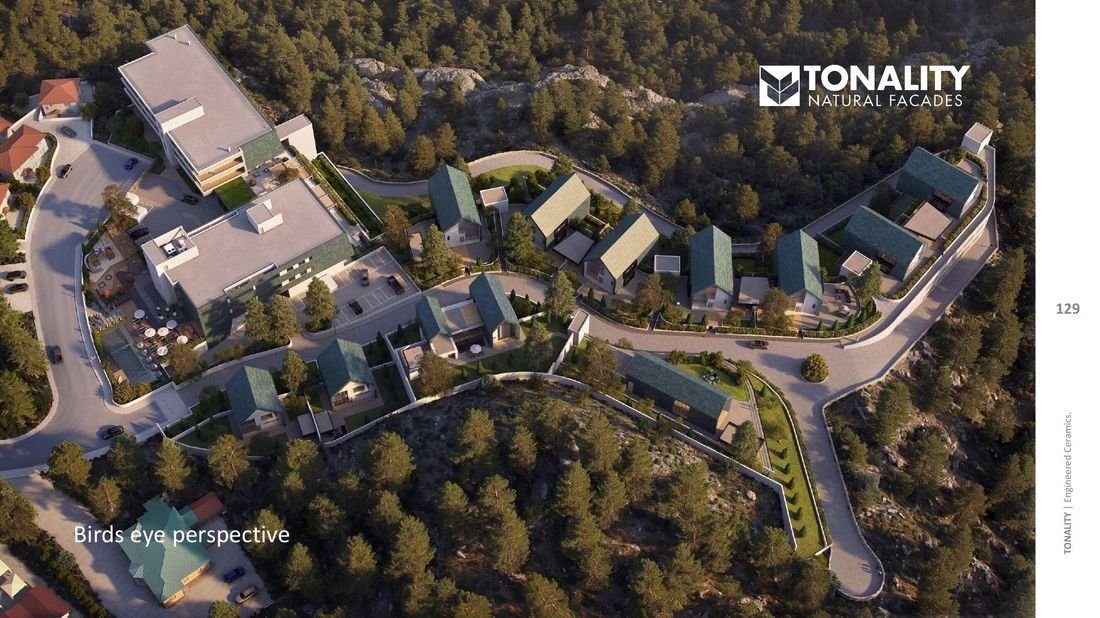
Belonging is the project he returns to as his favourite: GURU Mountain Resort at Platres, the practice's first and largest Cypriot commission at around 20,000 square metres of villas, chalets and hotel buildings, its arrangement threaded into the mountain landscape. The panels went up as a plug-and-play system across walls, roofs and soffits, hang the panel, and move on, which he credits, along with the early trust of the developer, for a result he is plainly happy with.