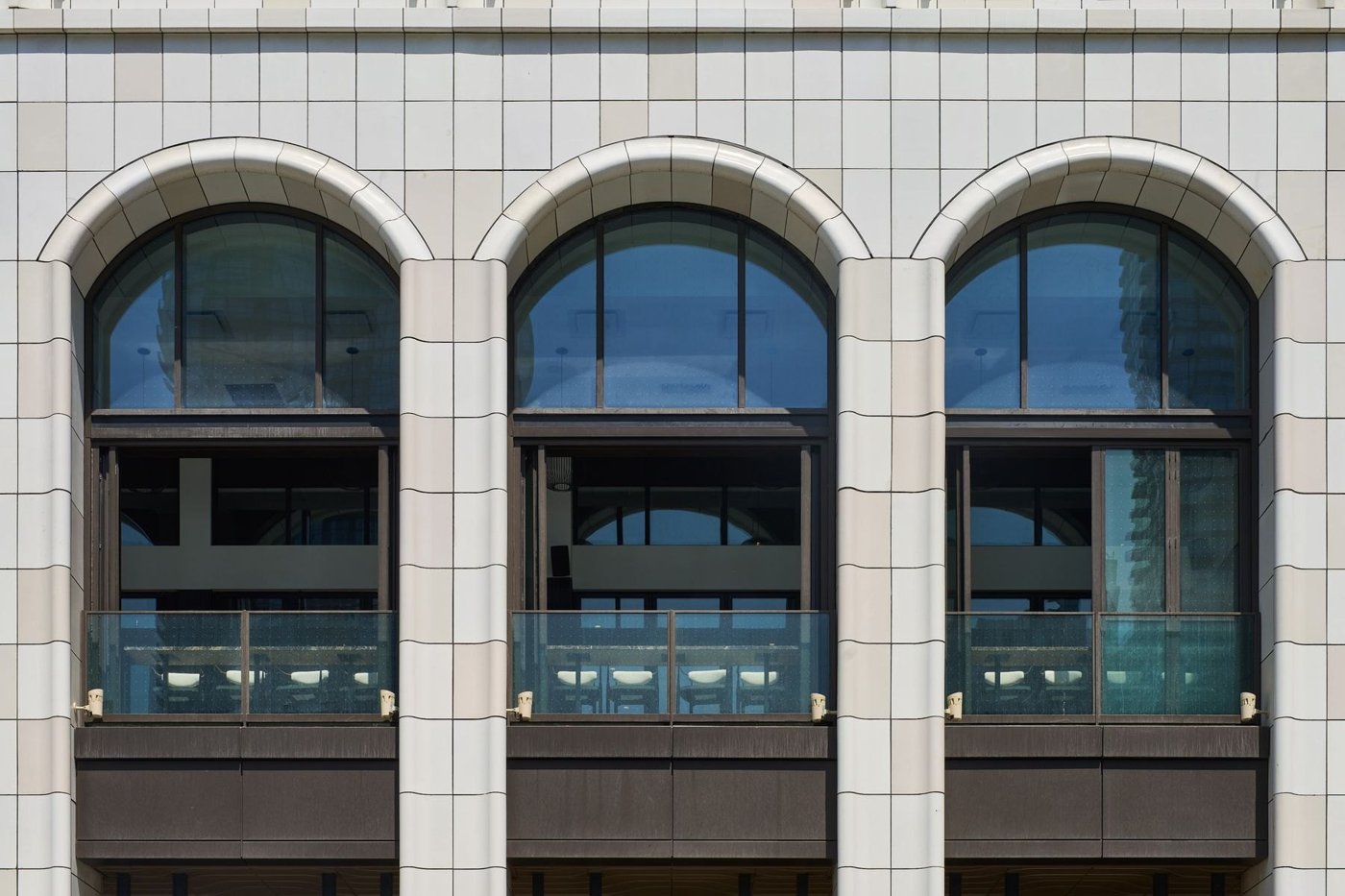
Andrew Pries uses research, manufacturing methods and long-lived projects to show how terracotta can move beyond decorative cladding, contributing to lower-carbon wall assemblies while retaining the colour, texture and durability associated with fired clay.
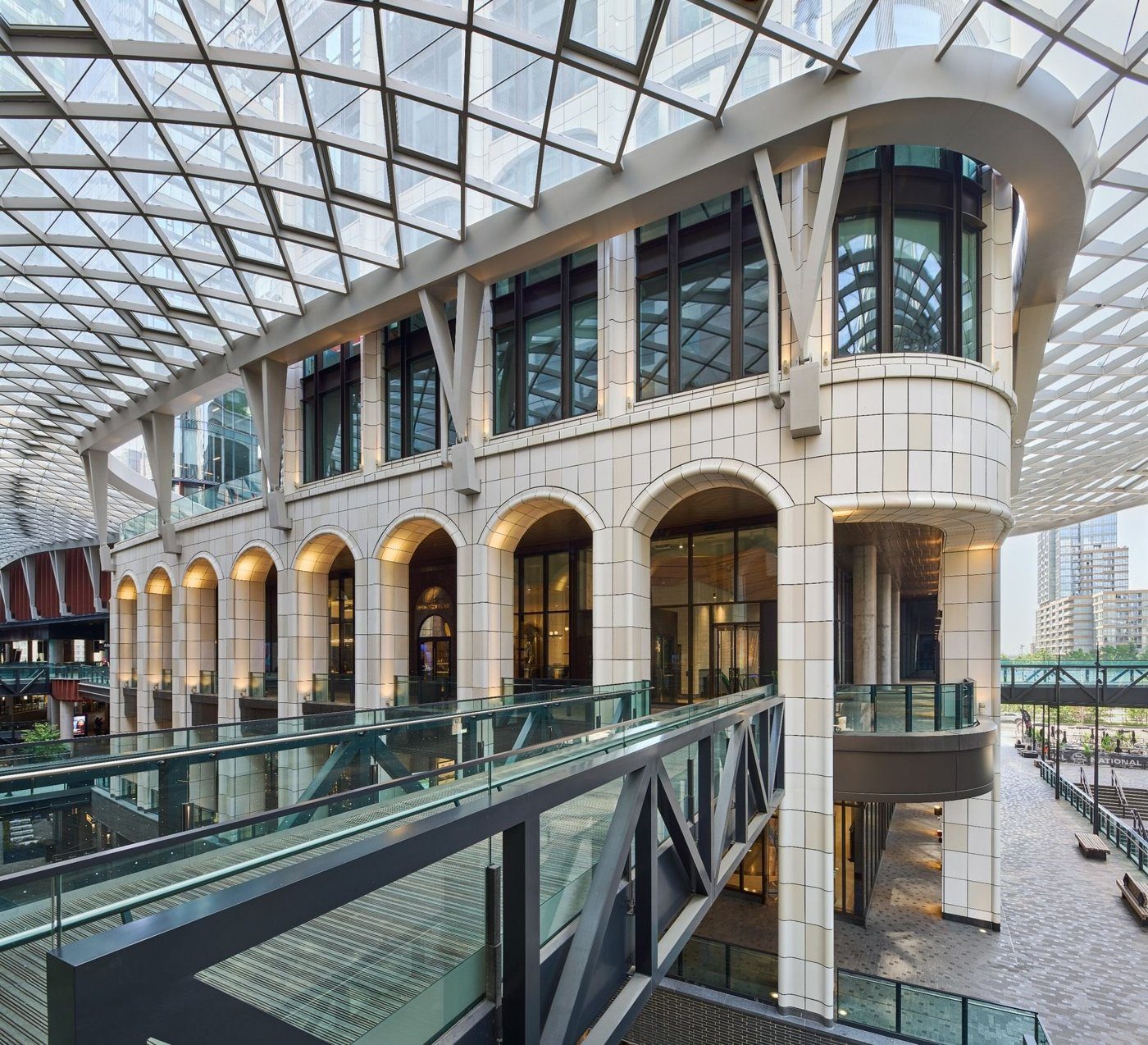
Clay starts with less carbon
Pries frames terracotta against two connected pressures: the carbon associated with the built environment and the urban heat-island effect. Fired clay is derived from an abundant mineral resource and can be used in ventilated rainscreens with comparatively low embodied carbon. The important comparison, however, is not between isolated materials but between complete wall assemblies. Research discussed in the presentation compared conventional systems with alternative terracotta configurations to understand where support steel, insulation and substructure add carbon beyond the visible surface.
Manufacturing expands design range
Terracotta’s plasticity before firing gives designers several routes to form. Boston Valley uses hand pressing, ram pressing, slip casting and extrusion, each suited to different geometry, repetition and scale. That variety allows projects to move between highly repetitive modules and bespoke elements without changing material families. Glazes add another layer: colour, gloss, metallic effects and layered finishes can be developed for a specific project while remaining part of the fired surface rather than an applied paint system.
Innovation targets the wall
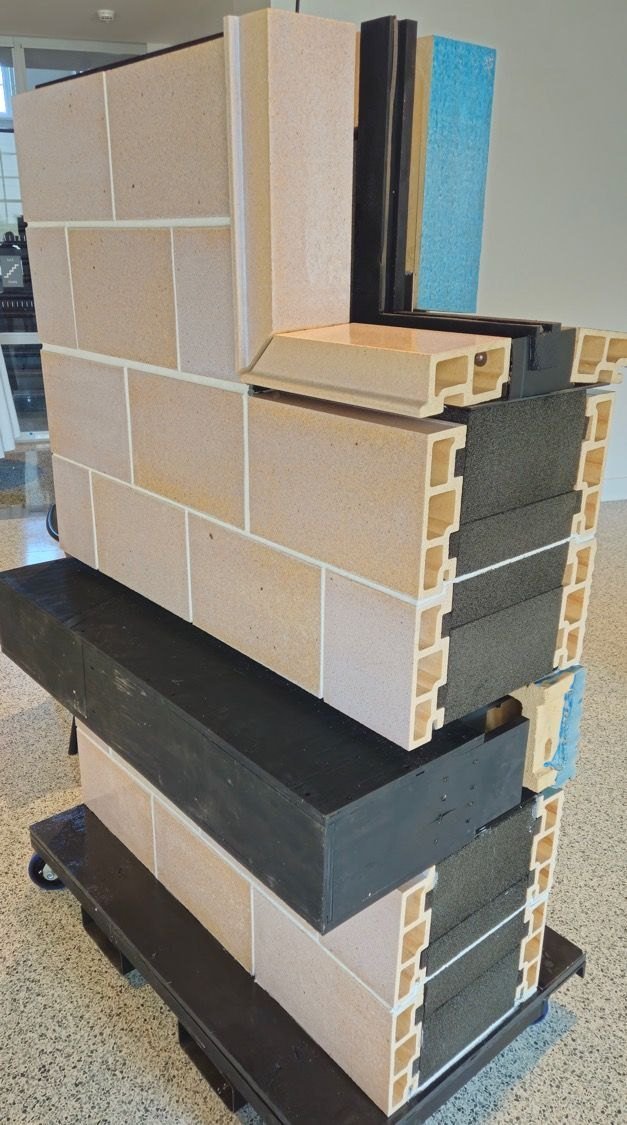
The most useful innovation is not a new shape for its own sake. It is a wall system that reduces material, simplifies support, controls heat and remains practical to fabricate and install. Terracotta’s mass, surface finish and modularity can help with solar exposure and urban heat, but those benefits have to be integrated with insulation, drainage, fixings and code requirements.
Terracotta becomes structural
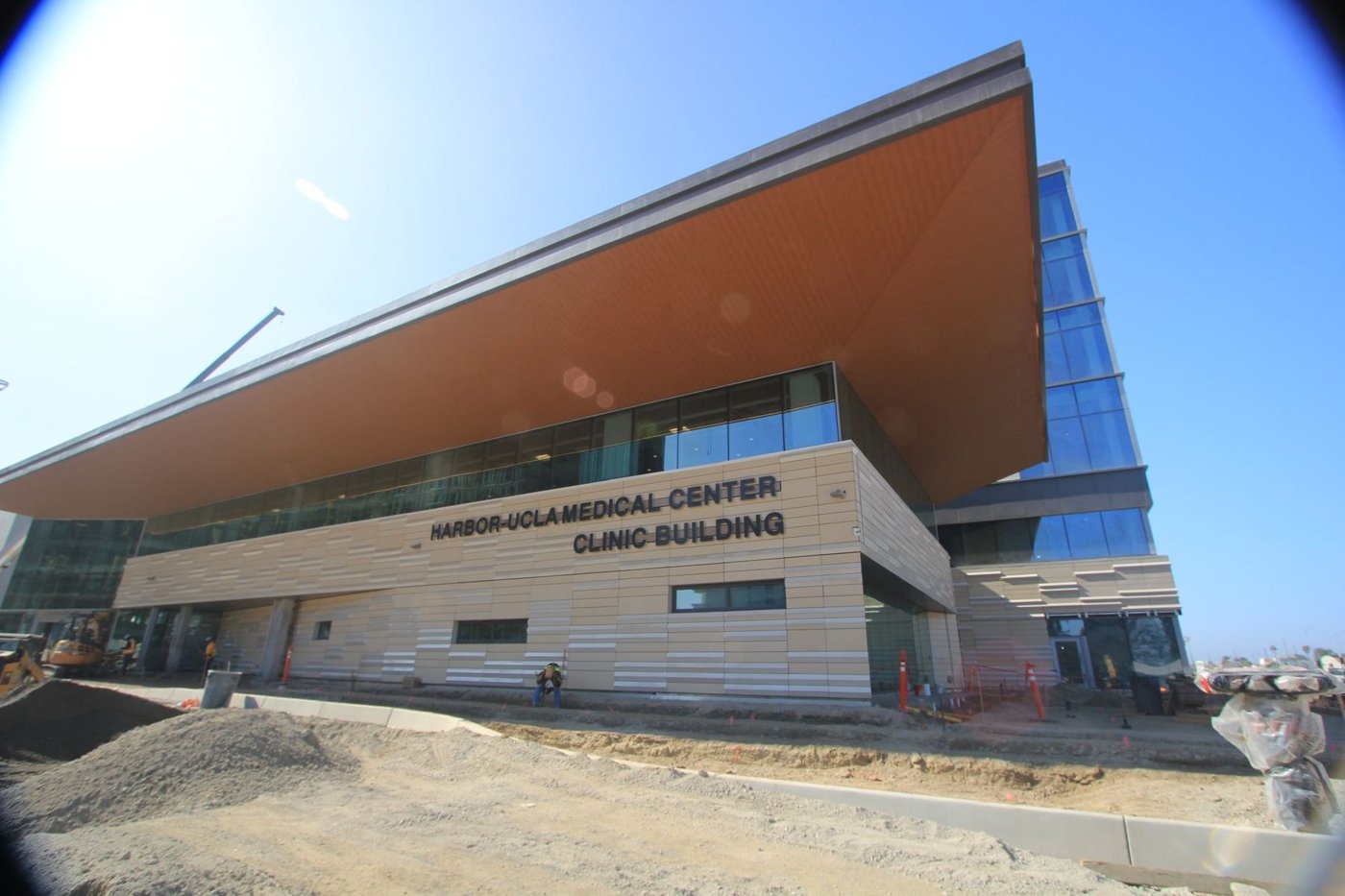
One research example pushes fired clay beyond the conventional role of rainscreen tile. The team paired terracotta's compressive capacity with foam-glass insulation to develop a modular wall in which the ceramic elements contribute to carrying load rather than hanging from a separate subframe. Pries describes the prototype as capable of supporting several storeys without an additional conventional support system, with limited post-tensioning introduced as height increases. The importance of the exercise is less the exact configuration than the design direction: if the cladding material can take on another building function, some of the carbon and complexity of secondary support can potentially be removed.
The research team compared the concept with a more conventional rainscreen baseline and reported a substantial reduction in embodied carbon. Because this is a project-specific study, the figure should not be treated as a universal property of terracotta. What it demonstrates is the value of changing the system boundary. A low-carbon tile attached to a high-carbon substructure is a different proposition from a wall in which material roles have been reorganised. Innovation becomes meaningful when it reduces the whole assembly rather than only improving the declared impact of the visible layer.
Longevity compounds carbon value
Pries also grounds the sustainability case in durability. Historic glazed terracotta façades show that the ceramic itself can remain serviceable for many decades; deterioration may instead originate in embedded or supporting metal. The Eastern Columbia Building is used as an example in which restoration addressed rusting support steel rather than wholesale failure of the terracotta. That distinction matters because it points designers towards the interface as the life-limiting component. A century-scale finish is only as durable as the anchors, joints and backing conditions that keep it attached and dry.
Manufacturing offers another circularity lever. The presentation describes production practices that reincorporate fired or unfired material into new mixes and the potential to crush recovered terracotta for future products. It also shows how hand pressing, ram pressing, slip casting and extrusion create different geometries without changing the underlying material family. For architects, that combination of longevity and forming freedom is the real opportunity: use custom colour, glaze and profile where they create architectural value, but design the support and disassembly strategy so the ceramic can remain an asset rather than becoming inseparable waste.