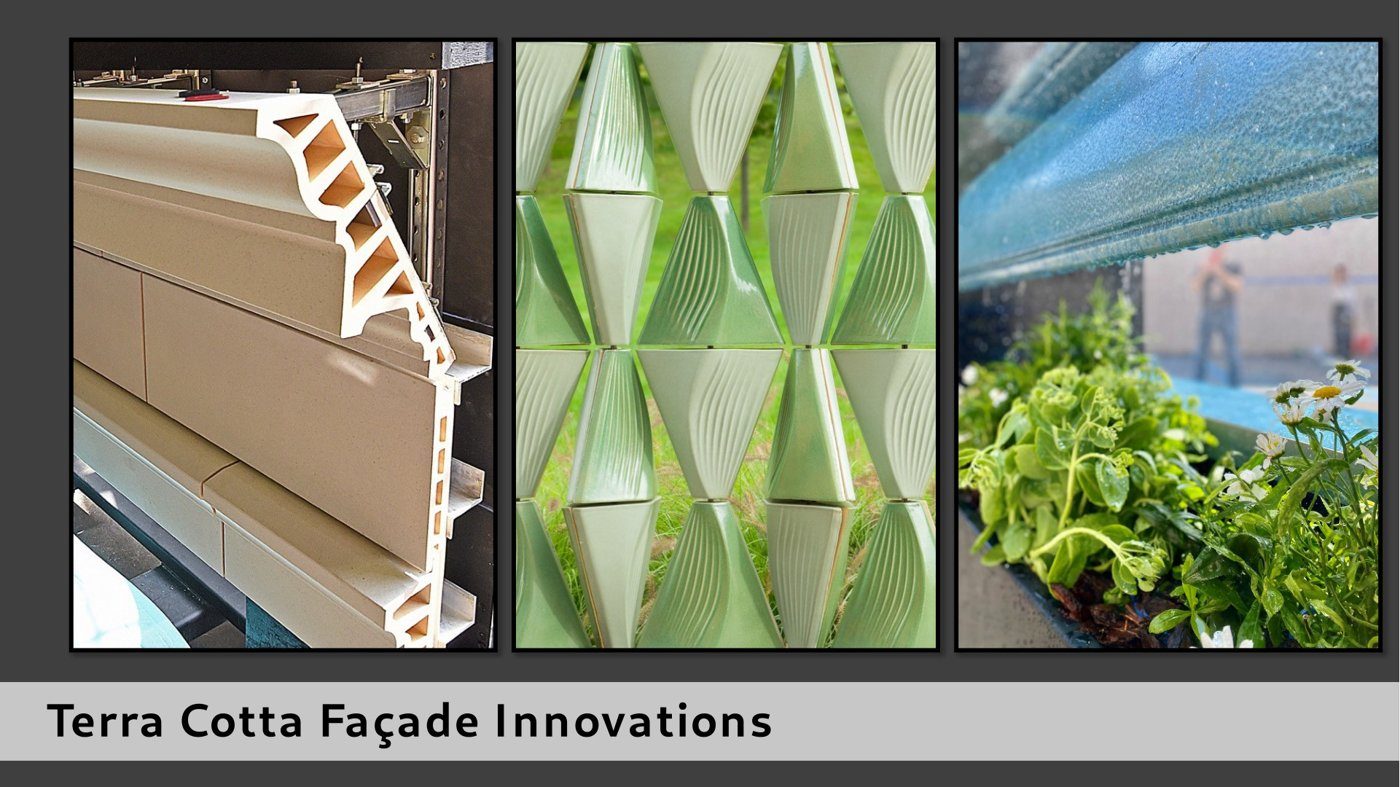
Andrew Pries argued that terra cotta, one of the lowest-embodied-carbon materials available, can do far more than clad a building, showing a new load-bearing wall module that cuts carbon against brick and rainscreen alternatives, the four forming methods behind complex work like the FDNY Fire Rescue façade, and a run of research prototypes that turn the material active.
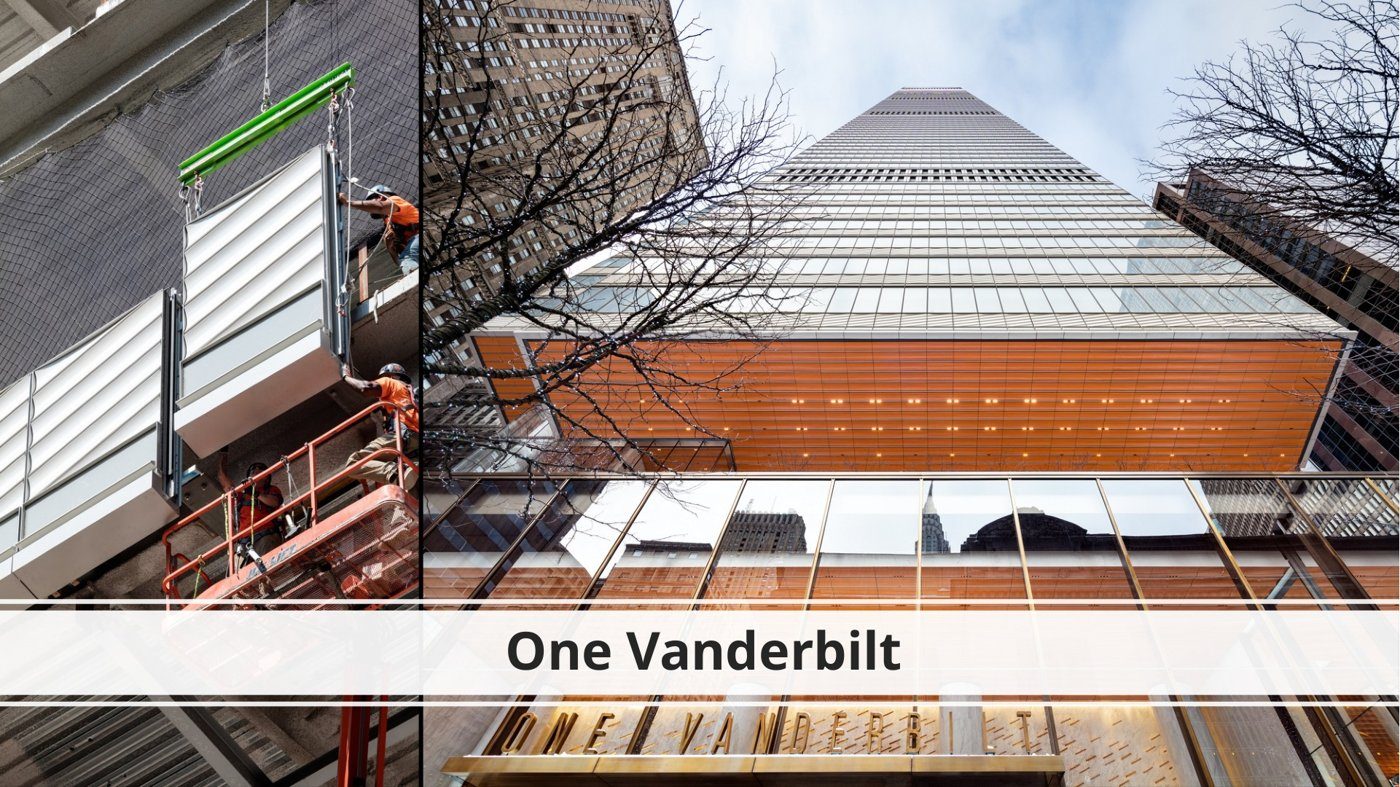
Pries set terra cotta against two linked problems: the urban heat island effect that afflicts nearly every American metropolis, and building operations, which account for roughly 27 per cent of annual CO₂ emissions. Cooling and heat trap each other, and one answer is to start with a lower-carbon material, terra cotta being among the lowest available.
The carbon case
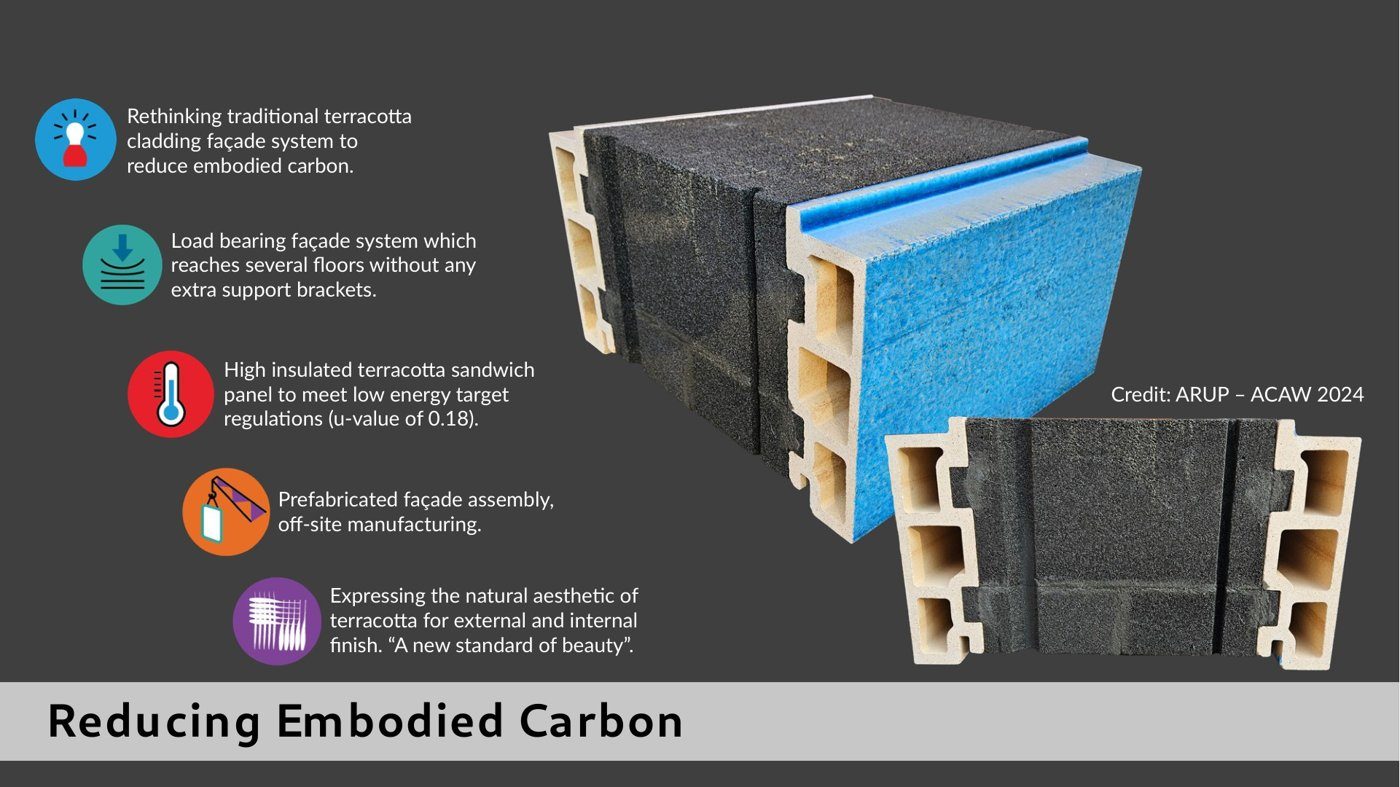
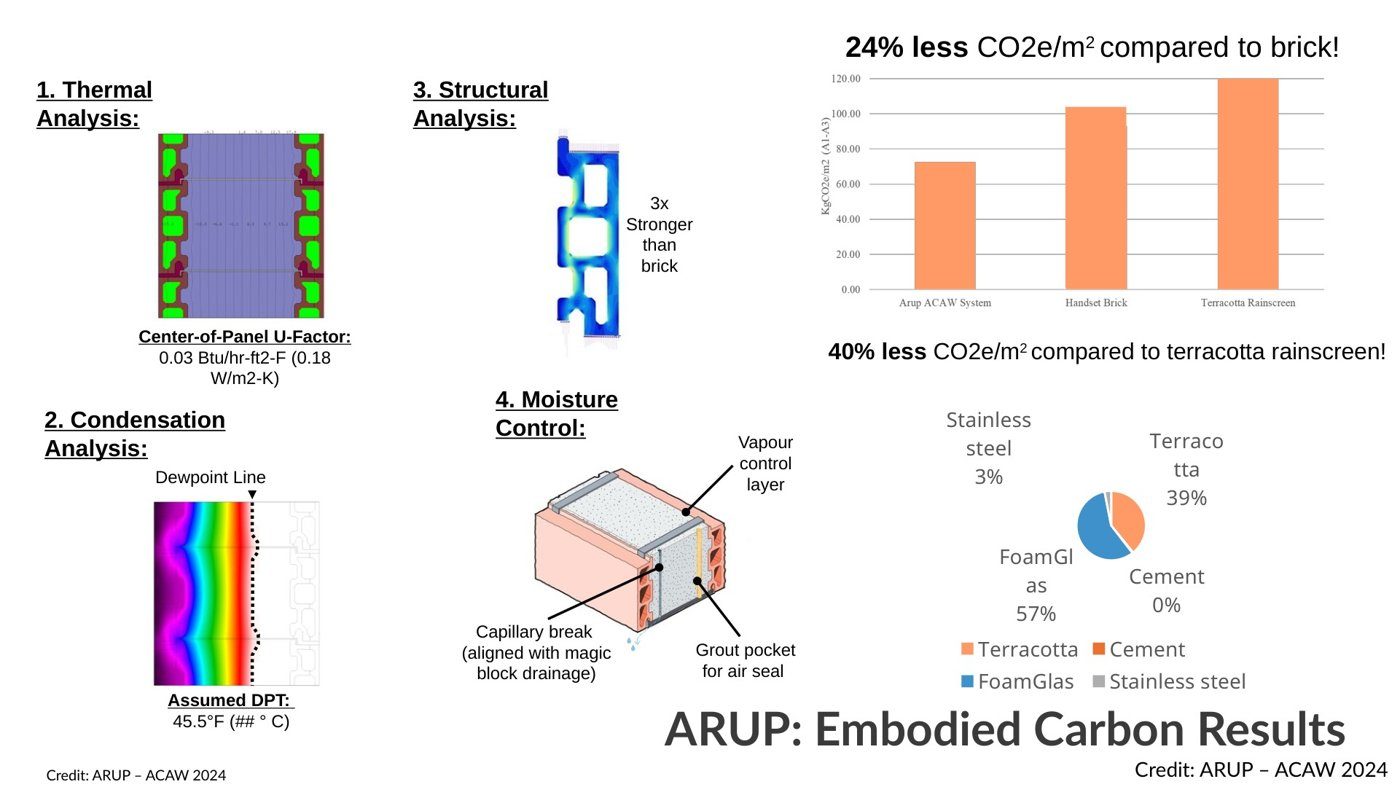
That low baseline was the starting point for a workshop team, drawn from London, Toronto and Los Angeles, that set out to design a new wall typology exploiting terra cotta's strength as well as its carbon. The module they arrived at works up to six storeys unsupported, needing only minor post-tensioning above that, and was developed as a full system with its thermal performance, dew point and moisture control resolved rather than as a pretty face. The numbers were significant: 24 per cent less carbon than a typical brick cavity wall and 40 per cent less than a typical terra-cotta rainscreen, achieved with inner and outer wythes of terra cotta providing the structure and foam glass between them doing the insulating.
Four ways to form clay
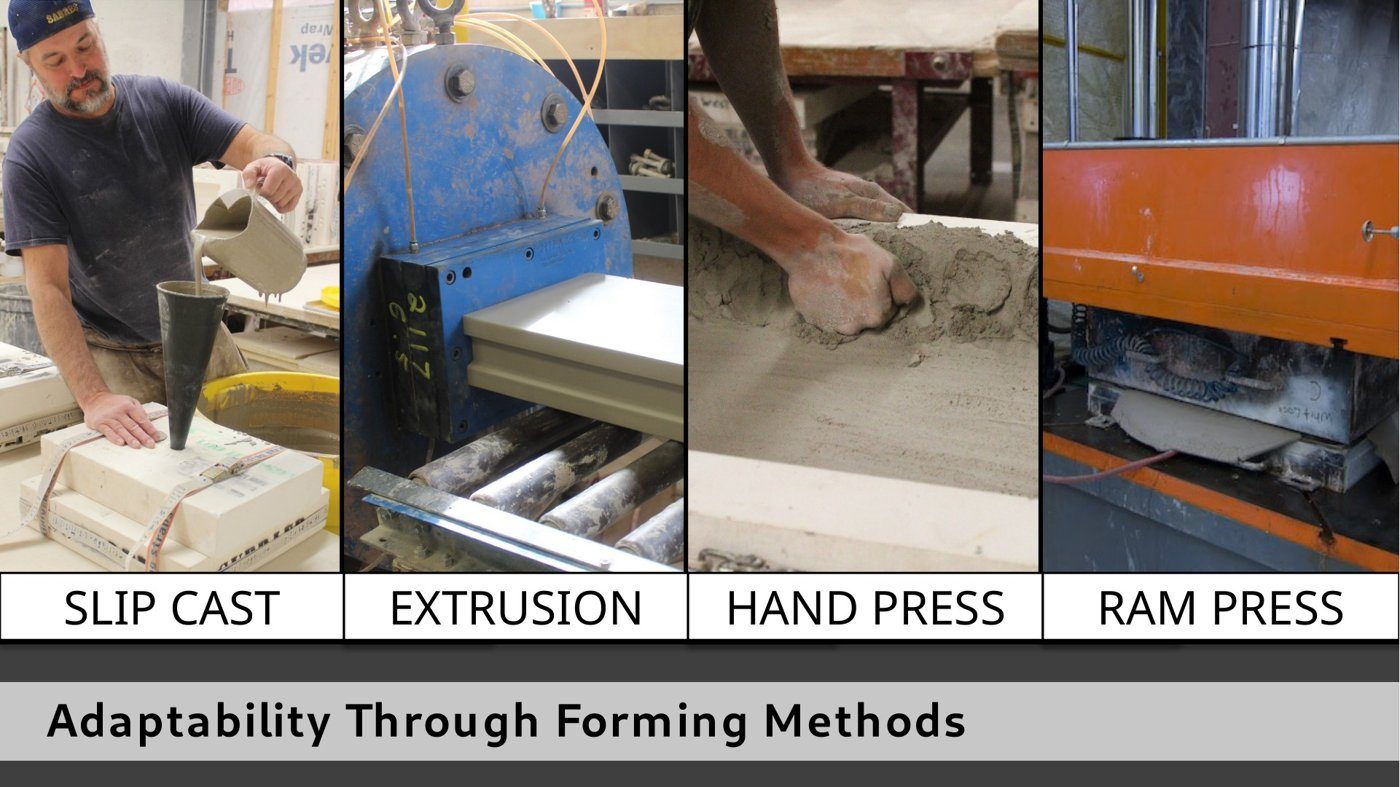
Terra cotta's range comes from how it is made. As one of the few manufacturers using all four industrial forming methods, slip casting, extrusion, hand pressing and ram pressing, the firm can shape a wide vocabulary; the art-deco-looking Fitzroy building nearby is in fact a rainscreen, its joints tuck-pointed to read as historic. The material is fired above 2,000°F to withstand hundreds of freeze-thaw cycles and last beyond a century, and it closes a loop: offcuts and rejects are crushed back into the next batch, and a rainscreen panel removed in fifty years can become the mix for the next façade.
Compound miters at FDNY
The forming range paid off at the FDNY Fire Rescue building, a training centre wrapped around eighteen uniquely angled apertures, every terra-cotta piece cut with compound miters and glazed in three reds. Narrow corners that offered nowhere to anchor were solved with a "triple die"; multiple glazes were applied to single pieces to hold the pattern; and because field dimensions never quite matched the drawings, every assembly was laid out and labelled on frames at the works before shipping, so it fit on site, down to the hand-carved lettering.
Making the façade active
Pries closed with prototypes from the firm's ceramics workshops that push terra cotta past cladding. A ZGF screen wall rotates its panels in fifteen-degree steps to track sun or program; a Woods Bagot spandrel folds terra cotta around photovoltaics to catch more light; a Selldorf origami panel sheds about 60 per cent of a conventional panel's weight; a COOKFOX and Buro Happold unit builds interchangeable habitat pods for birds, bees and plants; and an evaporative-cooling façade ran 18 degrees cooler than its surroundings for over an hour after rain. The argument was that a terra-cotta façade can reflect sun, disperse heat, capture rainwater and host life, if the industry embraces it.