


Andreas Roye shows how optical fibres embedded through concrete can turn a durable mineral panel into signage, ornament or a programmable media surface, without losing the material character of concrete in daylight.
Concrete is conventionally read through mass, texture and shadow. Andreas Roye introduces a fourth dimension: light travelling through the material itself. The founder of LUCEM described a system in which optical fibres are embedded through precast concrete elements. When unlit, the panel can appear close to conventional concrete; when illuminated from behind, selected points, lettering, logos or moving digital content emerge through the surface. The façade can therefore hold two identities, one in daylight and another after dark, without adding a separate visible screen to the front.
Translucent, not transparent
Roye framed the material as translucent: a condition between opacity and transparency. Optical fibres create controlled paths through the concrete. The surrounding matrix remains solid, while light passes through the fibre ends. This distinction matters. The material does not offer a conventional view through the wall. Instead, it turns the concrete surface into a field of luminous pixels or defined graphic lines. Fibre density, diameter, spacing and pattern determine how much of the surface can transmit light and how the image reads from different distances.
The backlighting source may be a uniform LED field, individually addressable LEDs or a full digital display. The support cavity must provide adequate distance for light distribution, ventilation, access and replacement. The concrete panel still needs ordinary façade engineering: anchors, joints, drainage, movement accommodation, fire strategy and safe handling.
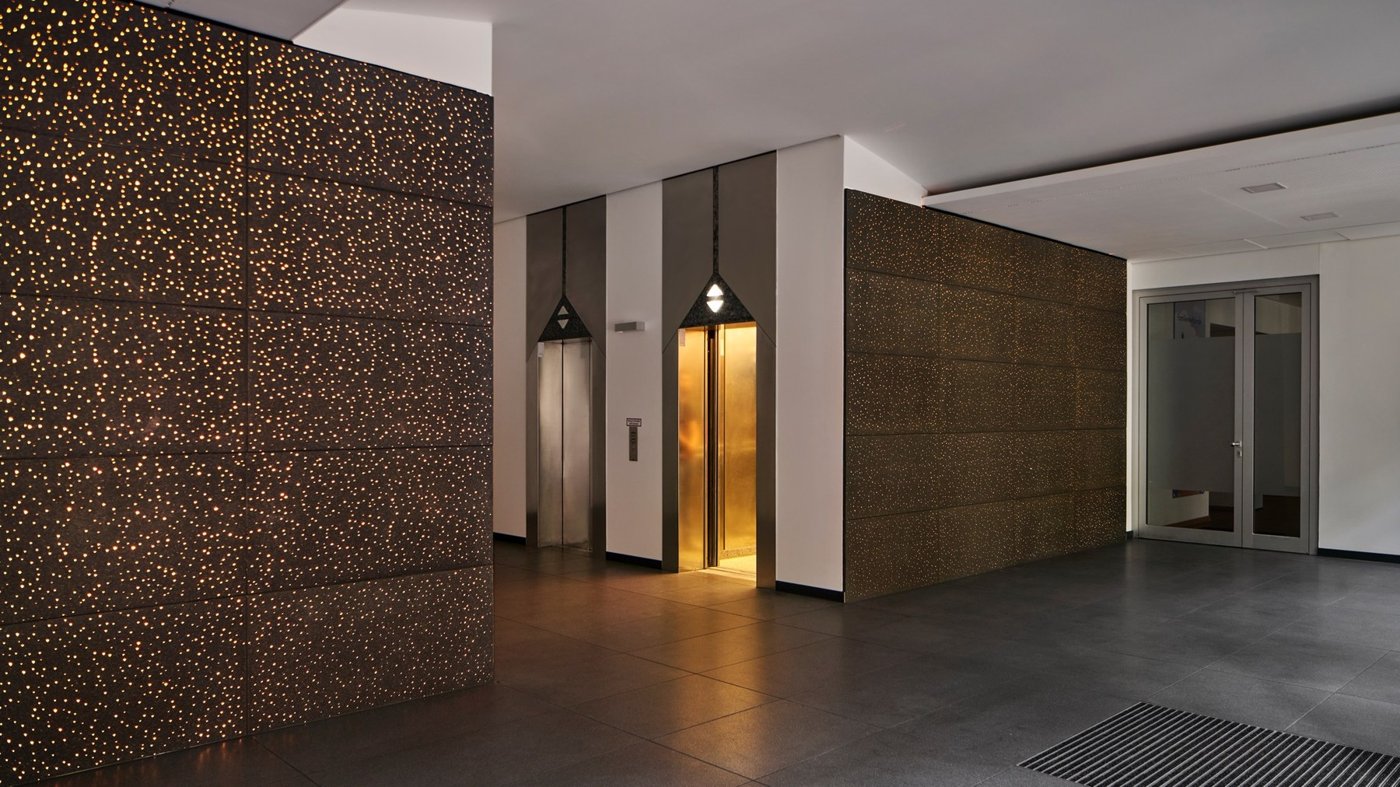
An elevator lobby project in Hamburg demonstrated a subtle application. Floor and wall used the same apparent material, but optical fibres were embedded in the wall panels. With the illumination off, the surfaces read as one continuous concrete environment. While waiting for the lift, users could change the wall colour through a local application. The value here is not brightness. It is transformation without changing the material language. The wall remains concrete in its texture and weight, yet it becomes interactive when activated.
This duality should guide specification. Designers need to approve both the daytime panel, colour, aggregate, pores, joints and fibre visibility, and the night image, brightness, uniformity, pixel resolution, colour, viewing distance and glare. A sample that proves only one state is incomplete.
Embedded identity: Edeka and Al Aziz Mosque
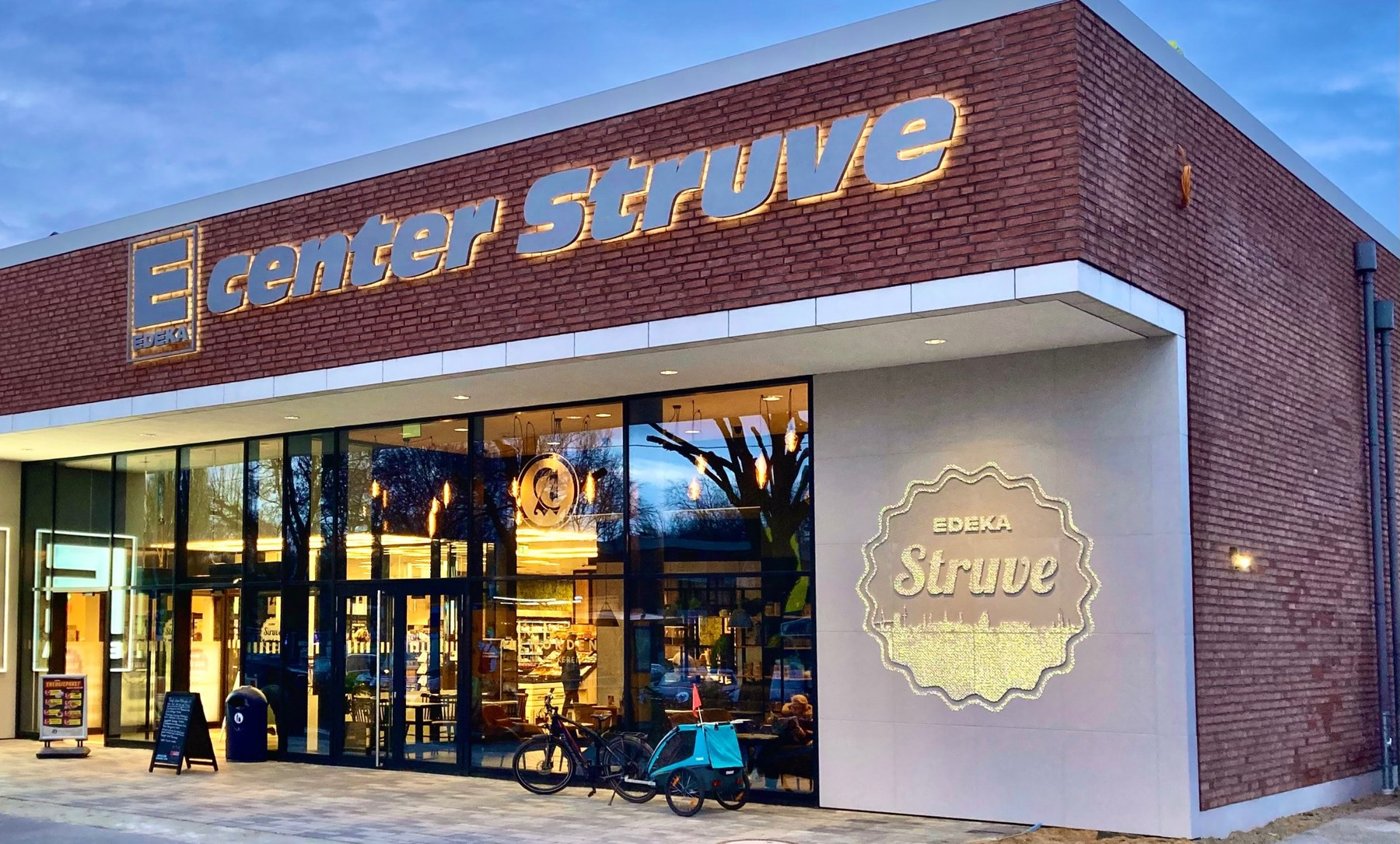
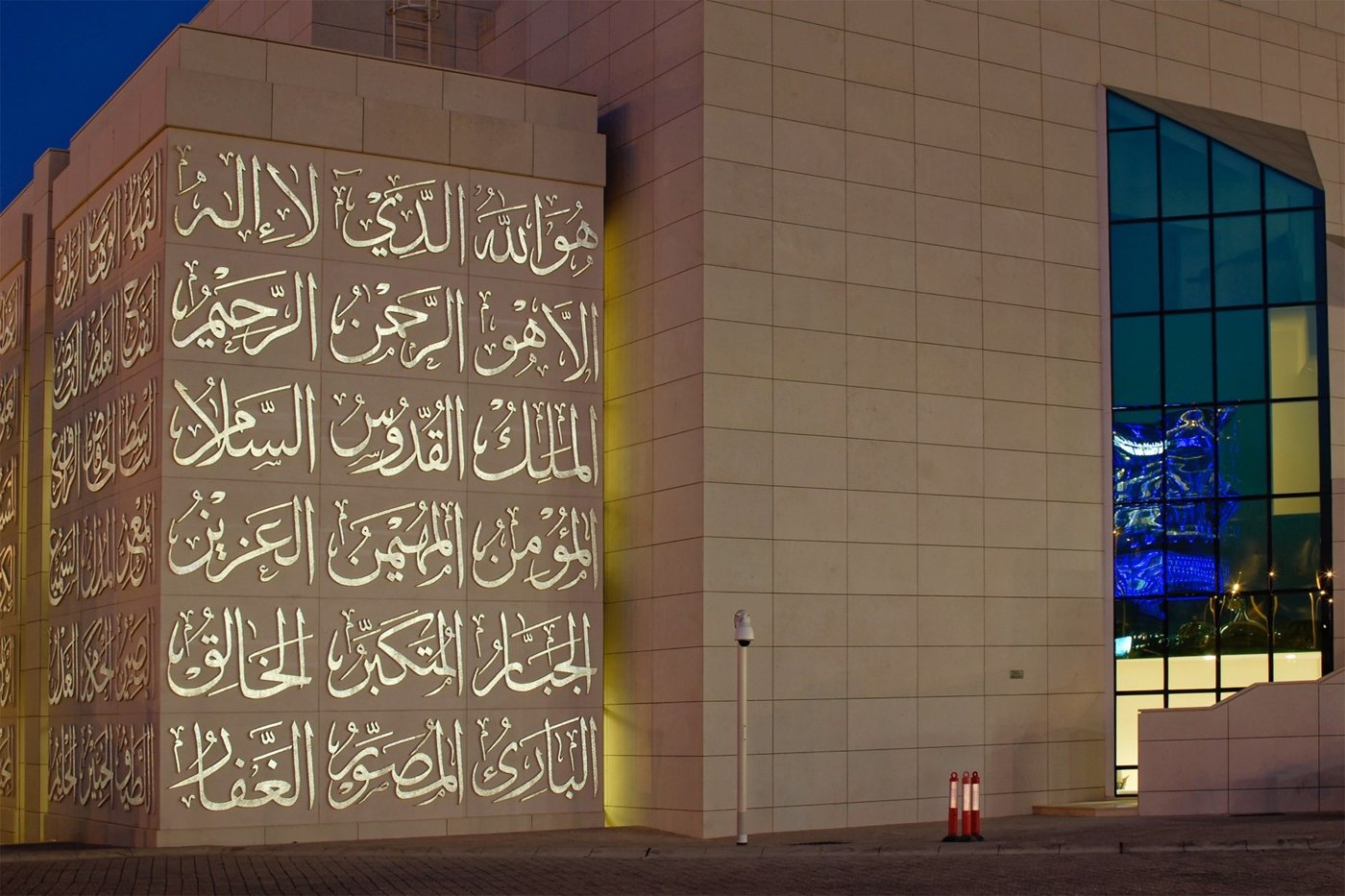
At an Edeka supermarket in Hamburg-Eppendorf, the company logo was embedded into the precast façade like a stamp and illuminated from within. The project included both the light-transmitting logo and surrounding precast elements, allowing graphic identity to belong to the architecture rather than being attached as conventional signage. Al Aziz Mosque in Abu Dhabi expanded the idea to a building-scale narrative. The façade displays the 99 names of God in their stated sequence. A roof sensor activates the illumination as darkness falls. During the day, the letters project approximately three centimetres from the surface so that moving sunlight creates legible shadows; at night, light through the concrete takes over.
The result depends on the relationship between relief and illumination. The message remains present without power through physical depth and shadow, then gains a second mode after sunset. For culturally significant text, full-scale review of typography, spacing, orientation, brightness and sequence is essential.
From responsive colour to digital concrete
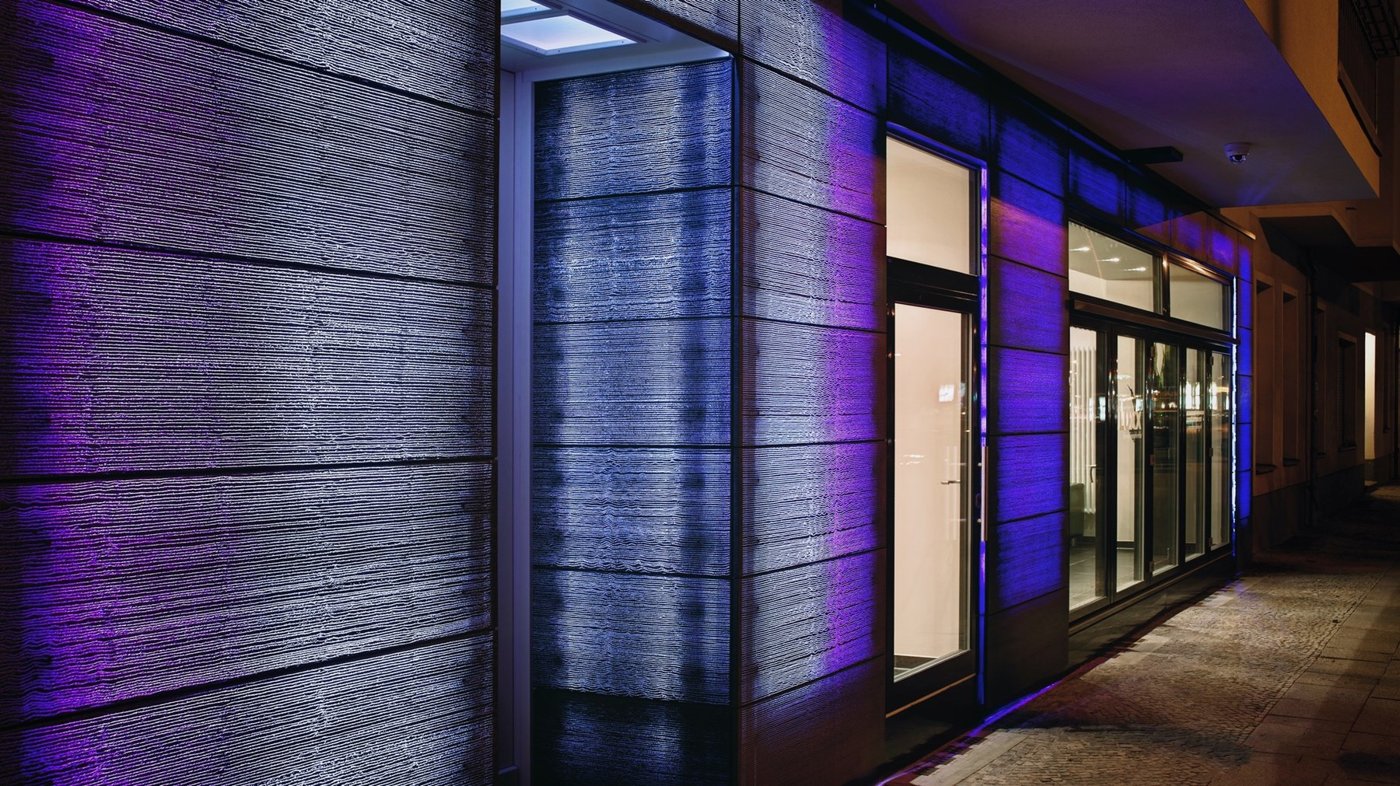
A Berlin residential project connected backlighting to electronic access keys. Each resident could trigger an assigned colour when arriving. A private garage used a related logic, coordinating ceiling and wall illumination with the displayed car. These examples turn the façade or interior cladding into a responsive interface. The technical challenge moves beyond panel production to controls: user permissions, sensors, scenes, data privacy, fail-safe states and the lifespan of electronics. The most durable architectural element may outlast multiple generations of LED hardware and software, so the lighting cavity and control system must be replaceable without destroying the concrete.
Roye also showed “digital concrete” applications in which an LED display behind the panel can carry changing content. During the day, sandblasted or coloured numbers and graphics remain visible; at night, the concealed display activates the surface as a media layer.
Transport infrastructure: visibility and abuse resistance
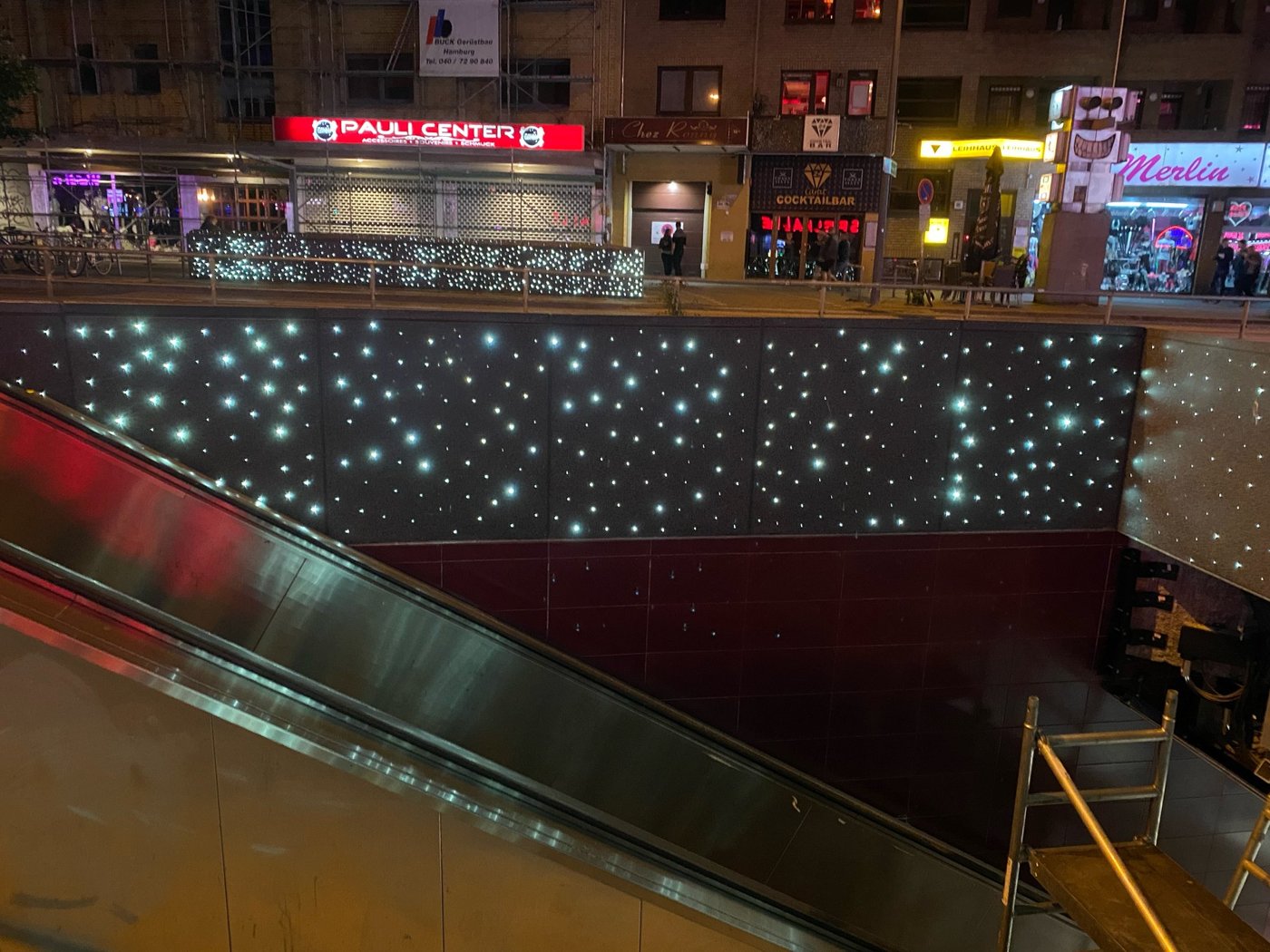
At Hamburg stations, light-transmitting concrete was used for names, starlight patterns and illuminated columns. Curved polished concrete corners were treated with an anti-graffiti coating, reflecting the high-contact, high-abuse conditions of public transport.
That context raises the practical questions a showroom sample never answers. Can damaged panels or LEDs be reached during limited closure windows? Are joints protected from cleaning water and impact? Will fibre ends trap dirt or change appearance after repeated washing? Is brightness sufficient for wayfinding without creating glare? And are graphics still legible if part of the lighting array fails? Public infrastructure needs a maintenance design, not only a night-time rendering.
Avenue Mall: concrete as a media façade
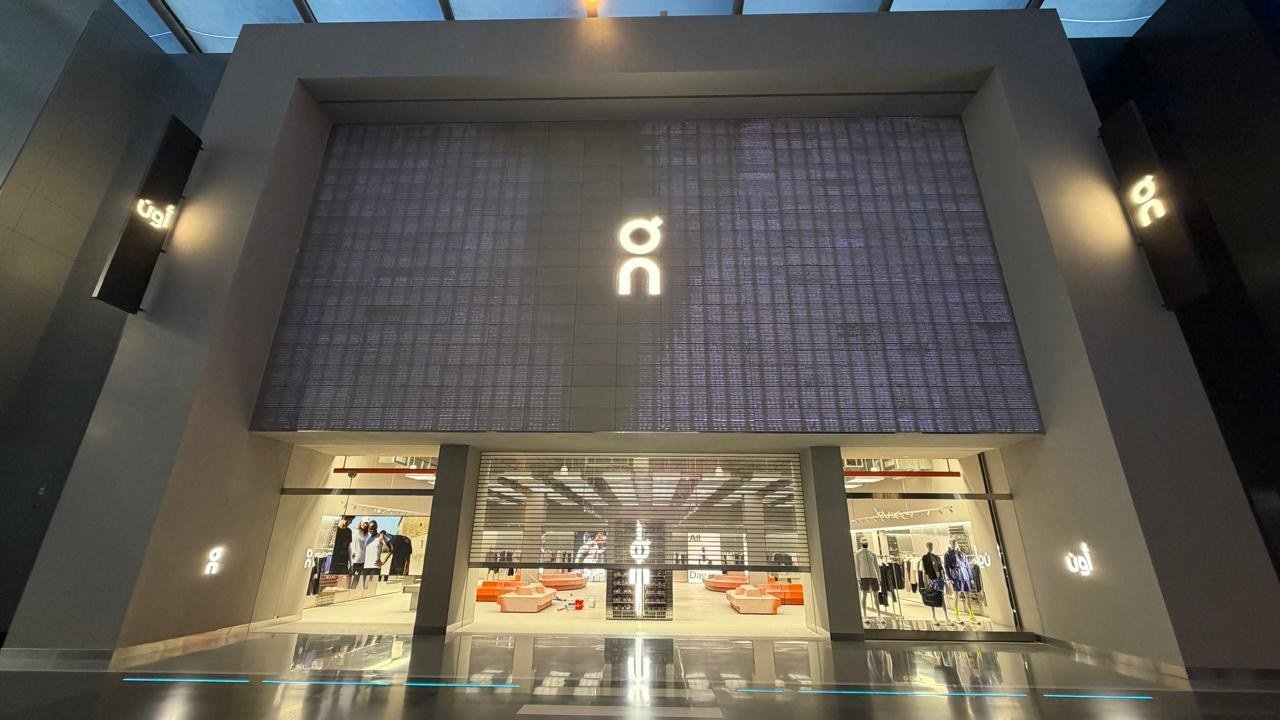
The largest media example is a new flagship storefront at Avenue Mall in Kuwait. Roye described a frontage 17 metres wide, an illuminated display 8 metres high and an overall light-transmitting area of approximately 180 square metres. An LED screen behind the translucent concrete can play moving content; the example used a restrained curtain-like animation, although the display can accept other video. The concrete filters the pixels, giving the imagery a material grain different from a conventional exposed screen.
For this scale, media resolution must be designed from the intended viewing distance. Too many fibres and pixels can weaken the perception of concrete; too few can make content unreadable. Heat from the display, ventilation of the cavity, fire stopping, power routing, structural support and panel replacement all need coordination with the mall façade.
A robust specification has to cover four layers, and the first is the concrete itself: mix, finish, thickness, reinforcement, fibre pattern, permissible pores, edge conditions, anchors, joint layout and the colour variation to be expected. The second is the optics – fibre density, graphic resolution, light loss, daytime visibility, alignment between neighbouring panels, and how many failed points will be accepted. The third is the electrics: LED type, brightness, colour consistency, refresh rate where media is used, sensors, drivers, control protocols, emergency state and remote monitoring.
The fourth is the cavity that holds all of it, which needs ventilation, drainage, fire separation, cable routes and safe access to screens, drivers and power supplies, with the electronics replaceable independently of the precast cladding wherever that can be arranged. Full-scale mock-ups are then observed in sun, shade and darkness from several distances, and video content tested in motion rather than as still images. The mock-up should also demonstrate a panel joint, a corner, a fixing, service access and the replacement sequence.
Roye puts the total at more than 600 projects worldwide by 2026, the company’s own figure. Across the examples, the most successful use of the technology was not simply making concrete glow. It was giving a durable mineral surface a controlled capacity to communicate. That communication can be permanent, such as a sacred inscription; branded, such as a logo; responsive, such as a resident’s colour; civic, such as a station name; or dynamic, such as a media storefront. In every case, the design gains strength when the unlit concrete remains architecturally complete. Light then becomes an additional state of the façade, rather than a disguise for a wall with nothing to say during the day.