


Christy Irish frames circularity as a sequence of design decisions rather than an end-of-life waste strategy. Reuse, material optimisation, demountable fixings and closed-loop processing show how façade components can remain useful for longer before recycling becomes necessary.
Recycling is the most visible part of a circular-material story, but Irish places it last. Her framework begins by asking whether new material is needed at all, then whether existing components can be reused, whether design can reduce material consumption and only then how waste can be returned to production. The sequence matters because recycling still requires collection, processing and new manufacturing. A façade that can remain in service for another cycle, or can be dismantled without destroying its panels, preserves more of the value already invested in the product. Circularity therefore starts with specification, fixing and layout decisions made long before demolition.
Irish organises the approach around four actions: refuse, reuse, reduce and recycle. The categories overlap, but they provide a practical way to test design choices. Refusing means avoiding unnecessary replacement; reuse means extending the life of existing components; reducing means cutting waste and virgin-material demand through better planning; and recycling means closing the loop when a product can no longer remain in its current form. The case studies all use fibre-cement cladding, but the design logic is broader. Each asks how much of a façade can stay valuable when the building, use or aesthetic requirement changes.
Refuse replacement when the material still works
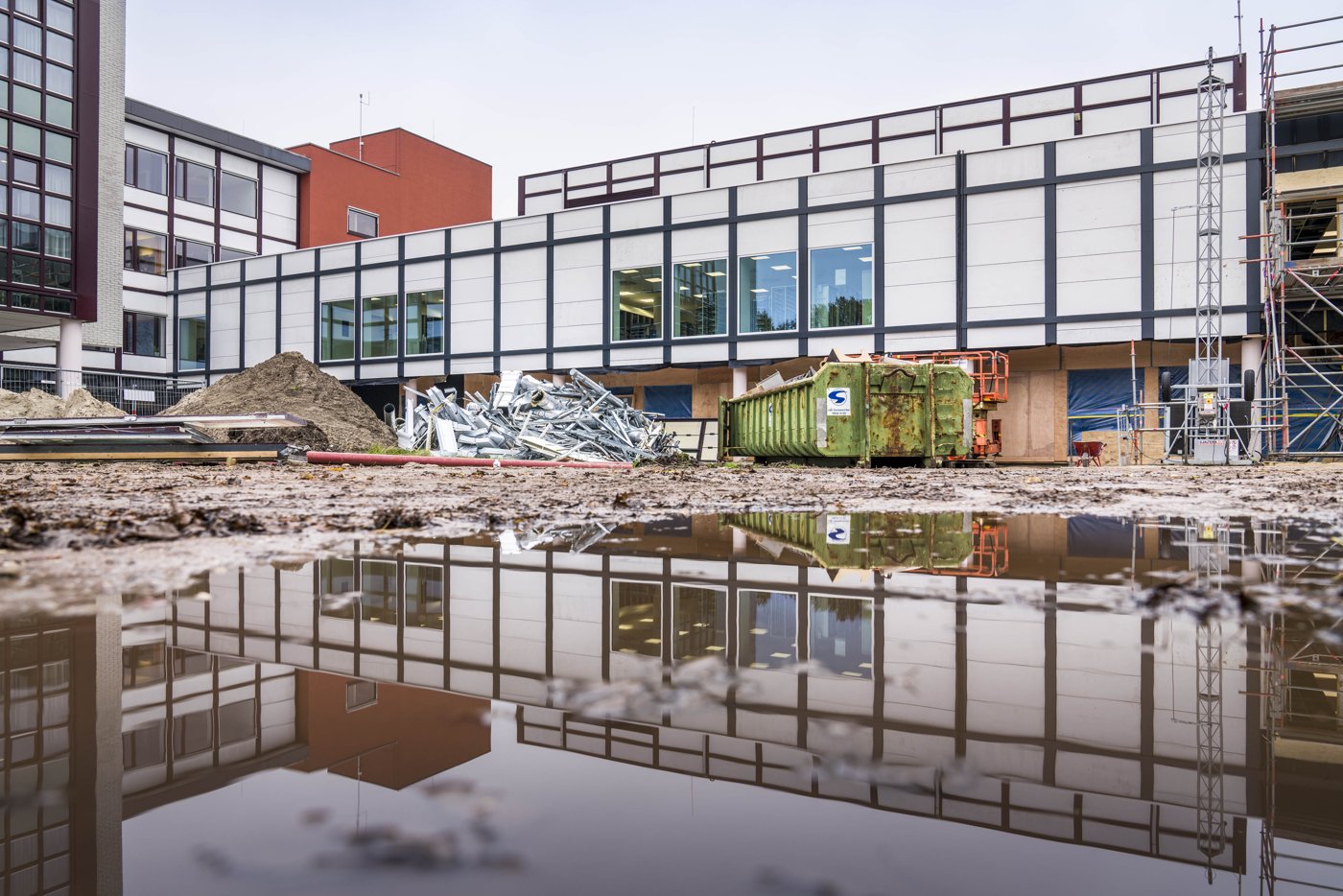
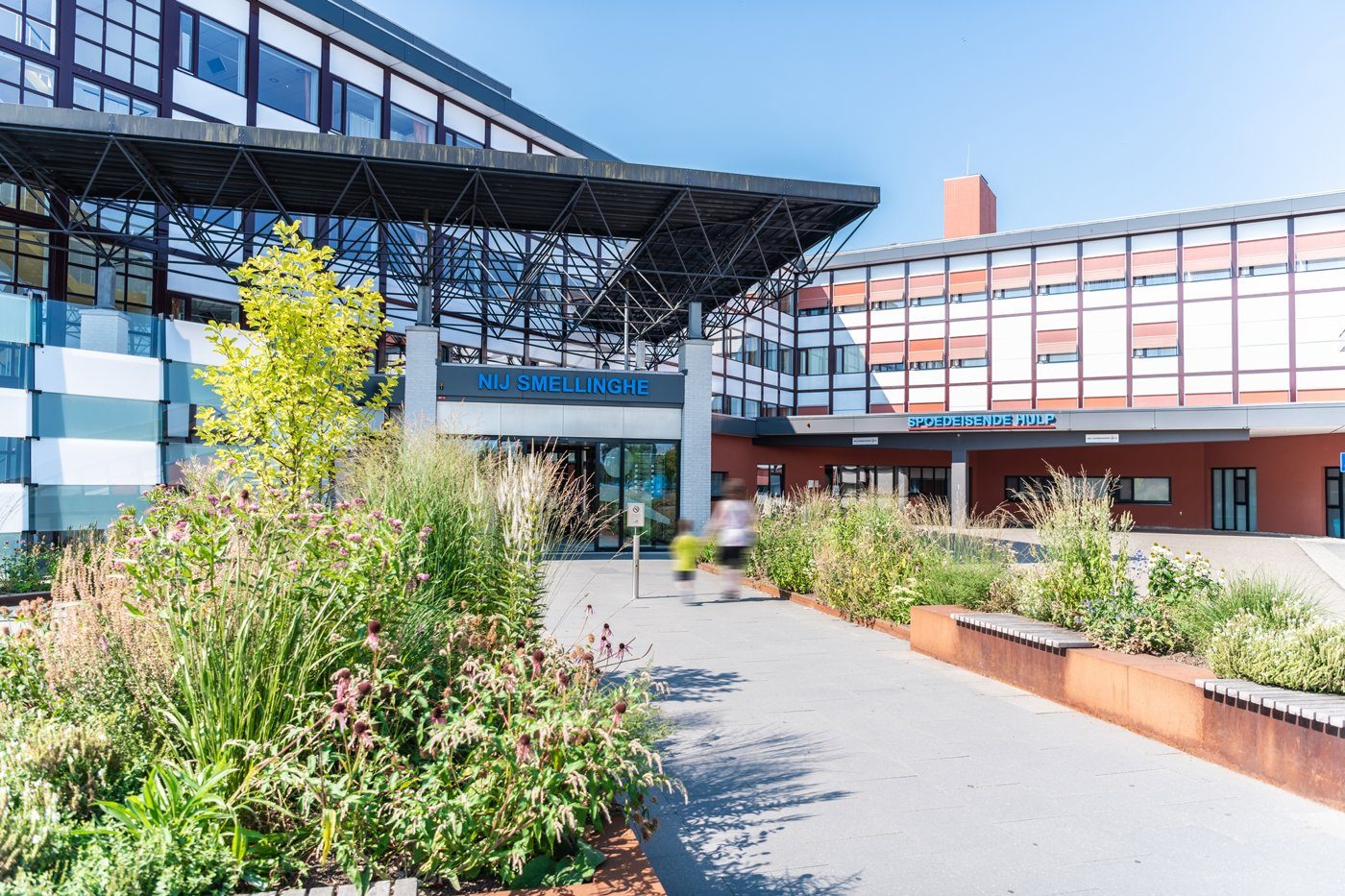
At Nij Smellinghe General Hospital in Drachten, the Netherlands, the project team investigated whether existing fibre-cement panels could remain useful after more than two decades. Irish presents the case as a test of mindset as much as material durability. Replacing the panels would have been the conventional route, but the client was prepared to assess their condition and explore reuse. The process depended on cooperation between client, architect, contractor and supplier, because keeping an existing component usually requires more project-specific investigation than ordering a new one from a catalogue.
The important lesson is that service life is not identical to the age of a building. If a panel remains structurally and visually suitable, refurbishment does not automatically require disposal. That changes the designer’s first question from “what should replace this?” to “what can remain?” It also increases the importance of demountability. Components that can be removed without breaking the panel or destroying the support system are easier to inspect, relocate or reinstall. Circularity becomes a property of the connection as much as of the cladding material.
Reuse changes the order of design
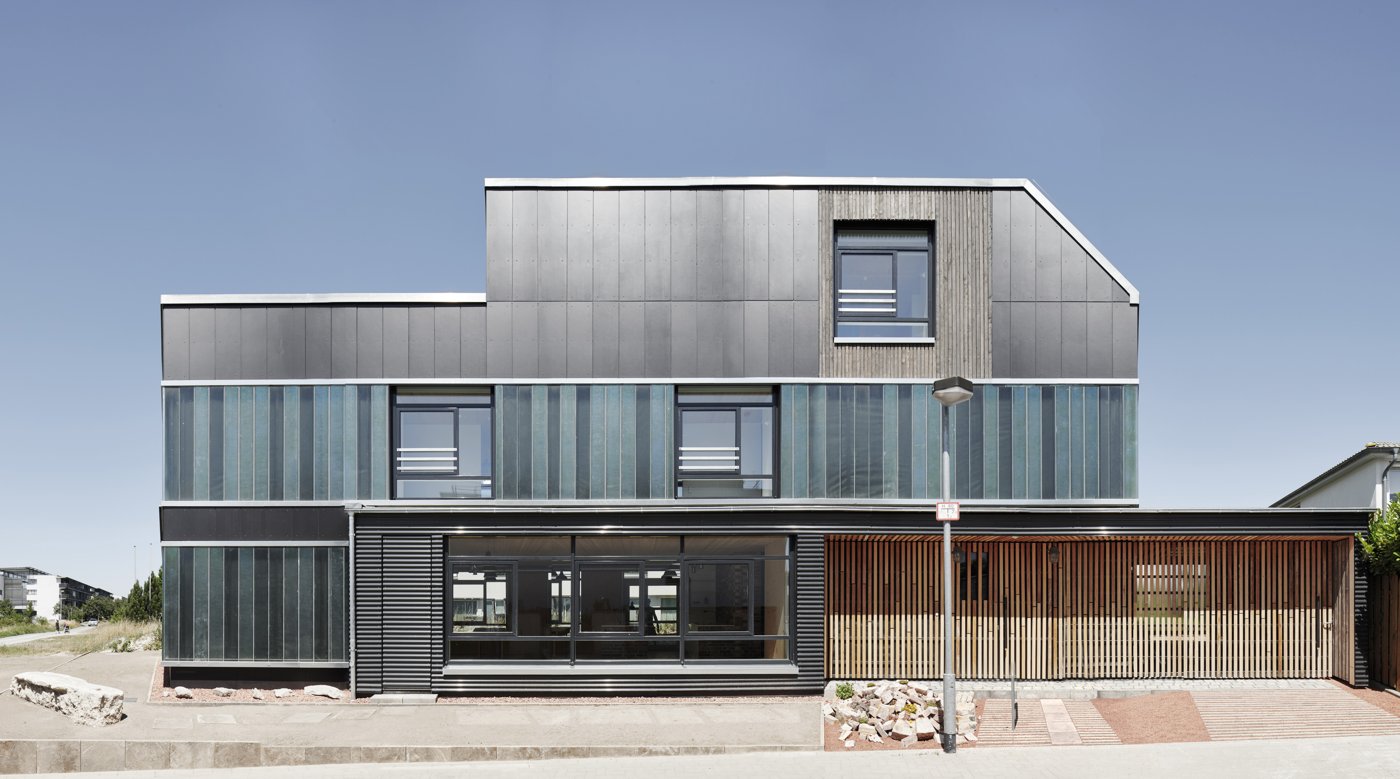
The Recycling House in Hannover takes that principle further. Irish describes a design approach based on availability: salvaged components were identified first and the architecture was developed around what could be reused locally. The façade incorporated up to 90 per cent reused building elements according to the project account, including fibre-cement panels originally installed in 2007. Those panels were recoated from green to a deep black and visibly fixed to a timber substructure, creating a rear-ventilated wall that could be dismantled again in the future.
Designing around available components reverses the normal specification process. Architects are accustomed to defining an ideal dimension, colour and finish before asking the supply chain to produce it. Reuse introduces existing sizes, quantities and conditions as design constraints. The resulting façade may show more variation, but that variation records the material’s previous life rather than being a defect. Irish uses the project to argue that circular construction requires a willingness to value retained components for what they can still do, not only for whether they arrive in a perfect new-product range.
Reduce waste in the geometry itself
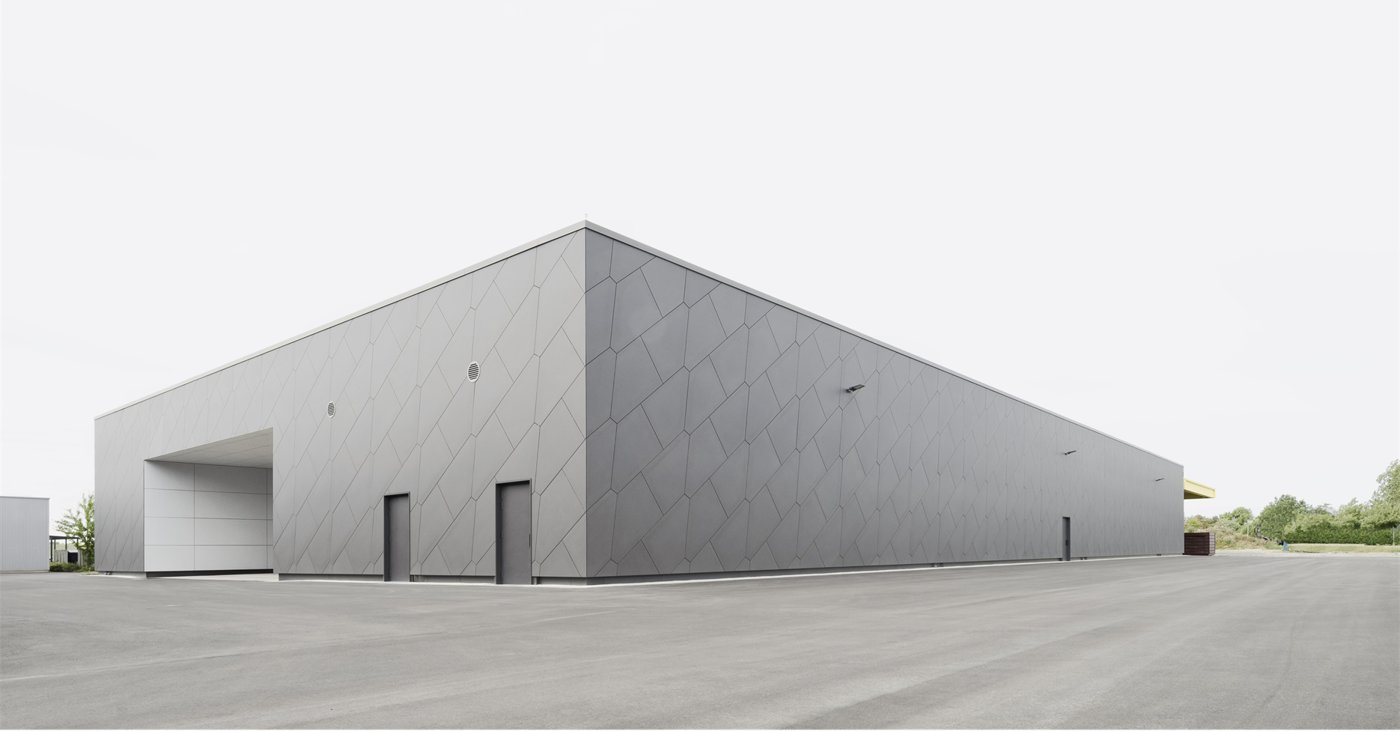
Hall 01 in Niederstetten shows a less obvious form of circularity: panel optimisation. The industrial building uses a camouflage-like fibre-cement pattern wrapped around corners. Rather than achieving that pattern through a large number of unrelated cuts, the design was developed around one repeatable shape and the largest available panel formats. Irish reports off-cut waste in the range of roughly 1.6 to three per cent. The architectural image and the cutting strategy were therefore developed together, reducing waste without flattening the façade into a purely economical grid.
This is a useful counterpoint to the assumption that material efficiency requires visual simplification. A complex-looking envelope can use material efficiently when geometry is designed around stock sizes and nesting. Conversely, a restrained façade can generate unnecessary waste if modules ignore production dimensions. Circular thinking therefore enters the design model at the point where elevations are divided into pieces. Panelisation, corner conditions and openings determine how much material becomes off-cut before a product ever reaches the building.
Recycling works better when disassembly is planned
Irish’s final examples move from component reuse to material recovery. She describes CEMLOOP XL, an Etex and Heidelberg Materials initiative in which fibre-cement waste is processed into recycled fibre-cement powder. Fibres are removed, the mineral fraction undergoes an enforced-carbonation process using carbon dioxide from kiln exhaust, and the resulting material is used as a secondary raw material intended to replace part of the clinker in new cement production. The company positions the process as a way of diverting tens of thousands of tonnes of fibre-cement waste while returning mineral content to manufacturing.
The circular loop still depends on getting panels off buildings cleanly enough to manage them. Irish therefore ends at a much smaller component: the screw. She describes work with SFS in Sydney on a fixing intended to create a stress-free connection that allows panels to be dismantled and relocated without damage. It is an intentionally modest example. A closed-loop material technology can be sophisticated, but if the façade is bonded or fixed in a way that destroys the panel during removal, the easiest circular option, direct reuse, has already been lost.
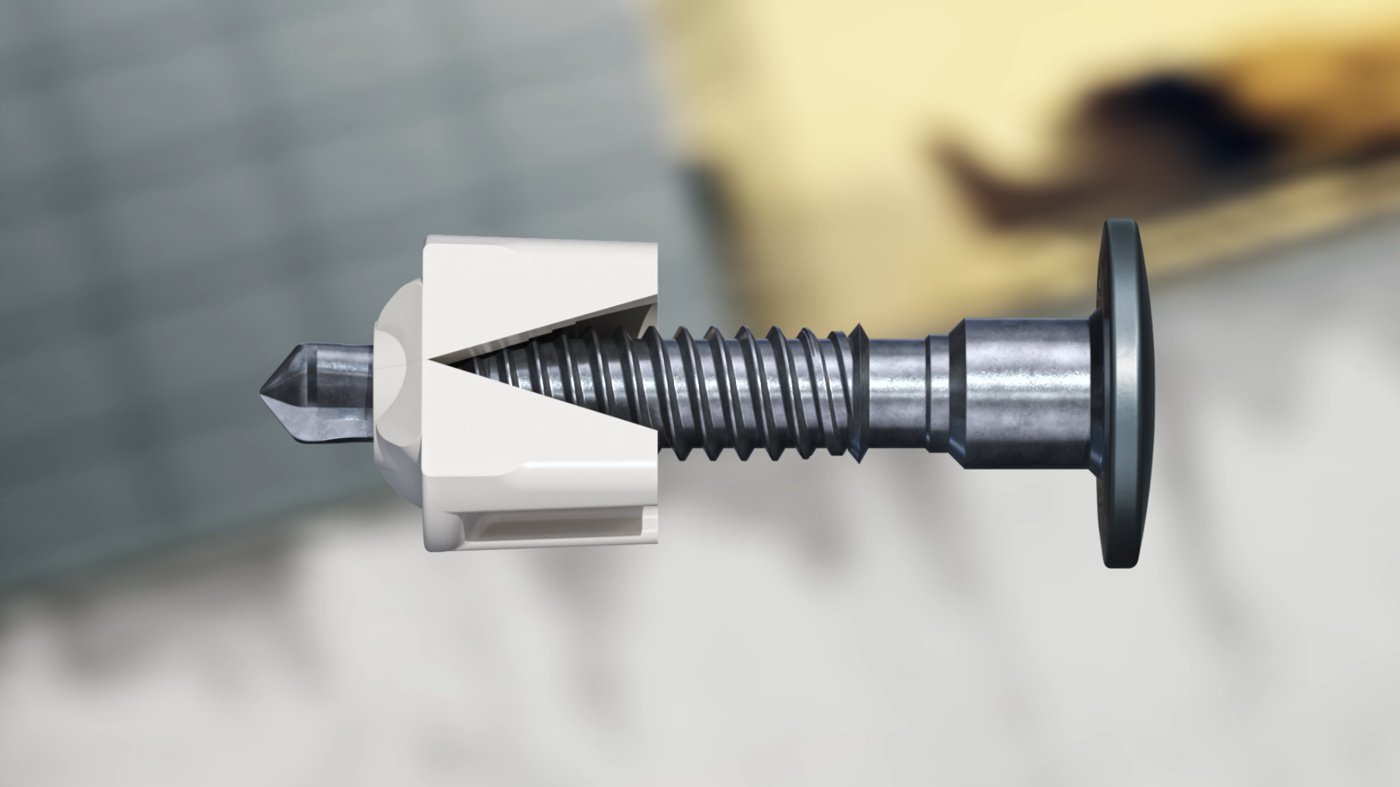
Irish’s 4R framework is useful because it resists treating circularity as a single product claim. The most effective intervention may be to keep an existing panel, adapt a salvaged one, redesign a cutting pattern or change a fixing detail. Recycling remains necessary, but it is the last opportunity to retain value rather than the first. For façade designers, that means circularity becomes visible in drawings: module sizes, fasteners, tolerances, access and disassembly sequences all influence whether the next team can reuse what is being installed today.