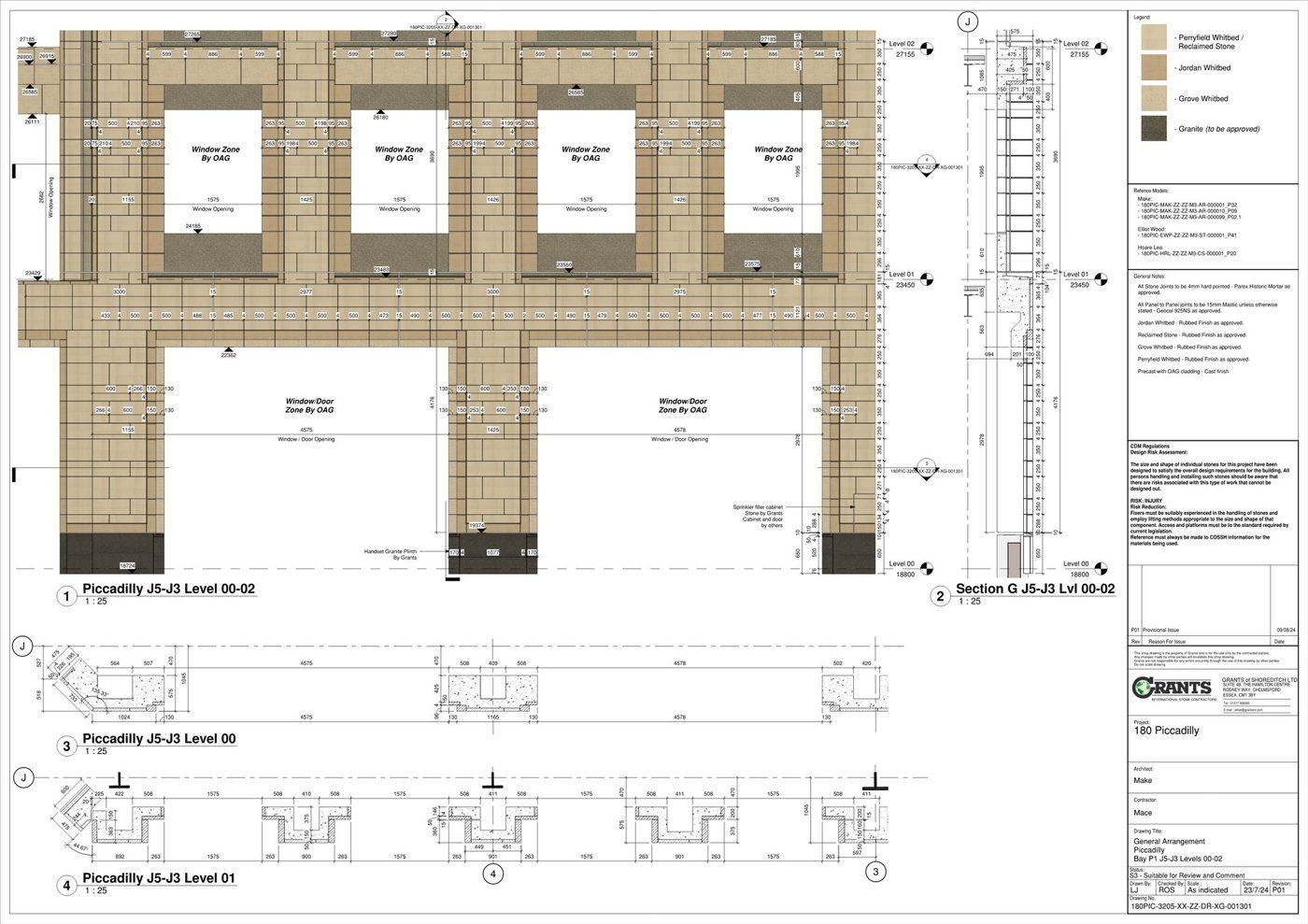
FMDC used Panorama St Paul’s, 30 Duke Street and South Molton Triangle to demonstrate that reclaimed stone can move from exceptional experiment to repeatable façade strategy.
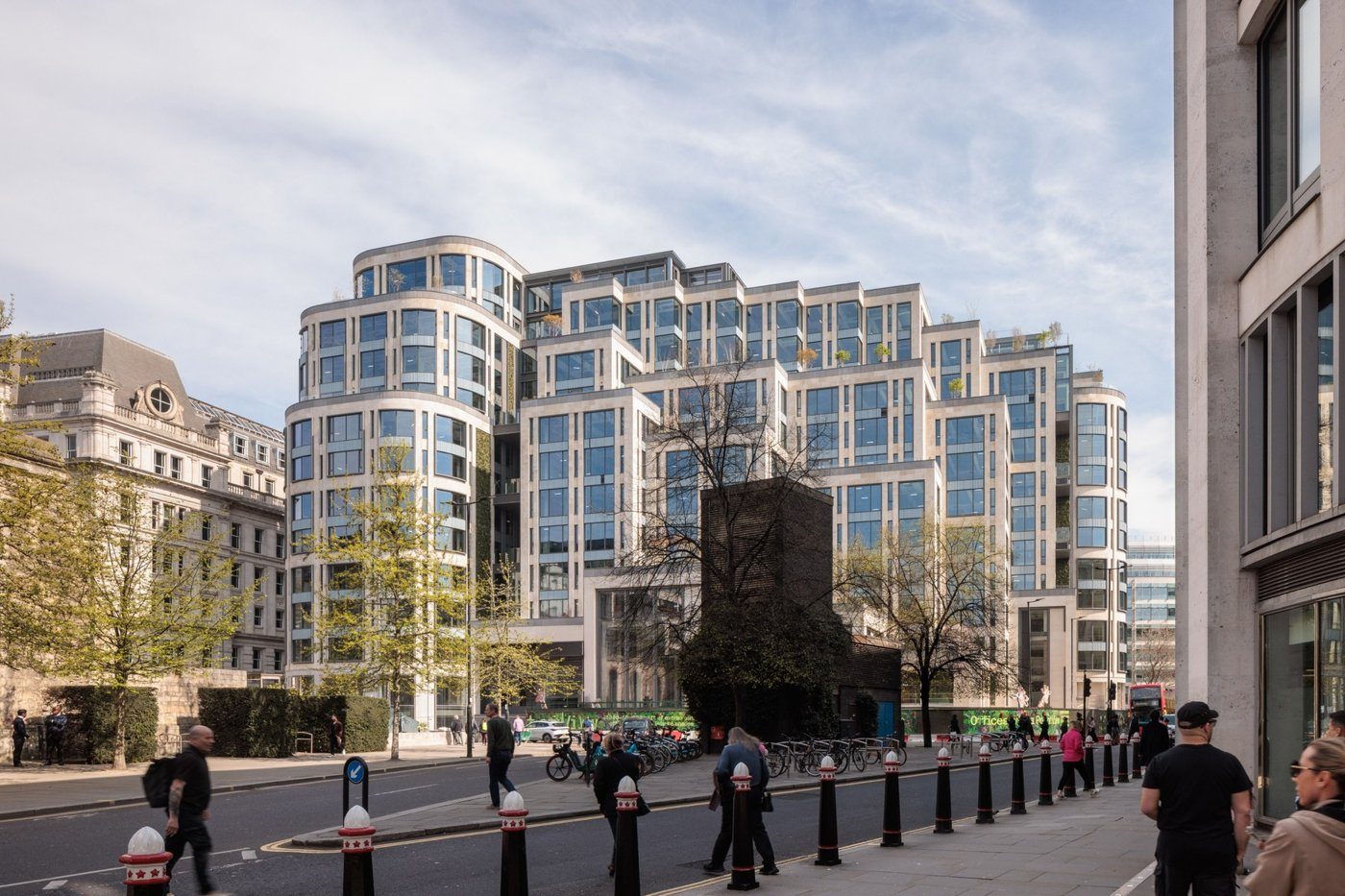
Lefteris Siamopoulos treated the “urban quarry” as a delivery method rather than a circular-economy slogan. Across three London projects, the same question recurred: if valuable stone is already fixed to a building that is about to change, how much of it can be recovered, tested and designed back into the next façade? The answer depended less on a single heroic detail than on surveys, dismantling strategy, storage, cutting, cleaning and an architectural grid that accepts the dimensions of what already exists.
Reuse has to be designed as a lifecycle
The conventional route sends façade stone into a skip or, at best, downgrades it to aggregate. Siamopoulos set out an alternative chain: dismantle carefully, store by type and location, test the material, cut or resurface it, establish range samples, build visual mock-ups and then return it to the building. Each stage protects yield. Damage during removal or poor inventory control can erase the carbon and cost case long before installation begins. He also argued that the economics are more practical than many clients assume. With the right demolition, stone and façade contractors, reuse can be close to cost-neutral while avoiding new extraction and reducing transport. For London projects, the existing building can be physically closer to processing yards than a new quarry supply chain. That turns the city itself into a material source.
Panorama made the quantities work
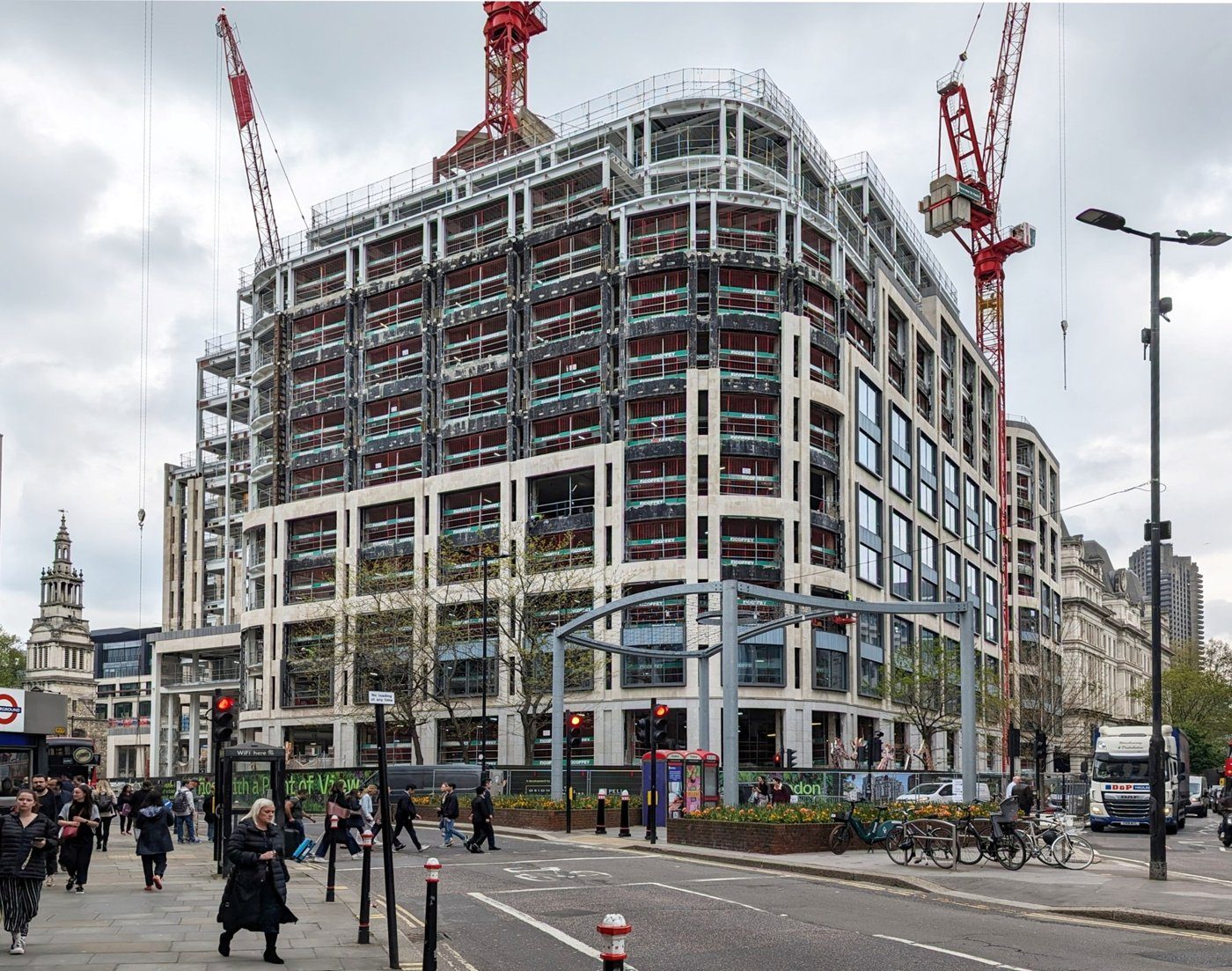
At Panorama St Paul’s, the former BT Centre carried about 6,000 square metres of limestone at roughly 75 mm thick and around 500 square metres of 40 mm granite. Siamopoulos said that stock was sufficient to clad about 90 per cent of the transformed scheme. Reuse had also entered the planning conditions, so the team had to move from aspiration to a measurable recovery strategy. Dimensional and intrusive surveys established the actual stone sizes and thicknesses. The new façade was then adjusted so pieces could be trimmed by roughly 10–20 mm around their perimeter, removing damaged edges and old fixing holes rather than rejecting entire units. Resurfacing took only a few millimetres from the face. Temporary brown staining caused by wet cutting and processing was treated as a material behaviour to understand, not evidence that the stone had failed; exposure and ultraviolet light reduced it over time.
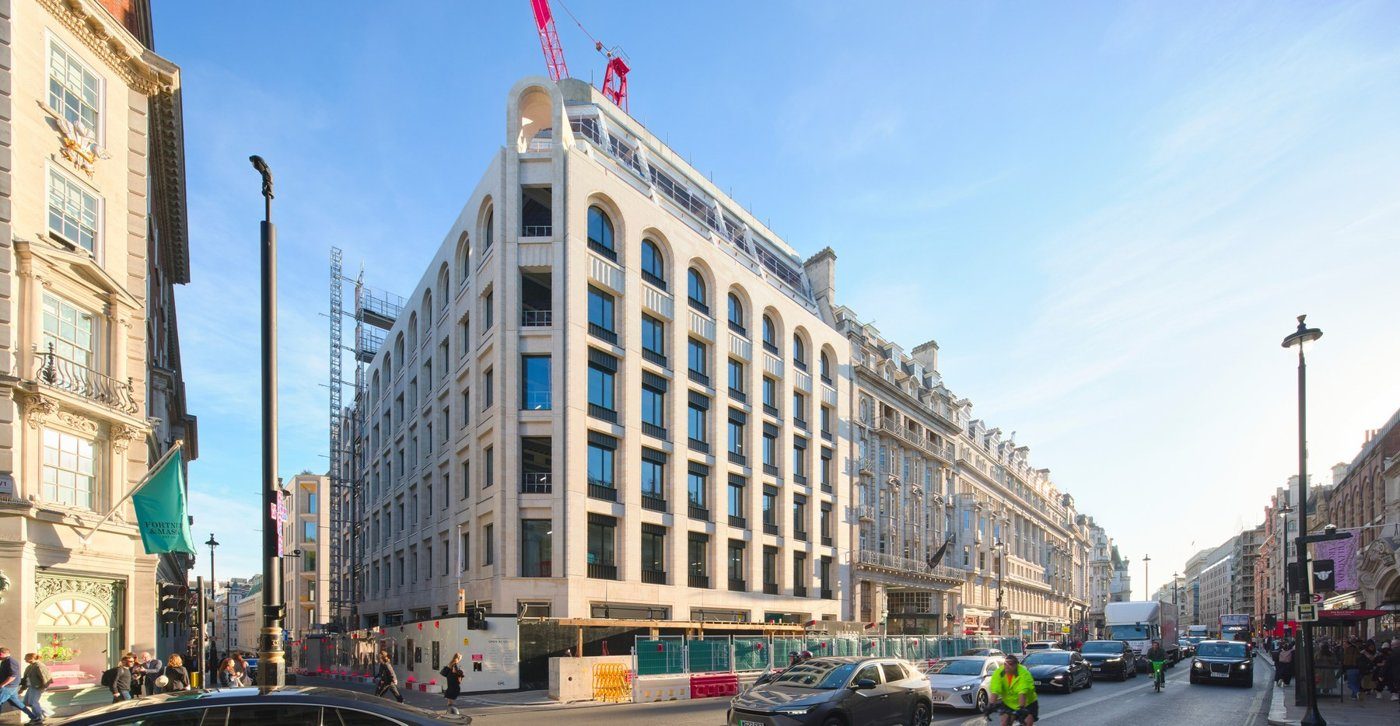
30 Duke Street widened the material loop
The second case moved beyond stone alone. Reclaimed facing material sat alongside reused structural steel, recycled aluminium and glass with recycled content, making circularity a coordinated project strategy rather than one isolated façade gesture. The lesson was that reuse works best when design teams know early what is available and allow those stocks to influence module sizes, interfaces and procurement.
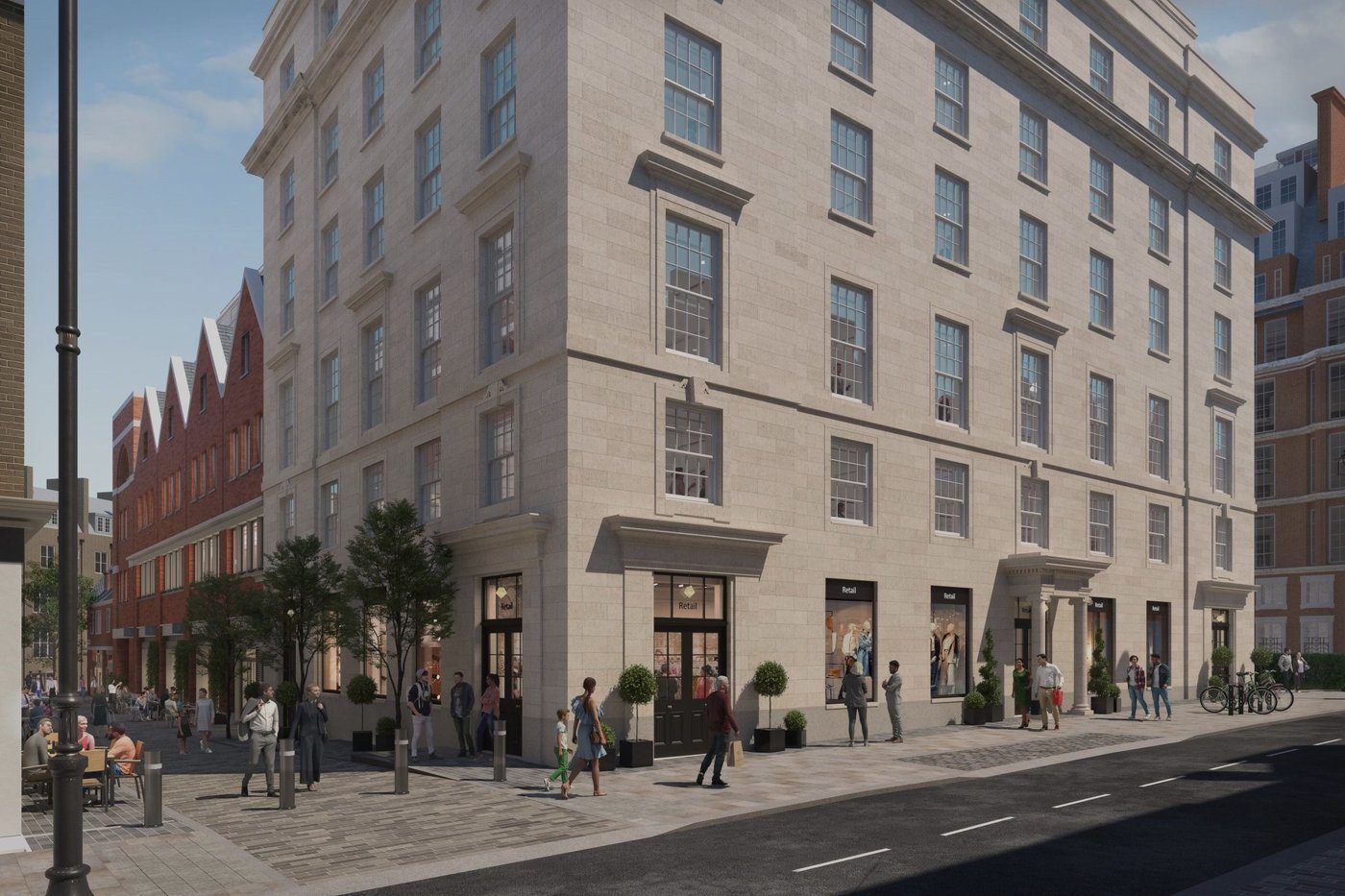
South Molton Triangle started with uncertainty
South Molton Triangle presented an older and less regular fabric. Ground-penetrating radar helped reveal a wall in which stone thickness varied from about 110 mm to as much as 380 mm. That discovery increased the reuse potential because some thick pieces could be cut to yield more than one usable face. Orthographic surveys recorded defects and staining before dismantling, while cleaning trials and range samples established how old and new material could sit together. The important shift is procedural. Reclaimed stone cannot be specified as though it were a fresh, uniform product arriving from a quarry. It comes with bedding direction, previous fixings, irregular dimensions and a weathered history. Once those variables are surveyed and fed into the design early, they become constraints that can be engineered around rather than reasons to discard the material.
Siamopoulos also stressed that reuse has to be committed early enough to influence appointments and programme. Panorama’s planning condition gave the team a clear mandate, but the same result can be pursued voluntarily when demolition contractors, stone specialists and façade designers are engaged before strip-out. Once pieces are smashed, mixed or sent away without records, design skill cannot recover the lost yield. The urban quarry begins with procurement discipline as much as with architectural enthusiasm.