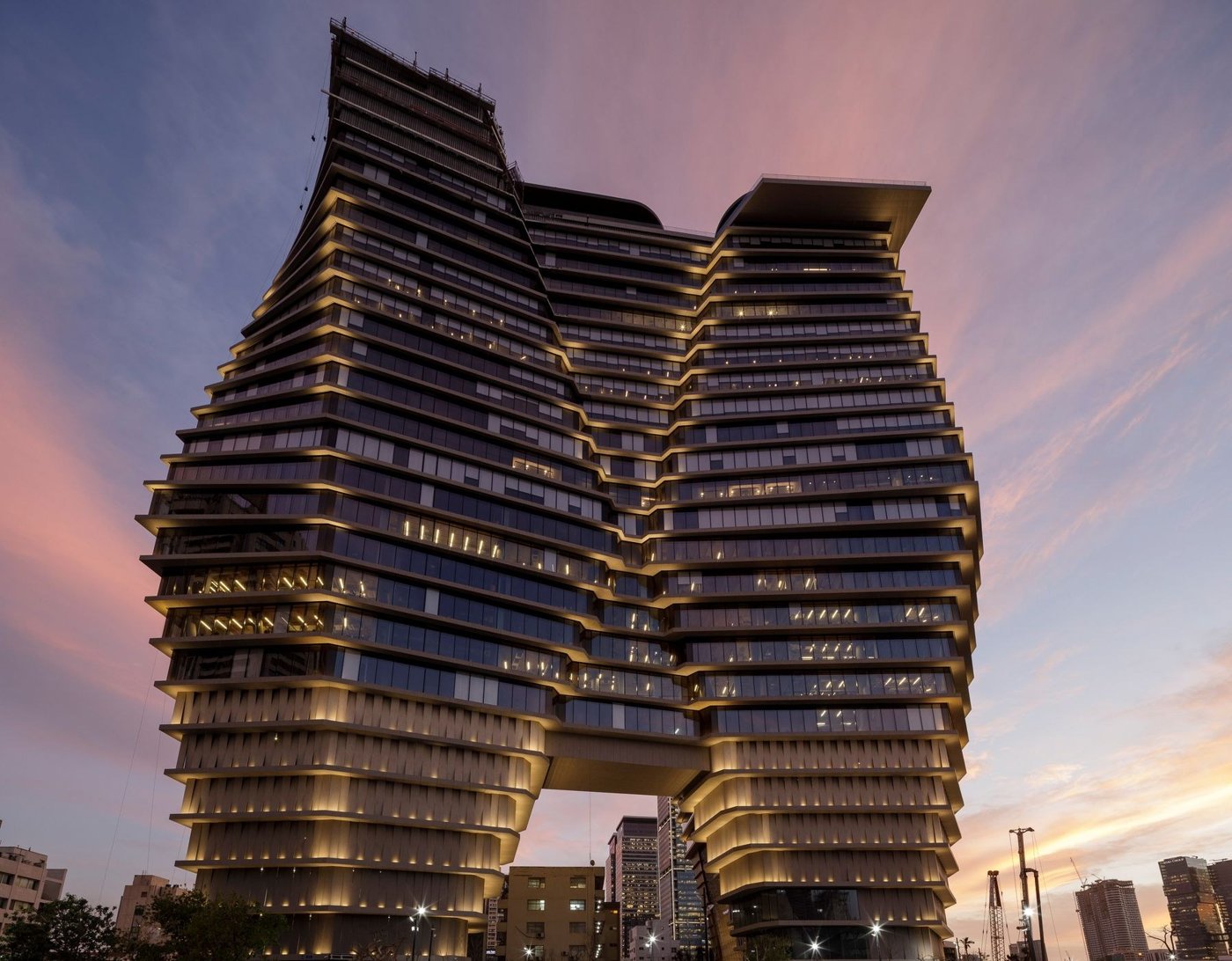
Ultracompact stone is presented as a hard-surface option for rainscreens, curtain walls and bonded applications. Dean White’s argument is strongest when material properties, manufacturing inputs, attachment strategy and service life are considered as one lifecycle decision rather than as a finish alone.
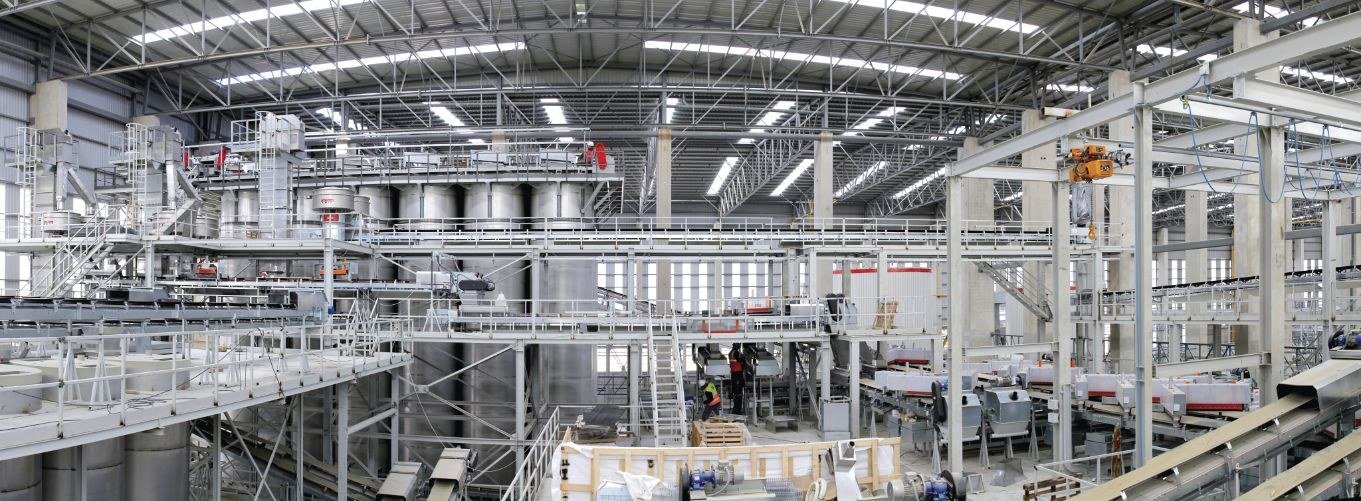
The material sits between familiar categories. It reads visually as a mineral surface, but it is manufactured as a highly controlled slab rather than quarried and cut like conventional stone. High pressure and temperature create a dense, low-porosity material with relatively predictable dimensions and surface characteristics. That consistency opens applications that would be difficult with thicker natural stone.
A façade material is also a manufacturing system
White frames the material through circular manufacturing, recycled mineral inputs and reduced waste, but the architectural question is broader. The environmental value of a façade product depends on how efficiently it can be fabricated, how much support it requires, how long it lasts and whether it can be maintained. A thin panel that allows lighter subframing may reduce material elsewhere in the wall; a difficult attachment detail can erase that advantage. Lifecycle thinking therefore needs to follow the material into the assembly.
Thinness creates opportunities and responsibilities
Large-format mineral panels can reduce dead load compared with thicker stone, making them attractive for renovations and for curtain-wall systems where weight is tightly managed. Low absorption and resistance to UV exposure support exterior use, while dimensional consistency helps with patterned panelisation. These characteristics, however, do not remove the need for careful structural design. A thin, rigid sheet behaves differently from a ductile metal panel. Edge distances, hole geometry, kerfs and undercut anchors have to be coordinated with panel thickness and support spacing. Handling during fabrication and installation becomes part of the risk model. The benefit of factory accuracy is realised only when the attachment strategy respects the material’s brittle behaviour and the building’s expected movement.
The rainscreen and curtain wall ask different questions
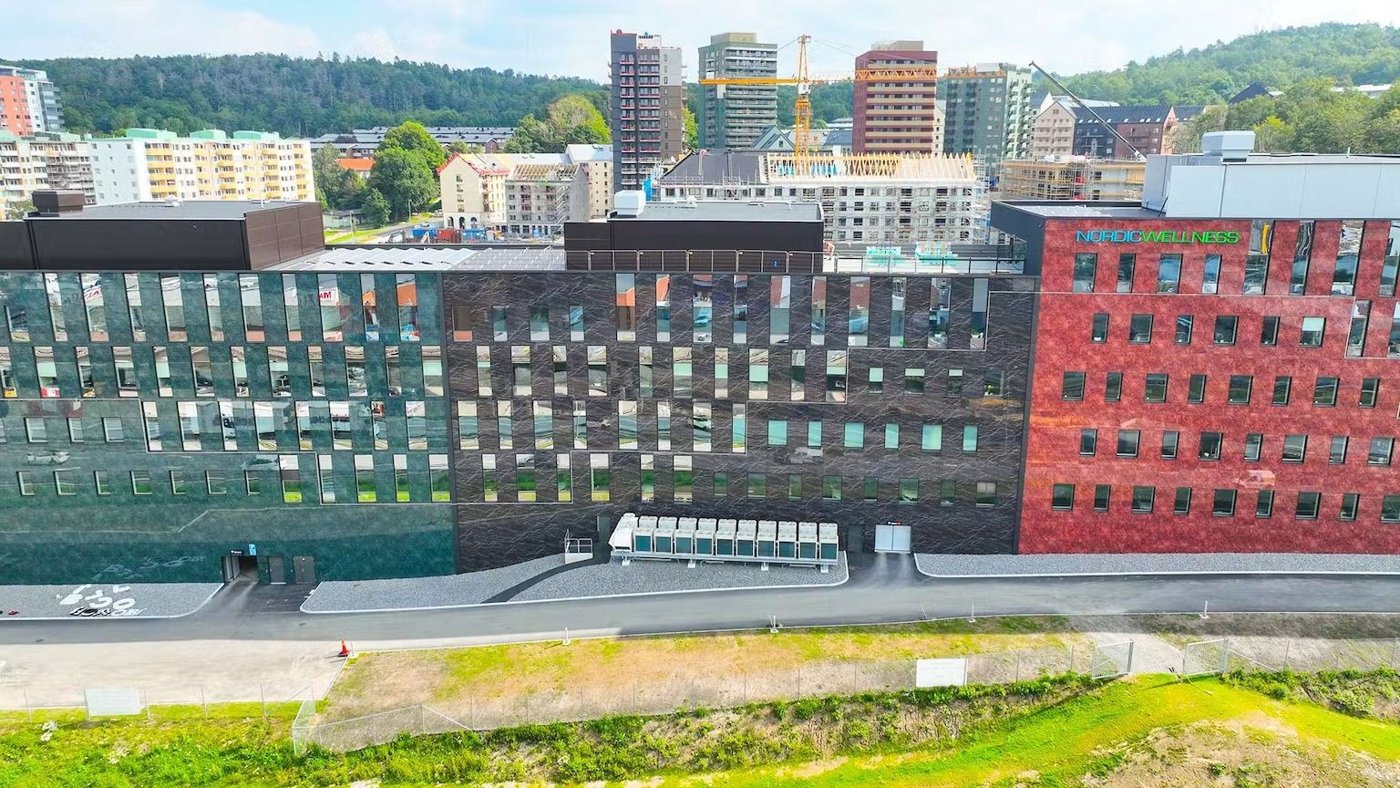
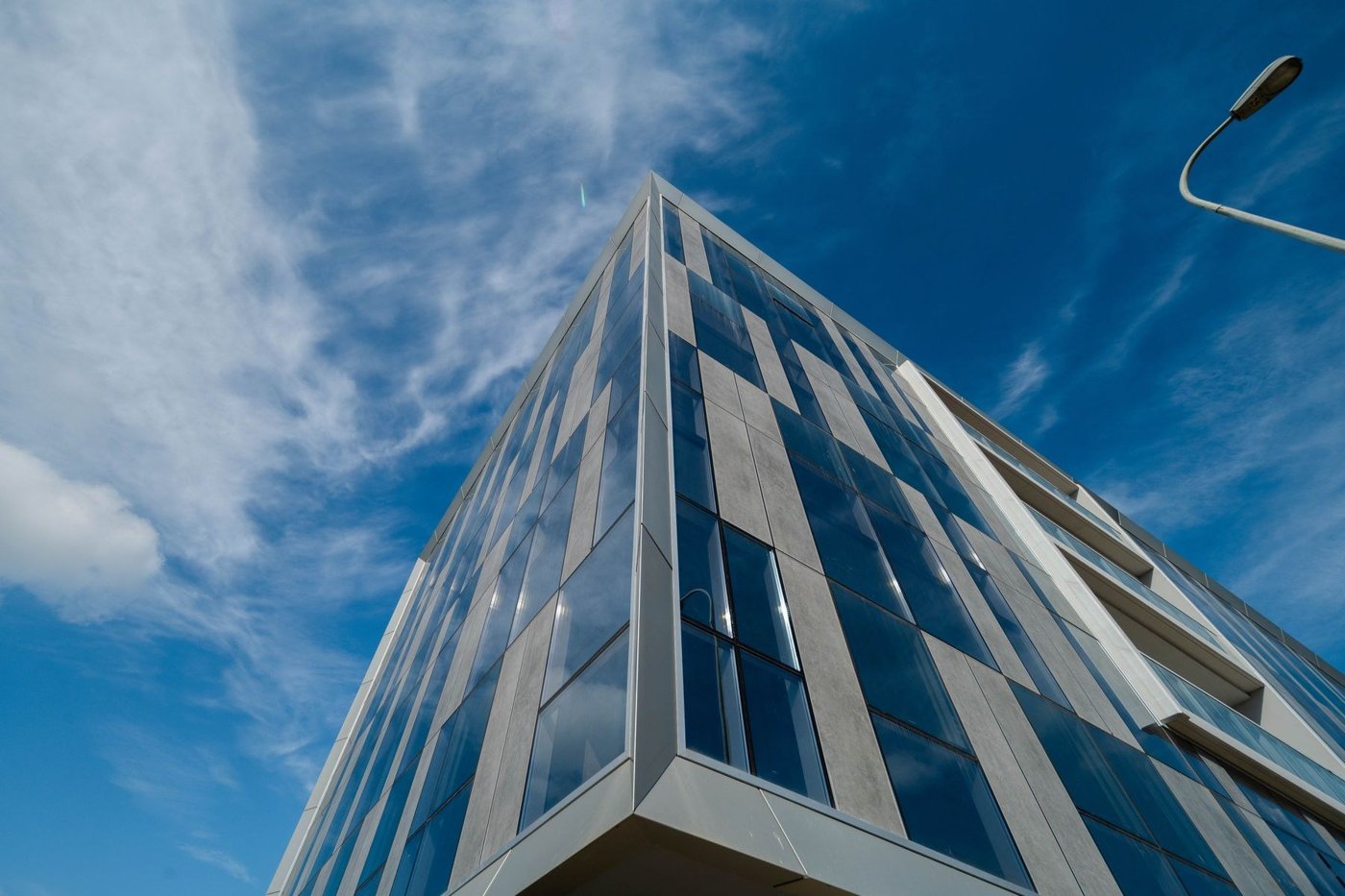
In a ventilated rainscreen, the panel is part of an outer weathering layer. The critical design issues include cavity drainage, bracket thermal bridging, attachment pull-out, wind pressure and the ability to replace individual pieces. In a curtain-wall integration, the panel may sit within a framed unit alongside glazing, making edge capture, structural silicone, unit movement and factory assembly more important. That versatility is useful, but it can encourage teams to treat the surface as interchangeable between systems. It is not. The same colour and thickness can require very different machining and reinforcement depending on whether the panel is directly adhered, mechanically fixed to a subframe or incorporated into a unitised façade. Specifications should therefore define the complete support method rather than naming the finish and leaving the attachment to later coordination.
Customisation increases the importance of data
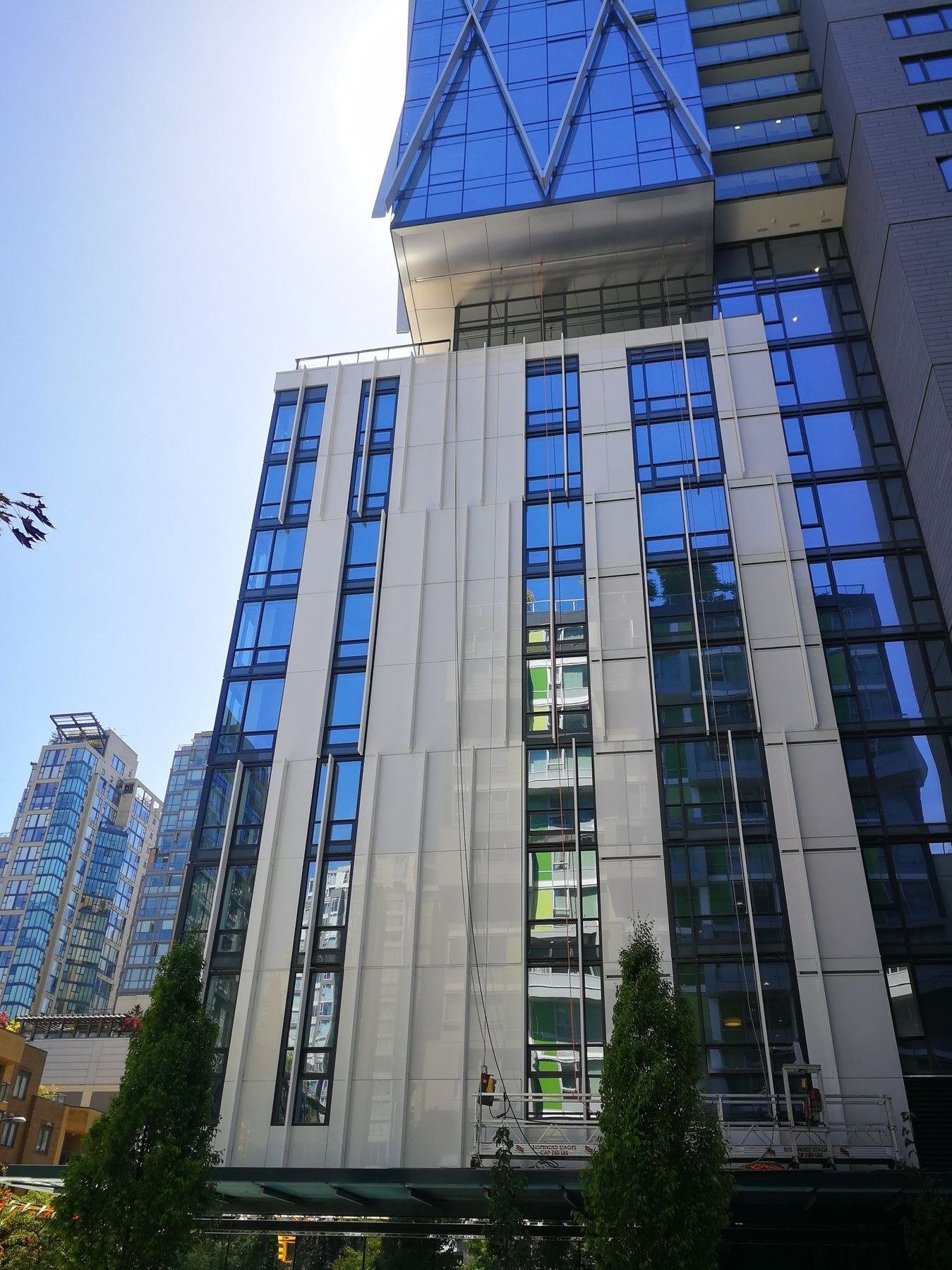
Complex façades often depend on thousands of panels that are similar but not identical. The Toha project illustrates how colour, thickness, geometry and ventilation requirements can generate a large family of cut pieces. Digital fabrication makes that possible, but it also shifts risk into information management. Every panel needs a reliable identity, orientation and machining record. This is where the material’s dimensional consistency becomes valuable. If slabs can be cut predictably, the façade can use a much richer pattern without requiring extensive wet fabrication on site. Yet the installation sequence still has to be rational. Panels need to arrive in the order they will be used; replacement pieces need traceable data; and subframing tolerances need enough adjustment to absorb construction variation without forcing field modification of the mineral surface.
Lifecycle claims need project-level judgement
Manufacturers increasingly provide recycled-content figures, carbon declarations and production-efficiency claims. Those are useful inputs, but project teams still need to evaluate the whole wall. Transport distance, subframe material, panel yield, replacement rate and service life all affect the realised impact. A durable surface that remains in place for decades can perform differently from one that looks efficient at manufacture but requires early replacement. The practical takeaway is to specify ultracompact stone as part of an envelope system. Panel thickness, machining, anchors, cavity, insulation, backup wall and access for maintenance should be resolved together. When those decisions are coordinated, the material’s thinness and fabrication precision can support both architectural freedom and lower lifecycle burden. When they are not, the façade is left relying on a surface property to solve problems that belong to the assembly.
The thin-panel approach also invites a closer look at replacement strategy. A mechanically fixed rainscreen can allow an individual damaged panel to be removed, whereas bonded applications may make local replacement more disruptive. Curtain-wall integration adds another variable because panel replacement can depend on whether the mineral sheet is captured inside the unit or attached as an external cassette. The sustainable option is therefore not simply the application with the least material; it is the one whose likely maintenance can be carried out without destroying adjacent work.
Specification can support that by requiring panel schedules, machining records and spare-material strategies on highly customised projects. Where thousands of pieces are individually cut, future replacement becomes much easier if the geometry and finish of each panel remain traceable. The same data that drives fabrication can become an asset-management tool. White’s examples suggest a broader principle for digitally manufactured façade materials: design information should outlive construction. If owners receive a reliable record of panel type, fixing method and source material, a complex patterned elevation has a better chance of being repaired rather than partially replaced when damage occurs years later.
Designers should also distinguish between material durability and visual ageing. A panel may remain structurally sound while stains, sealant shadowing or colour variation change the appearance of the elevation. Joint design, drainage and cleaning access influence whether a hard surface retains its intended character. Large-format panels can reduce joint count, but each joint becomes more important because it manages tolerance, drainage and replacement. The façade grid therefore deserves as much attention as the slab finish itself. On high-rise or inaccessible façades, the maintenance method should be resolved before panel size is finalised. Can a damaged piece be reached from a building-maintenance unit? Can it be removed without disturbing panels above? Is the anchor accessible from the cavity or only from the exterior? These practical questions determine whether the theoretical service life can actually be achieved. A durable material is only as durable as the system that allows it to be inspected and repaired.