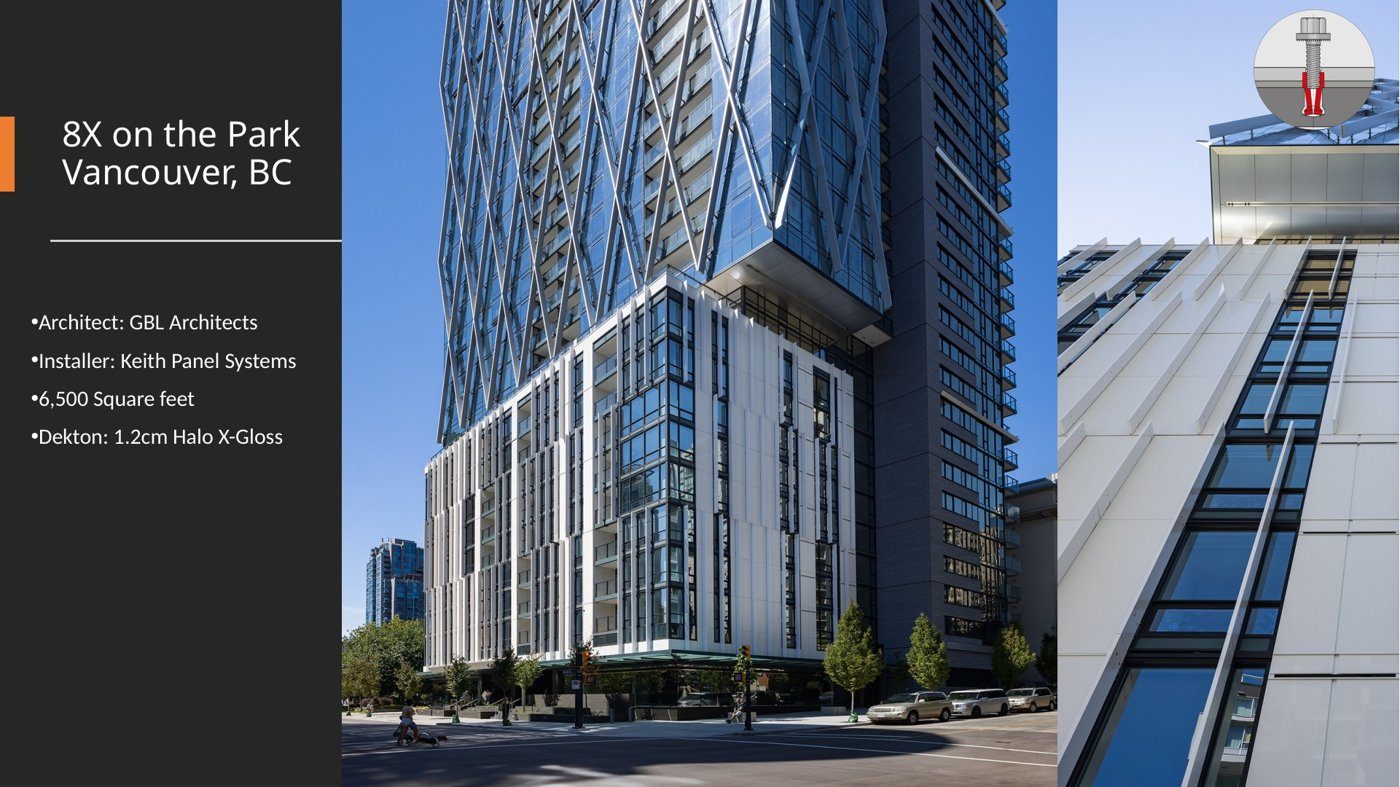
Dean White set out the case for ultracompact stone as a façade material, a slab pressed under tens of thousands of tonnes and fired to a near-liquid state, giving it UV stability, zero water absorption and freeze-thaw resistance, and framed its sustainability around a circular, carbon-neutral manufacturing model.
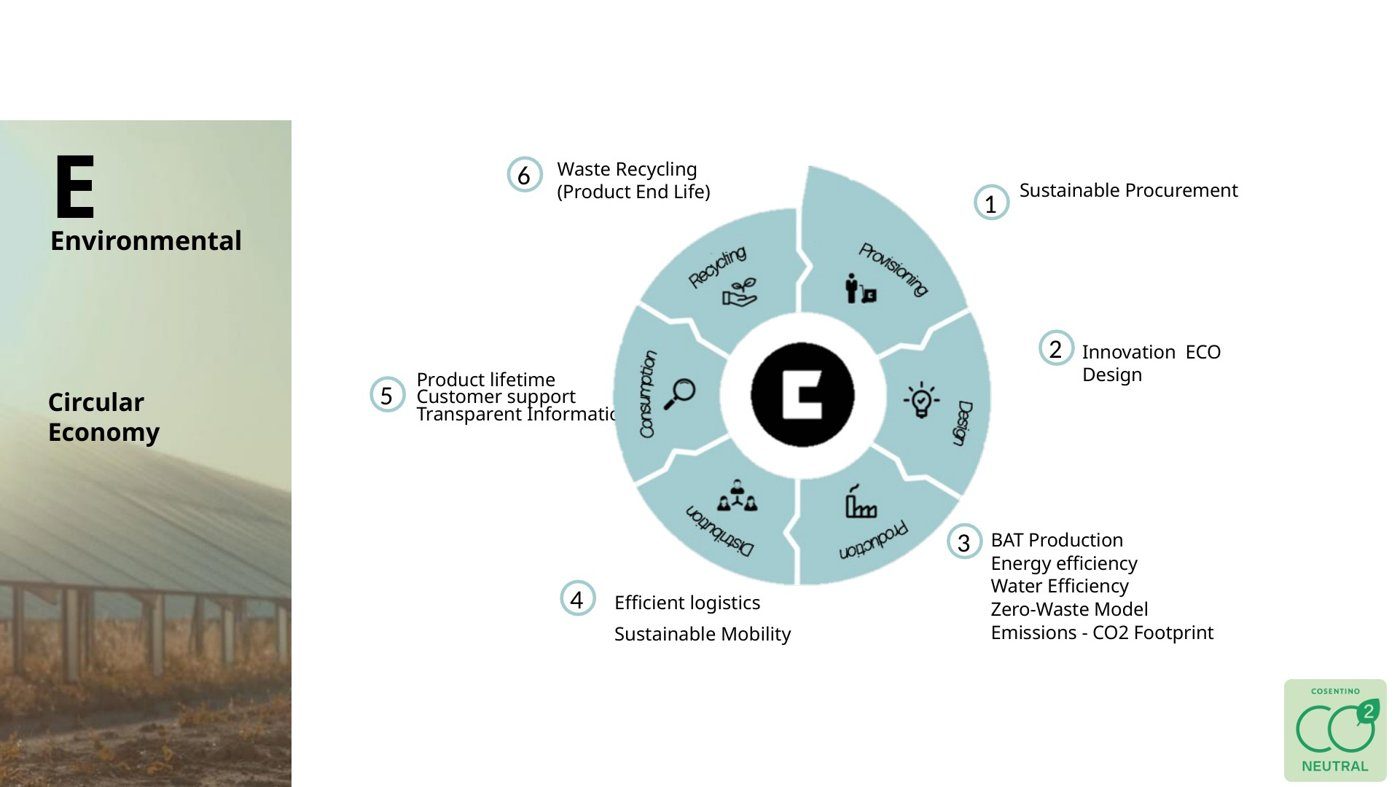
White made a point of framing sustainability from the factory rather than the finished wall, the embodied side of the story that a slab of ultracompact stone carries before it ever reaches a building. It is the newest of three lines from a manufacturer that began as a marble business in the 1940s and remains one of the largest natural-stone exporters in the world, introduced in 2013 as a mineral-based, sintered surface.
A circular manufacturing model
The manufacturing case rests on inputs. The campus runs on renewable electricity, drawing on what White described as Europe's largest self-consuming solar farm, which supplies about a quarter of demand with the rest bought from certified renewable sources. In a dry part of southern Spain, the water used in production is 99 per cent recycled with no discharge, and the firm treats water for surrounding communities too. The high-temperature ovens still run on natural gas, offset for now with carbon credits while the company moves toward biomass and hydrogen; production offcuts are fed back into the slabs. With a service life quoted at sixty years or more and full recyclability, the material is calculated as carbon-neutral cradle-to-grave.
How the material is made
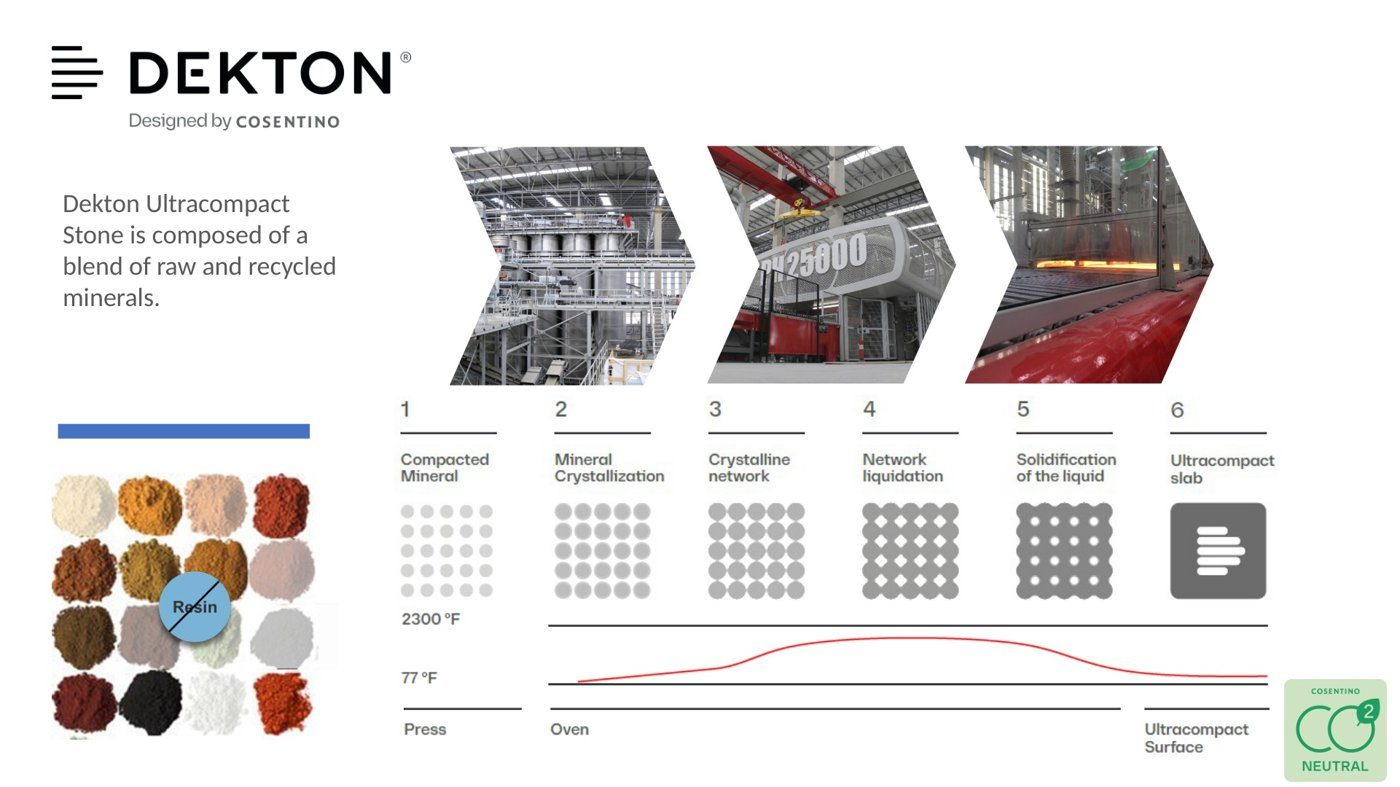
The process is worth understanding because it dictates how the material behaves. More than twenty minerals are pulverised, mixed to a slurry, dried into a slab and pressed, under the equivalent, White said, of two and a half Eiffel Towers, which is where the "ultracompact" name comes from. Mineral pigments are laid on without dyes, resins or binders, and the slab is then fired in ovens some 200 metres long until it nearly liquefies and its molecules realign on cooling. The result is UV-stable, non-combustible, effectively non-porous and dimensionally consistent, with zero water absorption and freeze-thaw resistance drawn from the same family of technology once used for space-shuttle tiles.
What it does on the façade
Those properties translate into practical advantages: graffiti washes off a surface that will not absorb it, colour holds for decades, and a fibreglass mesh on the back keeps a panel attached if it is struck at height. At seven on the Mohs scale it resists scratching and impact, in Miami-Dade missile testing, a half-inch panel shatters the two-by-four fired at it. Because it is a slab rather than an extrusion, though, the material is dead flat with no profiles, so design works in flat planes and segmented curves.
Attachment and application
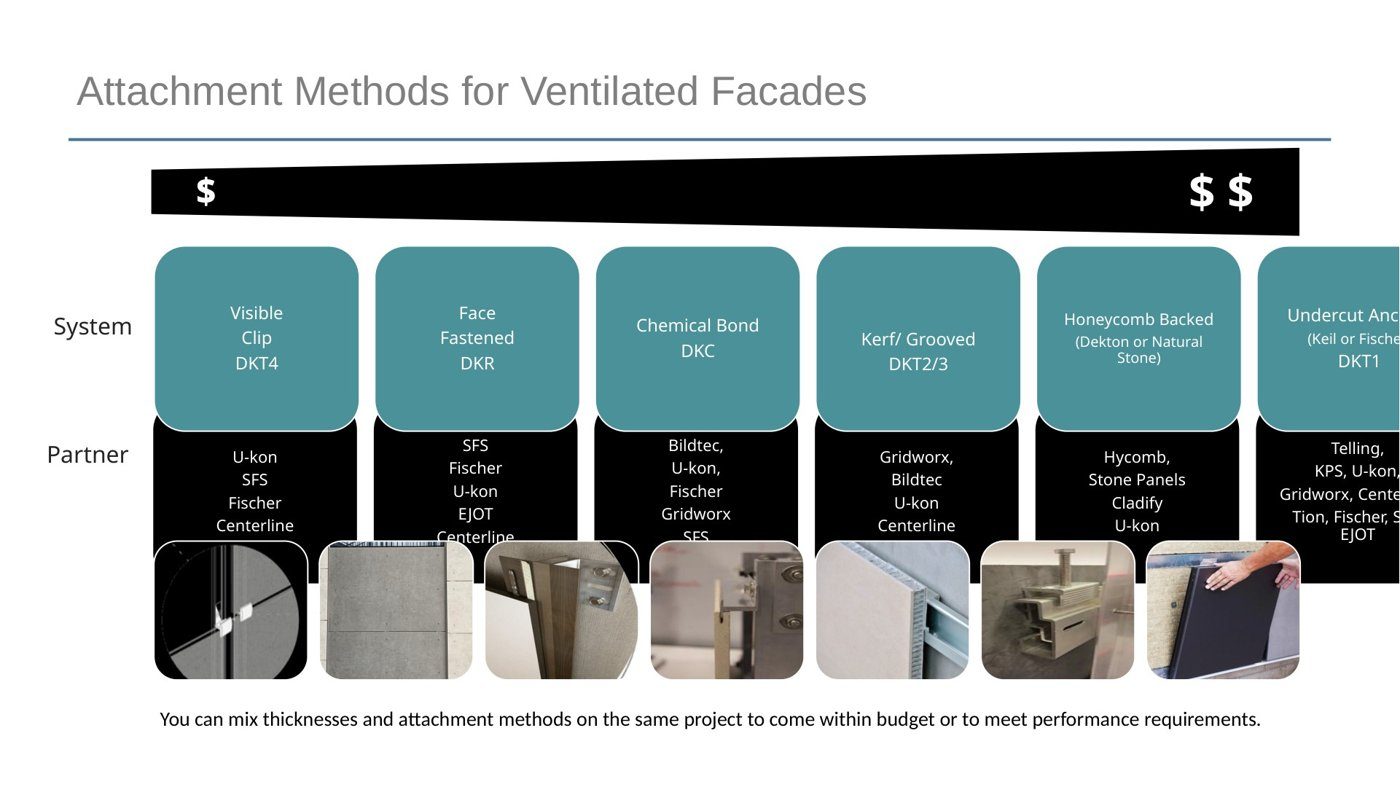
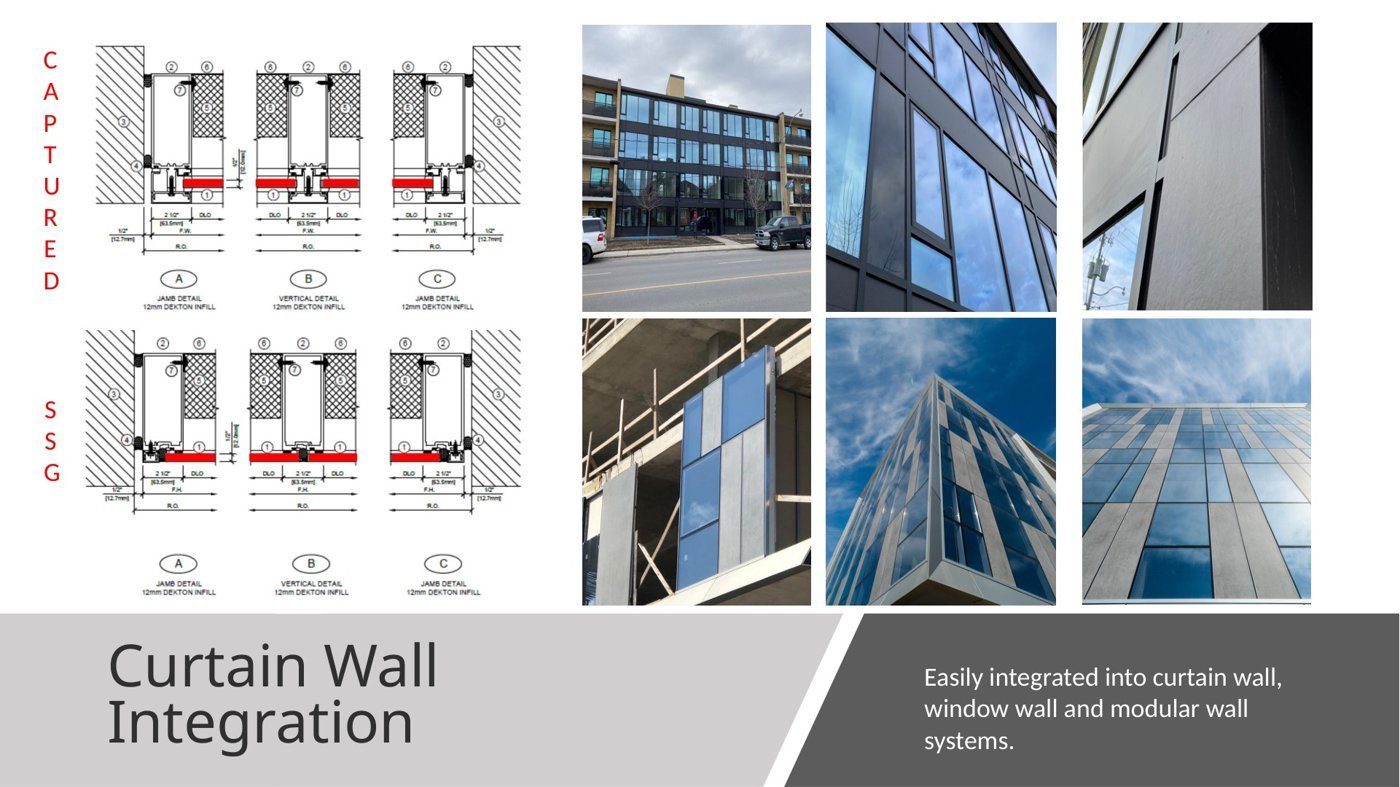
That opens a design point White pressed: thickness and fixing can vary across a building, a thicker, more durable panel low down where it takes knocks, a thinner riveted one above, without losing the design intent. The material takes ventilated rainscreen, curtain-wall, window-wall and unitised attachment, from face-fixing to concealed and structural-adhesive methods, with panel gaps as tight as an eighth of an inch when unitised.
He closed on a high-rise case in Tel Aviv, an inverted tower with mechanical space below, its panels folded into an X-shaped pattern for ventilation and hung on undercut anchors, and made the broader pitch that a single hard surface can carry a design from interior to façade to pool deck.