The Arena at Diriyah Gate uses computational design to turn an expressive geometry into families of buildable GRC components. Deniz Arslan and Tim Logan show that the value of computation lies in decomposition, repeatability and data control rather than complexity for its own sake.

The geometry is the kind that can easily be described as “parametric” and left at that. Arslan and Logan instead focus on computational thinking: abstraction, decomposition, pattern recognition and algorithmic reasoning. Those are useful because they turn a visually complex façade into a sequence of design decisions that can be checked, repeated and communicated.
Computation is a way of organising decisions
The aim is not to maximise the number of unique panels a digital model can generate. It is almost the opposite. A successful computational workflow identifies which differences are architecturally meaningful and which can be rationalised into common families. That distinction is what makes an expressive concept compatible with mould production, shop drawings, tolerances and installation.
Panel families are more valuable than unique panels
GRC lends itself to moulded geometry, but mould cost and production time increase quickly when every panel is treated as unique. The design team therefore needs a strategy for grouping surfaces. Curvature, edge condition, size and orientation can be analysed to determine where one mould can produce several pieces or where controlled variation can be achieved without changing the basic production method. This is a classic trade-off between geometric fidelity and manufacturing efficiency. Simplifying too aggressively can flatten the architectural character. Preserving every theoretical variation can make the façade uneconomic and difficult to quality-control. Computational clustering gives the team a way to negotiate that boundary with evidence rather than intuition. The result is not a simpler-looking building; it is a more structured route to producing the same visual complexity.

Interfaces are where rational systems collide
The arena envelope includes more than GRC. Metal panels, louvers, several curtain-wall types, soffits, skylights and roof assemblies all meet the sculpted outer skin. Each system has its own grid, tolerance and movement behaviour. A panelisation strategy that works perfectly in isolation can fail where it reaches an entrance, parapet or glazed opening. This is where the shared digital model becomes especially valuable. The team can map system boundaries, identify recurring edge conditions and test whether panel joints align with the underlying support. Repetition at the centre of a field is relatively easy; repetition at interfaces is harder. The more those conditions can be standardised, the less site work is required to absorb mismatches between trades.
Performance criteria can drive geometry
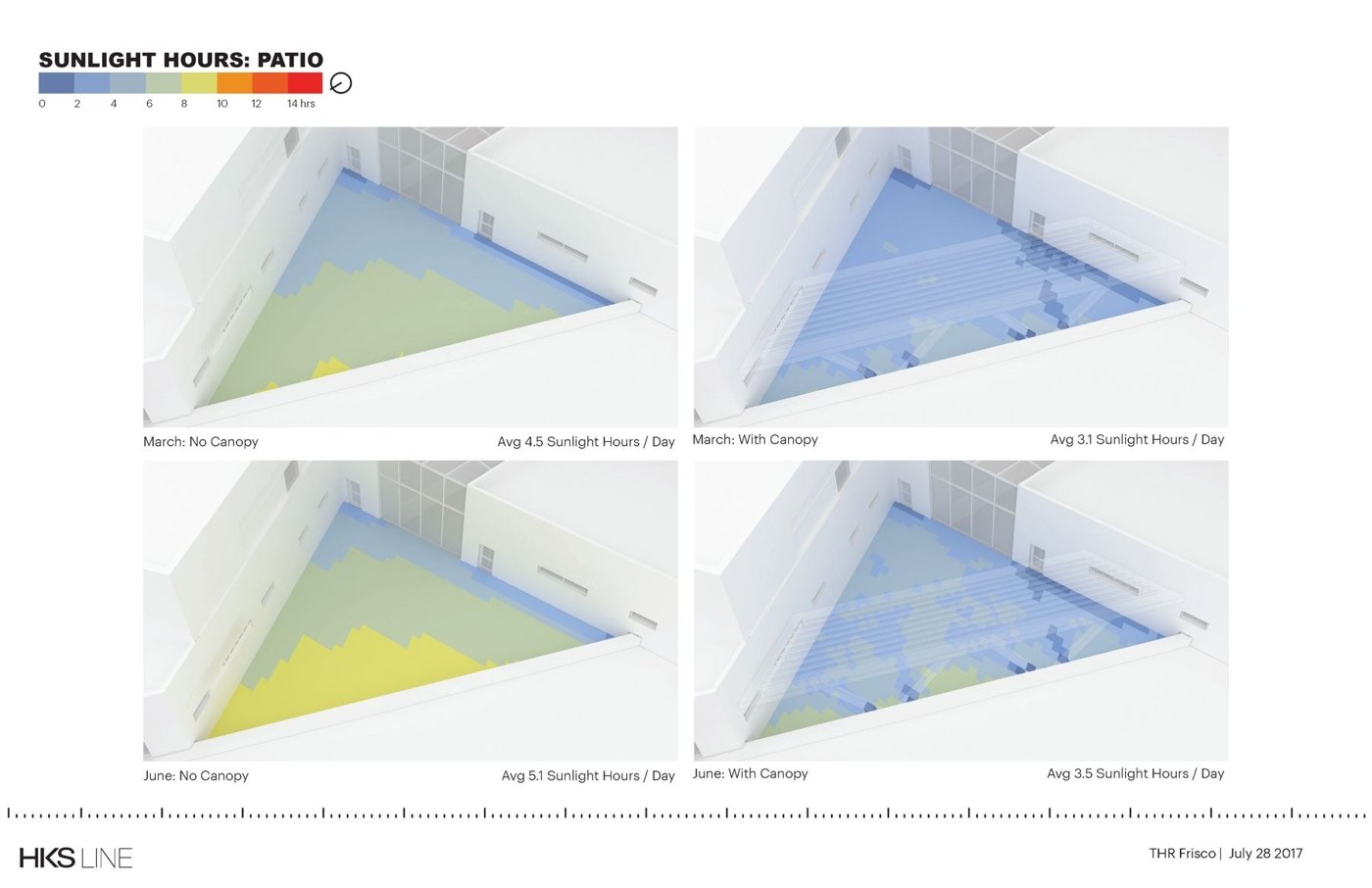
Computational workflows also allow environmental questions to enter the same decision space as panelisation. The team used data-driven studies to evaluate canopy geometry against daylight hours. Rather than adding shading after the form was fixed, performance could inform the shape and depth of the envelope. This does not mean that an algorithm produces the architecture. It means that the consequences of geometric options can be compared quickly. Daylight, solar exposure, view, material quantity and panel count can all become variables in the design conversation. The architect still decides which trade-offs matter, but the decision is supported by a much clearer picture of what each option does.
The deliverable is reliable information
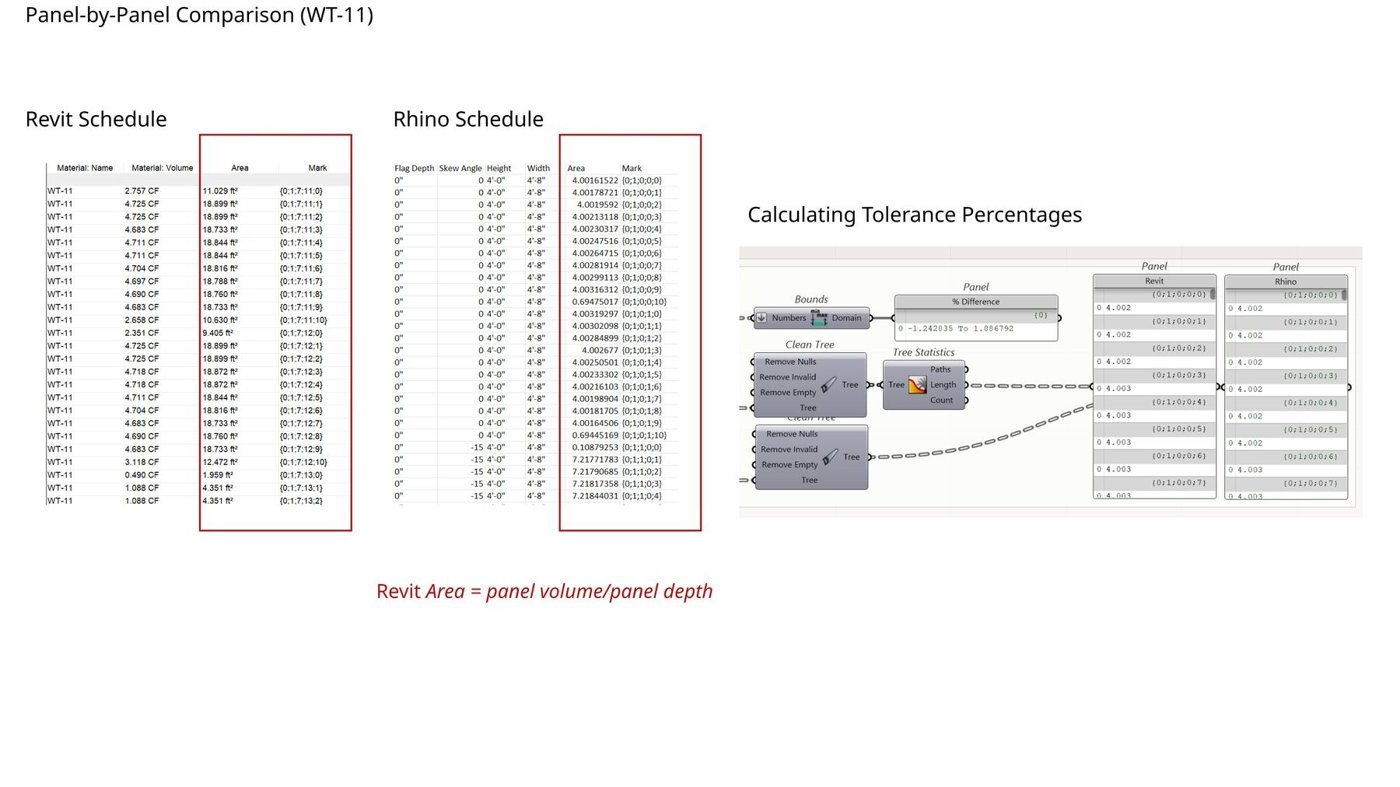
On a project with extensive variation, the final value of computational design is the consistency of the information handed to fabricators and contractors. Panels need stable identifiers, geometries, support points and relationships to neighbouring systems. Changes must propagate without creating conflicting drawings. The model becomes a production database as much as a visual representation. That requires discipline. Scripts have to be transparent enough for the team to understand; naming and version control have to remain stable; and outputs need to match the formats used downstream. When those conditions are met, computation reduces the gap between design intent and fabrication. The arena demonstrates that digital sophistication is most useful when it removes uncertainty from a difficult façade rather than when it merely produces a difficult shape.
A rationalised model also provides a way to manage change. Complex projects rarely move from concept to fabrication without revisions to programme, structure or services. If panel geometry is generated from explicit rules, a change to an opening or support line can be propagated through the affected family and the consequences, new moulds, changed panel counts or altered interfaces, can be measured. Manual modelling makes that same change slower and more prone to inconsistency. The workflow therefore benefits from keeping design variables meaningful. Parameters should correspond to architectural or fabrication decisions such as curvature range, panel width, joint offset or support spacing, not become an opaque collection of numerical controls that only one specialist understands. That makes computation shareable across the project team and allows fabricators to challenge assumptions. Arslan and Logan’s case study points to a mature use of digital design: the goal is not authorship by algorithm, but a repeatable method for translating complex intent into a limited number of manufacturable rules and a reliable set of production data.
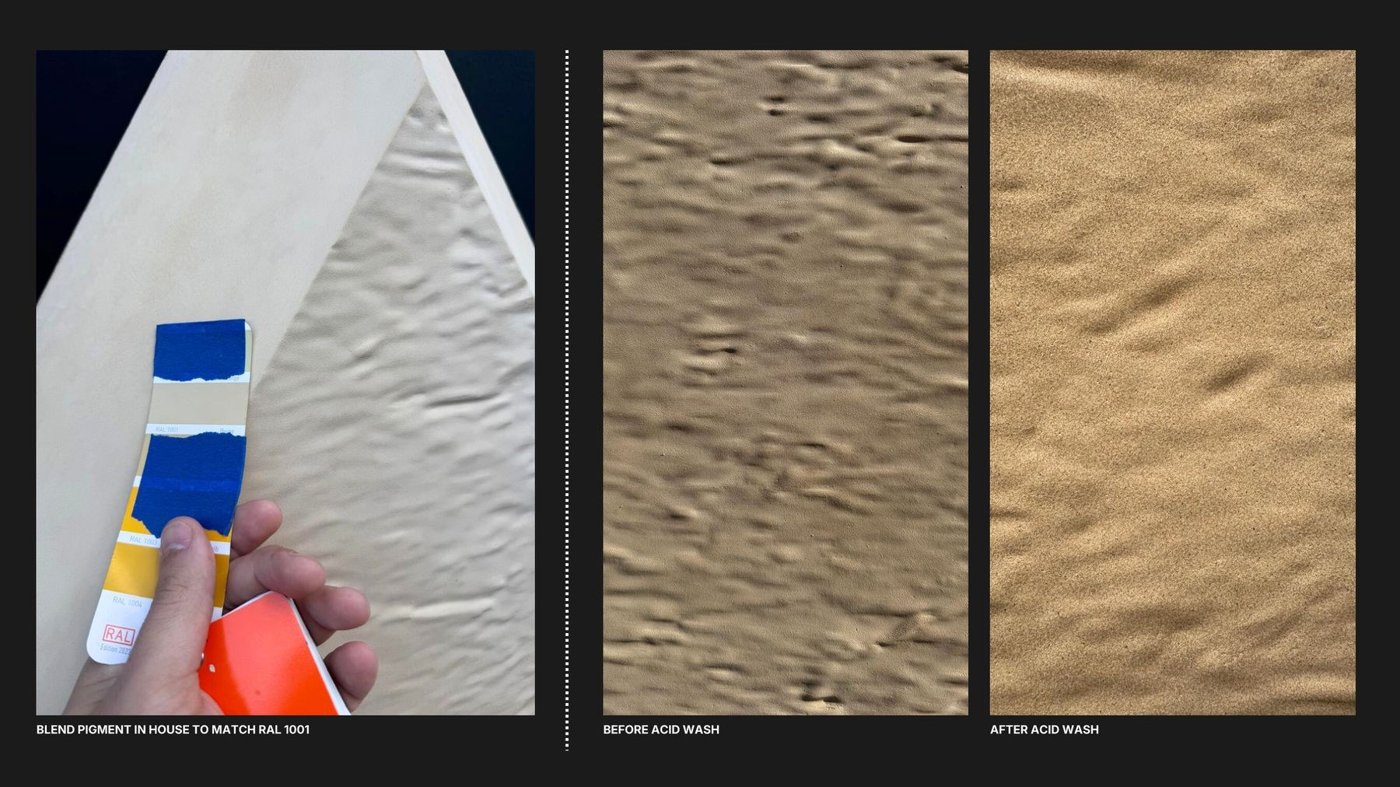
Mock-ups provide the point where computational rules meet physical tolerance. A digital family may appear perfectly rational, yet mould release, GRC thickness variation, embedded anchors and support adjustment can expose assumptions that are invisible in the model. Building representative corner, edge and transition conditions allows the team to calibrate joint width and attachment tolerances before those assumptions are repeated across hundreds of panels. The feedback should flow back into the computational definition rather than be handled as one-off field knowledge. If a mould needs a larger draft angle or an anchor requires more edge distance, the rule set can be updated and every affected panel regenerated consistently. That closed loop between prototype, model and production is what turns computation into a construction tool. The project’s complexity is manageable because the team can learn once and propagate the lesson through the system instead of discovering the same problem repeatedly on site.
Fabrication feedback can also refine aesthetic tolerances. If mould production shows that a theoretical curvature difference is visually negligible, several panel types can be merged without perceptible loss. Conversely, a small change at a prominent edge may need to remain unique because it controls a shadow line or entry condition. Computational rationalisation is strongest when it is guided by perceptual importance as well as numerical similarity. That keeps efficiency from becoming a blunt simplification tool. That judgement also has to be visible in the contract information. Panel families, mould groups and exceptions should be communicated in a way that a fabricator can audit, rather than existing only inside an authoring script. Clear schedules and identifiers make the computational logic legible to the people responsible for producing and installing the work.