


Nandakumar BS of the façade consultancy Evermark made the case that value engineering is not cost-cutting but its opposite, a systematic way to hit the required performance at the lowest life-cycle cost without compromising the architect’s intent. He proved it with two projects: a car-park screen re-solved from an expensive 150 mm box fin into a C-type louvre that keeps the same face at a fraction of the depth, cutting the bill from ₹5.9 to ₹2.8 crore; and a tower of tapering fins walked through GFRC, HPL and solid aluminium before it landed on the right material at the right price.
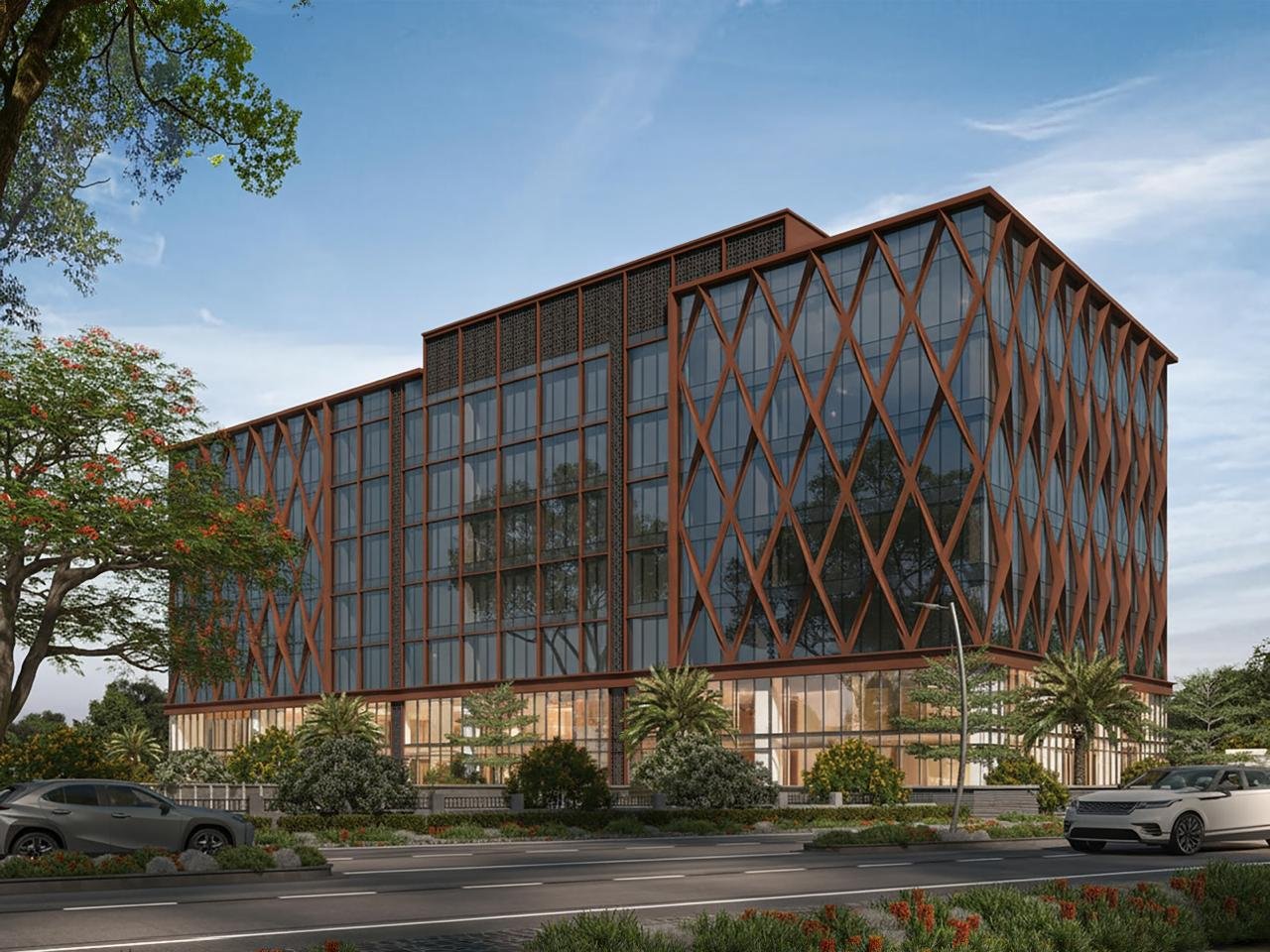
The subject was the one the industry finds least glamorous: cost. Value engineering, he insisted, is not slashing a budget but very nearly its opposite, a systematic method of improving the value of a project by analysing its functions and achieving the required performance at the lowest life-cycle cost, without compromising quality, reliability or safety. The formula he keeps in view is value as function over cost: the best possible function at the lowest cost, judged across the whole life cycle, basic cost, installation, performance, rather than the sticker price alone.
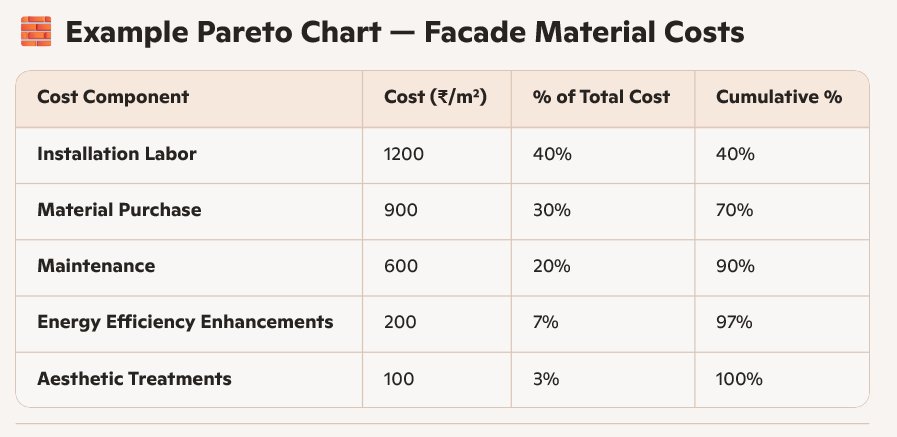
He first described how the moment arrives. A consultant takes the architect’s intent, works up the design-basis report and the best technical solution, prices it, and hands the client a budget, at which point the client calls a value-engineering meeting. The rule going in is fixed: the intent is not up for compromise, because neither client nor consultant wants that; only the cost has to come down. Everything that follows is the search for a way to hold the first while doing the second.
His first case was a ground-plus-22 tower in Hyderabad, where the parking levels were to be screened with the architect’s boxless fins, 100 by 150 millimetres at 250-millimetre centres, with steel backing. Priced at roughly ₹12,800 a square metre across 4,640 square metres, that parking screen alone came to about ₹5.9 crore, as much as the building’s actual façade. The client balked: not that much, and not on the car park.
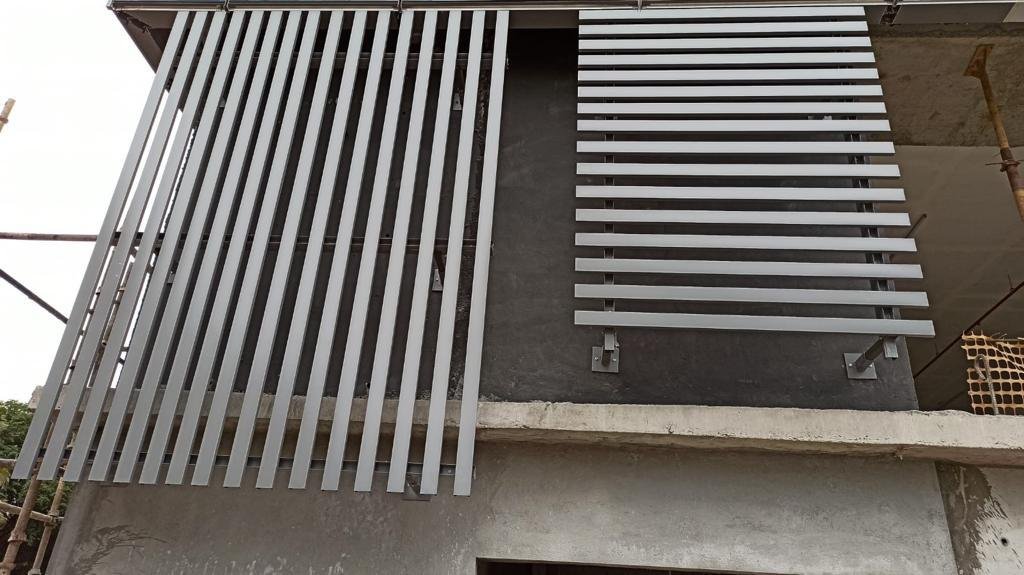
So Evermark worked the options, and each failed for an instructive reason. A pre-coated galvanised sheet was cheaper, at about ₹4.6 crore, but blocked daylight into the parking, raised green-rating issues, and changed the intent. Wood-plastic composite panels dropped the bill to ₹2.8 crore but looked cheap the moment you glanced down at them from the smart offices above. Powder-coated Swiss metal panels, which the client liked, came back at ₹6 crore and blew the budget. Perforated sheet on alternate panels reached ₹4.2 crore, but the car-park parapet then showed through the gaps and the architect balked on looks. None of them held both ends of the problem at once.
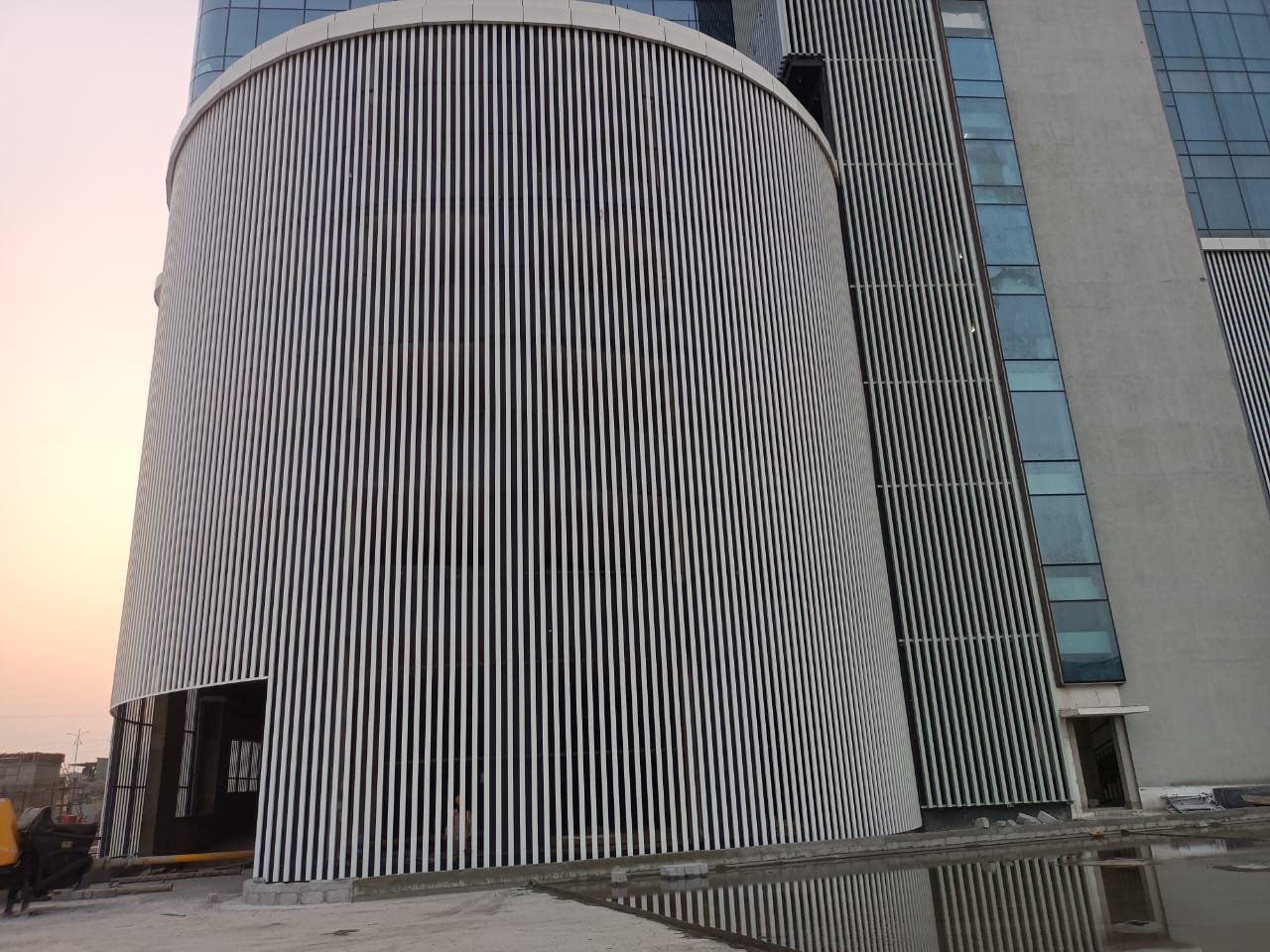
The answer, when it came, kept the original’s face and changed only its section: a C-type louvre of the same 100-millimetre width but with the depth cut from 150 to 35 millimetres, in powder-coated aluminium and galvanised steel, look and feel identical, cost roughly halved. Mockups settled the remaining questions, of orientation, spacing and colour, and once signed off the louvre brought the ₹5.9-crore screen down to about ₹2.8 crore, a reduction of some 55 per cent with no loss of the architect’s intent. Function over cost, achieved.
His second case was a harder brief in Bangalore. A client had seen a vertical building somewhere in Europe and wanted one exactly like it, but had already built the structure, had no elevation, only a handful of drawings, and no real idea what an architect or a façade consultant does. Evermark nearly walked away, architecture not being its core, then agreed to appoint its own architect, survey the site, take the measurements and develop the intent itself, translating a vertical reference into the linear building that actually stood there. The façade’s demand was a fin that tapers, bulges out and tapers again, changing every two floors.
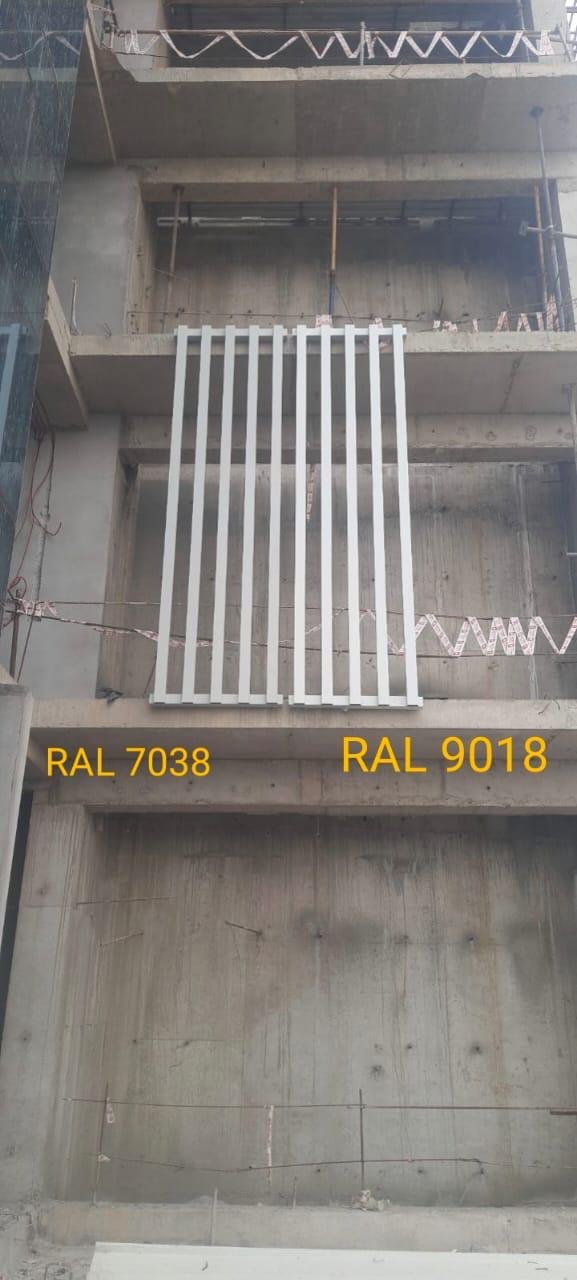
Then came the material hunt. GFRC was workable but heavy, engineering-hungry and a maintenance worry at about ₹1.6 crore; HPL fins, which, as a consultant, Nandakumar was reluctant to put on a building elevation at all, fine as they are for interiors and entrances, did not convince at ₹2 crore. Aluminium brought them back: a solid three-millimetre sheet, chosen with fire in mind, but almost impossible to bend into a three-dimensional form where four joints meet and the fin swells and narrows. The build finally landed on fire-rated composite panel, proven through mockups at around ₹2 crore. The thread through both jobs was the same: value engineering earns its name only when the cheaper answer still does the job the architect drew, anything less is merely cost-cutting.