


Powder-coated metals are often specified by colour and warranty, but Gerd De Lathauwer focuses on how pretreatment, coating chemistry, exposure and maintenance determine real service life. A durable finish is a system whose long-term appearance is designed, not assumed.
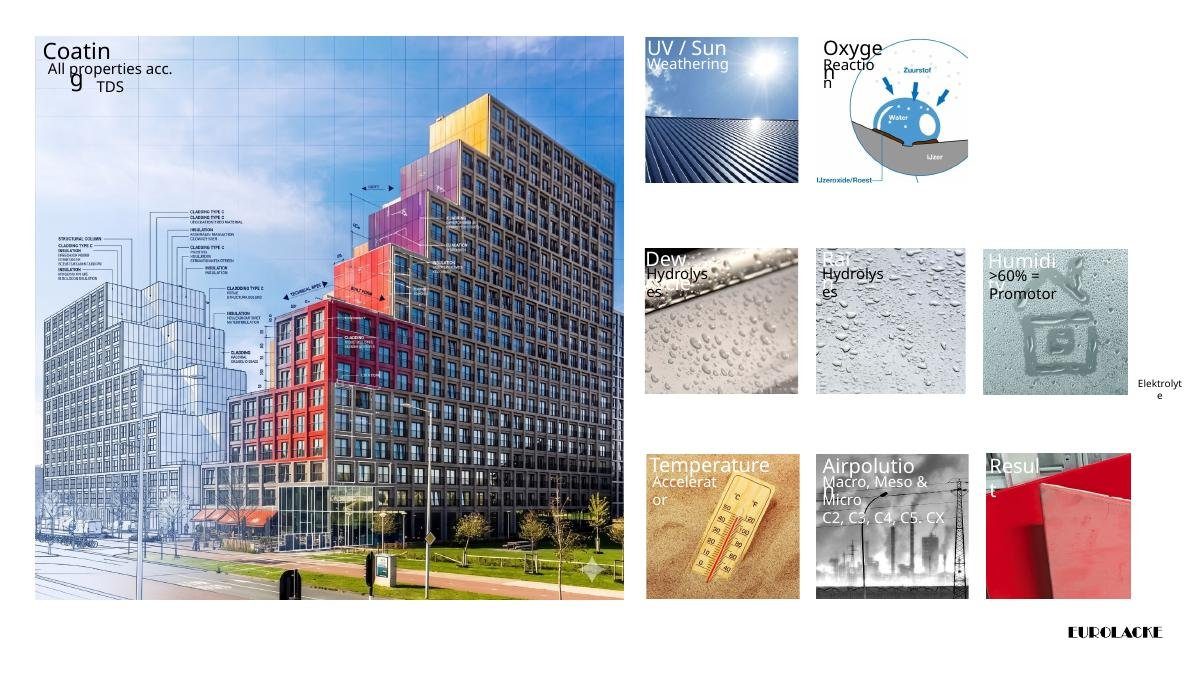
The visible surface of a metal façade may be only a hair-thin coating, but it carries much of the building’s perceived age. Gerd De Lathauwer argues that powder-coating specifications should be written around service life rather than colour alone. UV, moisture, heat, pollution and salts act every day, and the finish selected at completion determines whether the façade still looks intentional decades later, or needs an avoidable replacement cycle.
Weathering attacks both chemistry and appearance
De Lathauwer separates the main exposure mechanisms: ultraviolet radiation breaks chemical bonds; oxygen drives oxidation; dew and rainfall introduce moisture; airborne contaminants settle on the surface; heat accelerates reactions; and corrosion risk rises from benign C1 conditions toward severe CX environments. He notes that humidity above about 60% can accelerate corrosion processes. Maintenance matters because contaminants left on the surface extend those exposure periods. “Low maintenance” should not be interpreted as “no maintenance,” particularly where access is difficult.
Arval shows the difference between technical and aesthetic life
The Arval headquarters in Houten was completed in 2007 with a standard Class 1 powder coating. Eighteen years later, De Lathauwer describes the technical condition as broadly serviceable but the visual condition as severely degraded.
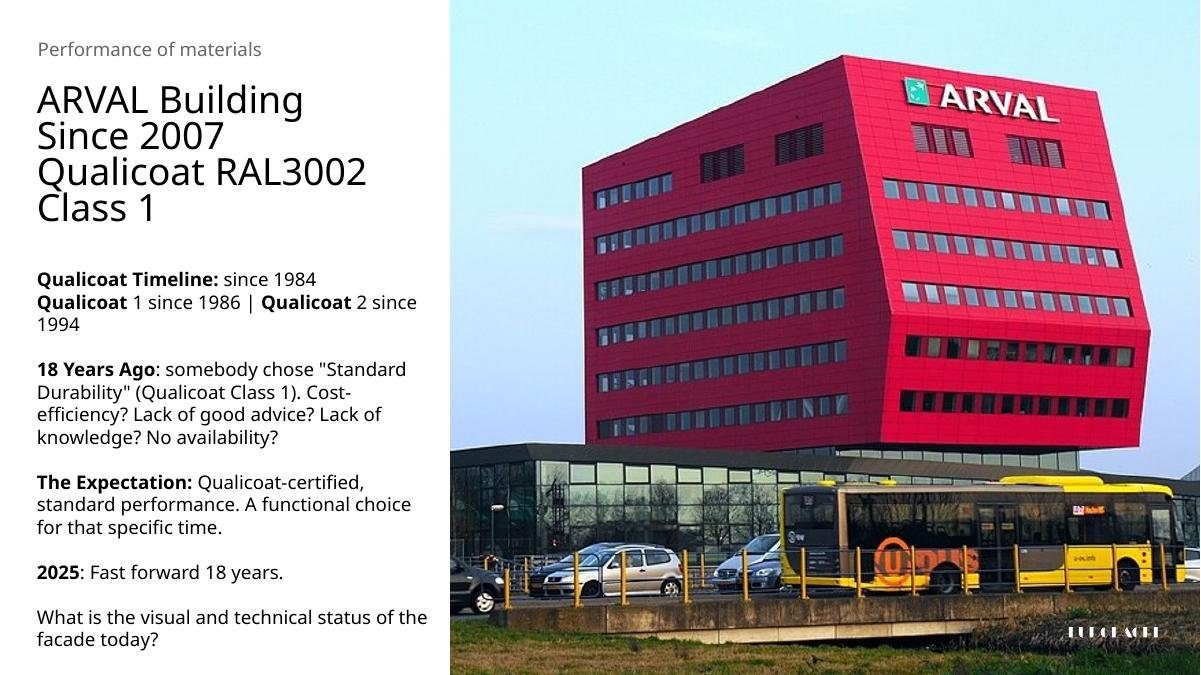
His measurements illustrate the change: an original semi-gloss around 70 gloss units had fallen to roughly one, while chalking created a substantial colour deviation. That distinction matters commercially. A coating can still protect the substrate yet make the whole property read as obsolete.
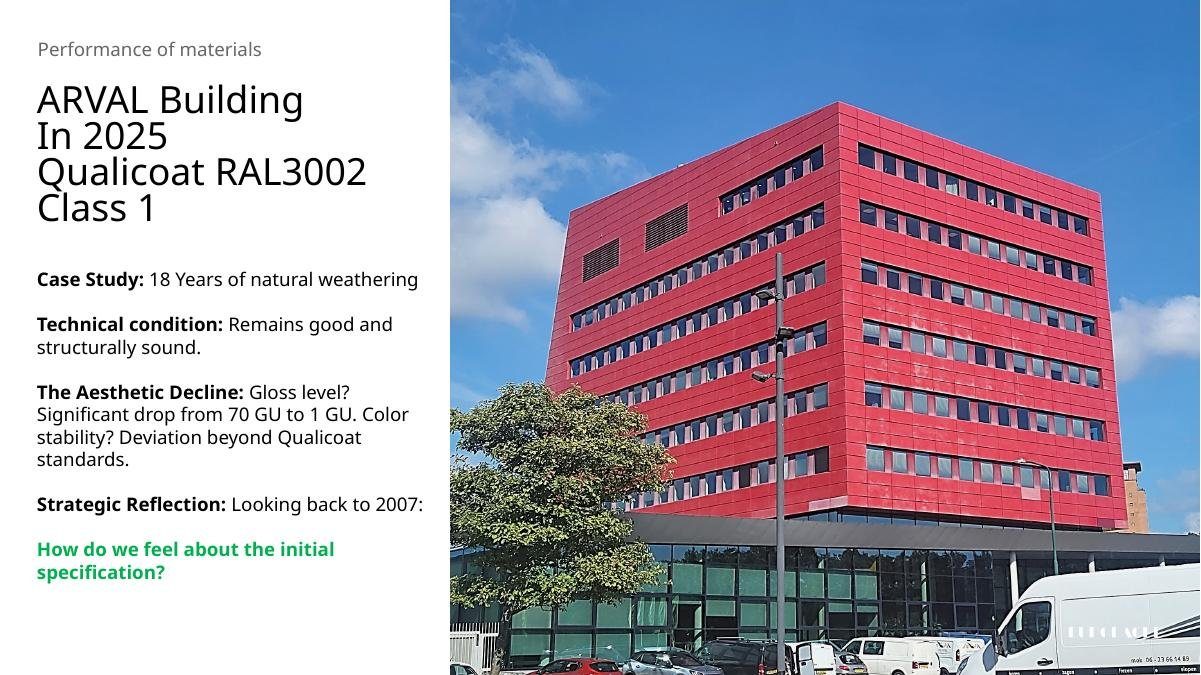
In 2025 the façade was renovated, with the existing panels removed and replaced by new panels finished to Qualicoat Class 2 super-durable performance. De Lathauwer uses the case to ask whether the original specification matched the building’s intended life.
Climate exposure is pushing specifications upward
The longer-term argument is that yesterday’s exterior category may not be enough for tomorrow’s climate. De Lathauwer points to the industry shift from Qualicoat Class 1 toward Class 2 for more durable colour and gloss retention, particularly among façade-system suppliers and specialist fabricators.
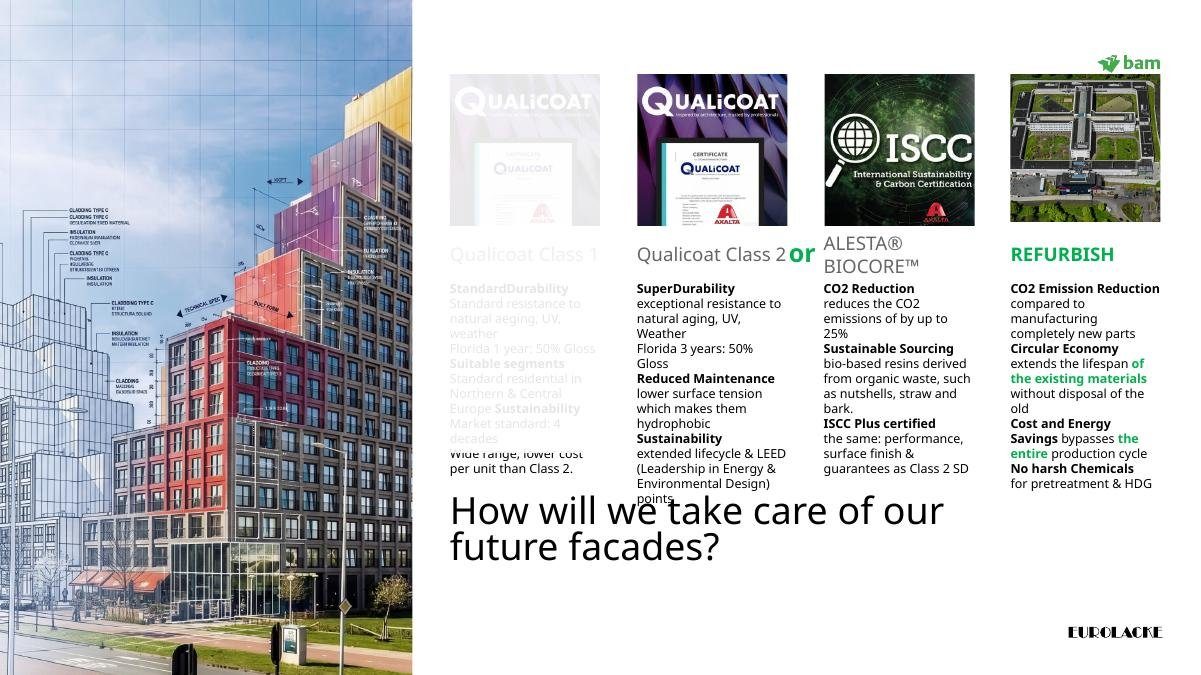
He also highlights Axalta’s BioCore super-durable powder, which uses bio-based resin feedstocks derived from organic waste and is reported in the source material to reduce coating-related CO2 emissions by up to 25% while retaining Class 2 performance.
Refurbishment can preserve the existing metal
Replacement is not the only route. At Sittard Penitentiary, a collaboration involving BAM and Astra Stramon refurbished roughly 7,500 square metres of façade. The existing finish was stripped, the substrate inspected and the metal restored with a single-layer high-performance Qualicoat Class 2 coating.
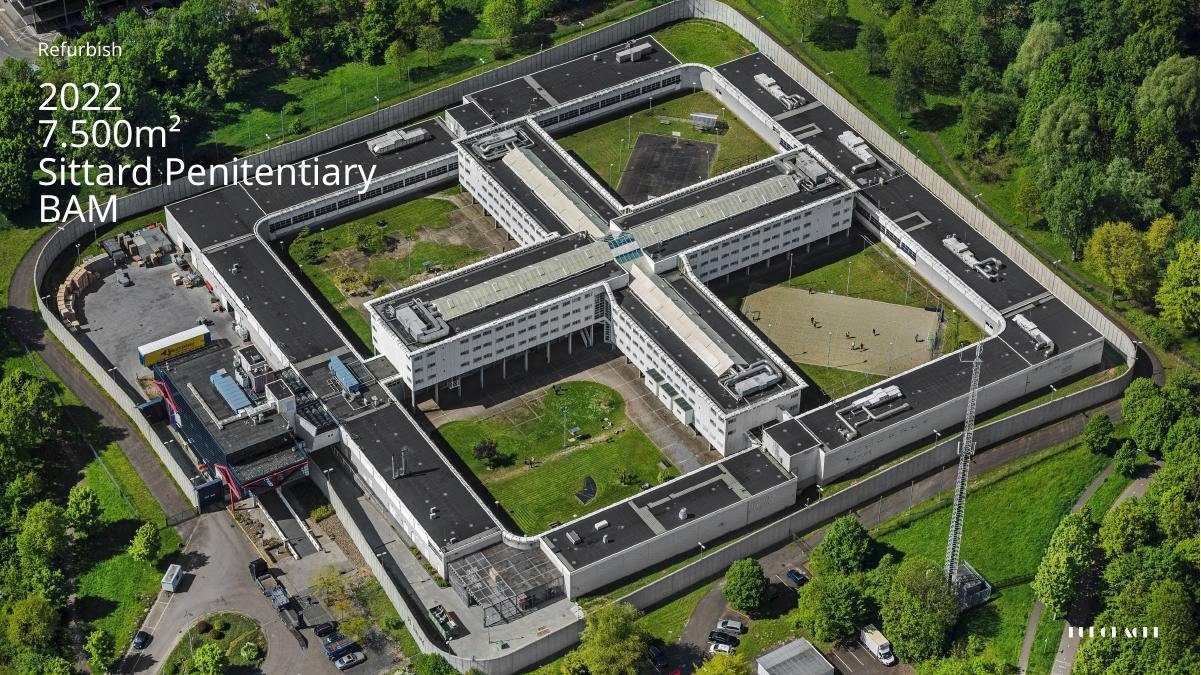
That case makes the life-span strategy tangible: specify enough durability at the beginning, clean and inspect during use, and refurbish the substrate when the coating finally reaches the end of its useful life. The façade is then treated as a maintainable asset rather than a colour sample that is forgotten after handover.
Coating thickness is tiny, but replacement consequences are not
De Lathauwer’s emphasis on the coating as an interface is easy to underestimate because the film is so thin. Yet when its appearance fails, the response can involve scaffolding or access equipment, removal of panels, transport, new aluminium production and another coating cycle. A small specification decision can therefore trigger a much larger material and operational consequence years later. The Arval and Sittard cases show the two ends of that logic. Arval eventually replaced the panel set when the aesthetic life had been exhausted; Sittard proved that stripping and recoating an existing substrate can avoid a complete production cycle. The best life-span strategy is to delay that intervention with an appropriate durability class, maintain the surface while it is in service, and preserve the option to refurbish the metal rather than discard it.
For owners, that sequence links appearance, asset value and embodied impact over several decades instead of judging the coating only at practical completion. That makes durability a whole-life design decision.