Necdet Bahadır Buluk argued that a high-rise glass balustrade is a life-safety system rather than a detail – it has to survive its own breakage and protect those below, which rules out single and tempered panes and rests as much on the support and the anchor as on the glass.
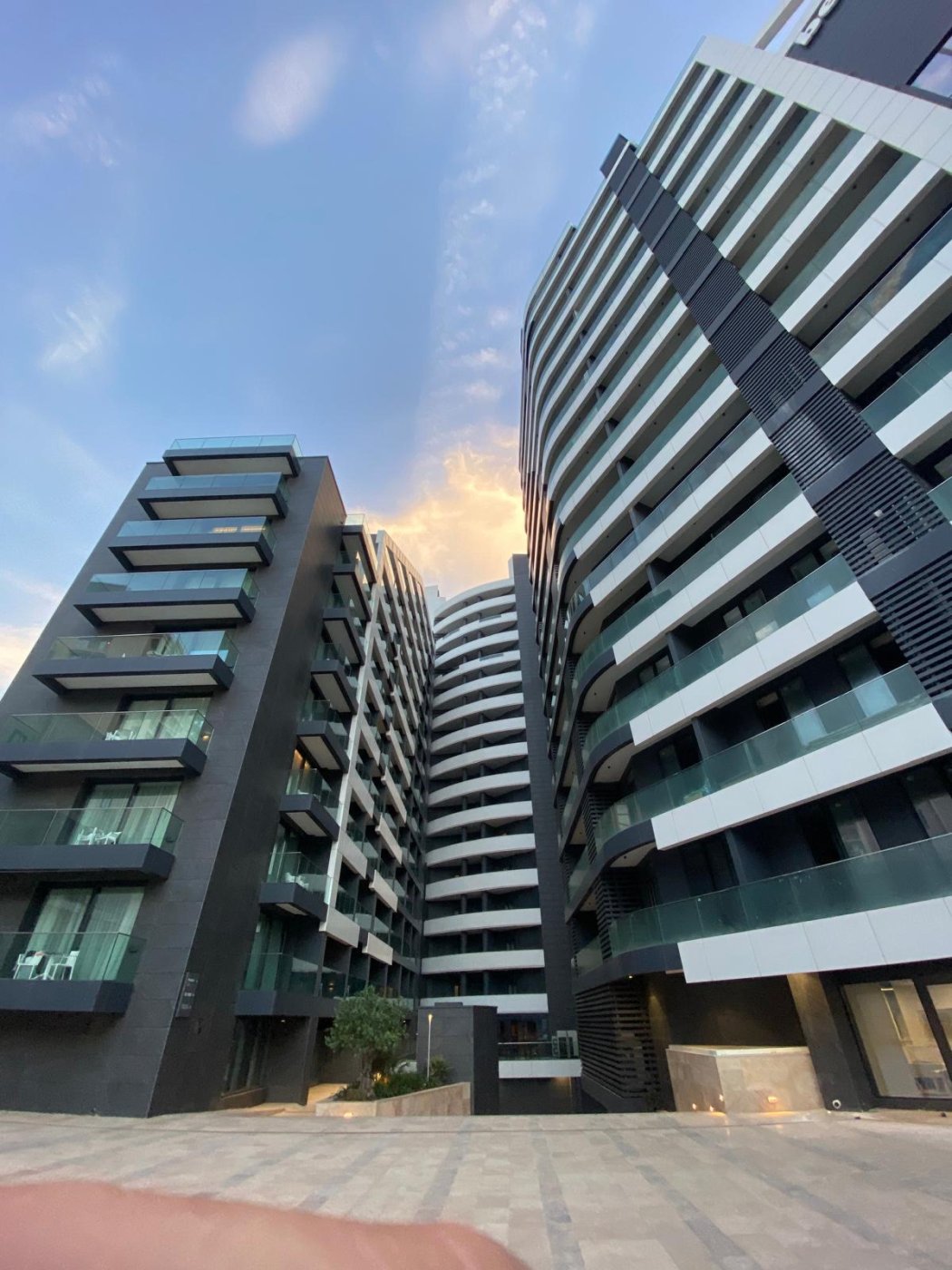
A glass balustrade reads as a design flourish – a frameless sheet that leaves a balcony view uninterrupted. Necdet Bahadır Buluk’s argument was that it is nothing of the sort: on a high-rise balcony, the glass is a life-safety system, all that stands between a person and a long fall, and all that protects whoever is walking below. Glass railings sit on more than nine in ten modern balconies, he noted, and each one is a structure to be engineered, not a detail to be styled. The practice has built them from the Ambassadori tower in Batumi to towers in Malta and London.
Four ways it has to stay safe
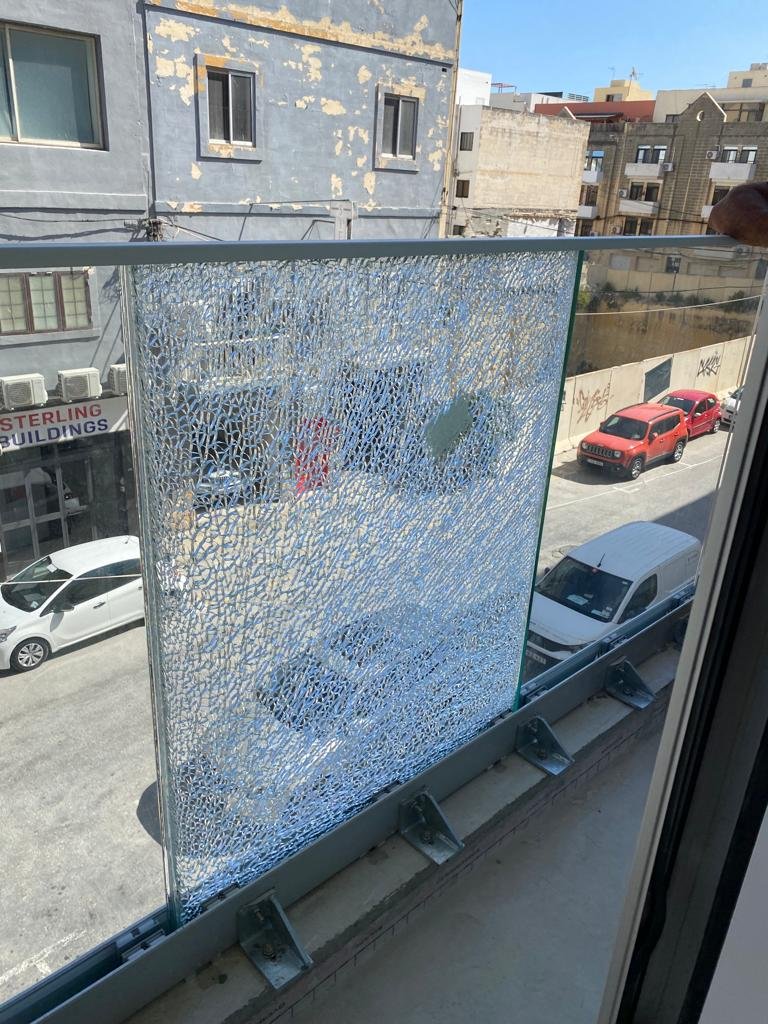
A railing has to do four things at once – arrest a fall, protect the pedestrians below, keep users safe when the glass breaks, and allow safe replacement. The second is not abstract: a pane that fell from a fifteenth floor in Istanbul in 2020 killed a passer-by, and Buluk knows of similar cases in Georgia. That alone rules out single panes, since annealed or single tempered glass is not safety glass, so a balustrade must be laminated. Even both-tempered laminated glass fails, because tempered panes shatter into small dice that lose their grip; the configurations that pass use heat-strengthened glass – heat-strengthened paired with tempered, or both heat-strengthened – which crack into larger, interlocking pieces that hold position. Annealed glass, by contrast, breaks into large shards at roughly half the impact resistance of heat-strengthened; fully tempered is about four times as resistant, but shatters into small dice.
The support decides the stress
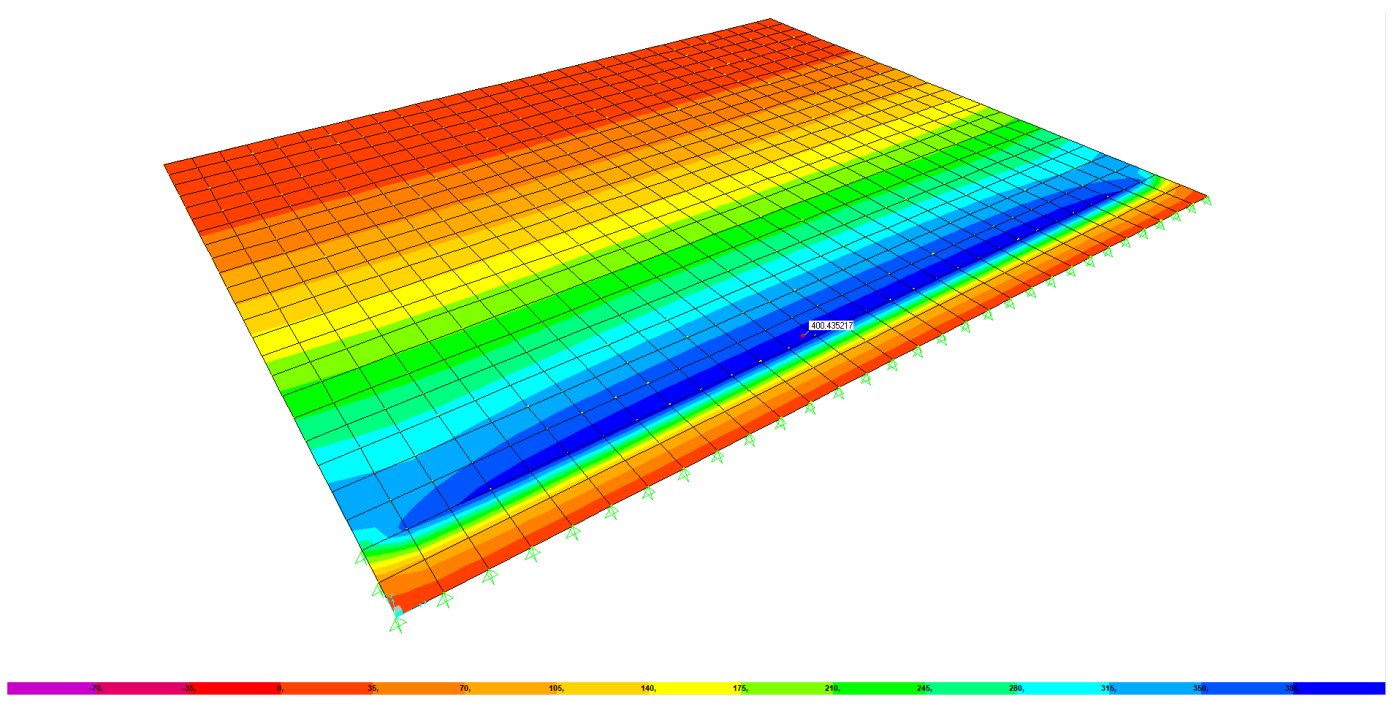
How the glass is held matters more than it appears. Over seventy per cent of the practice’s balustrades are frameless, fixed only at the base – the most transparent option, but the one that makes the glass the primary structure and loads it hardest. Under the same 200-km/h wind on the same laminated pane, Buluk put the peak stress at roughly 400 kg/cm² for a frameless bottom-fixed panel, against about 165 with vertical posts, 150 with point fixings and just 60 in a perimeter frame – the frame carrying nearly seven times less. The most transparent detail, in other words, is the one that demands the thickest, strongest glass.
What holds after it breaks
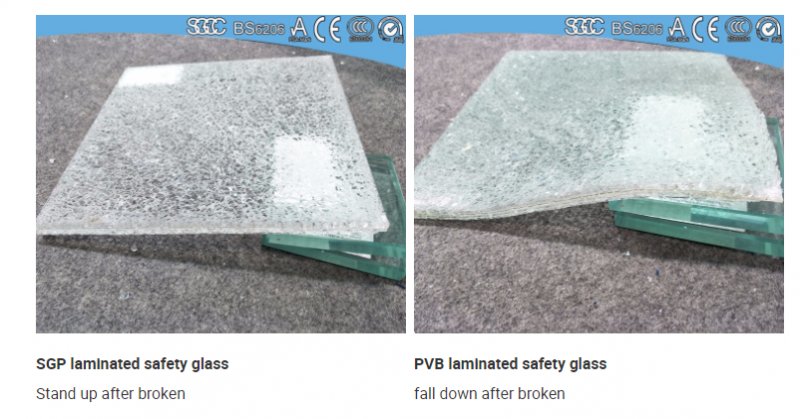
Two components decide what happens after a crack. A handrail cap along the top lets a broken pane lean on its unbroken neighbours and hold position long enough to be replaced, while shielding the laminate’s edge from rainwater; and the interlayer sets the failure mode – elastic PVB behaves like a membrane, where a stiffer structural interlayer keeps the panel rigid, which is why the practice specifies the latter wherever there is no handrail cap or for any overhead glazing. Tempered glass carries one more hazard: spontaneous fracture from a nickel-sulphide inclusion, invisible until it fails, and avoidable only by heat-soaking every tempered pane so the flawed ones break in the factory rather than on the façade.
Down to the concrete
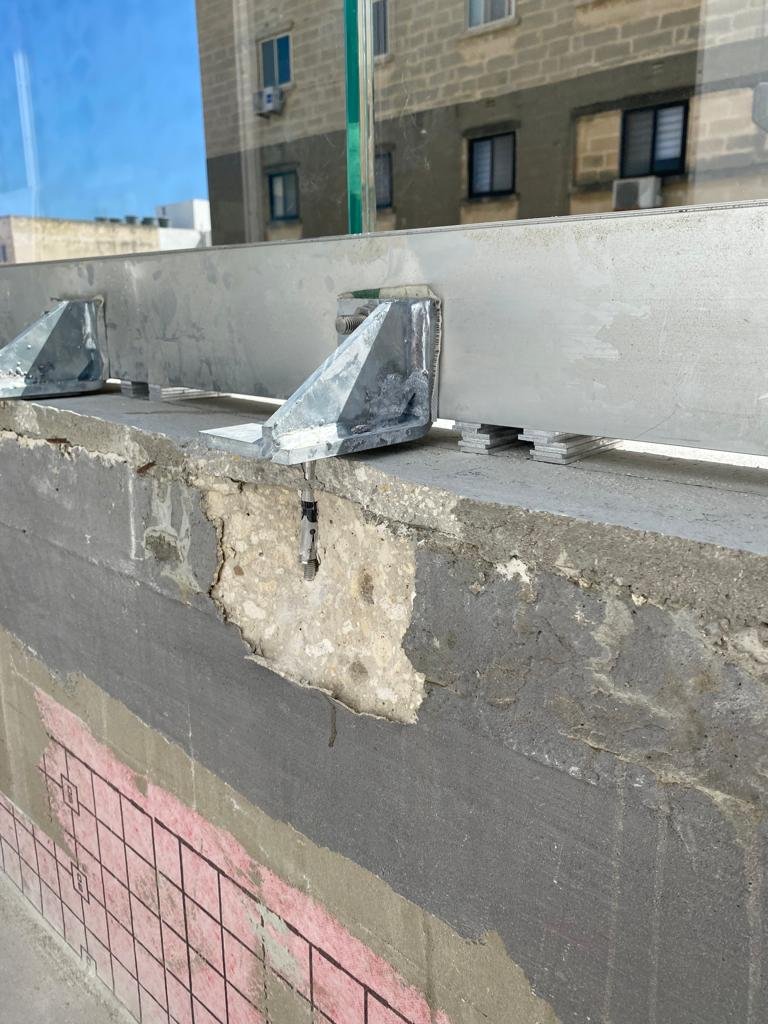
The calculation cannot stop at the glass. Load combinations follow codes such as BS EN 6180, the pane is modelled exactly as it will be built – a 50-millimetre embed entered as a 50-millimetre restraint – and checked against the safe stress of its glass type; then the full force it transfers is followed into the brackets, fastenings and anchor bolts, each sized to code. Reference analyses on the ST Tower and Fortina projects in Malta follow the same forces through the fixings. The last link is the concrete itself: edge distances and anchor spacing have to be checked so that a torqued expansion bolt does not simply crack the slab it is fixed to. A glass railing, in Buluk’s account, is safe only once it has been proven end to end.