Mustafa Alkan showed why Tbilisi’s exceptional wind loads dominate façade engineering in Georgia – and how lightweight textile and membrane skins can carry them with far less material, from a 246-metre test tower in Germany to a coming generation of adaptive façades.
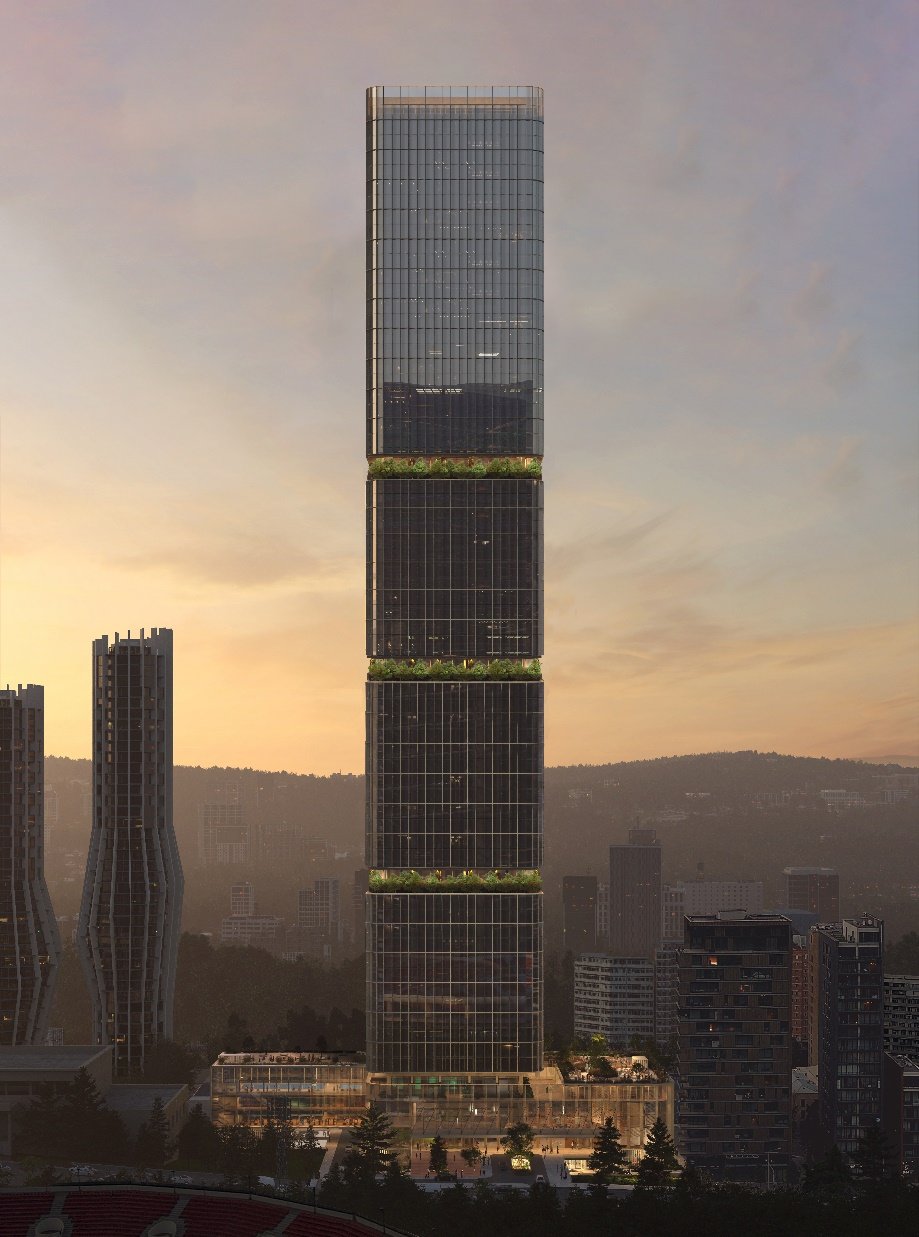
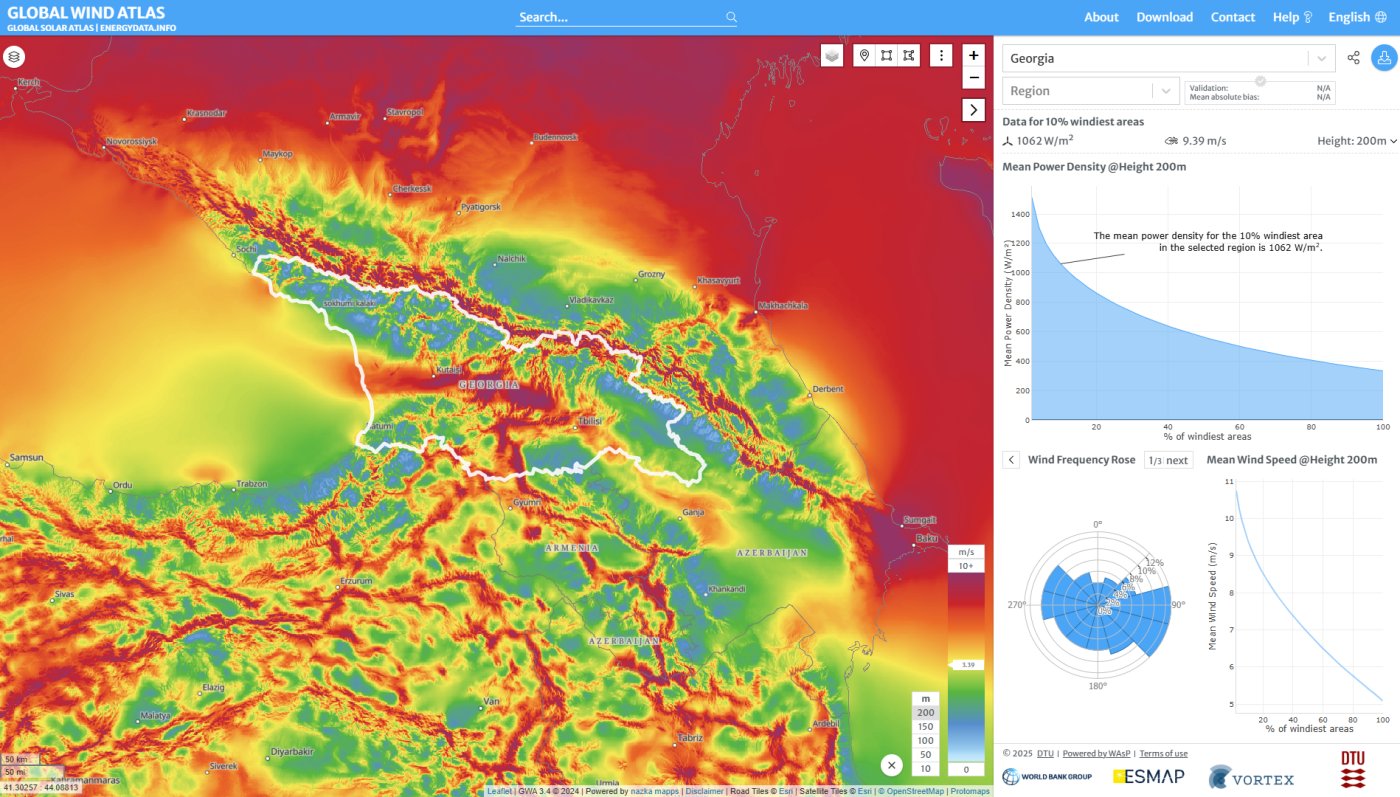
Mustafa Alkan knew Baku as a windy city; Tbilisi surprised him. When Werner Sobek’s Istanbul office began working across Georgia, airport records put the basic wind speed at 37 metres a second – high enough that a mid-rise here can carry a heavier façade load than a tower three times its height elsewhere. He turned that awkward fact into a design principle: engineer the envelope for the climate it actually faces, and use as little material as possible doing it. That work now runs across a growing Georgian portfolio, from the dark-terracotta Hilton Garden Inn to the VR Sky Tower that will briefly stand as the country’s tallest building.
Wind that outweighs height
Every façade, Alkan noted, is worked on by the weather long before anyone occupies the building – ultraviolet light degrading paints and sealants, thermal movement forcing joints open, humidity risking condensation and corrosion, pollution etching surfaces, and noise to be shut out with the right glass build-up. In Tbilisi one force dominates the rest. The design loads that follow from that 37-metre-a-second wind are startling: the Tbilisi Business Center, a 73-metre building by UN Studio, carries 5.9 kilonewtons per square metre – 6.1 on its cantilevered fins – where a 293-metre tower in Istanbul sits at 4.2 and a 246-metre test tower in Germany at 3.2. Baku had given him his highest figure until then, about 6.8 on a 170-metre ministry building, and Tbilisi was already close to that on a building less than half the height; the VR Sky Tower, at around 220 metres, reaches 8.6. Loads like that must be resolved across stick, panel and unitised systems, on curved and inclined elevations, and through fins fixed back to the structure across only a few millimetres.
A textile skin that protects the core
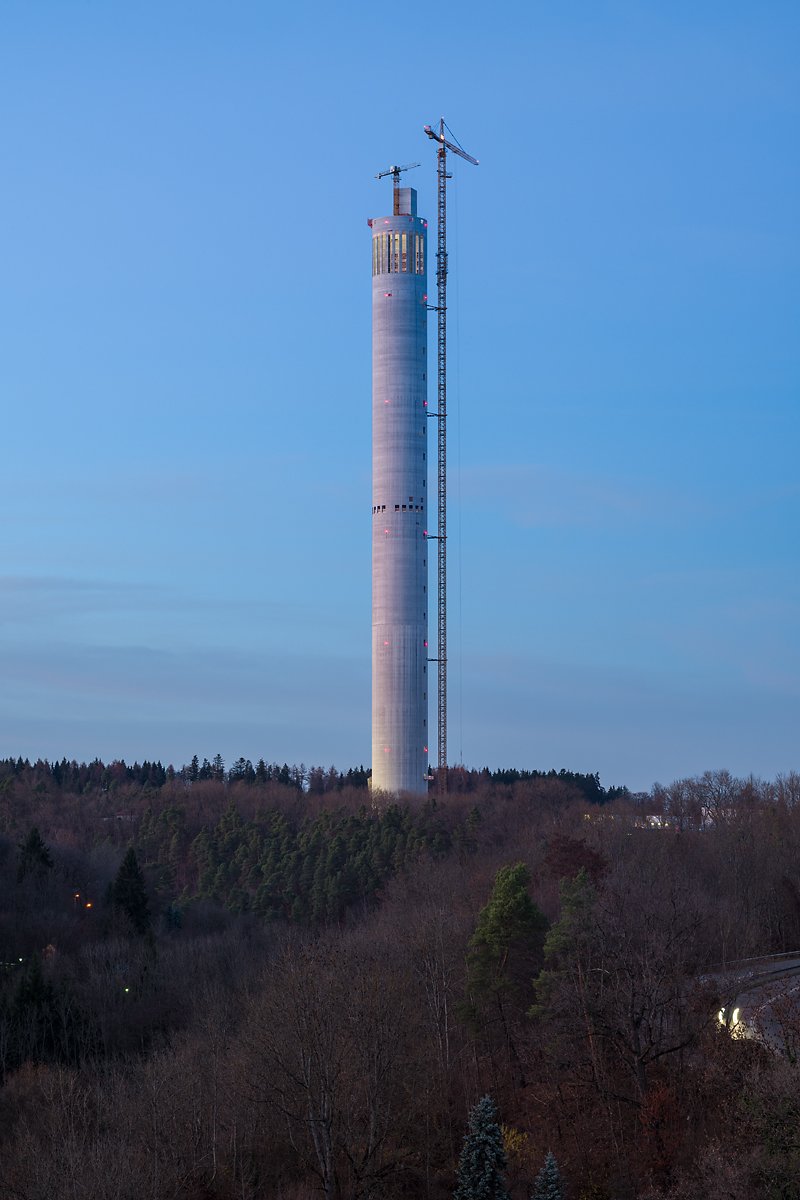
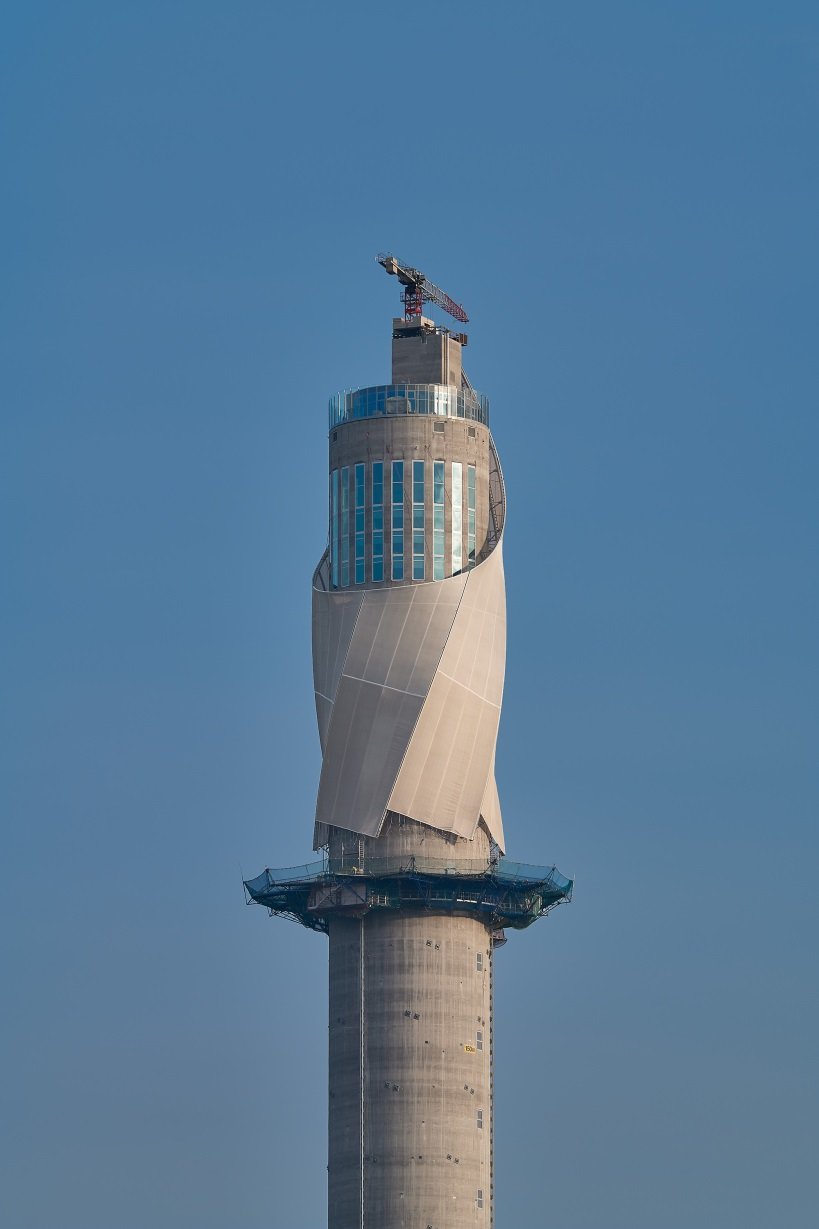
Alkan’s answer to heavy loads was, counter-intuitively, less material. The clearest case is the ThyssenKrupp Test Tower in Rottweil, a 246-metre concrete shaft built purely to test lifts, for which Werner Sobek was architect and structural and façade engineer. A bare core would have baked unevenly – sun on one face, shadow on the other, and large thermal stresses inside the concrete – so the team wrapped it in a tensioned PTFE membrane, a Teflon-based textile light enough to hang on a slender frame. The weave is kept tight at the base and opened up towards the top, letting the strengthening wind pass through while shading the concrete and keeping the tower transparent enough to see through. Prestressed spans of around ten metres mean fewer sub-structures and fewer connections.
Cutting load, and reinforcement
Slenderness brought a second problem – around half a metre of sway, driven by the lateral forces a thin tower attracts. The team ran a helical strake, a Scruton helix, up the outside – the trick used on old industrial chimneys – and let the membrane follow it. The helix cut wind loads by about 40 per cent and, with them, a great deal of concrete reinforcement, which is where the sustainability argument is really won. A tuned damper inside handles the rest, and because it runs on rails it can also push the tower into a controlled deflection with no wind at all, so the client can test lifts against a leaning shaft on demand.
The skins coming next
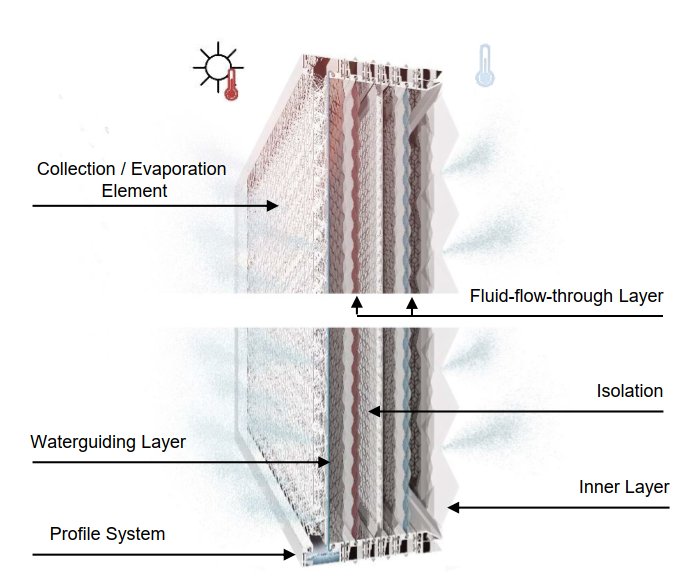
Alkan closed on where lightweight façades are heading, drawn from a demonstrator tower in Stuttgart clad differently at each storey. FibreSkin tensions textile strips that close against a hot sun yet stay transparent and slide open on rails; KineticSkin uses movable panels whose upper wing tracks the weather by computer while the lower one is left to the occupant’s view. Alongside them sit greener and wetter ideas already in use – planted façades of the kind at Kö-Bogen 2 in Düsseldorf, a HydroSkin that stores rainwater to cool the building in hot spells, and a pneumatic origami sun-shade that folds open and shut. Each pushes the same idea: an envelope that does more while weighing less.