Bird-friendly glazing has moved from goodwill to compliance, and optical distortion is a problem the international standard is too wide to catch. Ahmed Abuhashem, of Guardian Glass, on both, and on the glass at Serenia Living.
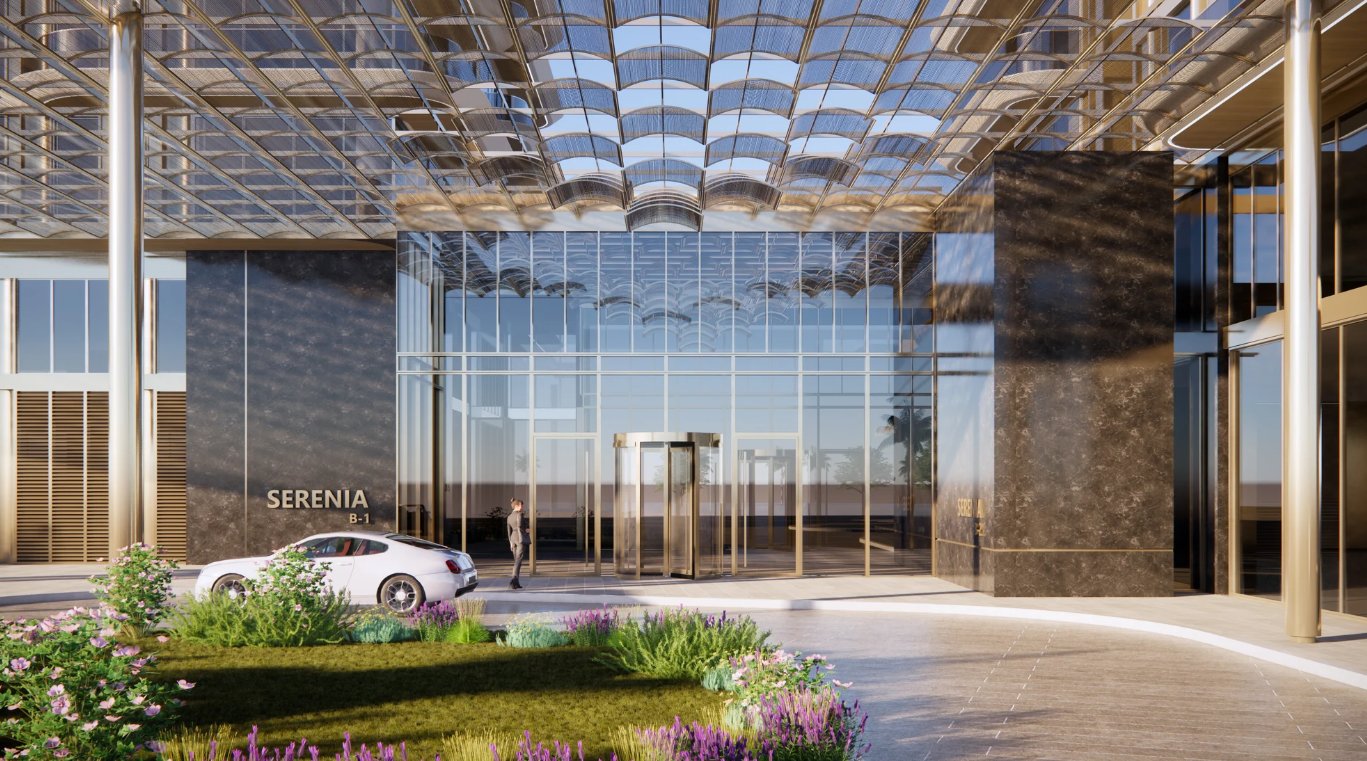
Ahmed Abuhashem divided a high-performance glass façade into three arguments: the birds that fly into it, a project that shows what glass selection can carry, and the tools an architect now specifies with.
Birds, and four things people get wrong
Bird-window collision is a global problem with a simple mechanism. A bird sees the reflected sky, the reflected trees or the surrounding scenery, or sees straight through the pane and reads an open path. Modern façades are more transparent and more reflective than they were, so the problem grows with the industry, and it is regionally specific: the map of migration routes runs through the UAE and the wider Middle East. Biodiversity, in his framing, has joined aesthetics and performance in the façade conversation.
Then the misconceptions, and he had four. That it only happens in big cities: it happens wherever there is reflection, urban, suburban or low-rise. That one solution suits every project: location and lighting conditions make each building its own problem. That a bird-friendly façade cannot look good, inside or out: the pattern can be part of the design, most solutions cannot be seen from any distance, including from indoors, and they combine with solar and thermal coatings so the occupant keeps both the view and the performance. And that a few stickers will do: effectiveness depends on the brightness inside and out, the complexity of the surrounding scenery, the surface the solution sits on and the spacing between elements. The object is a façade a bird can read.
It is also becoming a matter of compliance rather than goodwill. New York's Local Law 15, passed in 2021, requires bird-friendly solutions on new buildings and major renovations, which is what drove the glass at 70 Hudson Yards, and Abuhashem expects the same to arrive here. Guardian's answer is a family: a ceramic frit, a translucent acid etch, and the newest, a UV coating. All are tested with the American Bird Conservancy to a threat factor of 30 or less. The UV version is invisible to the human eye, which is the point, and it can be combined with double and triple silver coatings, so a project that wants the best possible view is not choosing between the view and the birds.
Serenia Living, and the quality nobody specifies
The case study sits on the crescent, a high-end residential project carrying more than 80,000 square metres of double-silver coated glass. Guardian's habit on a project like that is to work through everybody, developer, design team, main contractor, subcontractors and the glass processors, for one reason: to find out what the design intends before choosing anything. Here the design came from a sea shell, its colours and lines carried into the balconies.
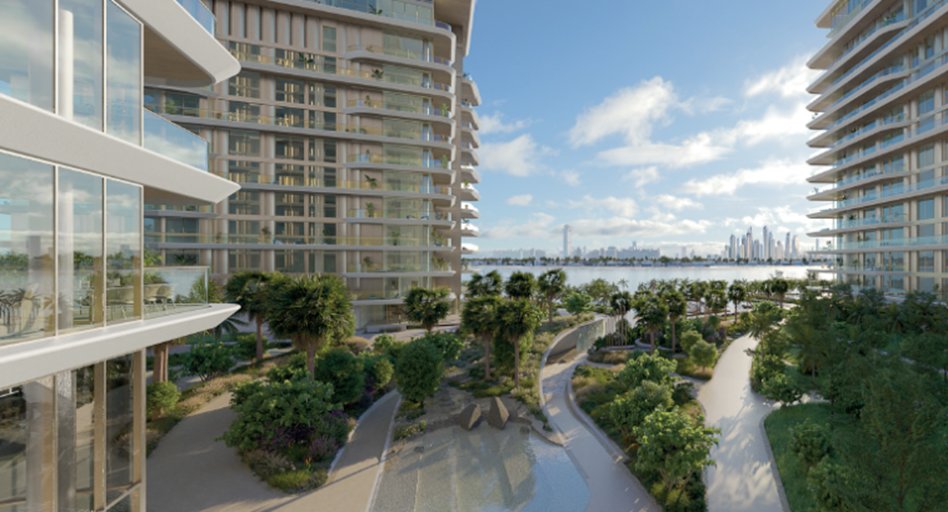
The location wanted a neutral grey appearance from outside, and the building's whole value is what it looks out at, so the glass had to give the view back: SN Grey 50, neutral grey, with reflection from indoors of 15 per cent or lower, and acoustic performance on top of it. It looks out at the Burj Khalifa and Marsa Al Arab, both of which Guardian also supplied.
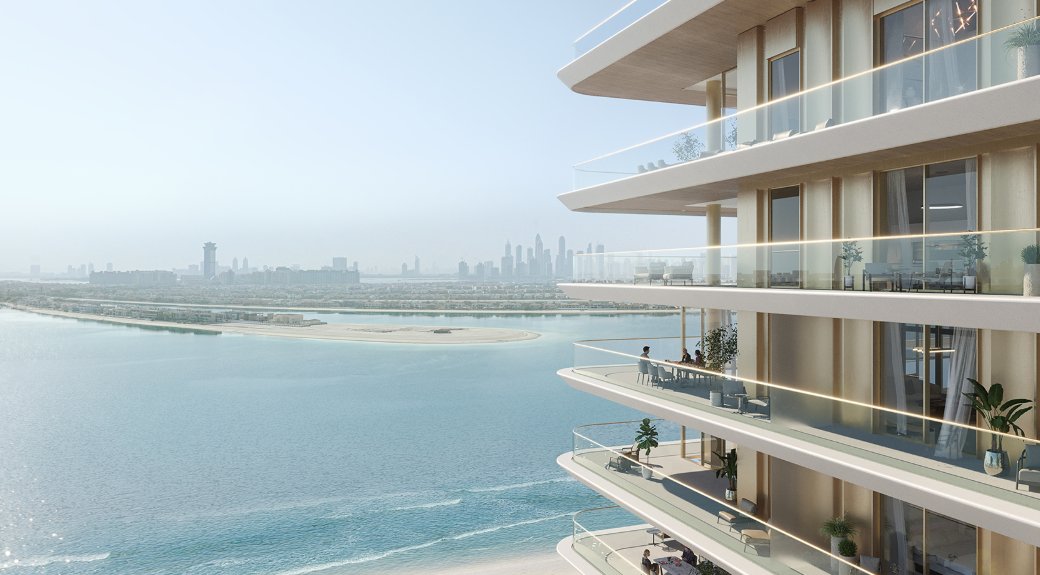
The podium had the opposite brief. The architect and client wanted maximum light transmission and the lowest reflection they could get, so it uses an anti-reflective coating: 6 mm clear glass reflects around 8 per cent, and this takes it below 1. That can be combined with double or triple silver coatings, so the visibility does not cost the thermal performance.
The point with the widest application was about optical quality. Distortion is a real problem in modern façades, and the international standard, he argued, is wide enough that meeting it is not enough. So there is a programme that tightens it for high-profile work. It starts at design, but design alone changes nothing, so the support extends before execution: evaluating the awarded certified glass processor, checking that certifications such as IGCC are current and that the scanner and spectrometer are there, and then staying through production for processing quality, tempering quality and distortion measurement, all of it reported and submitted to the project.
And then the tools
The last section was digital, on the argument that architects want answers at the hour they are working rather than a data sheet. Their AI assistant answers technical questions, recommends compliant glazing, identifies the nearest glass processor and points to the right resource, and gets better the more it is used. Behind it sits the platform: a project locator, e-learning, project showcases, a performance assistant and performance calculation, visualisation so a glass can be seen on a building before it exists, a selector that takes a light transmission and a U-value and returns the products that meet them, then specification, documentation, BIM and the order itself.