


Celeste Gariando set two projects at opposite ends of the scale against each other, the 750-metre Burj Azizi in Dubai and the low-rise AMAALA Triple Bay Yacht Club on the Red Sea, to show how the same façade material becomes a completely different problem depending on where it sits.
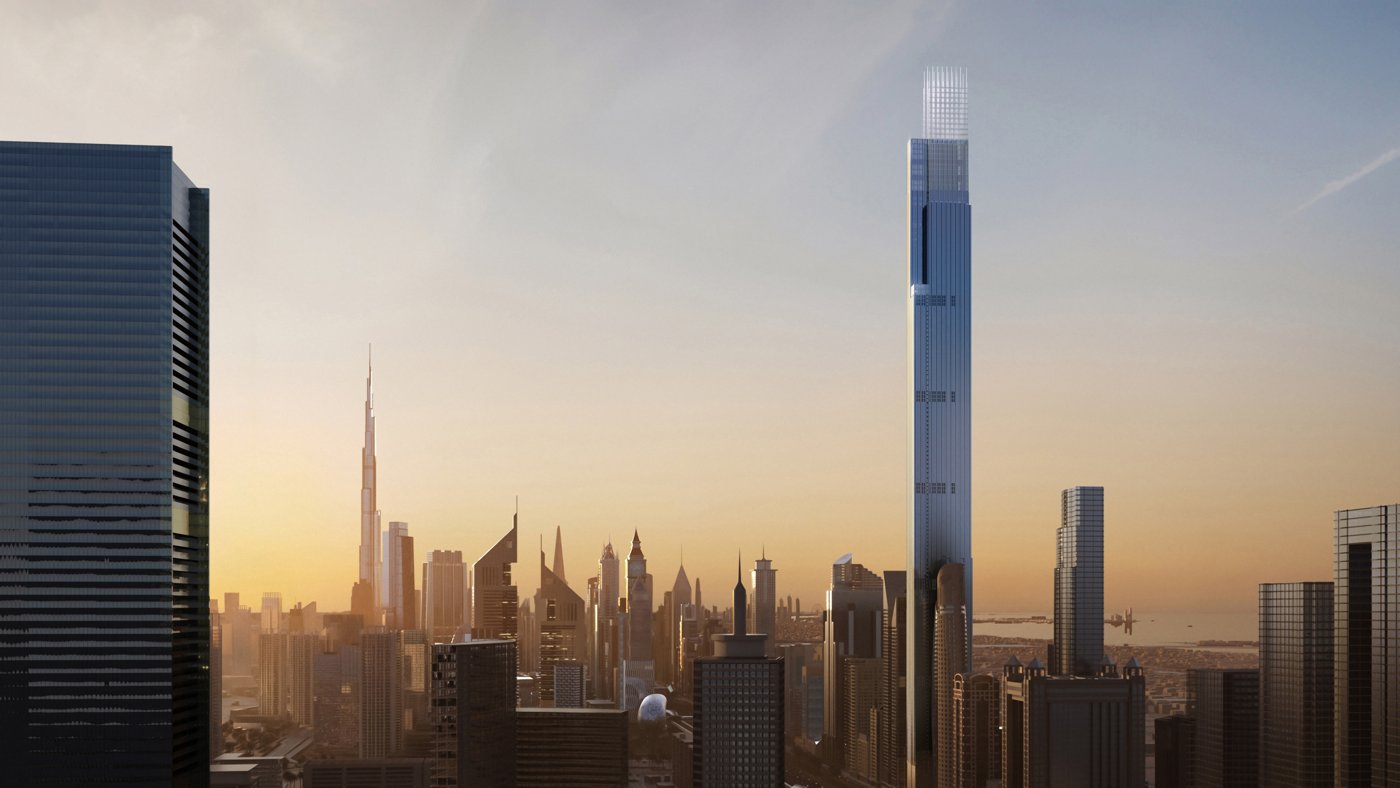
Celeste Gariando, technical director at Meinhardt Façade Technology in Dubai, put two of her team's projects side by side because they have almost nothing in common except their materials. One rises 725 to 750 metres and is set to be the second tallest building in the world. The other barely leaves the ground. Both are glass and aluminium, and the physics governing them is not the same physics.
What accumulates over 750 metres
On Burj Azizi, where Meinhardt is doing the façade engineering along with the access and maintenance design and AE7 are the architects, the drivers are global drift and human comfort criteria set by acceleration rather than by architectural form. The system itself is highly repetitive, and Gariando's point is that on a supertall the repetition is the strategy: it is how you manage movement, tolerance and the performance of the whole envelope. The base system is a fully unitised curtain wall on pin-and-roller supports, the pin restraining one direction and holding position while the roller allows controlled movement in the remaining degrees of freedom. It is interrupted by balcony zones and mechanical floors, each of which changes the loading demand and the access strategy with it. Where the elevation carries T-shaped panels with integrated glass fins, the frame is hybrid, so the fin can take higher lateral load while still moving compatibly with the unitised wall around it.
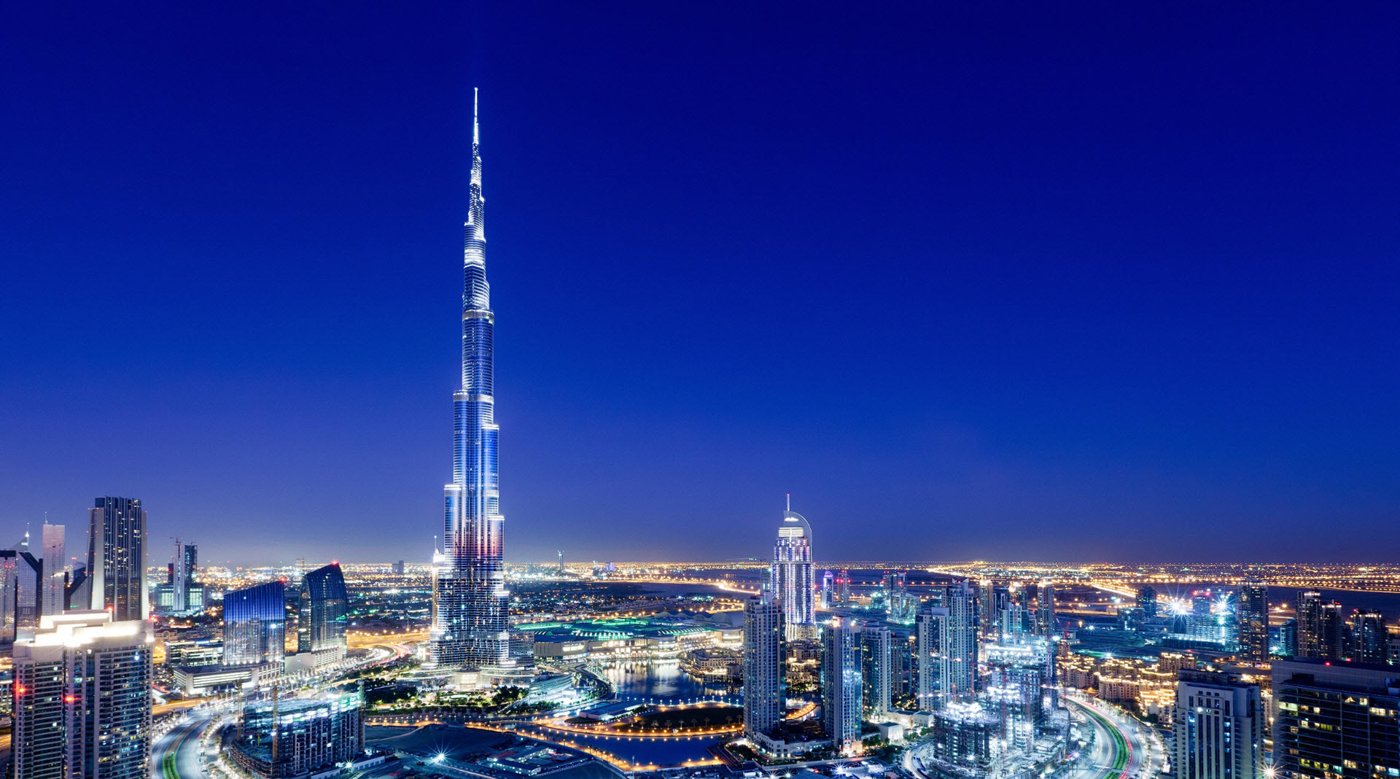
Her own checks put the conclusion plainly. Under wind and seismic the unitised system sits well inside its allowable limits, and the T-panels deflect very little because the external glass geometry stiffens them. Under dead load alone the frame deflects less than 0.8 millimetres, which is what rules out long-term sagging and the alignment problems that appear during installation, and on a T-panel a permanent deflection would show up as visual distortion or uneven load distribution. Under combined wind and seismic it stays under 11 millimetres, in a well-distributed deflected shape, which is elastic behaviour doing what it should. So the façade is not governed by the strength of the curtain wall at all. It is governed by movement and long-term serviceability.
Which means the joints do the work
A stack joint has to stay weathertight and accommodate movement at the same time. Horizontal joints answer to differential slab movement, inter-storey drift, column shortening and thermal effects, and drift dominates: adjacent slabs do not deflect uniformly, so panels rotate and lift relative to one another. Column shortening and lateral movement add horizontal displacement on top, calculated here at under 5 millimetres.
Vertical joints are subtler. Differential slab deflection and column shortening open a joint in one place while closing it in another, which is a combined shear and rotation demand, and the column movement adds its own, calculated at under 4 millimetres. They are smaller than the horizontal joints and, in her experience, more sensitive to differential behaviour, because the failure modes are binding split mullions, over-compressed gaskets, or load transferred directly into the glass.
Then the low-rise, where it flips
The AMAALA Triple Bay Yacht Club at Yanbu, for Red Sea Global, is low-rise and architecturally expressive, defined by long spans and a great many interface conditions. Nothing here is driven by height. The movement comes from thermal expansion and from the geometry itself, and it is less visible than a tower's while being locally aggressive exactly where systems connect and transition.
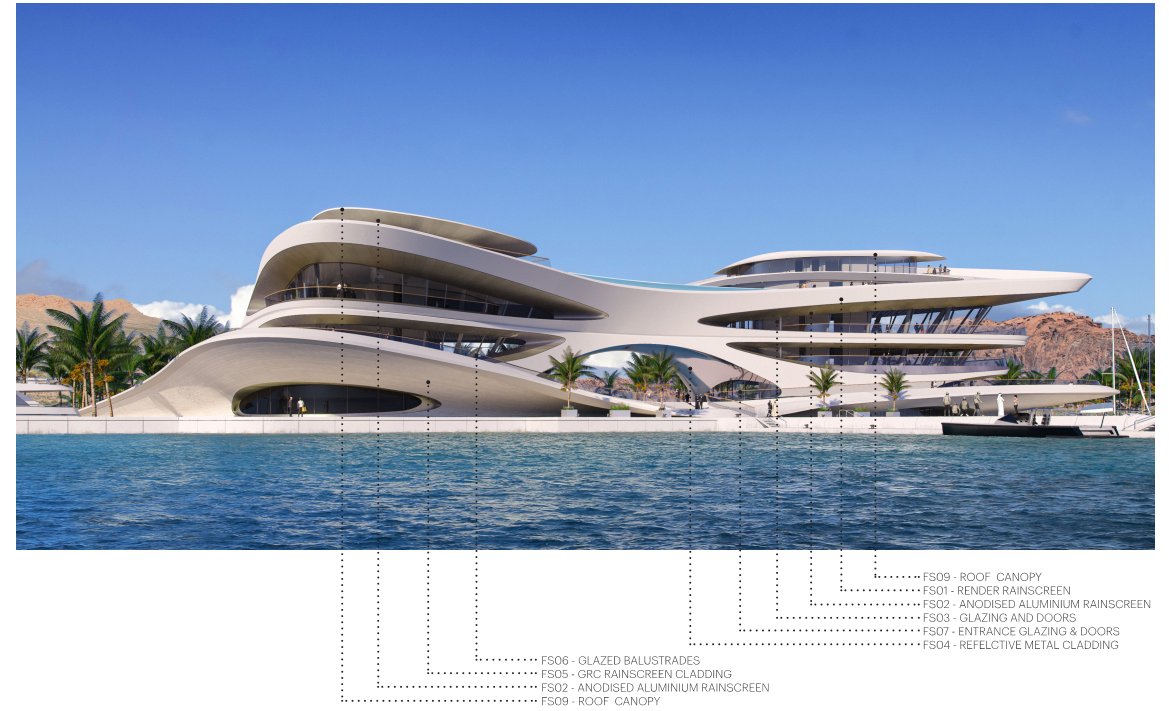
Continuous roof canopies and horizontal bands are what a visitor sees; underneath them the glazing sits in genuinely three-dimensional geometry, neither vertical nor orthogonal, with tilt, curvature in plan and a variable radius, transitioning continuously between flat, inclined and double-curved along its whole length. The fixed conical glazing at upper levels means glass edges are no longer parallel in plan, and the operable systems want the opposite: parallel head and sill conditions and a controlled movement path, which is in direct conflict with a free-form surface.
Parallelogram or trapezoid
With the design team they studied two panel configurations. Parallelograms are simpler structurally and to manufacture, but only for the fixed glazing. Trapezoids favour operability and resolve the interfaces at the doors. The trapezoid was selected, and the price is non-repetition: every panel is geometrically unique, which raises fabrication complexity and the quality-control demand in the factory and on site.
The architectural curvature is held to a minimum radius of 4 metres, which Gariando places at the threshold between cold-bending being visible and glass being genuinely curved. The doors themselves are straight and trapezoidal, inclined 15 degrees in plan and 22 out of it. When Red Sea Global asked for case studies of minimal sliding doors in that configuration, there were no comparable references anywhere, so the supplier in Switzerland committed to a dedicated research and development programme for this project's sliding door alone.