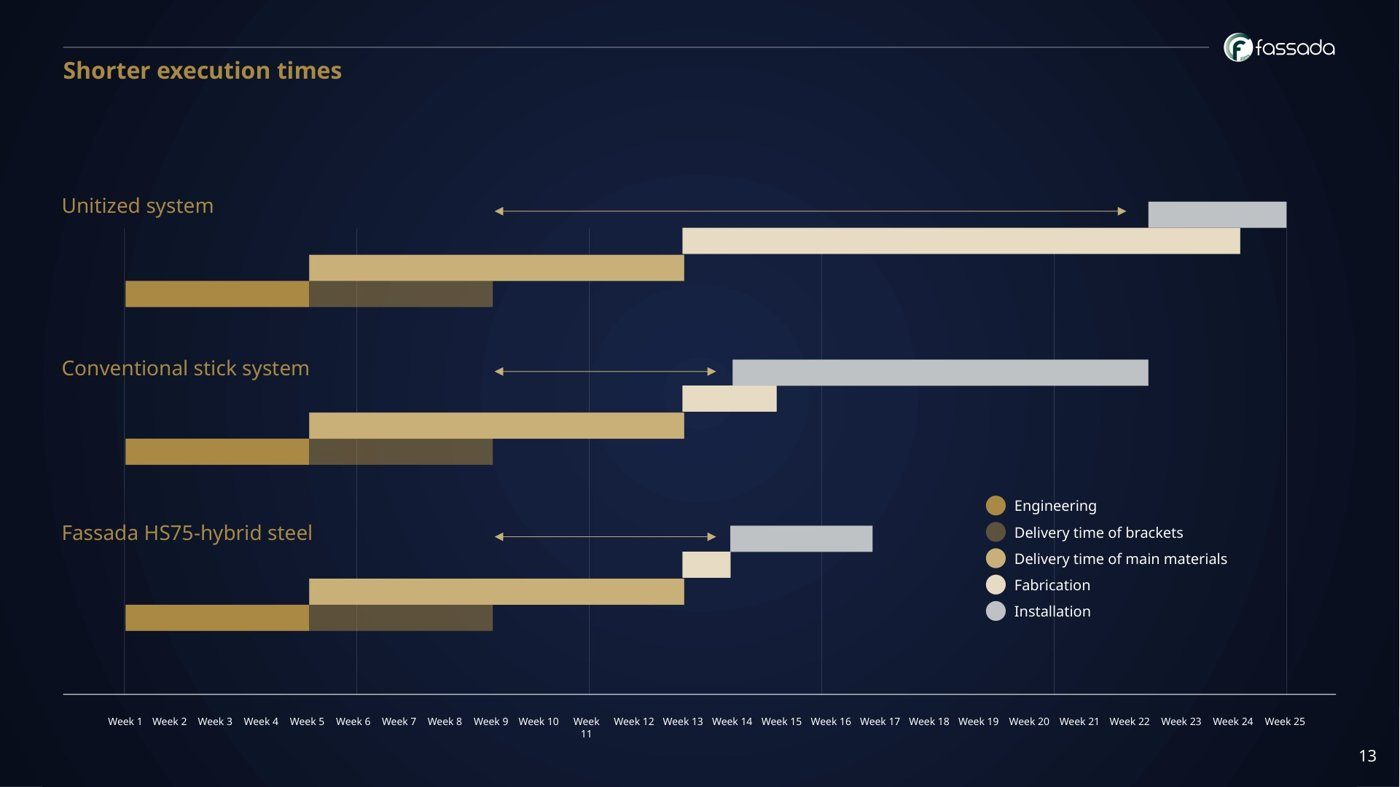
Eric Claeys made a combative case for a patented hybrid steel curtain wall, combining the strengths of stick and unitised systems without silicone, and argued that the industry has misjudged the fundamentals, from how buildings actually move to where a façade's real carbon lies.
Claeys opened with a provocation: that the curtain-wall industry has, in his telling, spent decades copying itself rather than rethinking the product. A civil engineer by training, he set out to build something different, and framed the whole talk around two fundamentals he believes are widely underestimated, building statics and building physics.
Statics and physics
A curtain wall, he stressed, is a skin hung on a moving primary structure, fixed to slabs that shift, and not uniformly, with differential movements between them. On that basis he was scathing about test certificates that, in his view, model the wrong kind of movement: buildings sway, he argued, they do not displace like an elevator, so he questioned how much those certificates are worth. The claims were pointed and his own, but the underlying point, that a façade must be designed around how its supporting structure actually behaves, is the foundation of everything that followed.
Where the carbon is
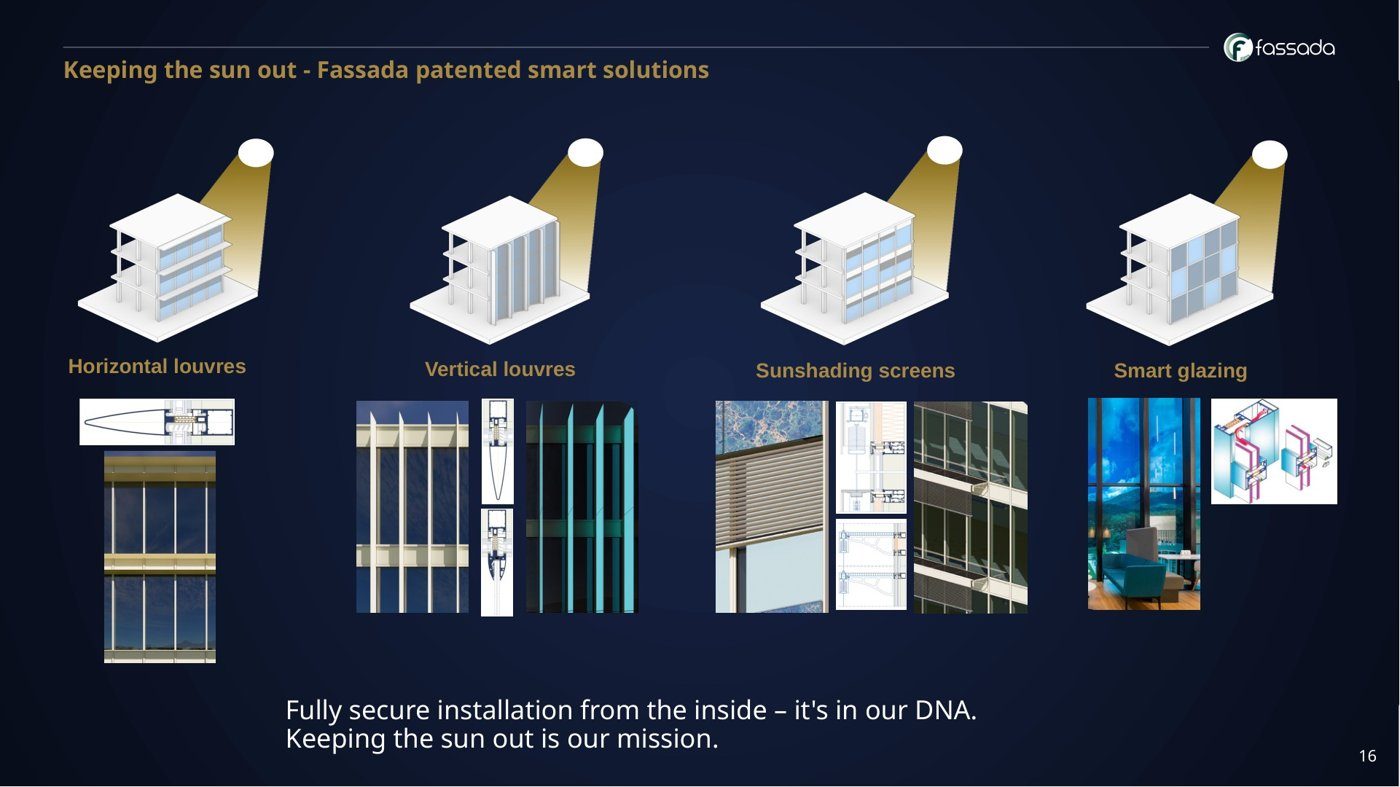
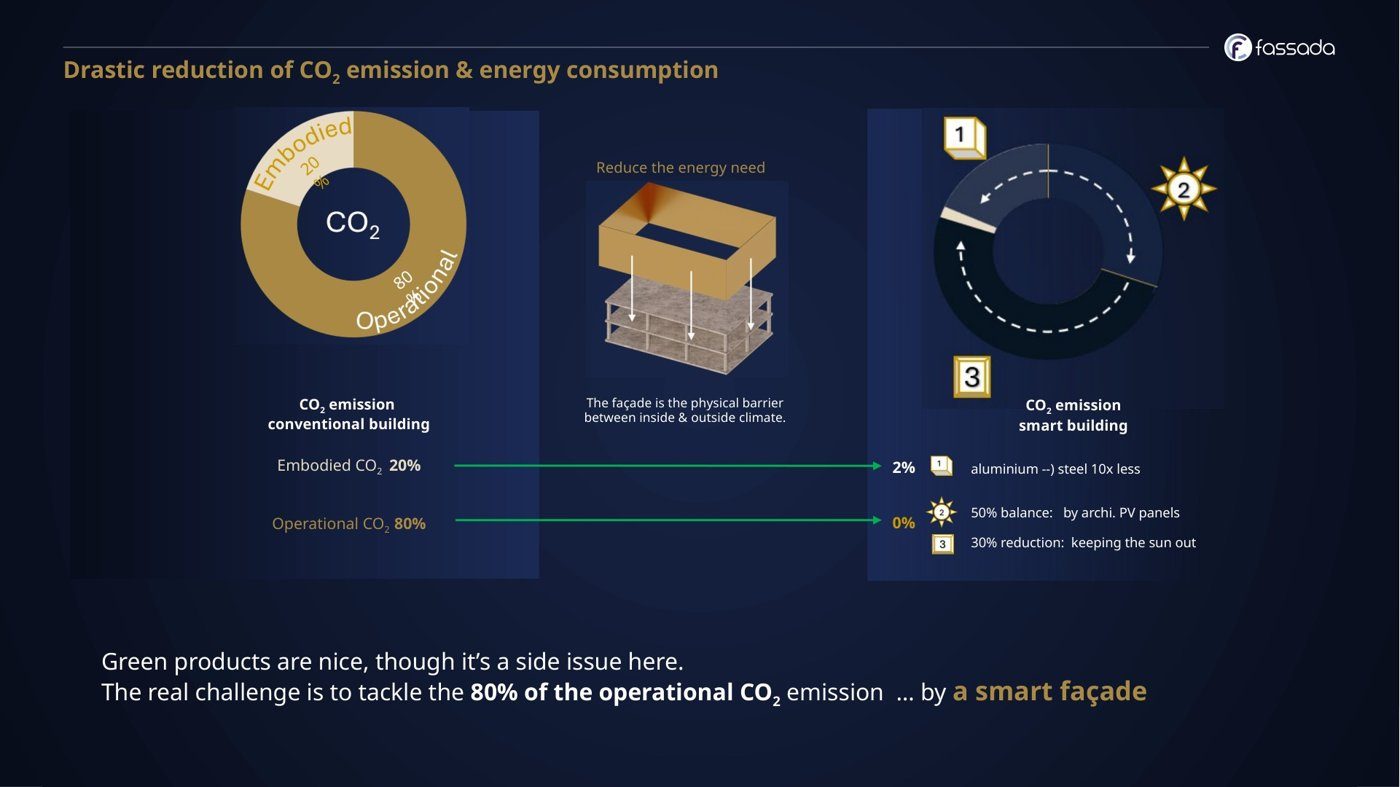
On sustainability he was equally contrarian. Embodied carbon, he allowed, is worth reducing, but he argued it is not the main event: the larger share of a building's carbon, in his account, is operational, the energy to heat and cool it, which he noted matters far more in Europe's energy market than in the United States. Where materials do count, he made the case for steel over aluminium on embodied-carbon grounds, and was openly sceptical of "green aluminium." His constructive claim was that a glazed building with proper dynamic solar shading can roughly halve its cooling demand.
The hybrid system
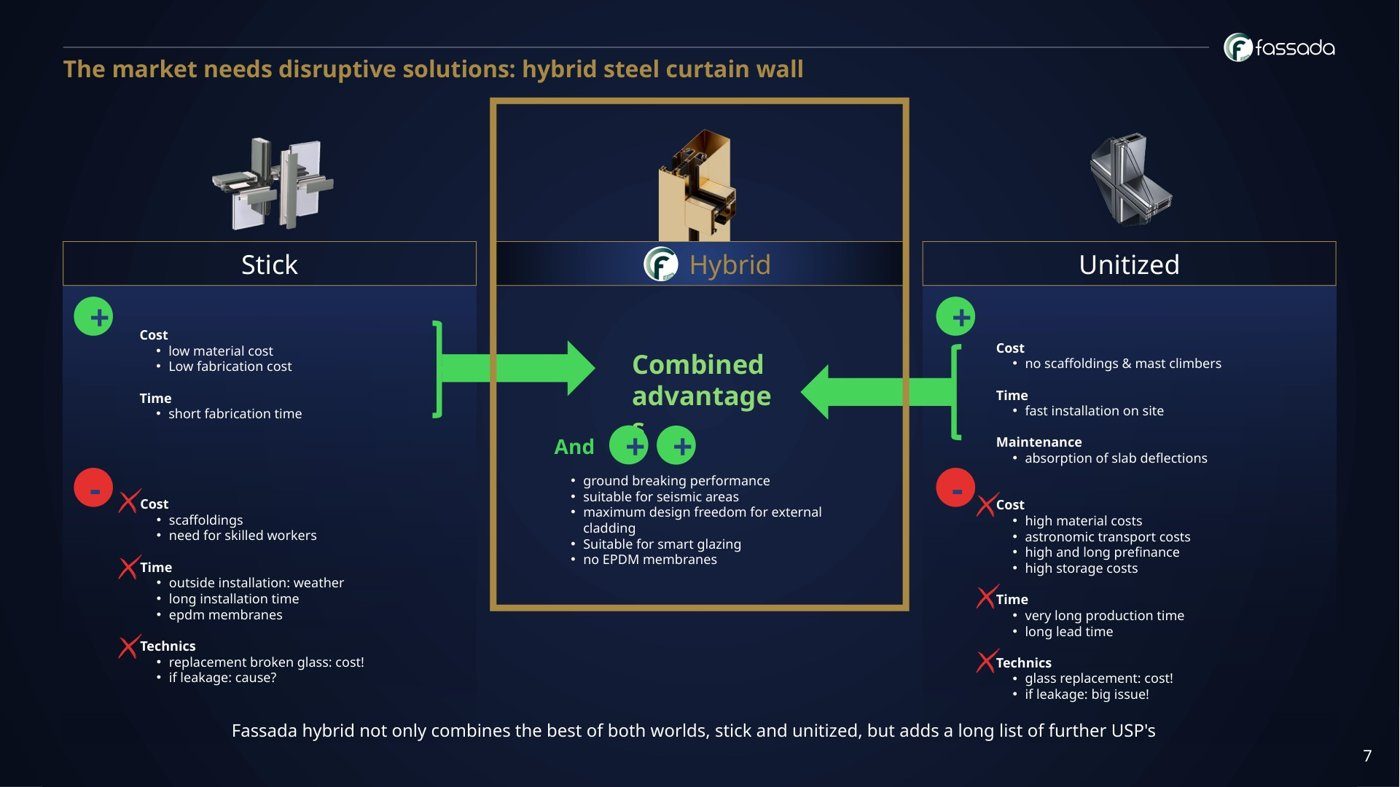
The product itself, for which, he noted, "hybrid technology" is now a registered trademark of the company, sets out to combine the strengths of stick and unitised systems while stripping the financial penalties he associates with unitised: high material and transport cost, expensive fabrication, and panels that cannot be reached once installed. His system, he said, uses no silicone at all, runs at roughly a minute per square foot on the line, and is fire-resistant, a steel façade he claims performs without sprinklers at a cost below aluminium, protected by a large patent portfolio.
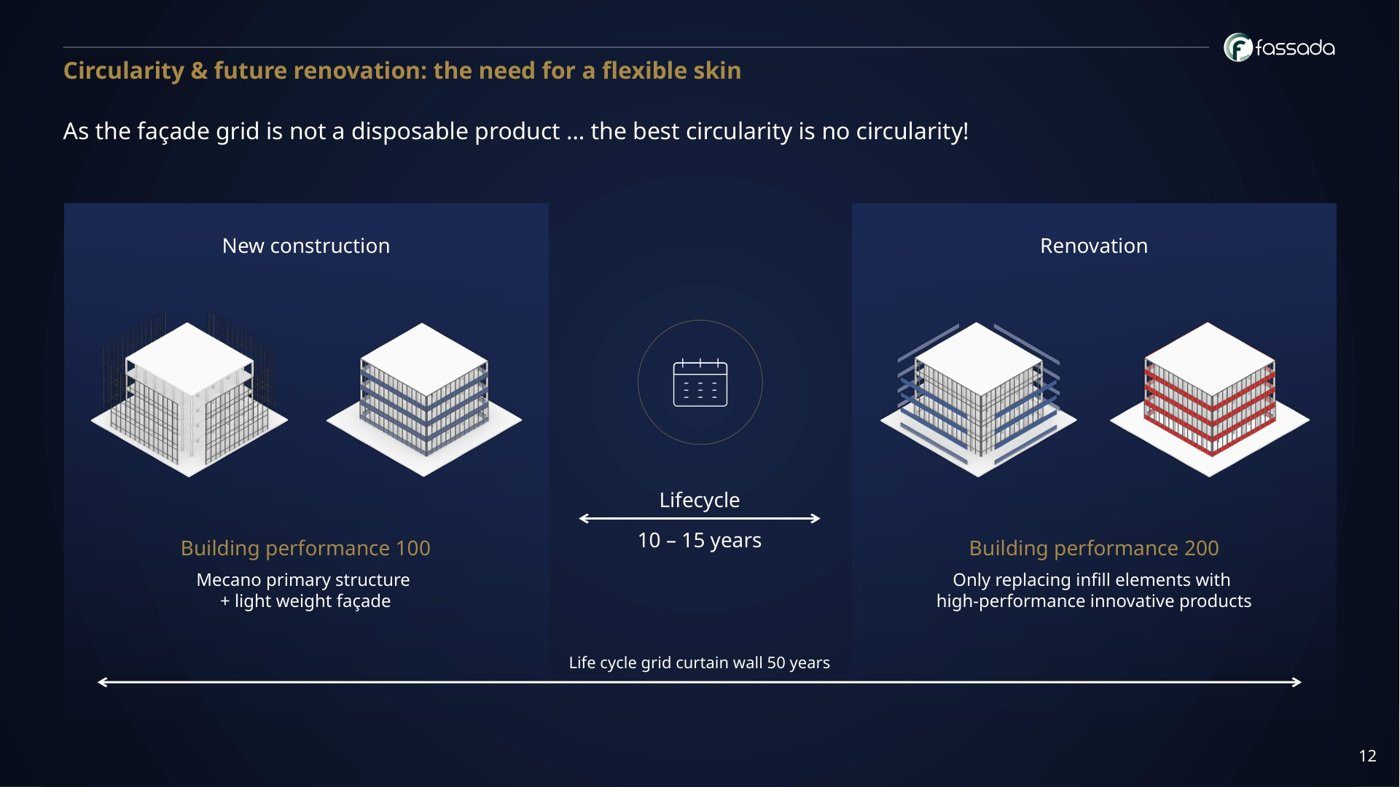
Built to last
Underpinning it all is a view of the building as durable rather than disposable. Claeys rejected the usual framing of circularity, arguing instead, with a collector's fondness for the 1963 Porsche 911 as his analogy, that the real gain comes from building to last for decades, which demands a different design perspective from the outset. To hold quality consistent at that lifespan, he described heavily robotised factories and a global manufacturing footprint now extending into the United States.