Alberto Alarcón made the case for laminated glass as a transparent answer to a fast-growing problem, flooding, explaining why a stiff ionoplast interlayer keeps broken glass in place and resists moisture where standard PVB fails, and how flood barriers and flood-resistant windows are tested and deployed from Battery Park to hospital fronts on the East River.
Alarcón opened by insisting that flooding is not a trend but a growing reality, and that laminated glass is unusually well suited to answering it, in both flood barriers and flood-resistant windows. To make the case he started, as he said he always must, with the glass itself.
Annealed, heat-strengthened and tempered glass can all be laminated, and lamination began as a safety measure: an interlayer bonds the broken fragments together to reduce injury. Most of the market runs on one of two polymers, flexible PVB, which dates to the 1940s and still sits in every car windshield, or a stiff ionoplast, which arrived after Hurricane Andrew in 1992 created demand for something that could resist hurricane winds and windborne debris. The benchmark safety test, ANSI Z97.1, requires no opening when a 100-pound impactor strikes the glass, dropped from a height that rises with the rating being sought.
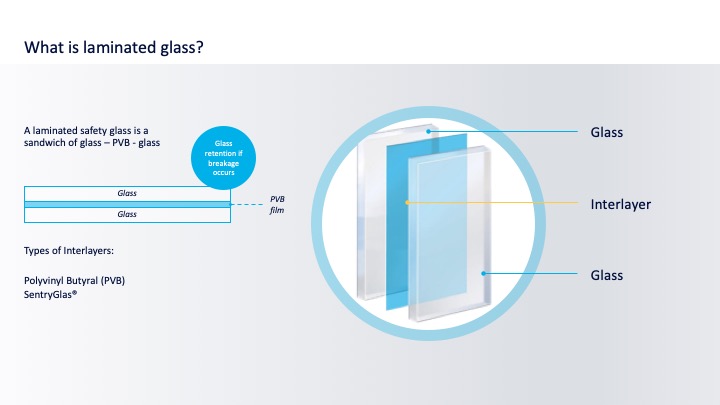
The property that makes the stiff interlayer right for flood work is what happens after breakage. Tempered glass shatters and effectively explodes on a single impact; PVB retains the fragments but, being soft, lets the pane sag like a wet blanket, so a top rail or handrail is needed to hold it in place. The ionoplast interlayer keeps a broken pane standing, which means rails can be removed. It also resists moisture where PVB does not: PVB carries a plasticiser that reacts with water and delaminates over time, whereas the plasticiser-free ionoplast has weathered more than twenty years of exposed-edge testing in South Florida, and stays structurally stable across a far wider temperature range.

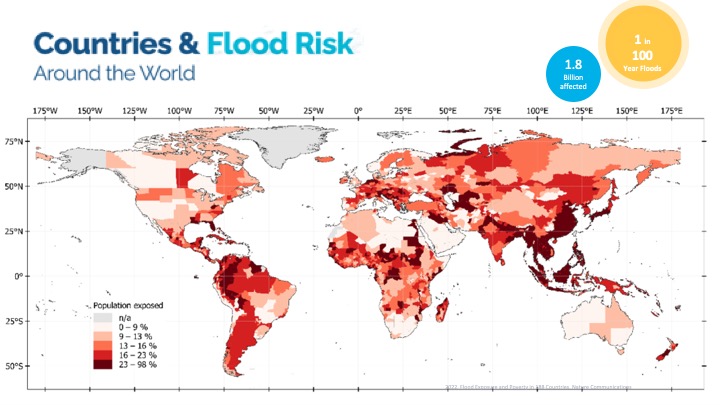
Alarcón framed flooding as the product of several forces at once, rising sea levels, more frequent and intense rain, and an urbanisation that deforests land and outpaces drainage, creating what he called a toxic cycle. A risk map showed Florida, the south-eastern United States and, on closer inspection, New York City deep in the danger zone, alongside recent events in Texas, Mexico, Spain and Germany. The market has responded accordingly: he put flood barriers at roughly two billion dollars and growing near 8 per cent a year, close to double the growth rate of construction overall.
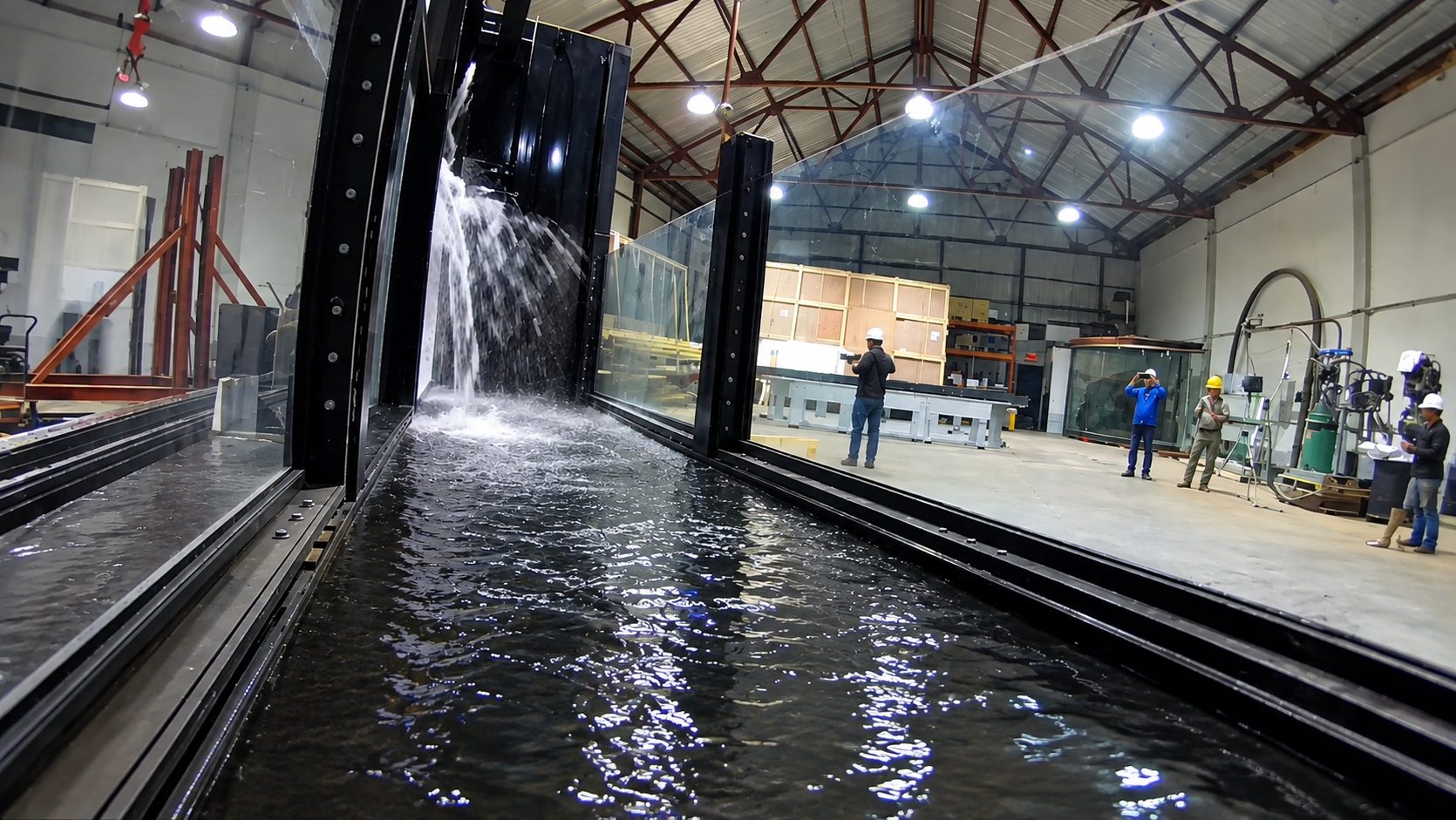
Solutions divide into active barriers, deployed before a flood and needing storage, inspection and human action, and passive barriers, which are always ready and take the form of walls, glass-and-wall combinations or full glass. Sea walls are a more elegant variant, a recent Florida project holds back rising water without blocking the view, so the defence is not read as a barrier at all. These systems are proven to FM 2510, a punishing sequence of roughly a full day of hydrostatic load, then dynamic load and a period of water at full height, followed by a 150-kilogram impact and a check for leakage.
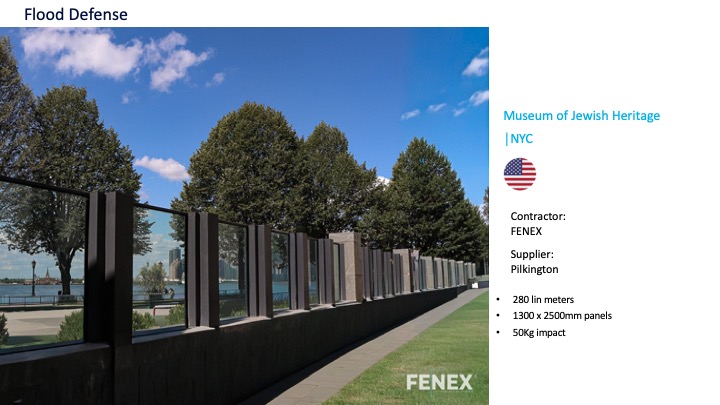
The references bring it home to the region. Ionoplast flood barriers protect historic fabric in Venice and, in Battery Park, shield a museum behind glass rated to hold back several feet of water. Flood-resistant curtain-wall systems have been installed on a Houston justice-centre restoration, and in New York flood-resistant windows now front a New Jersey medical centre and a hospital sitting close to the East River, each of them, Alarcón argued, keeping clarity and a view where a solid wall would once have been the only defence.