


Matthew Owen showed how membranes, junctions and condensation analysis can influence energy performance far beyond their physical thickness, especially as envelope targets tighten.

A membrane less than a millimetre thick can influence the performance of an entire external wall. Matthew Owen used that imbalance of scale to show why airtightness deserves to be treated as a primary design variable rather than a late-stage sealing exercise. Insulation, air control and moisture management are often specified as separate products, but the building experiences them as one environmental system. If the air barrier is discontinuous or the dew point is allowed to develop in the wrong place, nominal U-values alone will not deliver the intended result.
Choose the performance lever that actually works
Owen compared two ways of improving a wall. In his example, a wall with a U-value of 0.15 W/m²K and an air-leakage rate of 7 produced a dwelling emissions rate of 12.18. The instinctive response might be to push the U-value lower by adding insulation, but that can thicken the build-up, increase bracket cantilevers and introduce more thermal bridges. He showed that keeping the same U-value while driving air leakage down can produce a similar emissions improvement. A target of 0.5 is extreme, he acknowledged, but the comparison makes the design point: fabric performance should be assessed at whole-building level rather than through one headline number.
Continuity matters more than membrane thickness
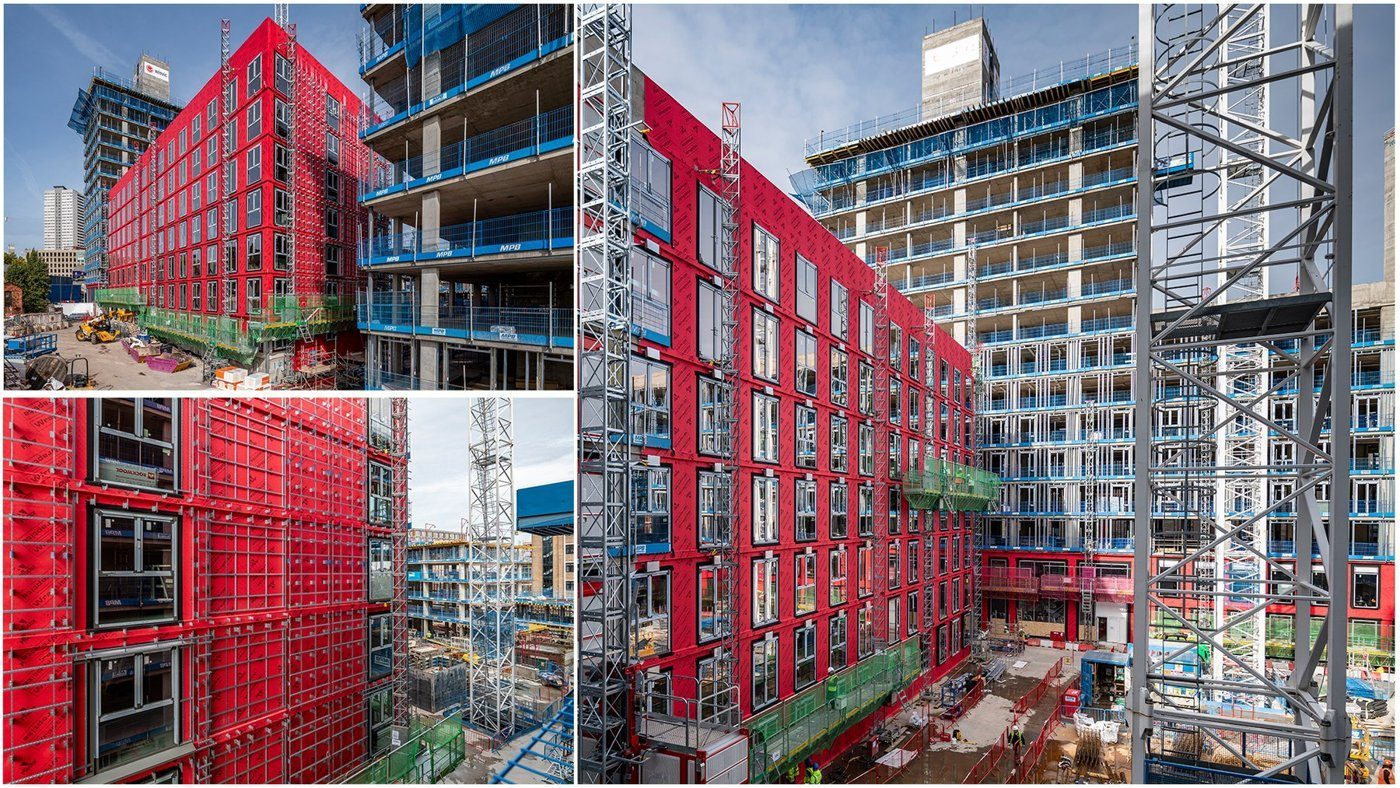
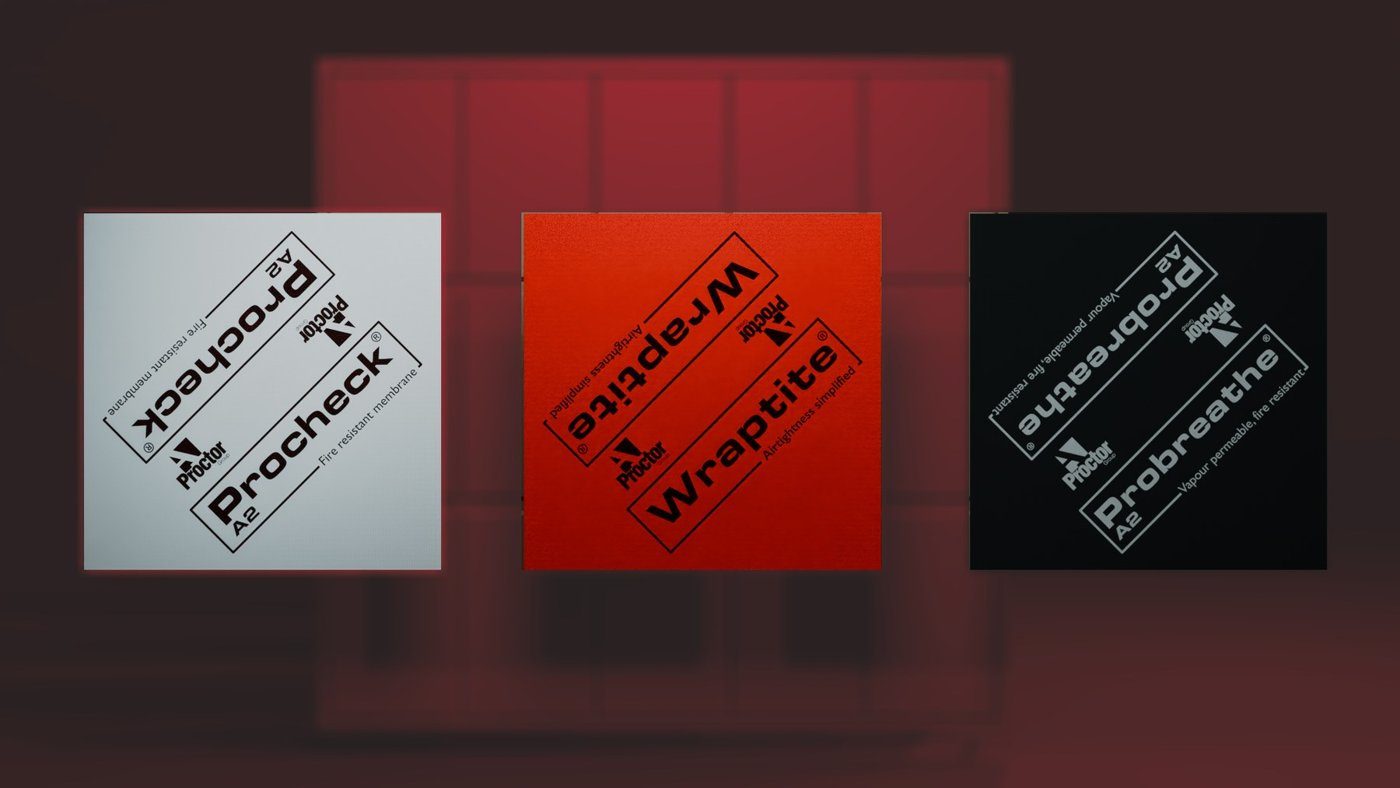
The air-control layer occupies almost no physical depth, yet it has to remain continuous through sheathing boards, brackets, openings and changes of trade. Owen contrasted that tiny thickness with the hundreds of millimetres devoted to mineral-wool insulation in a typical wall. The comparison matters because the membrane can be cheap and visually insignificant while still determining whether the paid-for thermal layer is bypassed by uncontrolled air. It also changes sequencing: installers need a surface they can bond to continuously before later packages make the junction inaccessible. Owen presented a fully self-adhered, vapour-permeable membrane as one way to simplify that task because the sheet bonds across the substrate rather than relying on a small number of fixings. Passive House certification was discussed as evidence of performance, not a restriction on use: the same system can be used on projects that are not pursuing Passive House certification. What matters is whether the selected membrane performs the required function in the actual wall build-up.
Condensation requires more than a rule of thumb
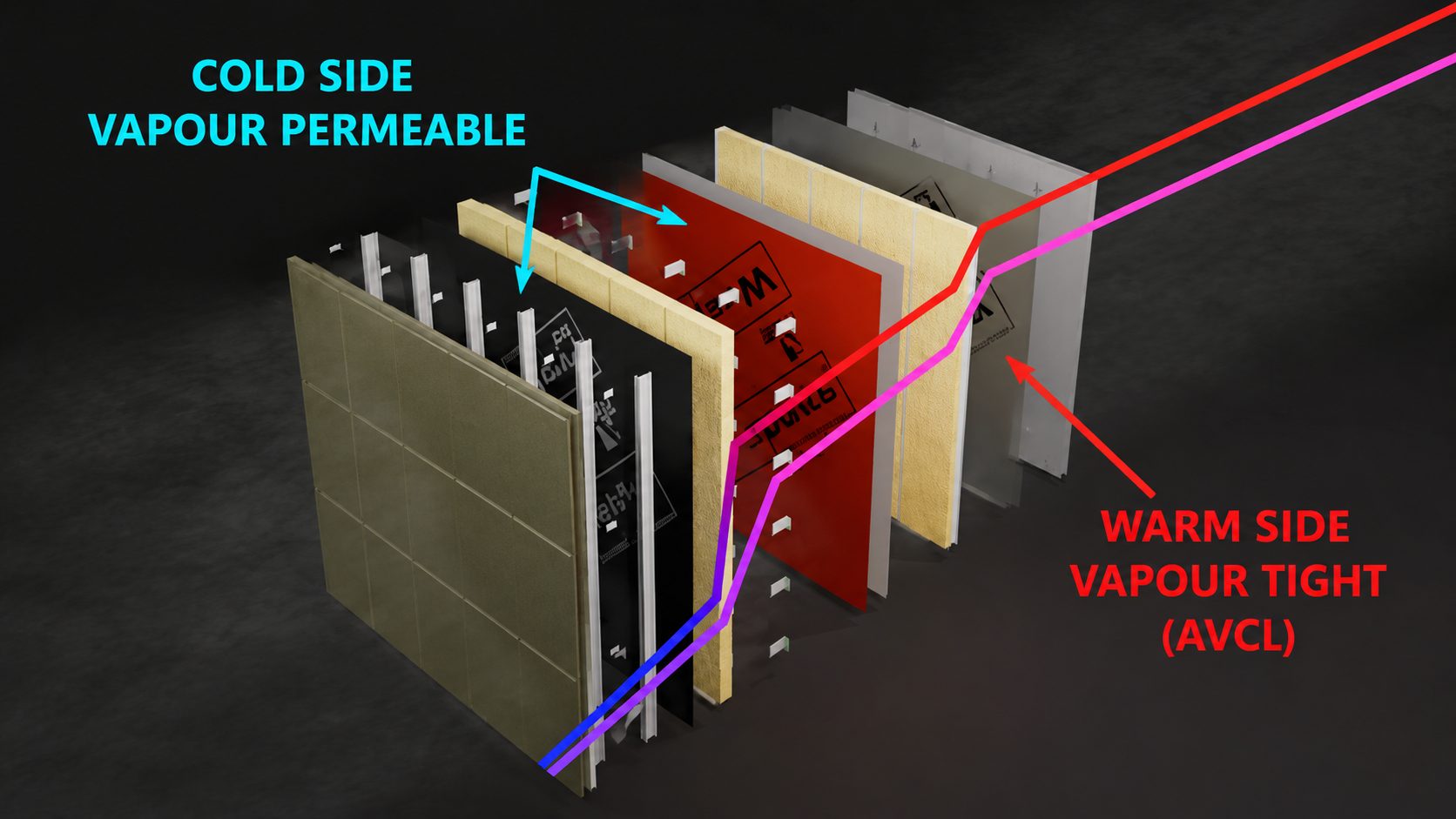
Airtightness also changes moisture risk. Warm internal air meeting colder conditions through the wall creates the possibility of a dew point and interstitial condensation. Owen distinguished between a conventional Glaser calculation, which assesses vapour movement from inside to outside, and a more detailed WUFI analysis that can model moisture movement in both directions. The more complex the façade, climate or material sequence, the less useful it is to rely on a generic assumption. The analysis needs to reflect the actual layer order, permeability and exposure of the project.
Installation closes the performance loop
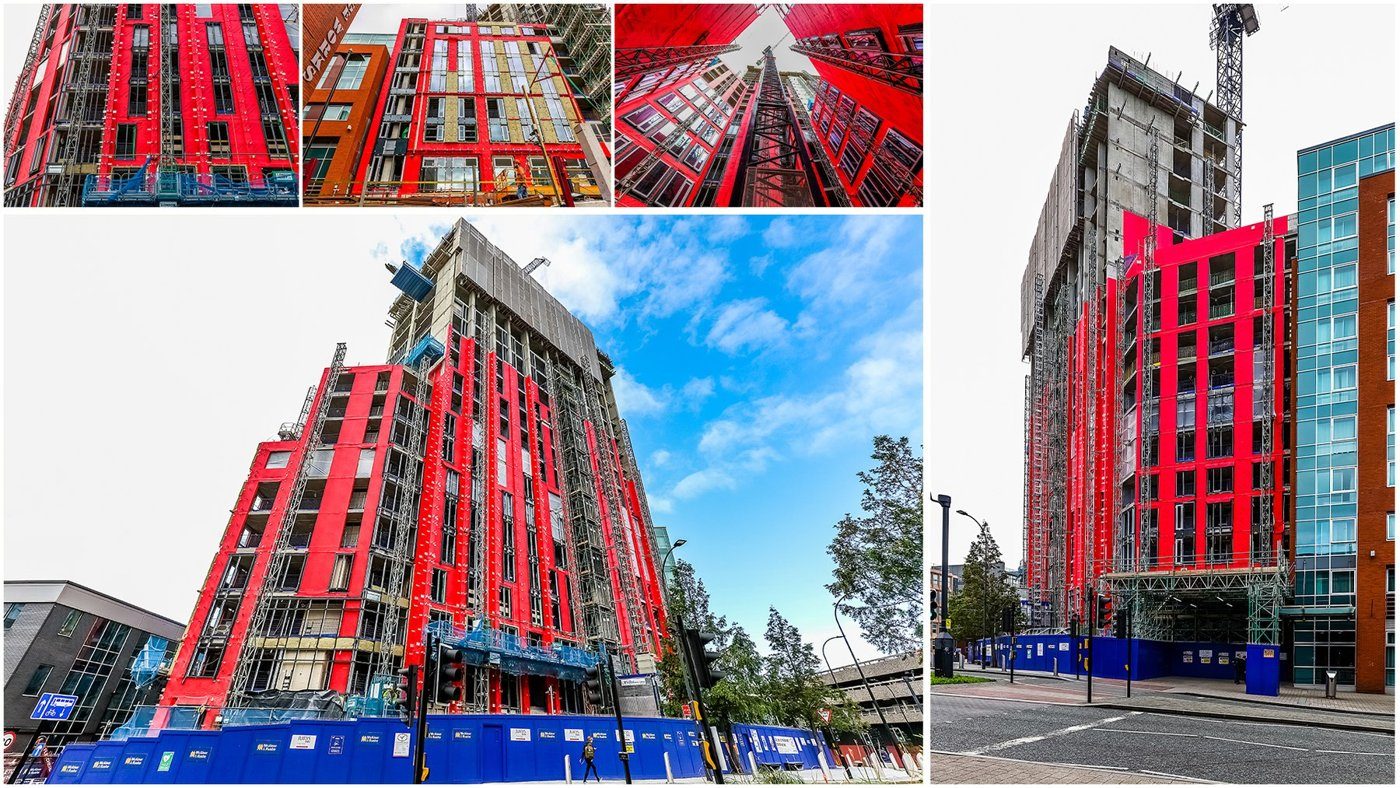
Owen's final emphasis was site execution. He argued that manufacturers should remain visible during construction because even a well-specified product can fail if interfaces are missed. Project photographs showed the membrane installed around brackets and behind later façade work, including at Deptford Landings, a Passive House project. That stage is critical: once insulation and cladding close the wall, discontinuities become expensive to diagnose and repair. The detail only works if that continuity survives junctions. Membranes have to pass columns, floor edges, windows and penetrations without becoming an afterthought, and the specification has to be supported by inspection on site. Owen’s comparison between simple Glaser analysis and more detailed hygrothermal modelling made the same point at another scale: a nominally thin layer can determine how the whole wall manages air and moisture. The performance gain therefore comes from design, installation and verification working together, not from selecting a membrane and assuming the number will follow.
The message is deliberately practical. Designers can keep pursuing better insulation values, but there is little benefit in paying for a high-performance wall if uncontrolled air movement bypasses it. Airtightness, condensation analysis and installation quality are small-looking items on drawings; together they determine whether the completed façade behaves like the calculation.