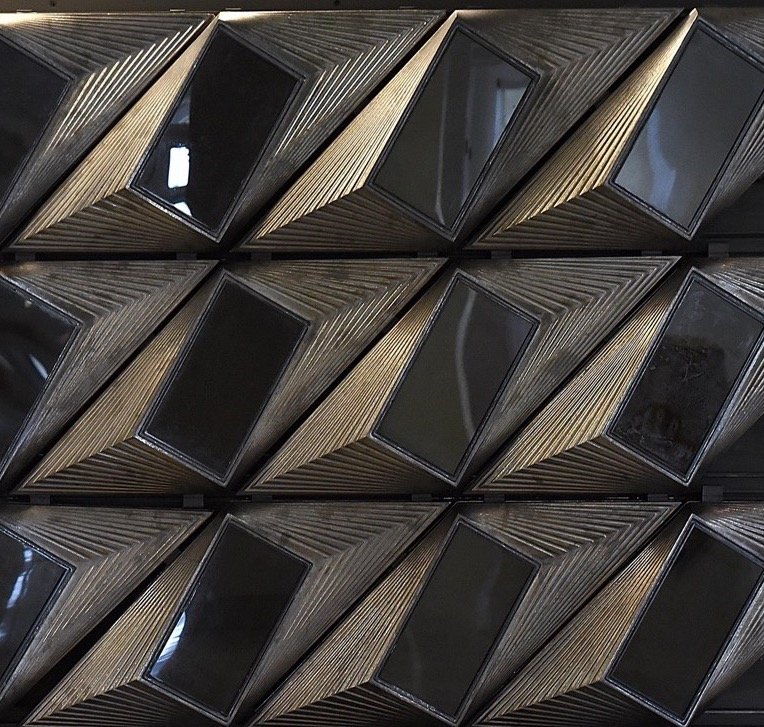
Matt Schwartz put a terracotta test wall against a plain block one and measured a surface twenty degrees cooler an hour after the rain stopped, then worked through four forming methods, a hurricane and a recycled clay body.
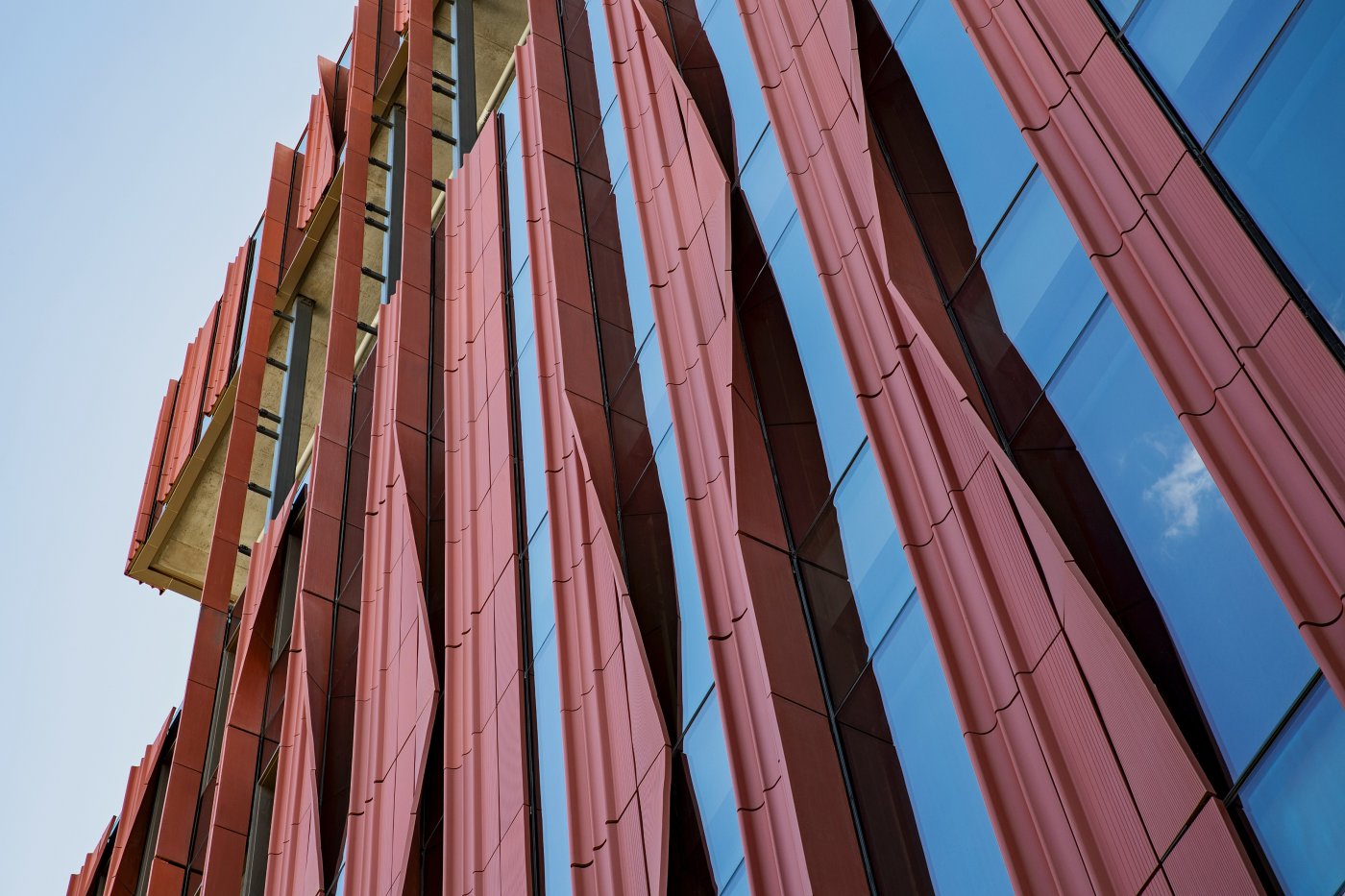
Terracotta is derived from clay, one of the earth's most abundant natural resources, and Matt Schwartz's case for it starts there: a panel very low in embodied carbon, with a long design life and few limits on shape. What he wanted to argue is that the material can be asked to do more than look right. Behind it is the urban heat island effect, which he said is present in virtually every metropolitan area in the United States and beyond.
A few years ago Boston Valley was approached by a team led by Behnisch Architekten with Knippers Helbig, Transsolar and TriPyramid, asking whether a terracotta façade could actually capture rainwater, control it and use it as a means to cool itself. A module was designed to test the theory, and the rain it captured and slowed was measured against a control, a plain CMU block wall. The terracotta ran a maximum surface temperature about 20 degrees cooler immediately after a simulated rainfall, and was still about 20 degrees cooler an hour later.
Four ways to form it
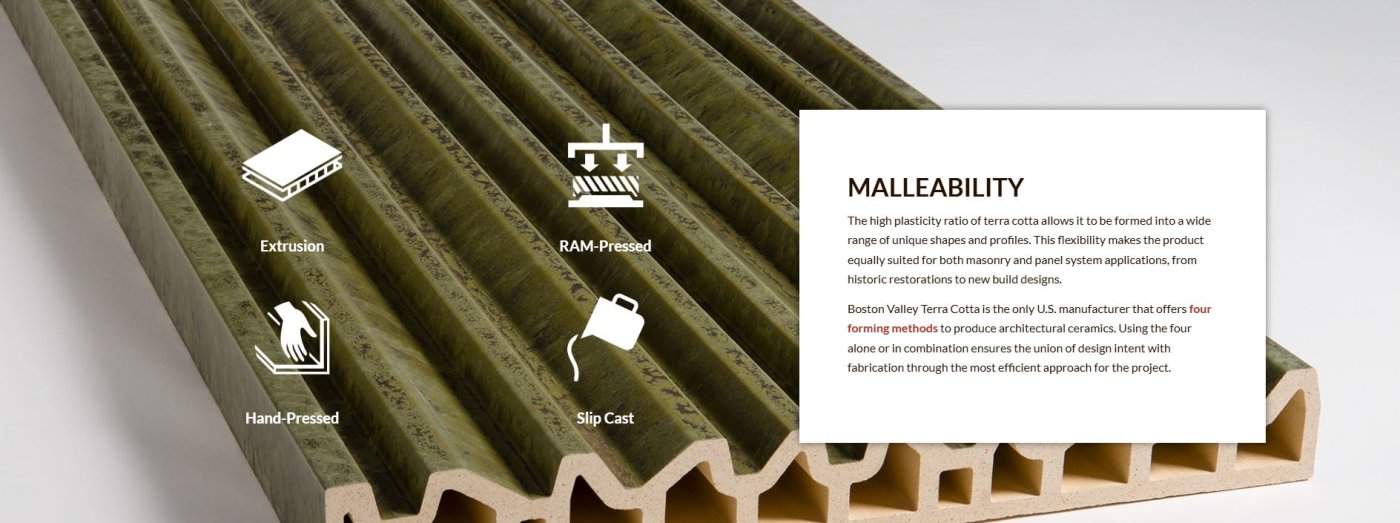
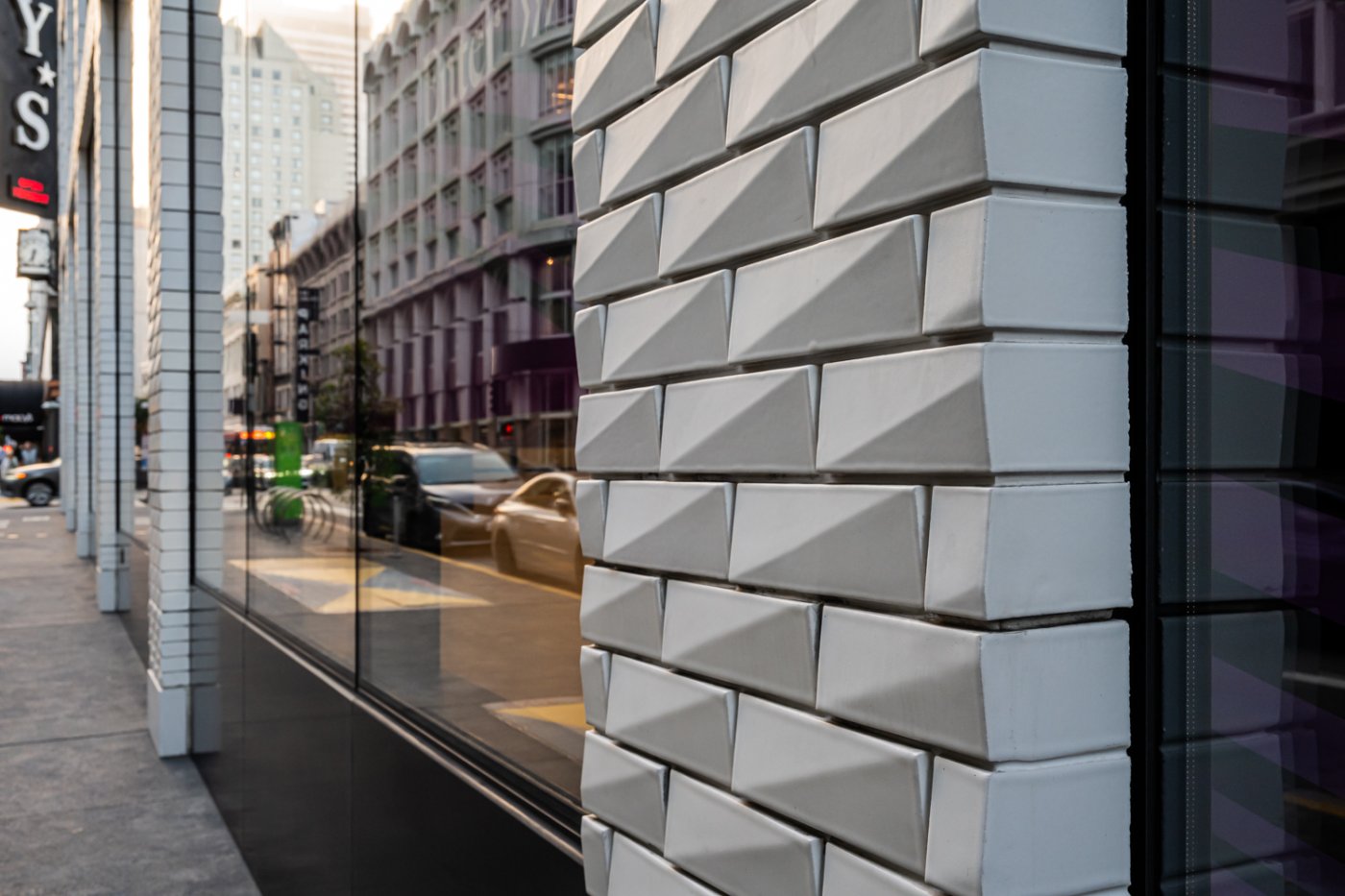
Before it is fired, terracotta is extremely malleable and can be formed into virtually any shape. Boston Valley uses all four commercially viable forming methods: extrusion, the best known and most cost effective, along with ram pressing, hand pressing and slip casting. Schwartz presented that as a reason to start from design intent rather than hand an architect a catalogue of shapes. At 120 Stockton Street in San Francisco, a reclad of the old Macy's men's store, Gensler graduated the module up the building from almost brick masonry to much larger extruded panels. Colour is the other half: through-body colours, surface textures and finishes, and custom glaze, which Schwartz called the golden goose of terracotta. At 10 Bond Street in New York, Selldorf Architects answered a historic neighbourhood with large-module panels and a custom glaze instead of more brickwork.
Thousands of years of evidence
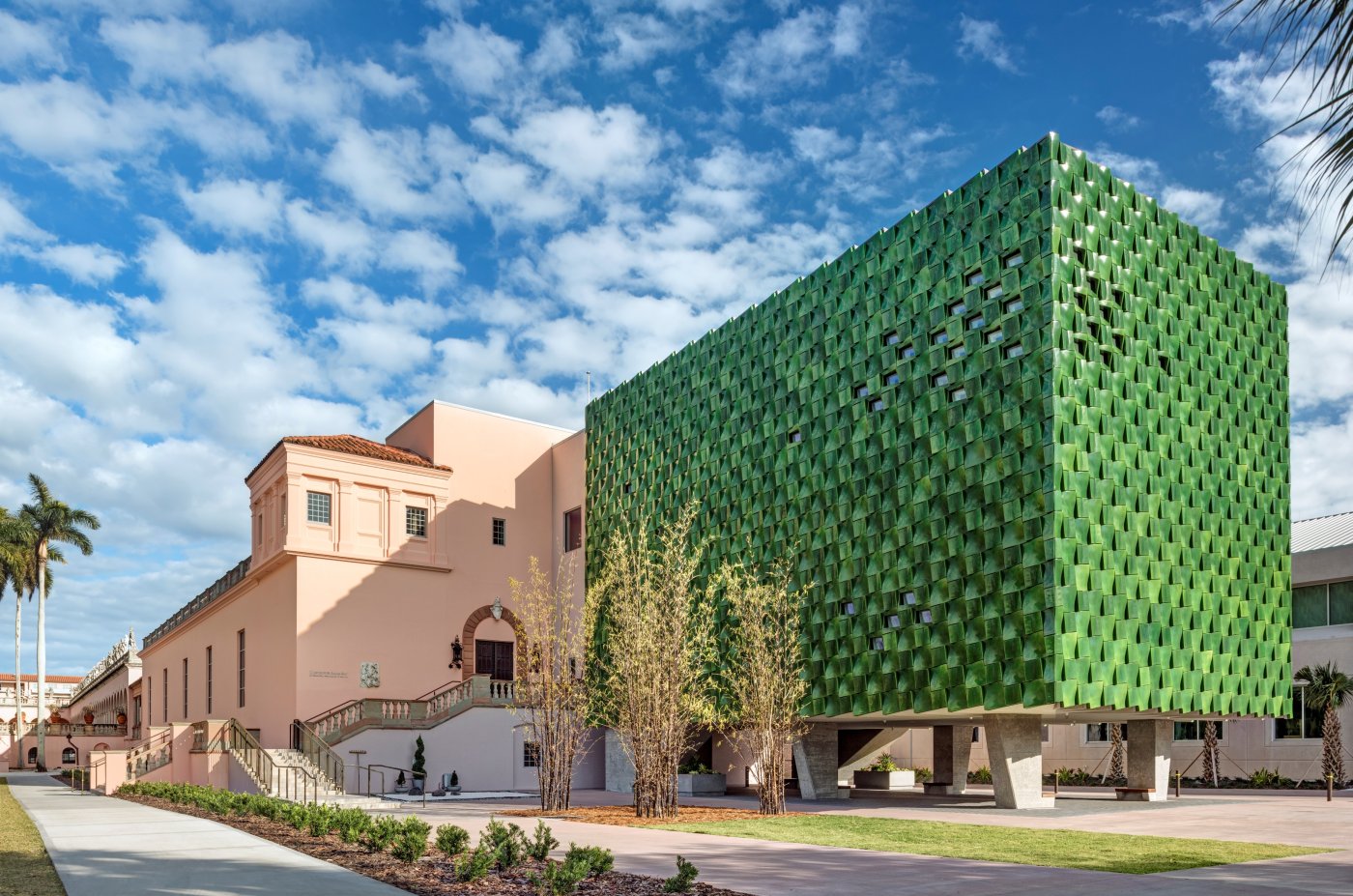
Durability carries the longest record, since we judge ancient civilisations on their ceramics. The material is fully UV resistant, so it does not lose its colour or sheen. At the Ringling Museum in Sarasota, Machado Silvetti's green glazed façade combined several forming methods in a rainscreen, and when Hurricane Milton made landfall the façade came away entirely unharmed.
Between 20 and 30 per cent of the Boston Valley clay body is recycled, drawn from steps in the manufacturing process and from panels that have outlasted the buildings they were once installed on, ground up and returned to the mix. In Austin, the Robert D. Moreton Building had a concrete skin deteriorating fast enough to raise both safety and efficiency problems, and the decision was to remove it and replace it not like for like but with a custom terracotta rainscreen.
What it might do next
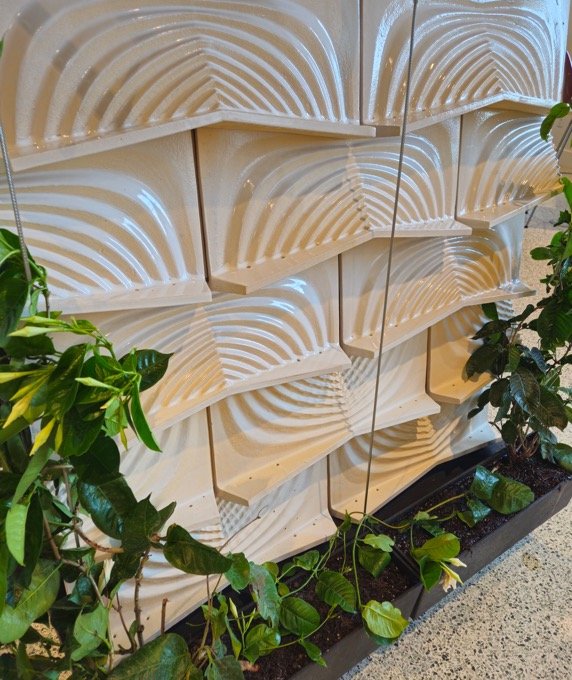
Boston Valley has run the Architectural Ceramics Assemblies Workshop for ten years to push at what the material can be made to do. Woods Bagot asked whether terracotta and photovoltaics could come together as one integrated façade, with the panels angling the cells to capture the most solar energy while throwing shadow across the elevation. With Wiss, Janney, Elstner, heavy historic cornices were tested against thin-walled extrusions on modern rainscreen attachments, producing a lighter assembly that is faster to install and makes restoring a crown practical. A third study routed Miami's torrential downpours off the façade into integrated planters while passively shading the building. Schwartz's closing ask was that a materiality conversation carry a second question alongside what the façade should look like: what it should do.