


Performance and safety come down to practical questions, what a mockup actually proves, why complex glass is a structural problem before an aesthetic one, how digital fabrication changes who a design is drawn for, and why the region’s façade engineers are now organising into a professional body. Jaime Cavazos, Tasos Poulokefalos, Dimitrios Moustakidis, Yiannis Pericleous and Odysseas Georgiou each took a piece of it.
Taken seriously, safety and performance resolve into a set of concrete questions, and each speaker owned one. Jaime Cavazos, an architectural engineer with more than thirty years in façade engineering, took them up with Tasos Poulokefalos of Interface Facades, Dimitrios Moustakidis of ift Hellas, Yiannis Pericleous of AJP Facade Technology, and Odysseas Georgiou of Seamlexity.
One of the founders of the Society of Façade Engineers in Greece, Poulokefalos also introduced the society. It was founded in London in 2010, and in the last year the group has created its own Greek and Cypriot hub for façade engineers, a sign of the discipline in the region maturing enough to organise itself.
The central argument was about testing. Untested, a façade lets in water, leaks air and whistles, and the financial cost of those failures, especially twenty storeys up, dwarfs the one-off cost of a performance mockup tested in a chamber. If a client trims that test at tender, the panel warned, someone pays later, potentially taking the façade apart and rebuilding it. The mockup earns its keep on workmanship too: the cladding contractor builds it, so every interface and installation challenge is rehearsed off site before it reaches the building. The cautionary tale was a London high-rise at Elephant & Castle, topped with wind turbines meant to generate power, never properly tested, too noisy to run, and now, as one panellist put it, expensive decoration.
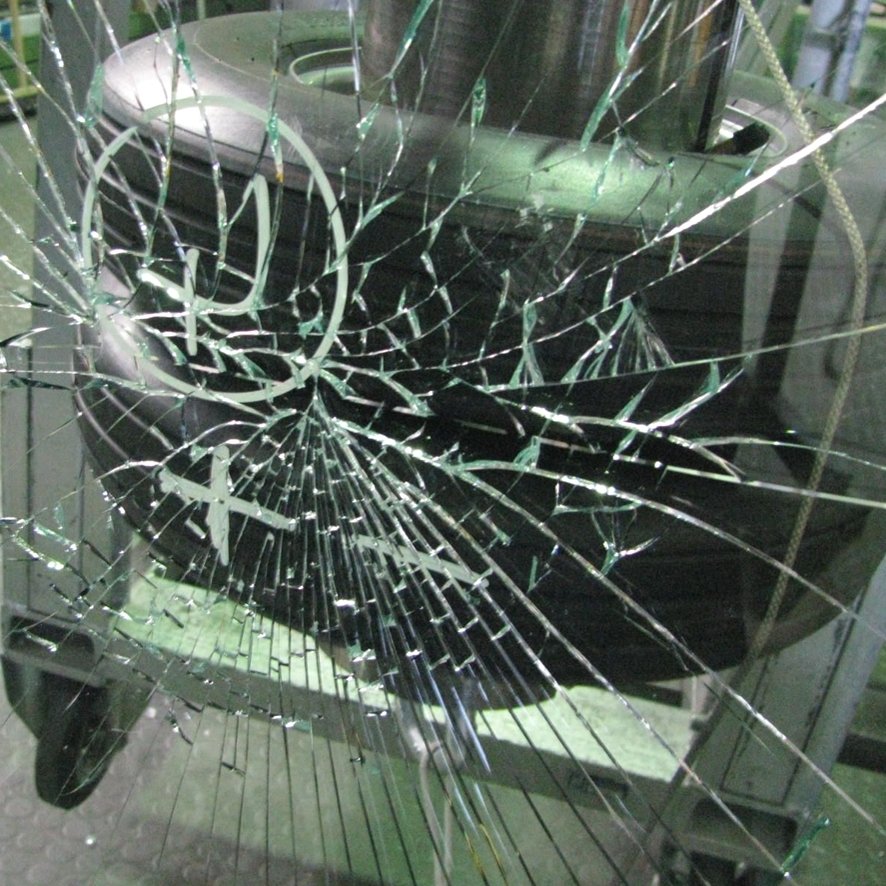
Moustakidis brought the perspective of ift, the testing institute. In Greece and Cyprus, he pointed out, there are no strict laws mandating this kind of performance testing, so the work falls back on international standards, and on the one baseline that does bite: CE marking, in force since 2006, without which a product cannot legally be placed on the market. The mockup, in that framing, isn’t red tape but the place where the real tests happen, impact and water-penetration tests, and fragility tests taken to the conditions that matter, a canopy proven at raised temperatures rather than assumed.
Pericleous, whose firm carries the structural engineering, pulled the conversation to glass and to safety in its most literal form, balustrades and infill panels that can break and fall from height. The answer lives in the make-up and in the numbers behind it: step a balustrade up from a ten-plus-ten laminate, add PVB interlayers, and it is the calculation, not the eye, that tells you whether it holds. Safety here is a structural question, settled on paper before anyone stands behind the glass.
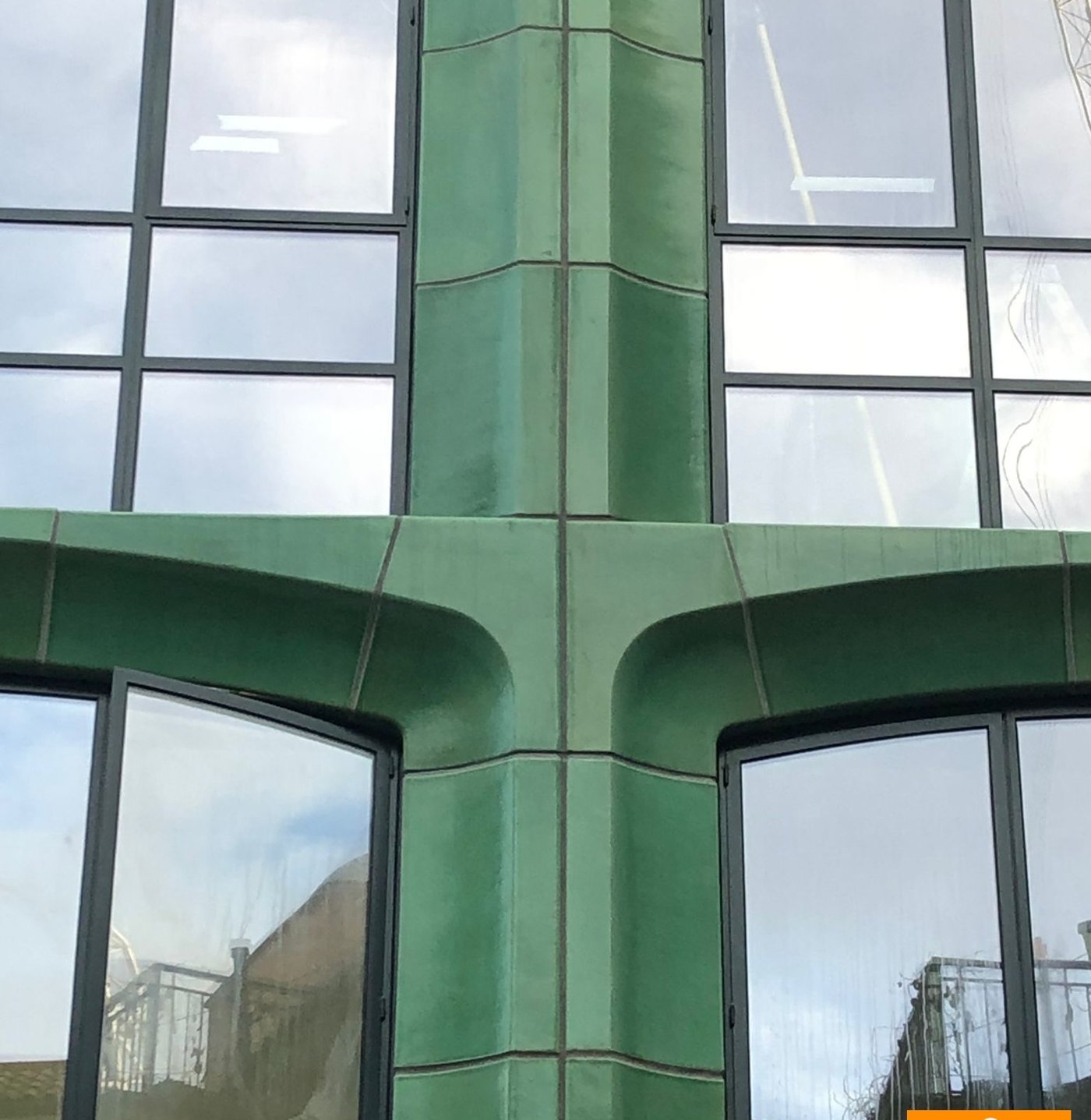
Georgiou then took the other half of the problem, making sure what was designed is what actually gets installed. Glass, as he put it, doesn’t negotiate: it either fits or it cracks. Seamlexity’s answer is a survey-management process that captures the real, as-built tolerances on site, feeds them back, and redesigns the system to suit, and the faster that loop runs, the better the result. The misalignments are caught and resolved during design, with the people who will actually assemble the façade, rather than discovered later on a scaffold.
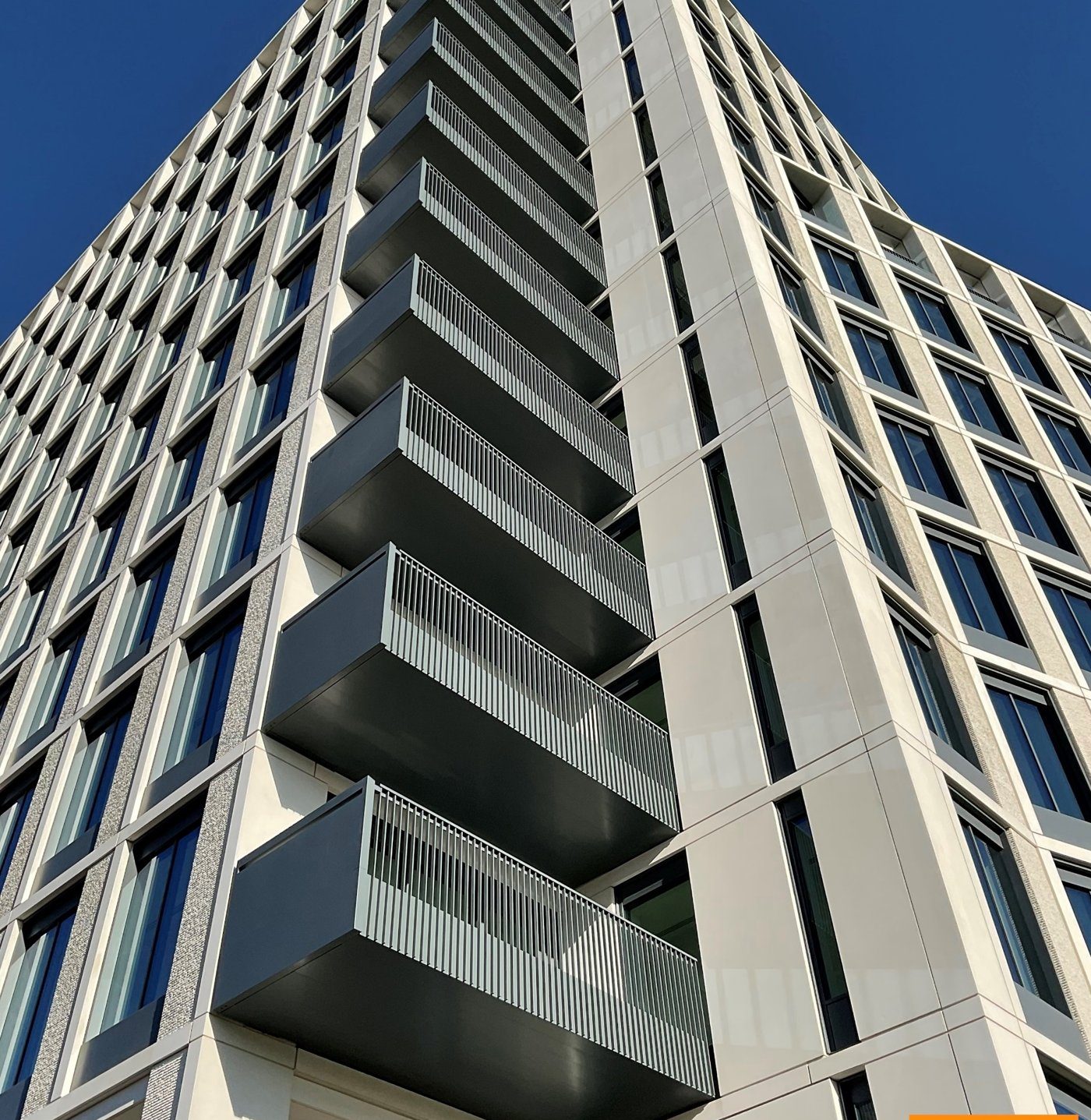
That led into digital fabrication. For a genuinely complex façade, Georgiou argued, traditional 2D drawings simply cannot carry the information, he has seen a single package run past five hundred issue sheets, at which point detail is lost either way. The alternative is to go straight from the model to the machine: cutting data issued directly to CNC, laser and five-axis tube-laser lines, digitally fabricated jigs to hold and weld the pieces, and thousands of components nested and labelled automatically. On the Metropolitan tower he described exactly that, unique panels whose moulds a robot mills from polystyrene, substructure cut and welded from digital data. But he was careful about the limit: handling and placement on site is still analog, and what looks effortless in a render has to be built by the person on the scaffold. The time digital fabrication saves, he argued, should be spent simplifying their job, not just feeding the robot.
Across the exchange, performance and safety came down to three things that have to hold together, test it, verify it, and keep it buildable, before you build it.