


Peter Dushenski put the case that where a façade is made now belongs in the specification beside U-value and solar heat gain, and priced the decision on an eight-storey courthouse in central Alberta.
A curtain wall specification used to be a short list of things that are easy to calculate: U-value, solar heat gain, and lately embodied carbon where a client will pay for it. Peter Dushenski's argument is that those metrics still separate the wheat from the chaff and no longer describe the whole problem, because the last five years have shown how fragile global logistics can be. What a product is made of now sits alongside where it comes from, how it is made and who it supports – not as a political position but as a practical one, since delays and contingency draw-downs are what an unreliable supply chain actually costs.
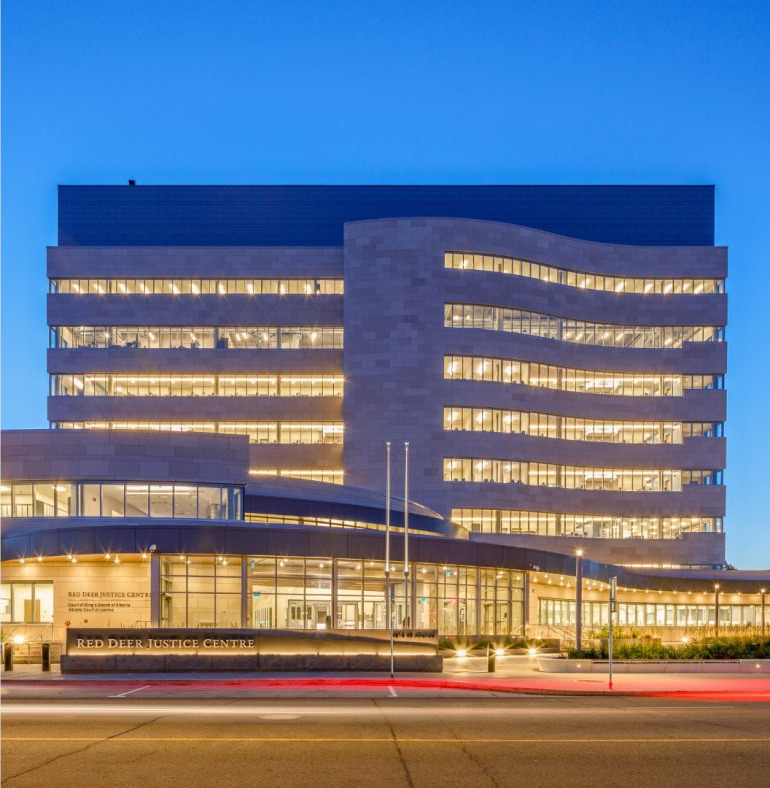
The Red Deer Justice Centre is the project he used to test that. An eight-storey provincial courthouse in central Alberta, designed by DLR Group with Group2 for Alberta Infrastructure, tendered in 2020 at $250 million – a figure he noted would be considerably higher today. It is also the tallest building in Red Deer. The client set out to meet Canada Green Building Council net zero standards rather than code, which put the envelope at the centre of the project: base compliance was never going to reach the operational efficiency, cost certainty and durability the brief wanted.
What the decision cost
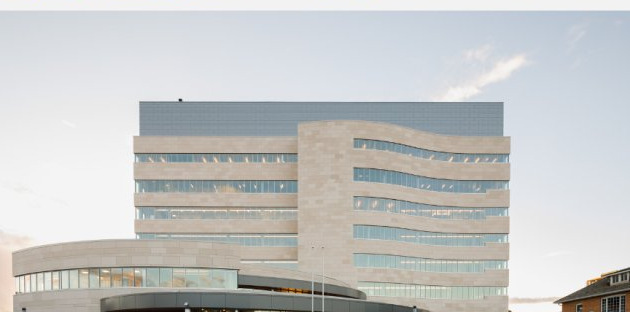
The specified system was a fibreglass-framed, triple-glazed curtain wall across 22,000 square feet of the building. Dushenski put the premium at less than half a per cent of the overall project budget. Against that: the glazing was delivered on time and on budget, 15 local manufacturing jobs were supported during construction, and the thermal performance of the façade roughly doubled – from about R3.5 to R7 – which he costed at over 4,000 tonnes of carbon emissions avoided.
The performance also bought design freedom rather than spending it. A building running between minus forty and plus thirty could have been answered by reducing glass; instead the team kept a relatively high window-to-wall ratio for the performance profile and made the envelope work harder – limiting heat loss, resisting condensation, and leaving a mechanical system that did not have to be oversized to compensate for a poor façade.

Where it was made
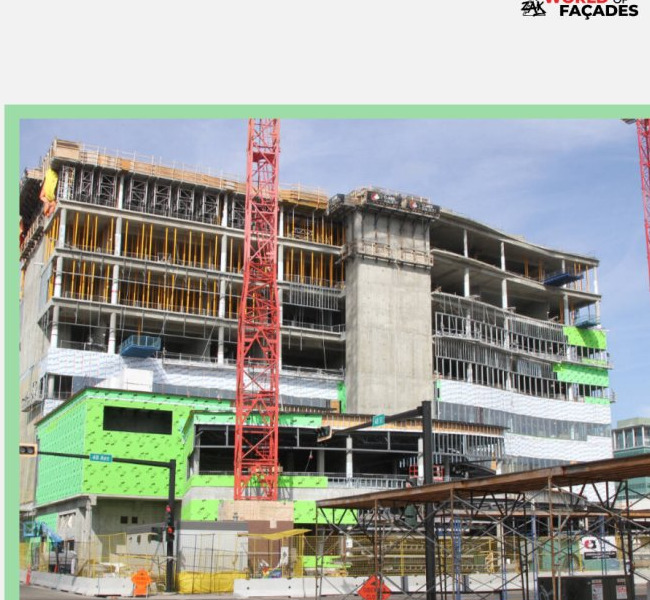
The part Dushenski was most insistent on is that the system was manufactured and fabricated entirely in central Canada, with the supply chain behind it in the same place. That removes customs and tariff uncertainty from the programme, shortens lead times and makes troubleshooting faster – advantages an imported system cannot offer whatever its performance. It was not long ago, he pointed out, that the best glazing systems had to come from Europe or Asia.
Which leads to the claim the talk was really built around: procurement is a design choice, with economic, environmental and social consequences, and not a line item to be managed down late in the project. He was blunt about the terminology – what tends to happen to envelopes at that stage is not value engineering, because there is no engineering in it. On a public project the choice also carries further than the building, because public work sets standards the private sector follows, and gives policymakers the built evidence that future standards get written from.