Celeste Gariando showed how the envelope of The Ritz-Carlton Hotel and Branded Residences in Tashkent was engineered around three questions: glazing balanced for climate, optical quality defined before fabrication, and movement accommodated in a seismic city, rather than around complexity of form.

The renders of The Ritz-Carlton Hotel and Branded Residences in Tashkent show façade systems that are, by Celeste Gariando's own description, highly repetitive. For her that is not a weakness but a deliberate position. The engineering challenge, she argued, lies not in the complexity of form but in managing movement accumulation over height, especially in a seismic prone city, and repetition is above all a risk management strategy for movement, tolerances and performance. Benoy is the architect, PD Estates the client and developer, and East West Engineering the local adaptation consultant. Gariando's team stayed on the engineering side of the envelope, which she took through in three parts: glazing for climate and comfort, the optical quality of a glass-dominant envelope, and movement in a slab-to-slab stick system.
A risk map, not a colour diagram
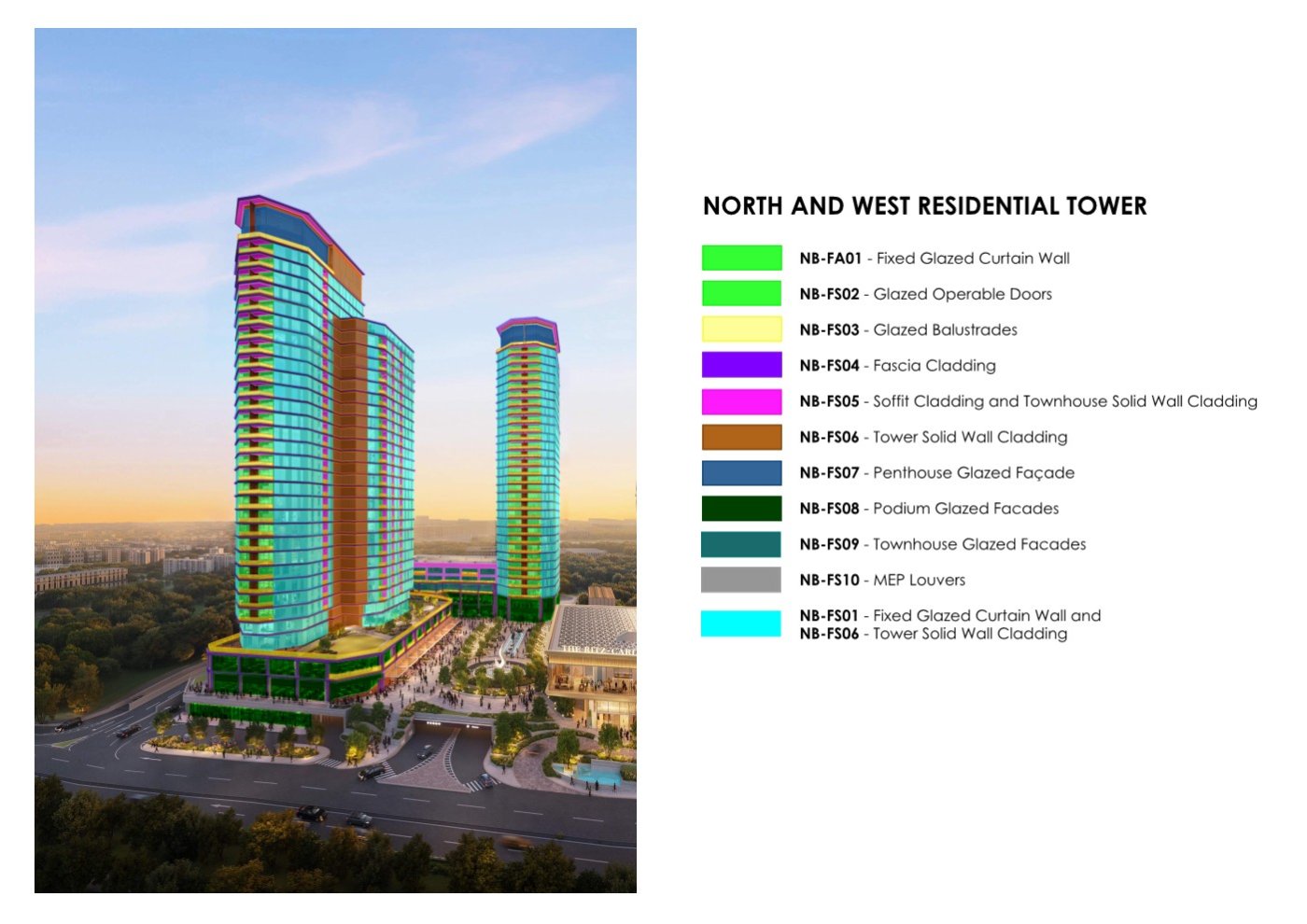
The work begins by breaking the envelope down into façade typologies, which Gariando described as mapping where risk, interface and performance change across the building. The north and west residential tower combines fixed curtain wall, operable doors, balustrades with solid cladding, MEP louvres and an architectural crown. The hotel tower is more layered, with curtain wall carrying fins and an architectural exoskeleton. She insisted this is the first engineering risk map of the envelope, showing where coordination with MEP, fire life safety and procurement has to happen early in design.
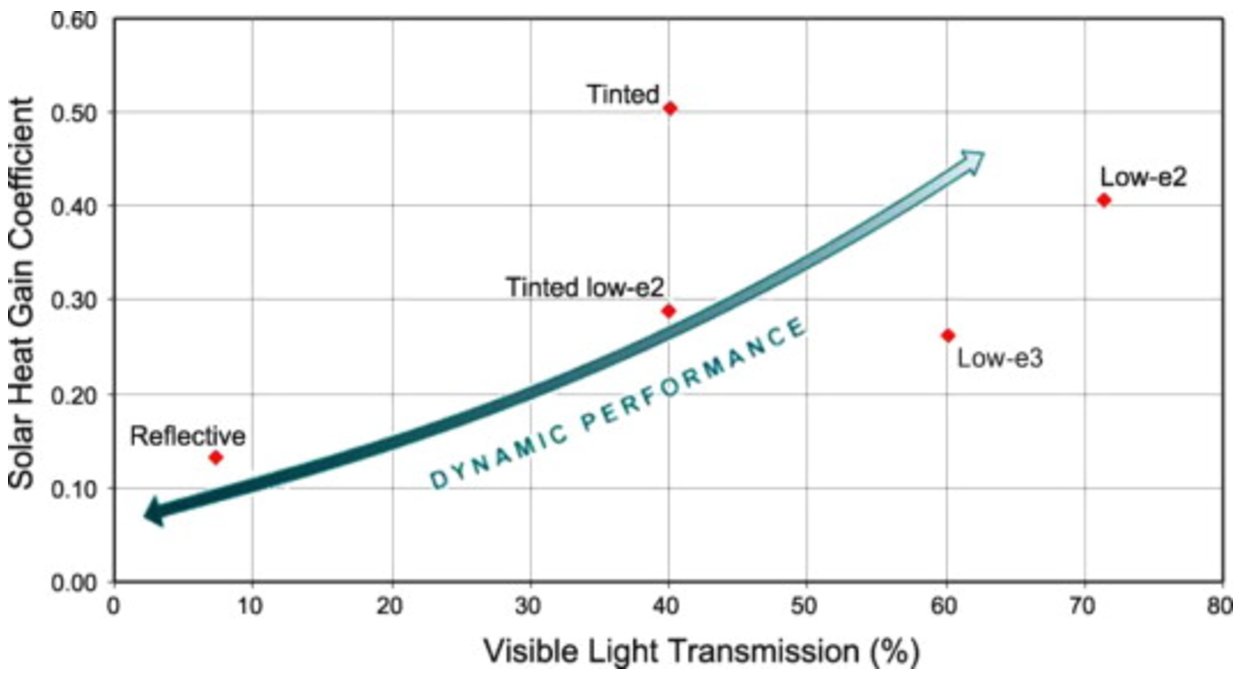
Because the development is predominantly glazed, the glass specification is one of the primary engineering decisions. The objective, Gariando explained, was neither the clearest glass nor the lowest solar heat gain figure but the right balance of visible light transmission, solar heat gain, U-value, reflectance and acoustic rating, coordinated with the MEP and sustainability consultants' model and with glass samples sent to the architect. On the hotel tower, external aluminium fins and projecting slab edges mean solar control is governed by the whole façade depth rather than the glass alone. Pushing solar gain down with a low-e coating also cuts daylight and raises reflectivity; the fins and projections instead intercept the sun before it reaches the glass, horizontal elements against the high south sun and vertical fins against low east and west angles.
The residences work the same way through balconies and slab projections. At approximately 41 degrees north, Gariando noted, the Tashkent sun rises to 72 degrees at the summer solstice and falls to around 25 degrees in winter, so overhangs shade summer sun while admitting low winter sun for passive gain. The position is controlled transparency, not maximum transparency.
Defining what good glass looks like
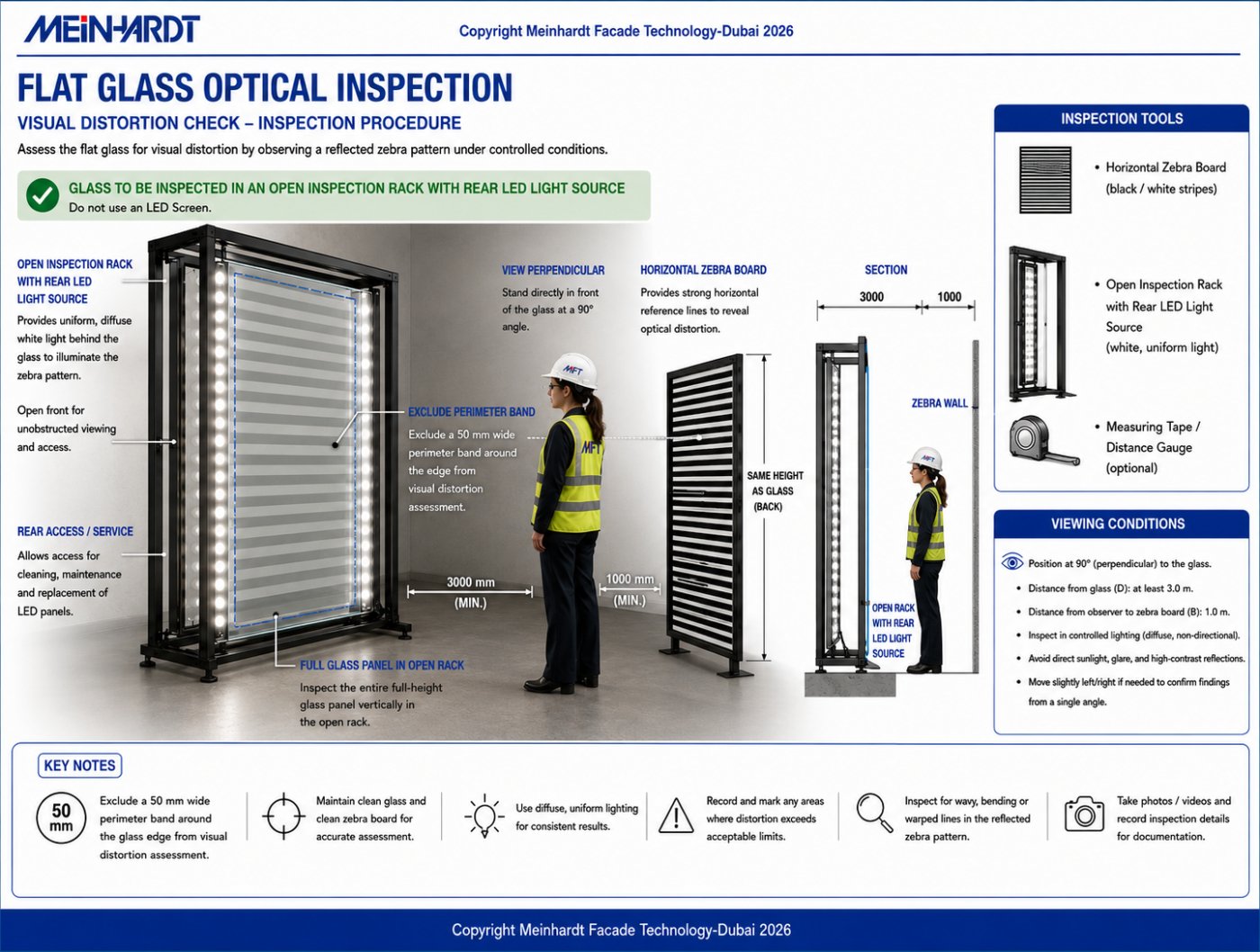
With so much glass, a minor defect becomes conspicuous once repeated across a tower elevation, and Gariando observed that many buildings in the region pass every structural, thermal, acoustic and safety requirement yet still fail visually. Optical quality should therefore not be left to judgement on site. It should be fixed through an early mock-up and inspected at the factory against ASTM, EN, ISO, GANA and Hadamar standards. Distortion is checked with a zebra board, the glass backlit in an open rack and viewed perpendicular from a minimum of three metres; surface defects are recorded by size and location, since acceptability depends on where a defect sits as much as how large it is.
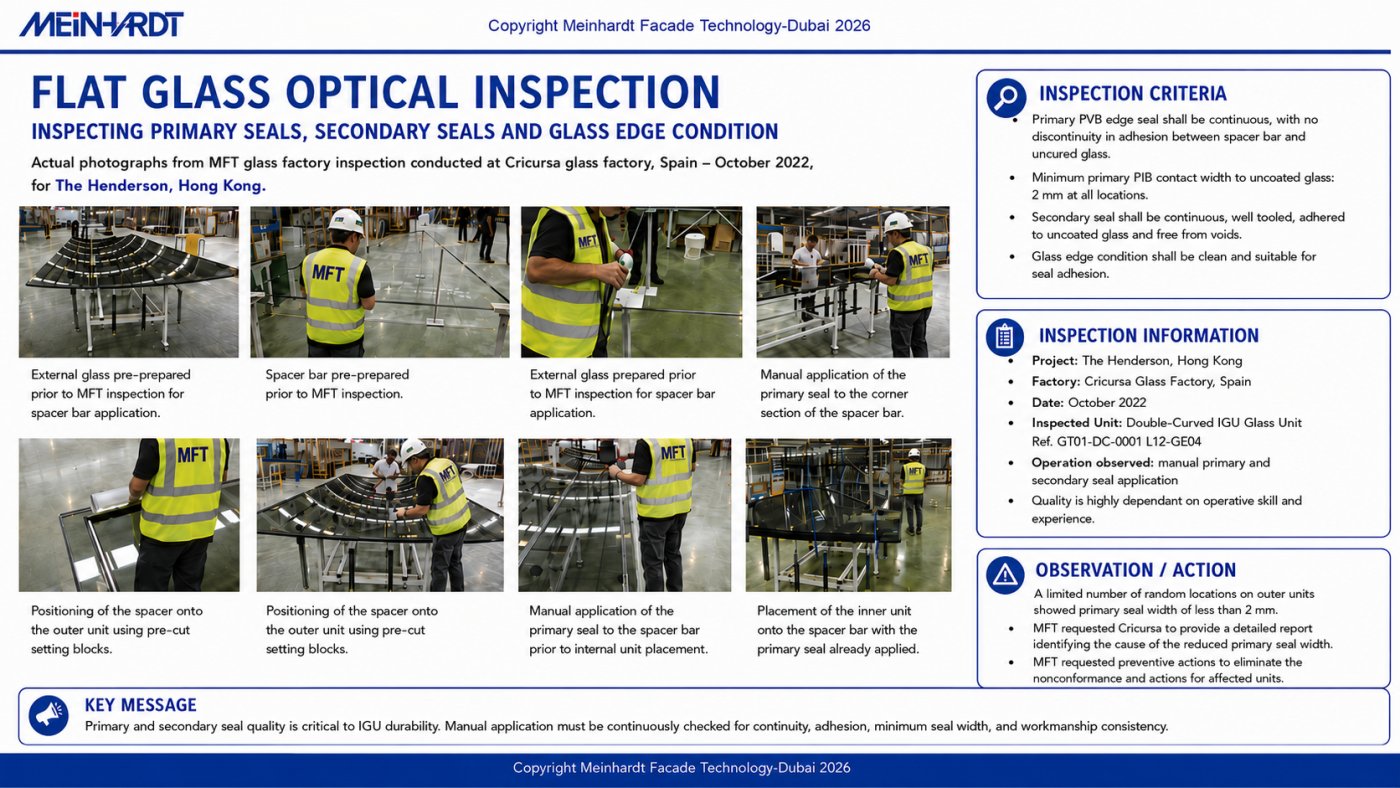
Edge seals made the contrast clearest. On the Henderson Building in Hong Kong, double-curved units had to be sealed by hand, and inspectors found random locations below the 2 mm minimum primary seal contact, so affected units were identified and corrective action required before production continued. The flat units in Tashkent run through an automated line, which removes operative variability, but the acceptance criteria are the same; only the focus of inspection shifts to line calibration, bead consistency and corner fill.
Movement as the governing case
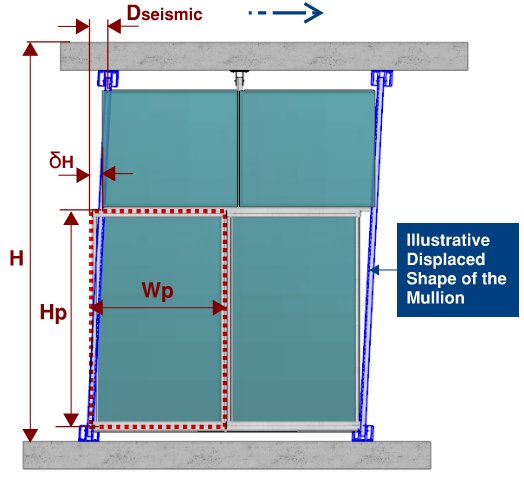
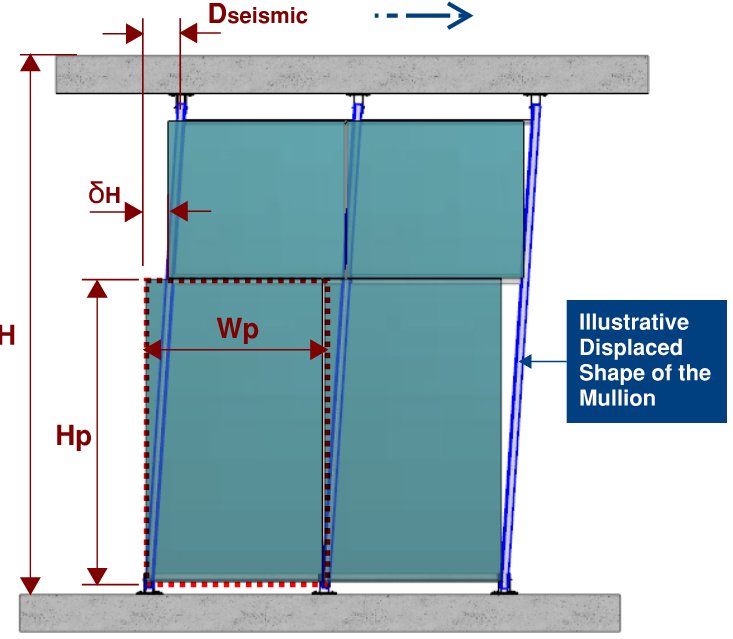
In a seismically active region, Gariando argued, interstorey drift under the design seismic event is the governing case, not a background check. Her analysis covered three points. The mullion head clearance and slotted hole length must absorb thermal movement, fabrication and installation tolerances, a base building tolerance of plus and minus 50 mm, column movement and differential slab edge deflection; she called it a movement control detail rather than an installation convenience. The 50 mm mullion profile leaves 10 mm glass clearance against a calculated drift of 47 mm, which exceeds the 20 mm allowance without overturning but stays within the 48.14 mm allowance with it. Narrowing a mullion for visual effect, she warned, also narrows the tolerance zone at the glass edge.
The sliding doors, often treated as a supplier item, were her final concern. Carried by the transom above, they must keep sliding, locking and sealing, and the same 47 mm drift falls within a 53.57 mm allowance with overturning. Movement analysis, she concluded, should start with operable components, where problems reach occupants first.