


Tony Abi Gebrayel walks through TeamLab Phenomena on Saadiyat, a building whose envelope was asked to do the one thing façades are not supposed to do: keep changing, like clouds, waves and dunes, while always remaining recognisable.
Tony Abi Gebrayel opened by declining the brief. He is an architect, he said, so there would be no chemistry and no self-cleaning: façade consultants describe the challenge of solving a façade, and he wanted to describe the challenge of setting one.
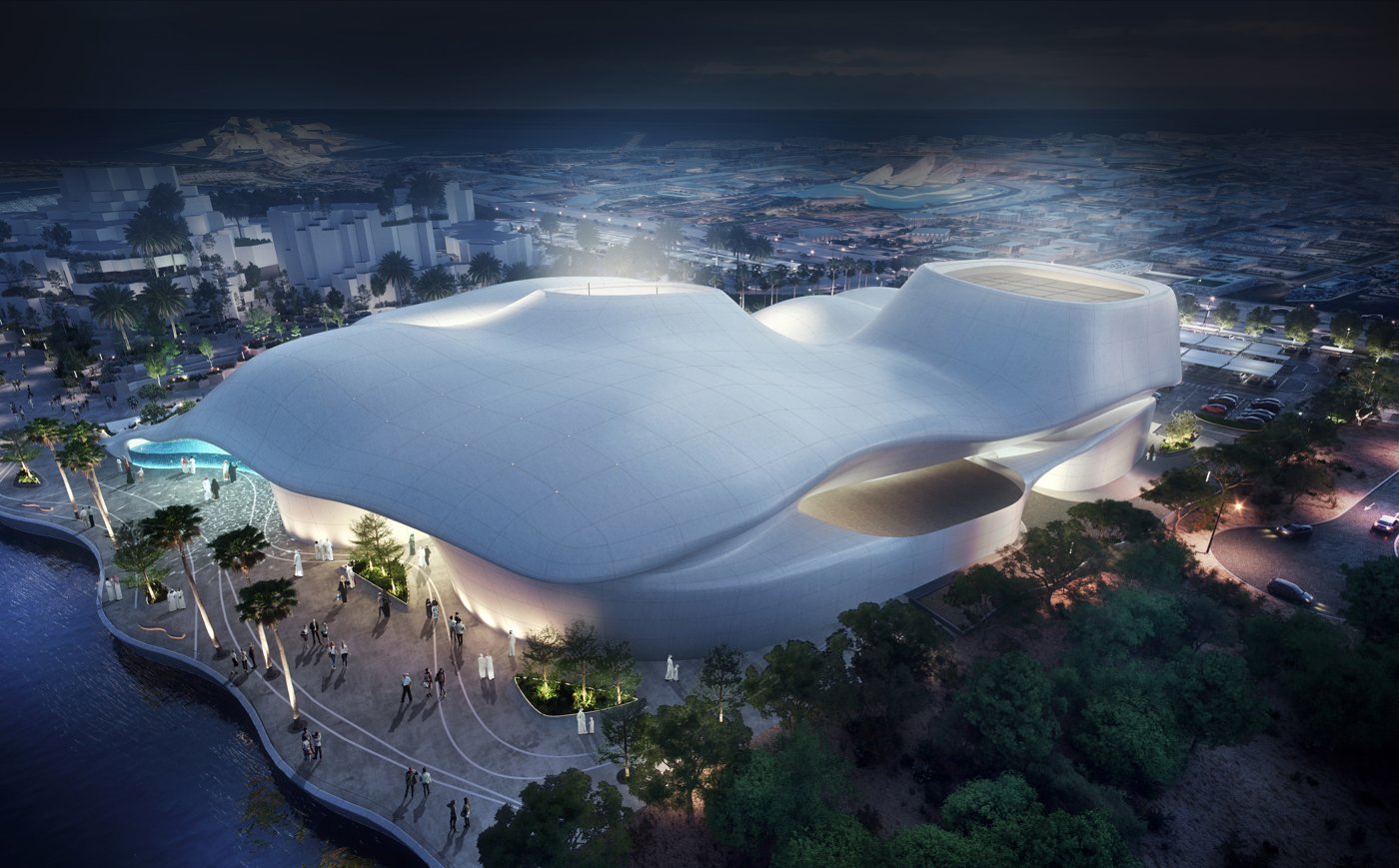
The building is teamLab Phenomena, on the Saadiyat Cultural District, where the Abu Dhabi government set out six projects: the Louvre, the Guggenheim, the Zayed Museum, the Abrahamic Family House, the Natural History Museum, and this one, which holds the immersive work of the Japanese artist collective teamLab.
Designed while the brief kept moving
It was drawn during the pandemic, which meant nobody could leave their office: a team of artists in Japan six hours ahead, developers in Abu Dhabi, and his own people split between home and the studio. That was the easy part. The layouts changed daily, sometimes hourly, because the artists were still designing the experiences: one of them would arrive in the morning wanting a 10 by 10 metre space to become 20 by 20, and the architecture was supposed to be fixing itself around that.
So they took a decision that explains the whole building. They freed the envelope from the plans. The functions sit below and the envelope sits over them, which let seventeen experiences across some 17,000 square metres keep moving underneath a skin that no longer depended on where any wall landed. Even the heights were undefined when the envelope was being designed.
How do you design a building that changes
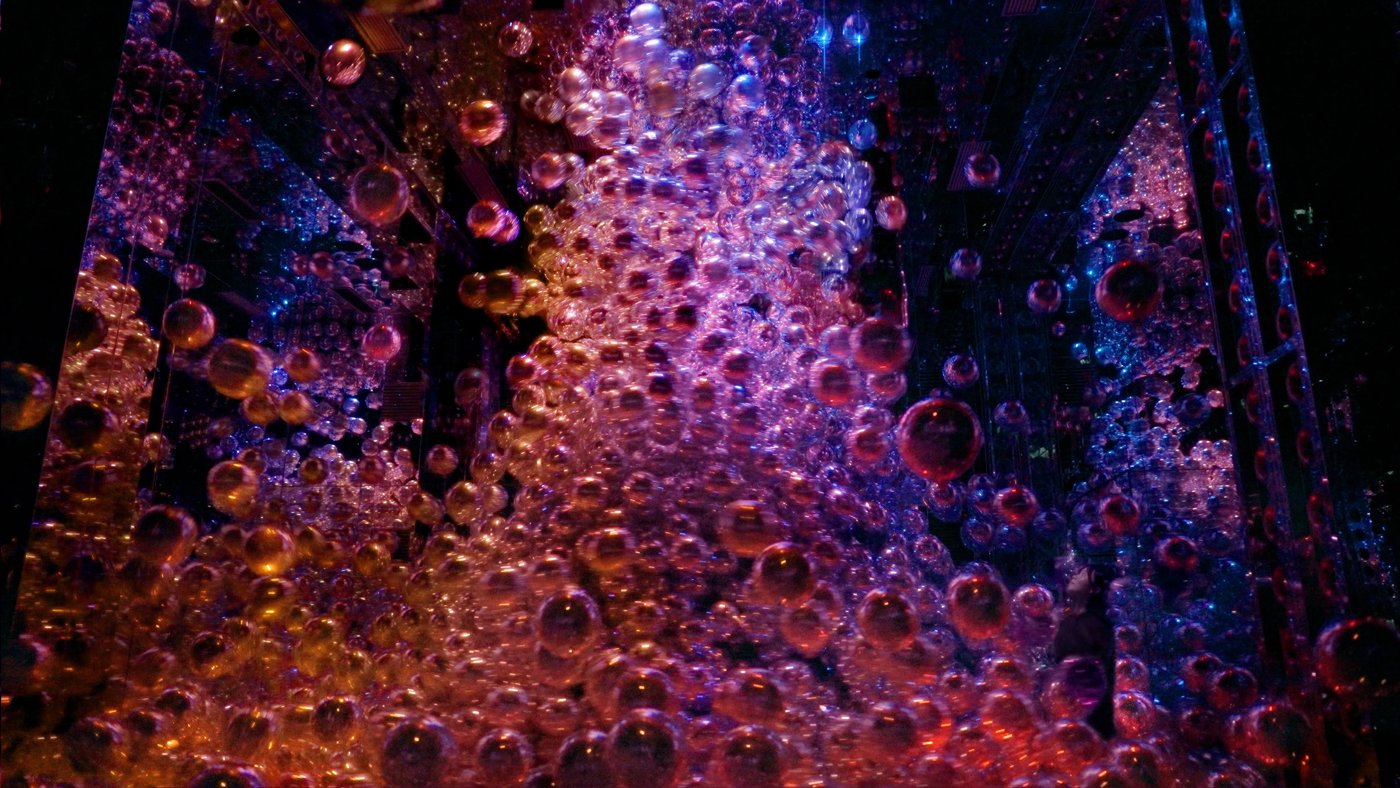
The brief they set themselves was immersive, which for a building is close to impossible: the thing cannot actually change. What it can do is be recognisable without being identifiable, so that no visitor can say they have seen this detail before, here and there and there.
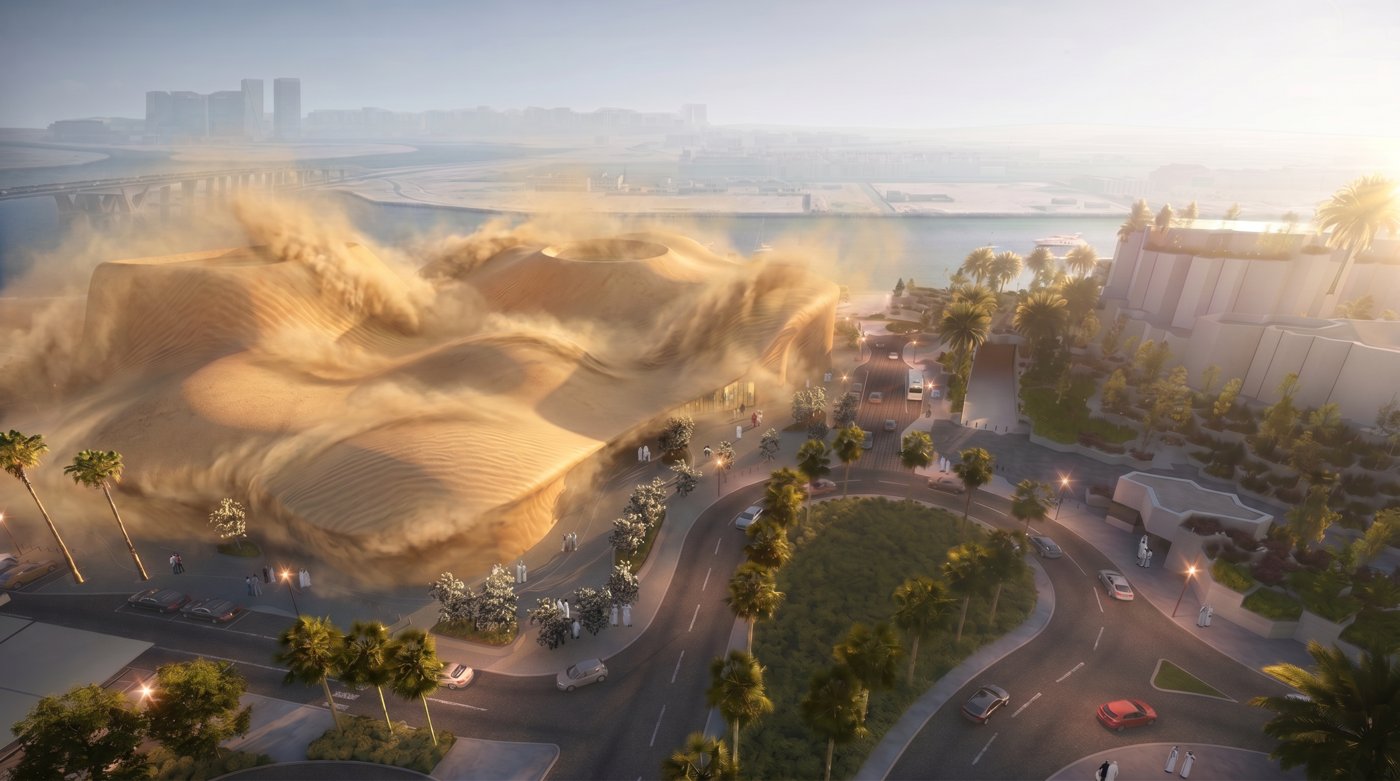
The analogues came from teamLab's own work, the cloud you walk into, the digital rainfall, the vortex where wind drives balloons into new shapes, and from the desert outside. You know a cloud when you see one and you cannot claim you saw that cloud last week. You cannot say a wave is the same wave as two minutes ago. People get lost in the desert because they are navigating to a dune that has since moved. Mist does the same thing. What the architecture mimics is that condition: walk around it and it changes with the light and the shadow, and reads as organic rather than composed.
Then somebody has to draw it
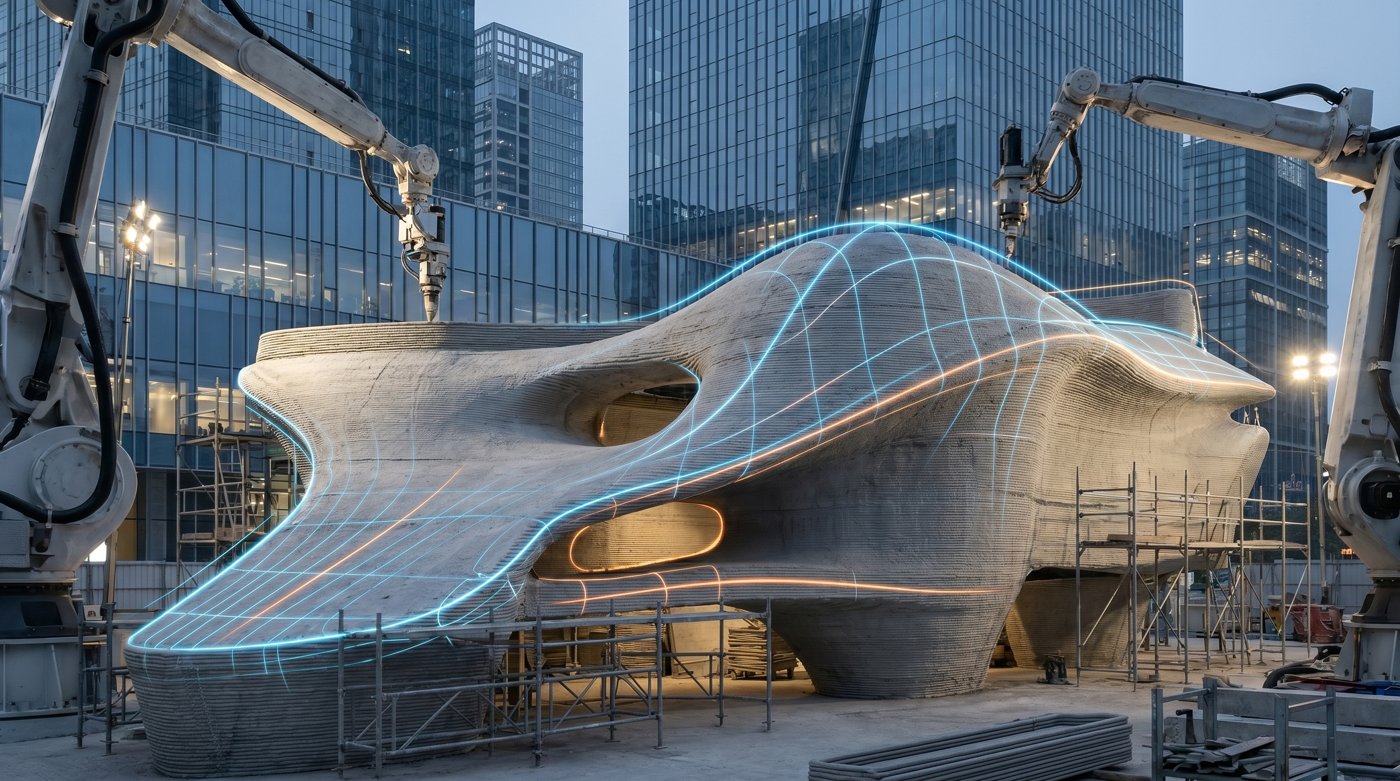
Every elevation is different from every other, which rules out the one repeated detail that normally makes a façade affordable. It went from hand sketches to physical models to a digital model and then to a parametric one, to size the panels. Grooves were the first thing they tried to avoid, on the grounds that nature does not have grooves, which meant maximising panel size: 6 metres by 6, and every panel different. That, as he put it, became a problem for the engineers and the façade consultant, and the cost went up.
The structure carries it in layers, primary, secondary and tertiary steel, with the upper layer becoming the skin itself. Because they refused a closed groove, the inner weather line runs below the GRC line. Several materials were considered and GFRC was selected on durability, weight, free deformation, fire safety and colour stability. The workflow ran through 3ds Max, then Rhino with BIM, then panelisation, fabrication and installation, with more than 3,000 panels of which no two are the same and the grooves themselves shaped to follow the form.
The urban moves are quieter but they are the reason the envelope has to hold up close as well as from the bridge. The roof is a fifth façade you can walk on, reached from the promenade on the canal by way of a terrace, and the water from teamLab's T-Space experience is extended out of the building to become a water feature outside it.
The ask
He finished with a request rather than a conclusion. Every one of those panels needs its own mould, and making a mould, casting it, waiting for it to cure, transporting it and installing it is slow. If this kind of architecture is going to be repeatable, architects, suppliers, scientists and contractors have to find a way to produce organic shapes faster and at lower cost. Otherwise the answer to a building that behaves like weather is always going to be three thousand individual moulds.