


Killa Design's sky gardens are not a void punched in a tower, which is why the glass around them was the problem. Oana Fayyad and Marina Kindelan Calvo, of Killa and AESG, on getting double curvature down to four per cent without touching the architecture.
Oana Fayyad and Marina Kindelan Calvo shared the stage deliberately, an architect from Killa Design and a façade consultant from AESG, under a title that needs unpacking: the architecture of the inevitable design, the discipline of clarity. Their premise is that a façade is not a building's outer skin but the place where architecture meets engineering, which is where the room for creativity turns out to be.
Three buildings, then the argument
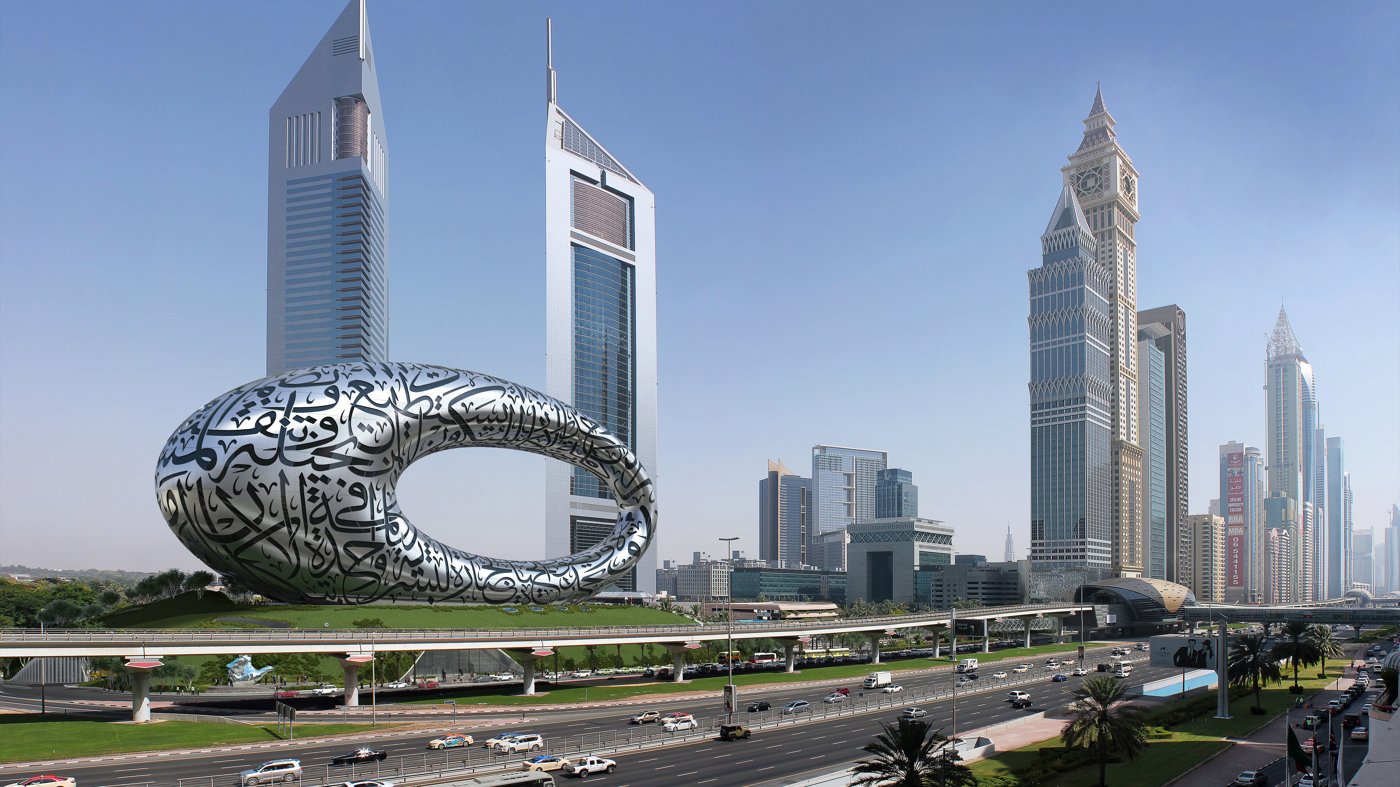
At Marsa Al Arab the problem was continuing a legacy without repeating it, next door to the sail and the wave. The answer was precision: the two buildings were placed so that wherever you stand in Dubai you keep a view of the Burj Al Arab. The arch over the driveway, where that view opens, is a truss 16 metres high and 36 wide in some 3,000 tons of steel, about a thousand elephants by Fayyad's reckoning. The balconies shade themselves, which takes around 40 per cent off the building's consumption.
Kindelan Calvo's contribution there was the part nobody sees. Façade access normally comes off the roof or up from the ground, and this building offered neither, while the strategy could not interfere with the architecture. It was resolved almost room by room, apartment by apartment.
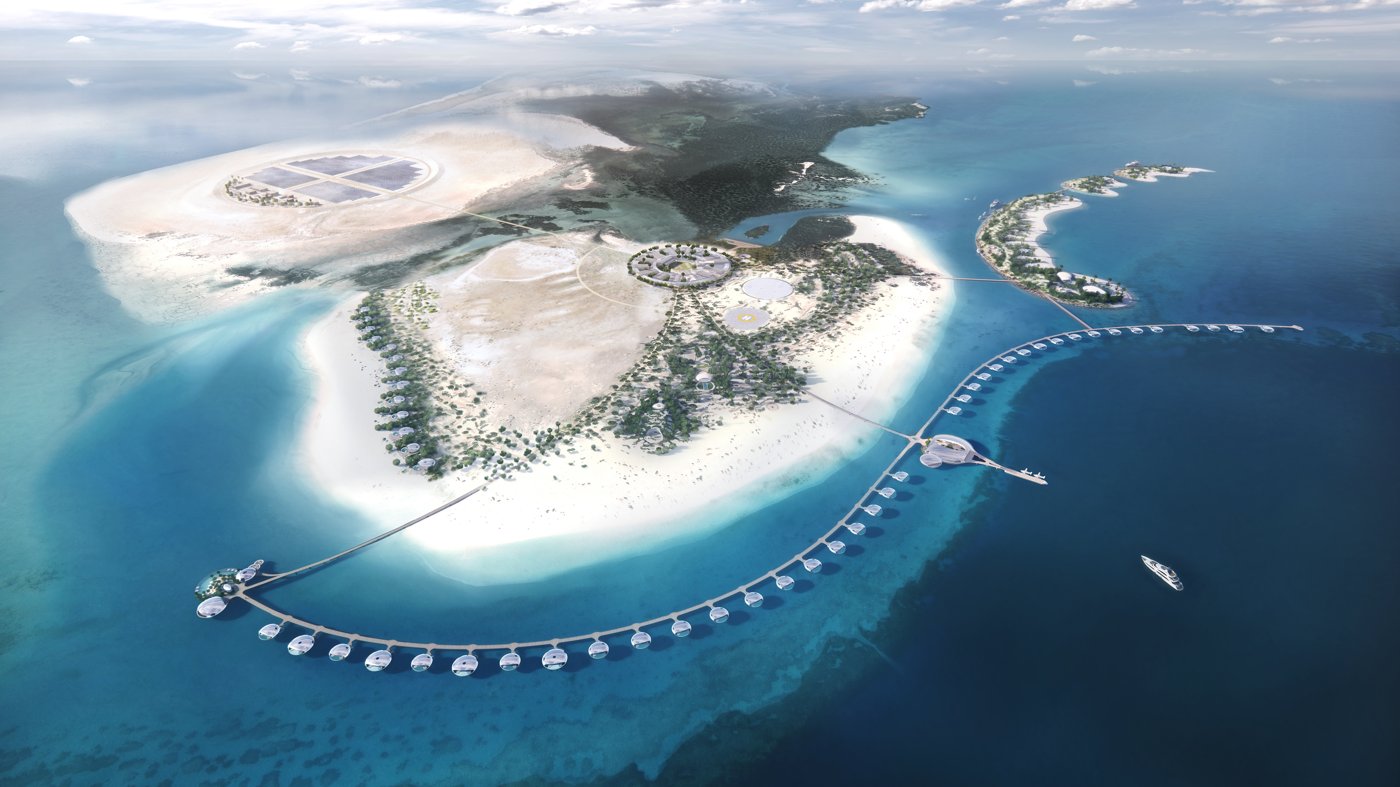
The Red Sea project had marine life underneath it, so the architecture became a canvas for the changing colours of the sky and the movement of the water, the master plan reading as a string of pearls. The pods were fabricated in Sharjah and brought in by boat, which kept the construction off the reef. Their pearl shape is structural, and the fabrication is what makes it read: connected from the inside and wrapped in stainless steel, so there is not a seam anywhere outside.
The Museum of the Future asked how you represent the future at all. Their answer began by dropping the two-storey museum: this one is vertical, and the voids at its centre are the future itself, space left deliberately for what nobody can predict. A steel diagrid makes the form and carries more than a thousand unique pieces, and the calligraphy on the outside, the words of His Highness, took iteration after iteration so that every opening falls clear of the structural nodes while staying large enough for light and for people.
The tower where the argument got tested
A residential tower in Business Bay needed height. Conventionally that means slenderness, which costs floor plate efficiency, or more floor area. Killa took space out of the middle instead and made elevated gardens of it, and what makes it unlike other sky gardens is that it is not a void punched in a tower: the whole façade embraces them, with fins emphasising them.
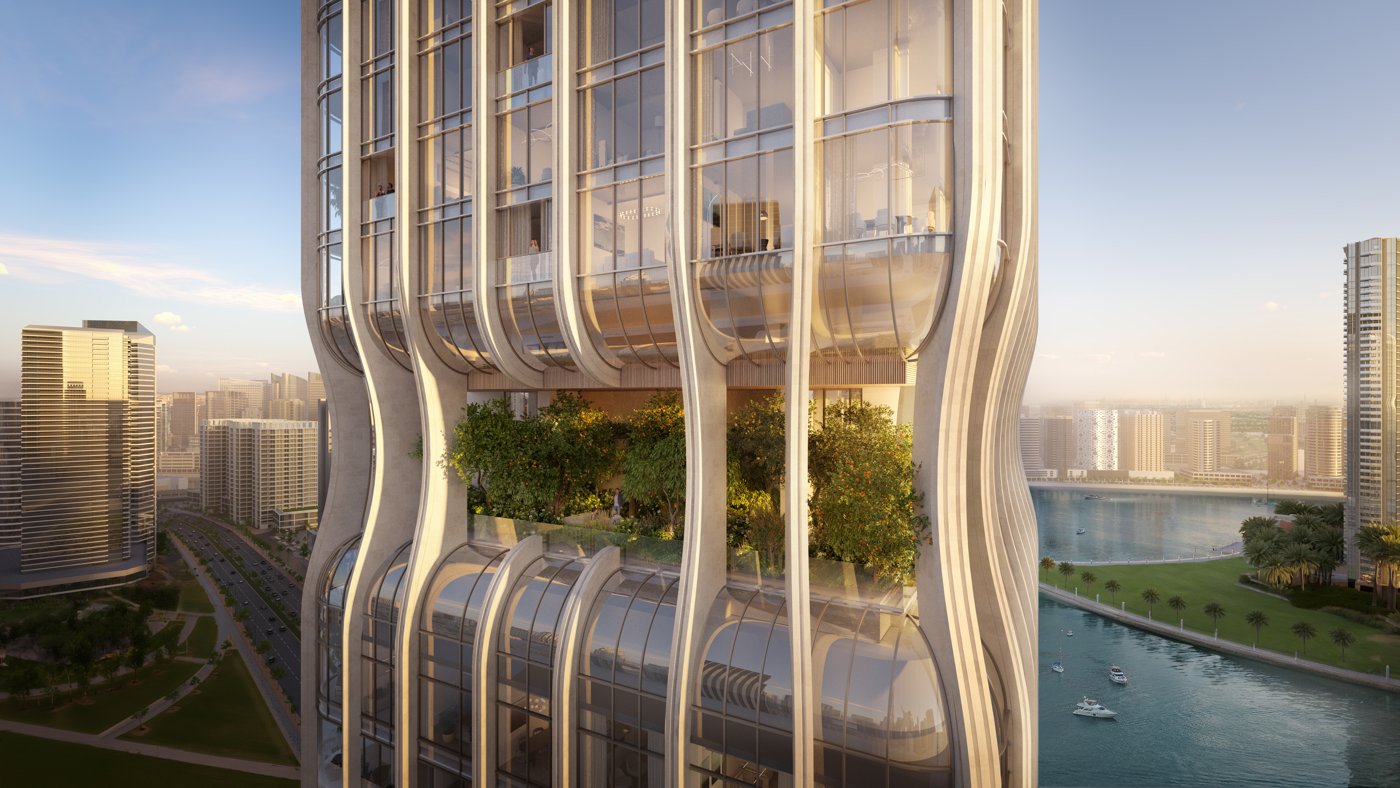
Then somebody took a section through the curved glass and found that every single panel was double-curved. The reason was geometric: the curve had been set out from an ellipse, in effect a quarter of one, rather than from a circle. At the corners the radius fell below 1.5 metres, and some of the curved panels overhung, which raised a safety question on top of the cost.
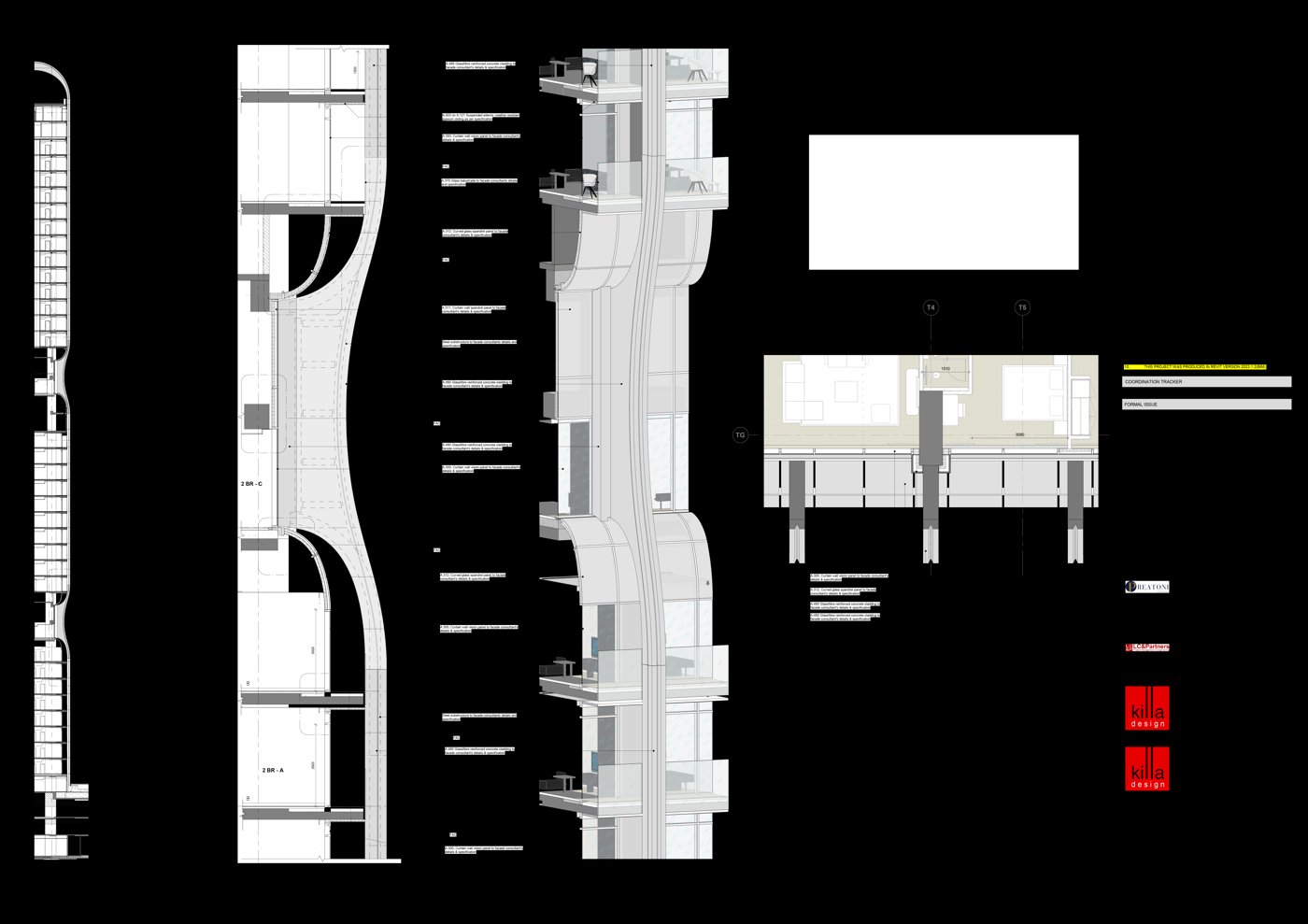
The fix was to leave the architecture alone and change the mathematics. The ellipse was tweaked into a figure described by two circles, a large one below and a small one above, and an intermediate transom was introduced to divide each curved panel into two panels of different radius. Each of those is a single-curvature panel. Double curvature survives only at the corner elements, which is about 4 per cent of the building.
Then the glass itself
One architectural condition governed the rest: no different coatings or build-ups across the curved areas, because people standing in a sky garden see those panels from a metre away. So the glazing design was driven by the corner elements with the tightest radius, whose shape the two firms adjusted together until it met the minimum. Those corners had to be heat-strengthened, and the double-glazed unit first intended gave way to single glazing, on stress and on the complexity it would have added. Laminated against monolithic was settled on safety and thermal stress. Thickness was the last balance, between what performs structurally and what will take the curvature at all.
None of which, she was careful to say, is a decision a façade consultant makes alone. It is why they presented together: when Killa has an intent it goes to the engineers to find out how to make it possible, and the form survives the process.
Fayyad closed on the garden. From the street its height is not human in scale; the point of the detailing is that the experience inside it is, from sightlines resolved wherever you look to birds in the planted trees and gravel underfoot. On that part of the building, she said, there is no in between: you either get it right or you don't.