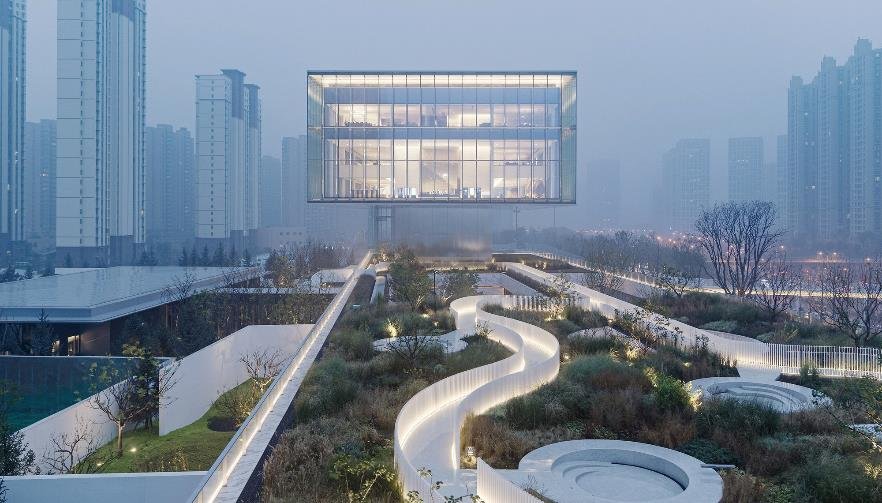
Fan Lee takes on both halves of a sixty year constraint, that anodised aluminium comes in natural or bronze outdoors because the dyes which colour it indoors fade in sunlight: a set of UV stable colours including a grey nobody had managed in coil, and an oxide layer that breaks pollutants down and lets rain sheet them off.
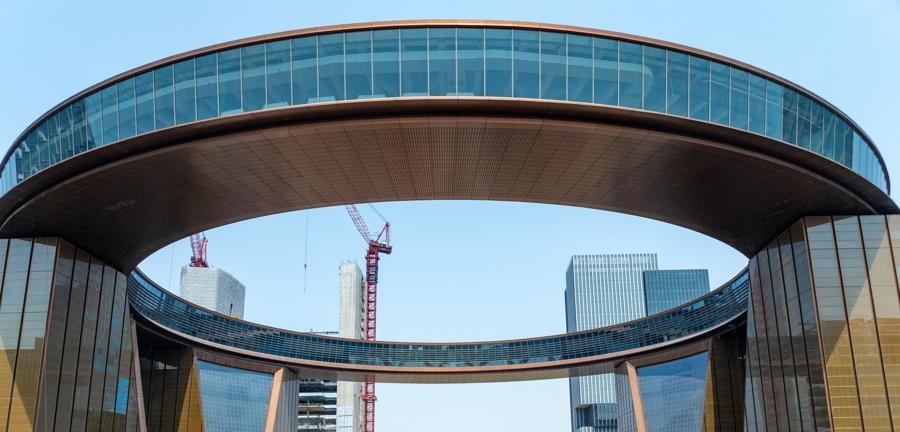
Anodised aluminium has been used on façades worldwide for more than sixty years, and Fan Lee is candid that for most of that time the exterior palette has been dull: natural tone or bronze, and little else. The reason is not aesthetic conservatism. The wide range of colours available indoors comes from organic anodising dyes, and those fade fairly quickly in sunlight, so they were never an option on an elevation.
Two mechanisms, one oxide layer
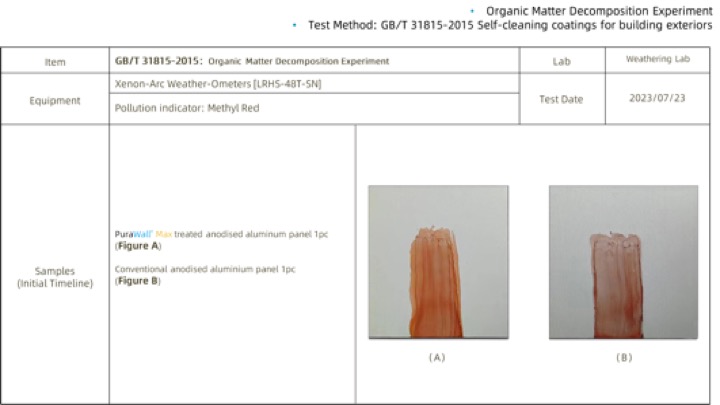
The first is photocatalytic. Under ultraviolet light in daylight, titanium dioxide releases electrons, and the electrons and the holes they leave behind react with oxygen and water in the air to produce singlet oxygen and hydroxyl radicals. Both are strongly oxidising, and they break the organic and inorganic pollutants sitting on the surface down into carbon dioxide and water. Water can then permeate beneath what remains of the dirt and lift it away. Lee claims that effect for over 25 years, which is a claim about the oxide layer rather than about a coating.
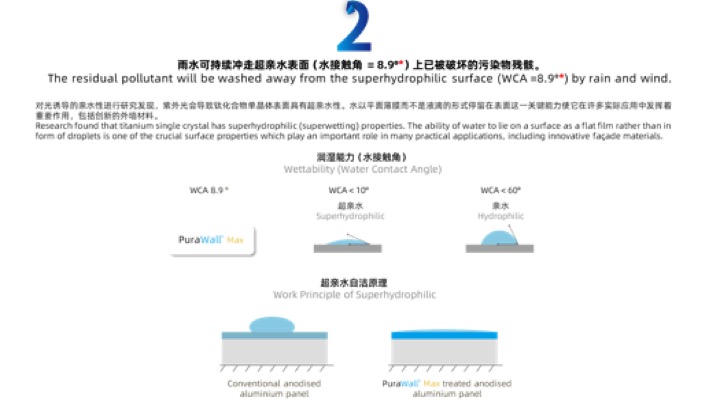
The second is wetting, and this is where the number matters. A drop of water on a surface makes a contact angle; below about 60 degrees the surface is hydrophilic and gains a degree of self-cleaning, and the smaller the angle the more effectively rain carries dirt away. Their measured figure, certified by a national architectural materials test centre, is 8.9 degrees, which puts it in super hydrophilic territory. In practice water does not bead at all: it spreads as a thin film, and the film removes the residue that photocatalysis has already broken up. Lee is explicit that this distinguishes the approach from the self-cleaning paints offered by the large coatings companies, which rely on wettability alone and have no mechanism for decomposing anything.
The colours, and why grey was hard
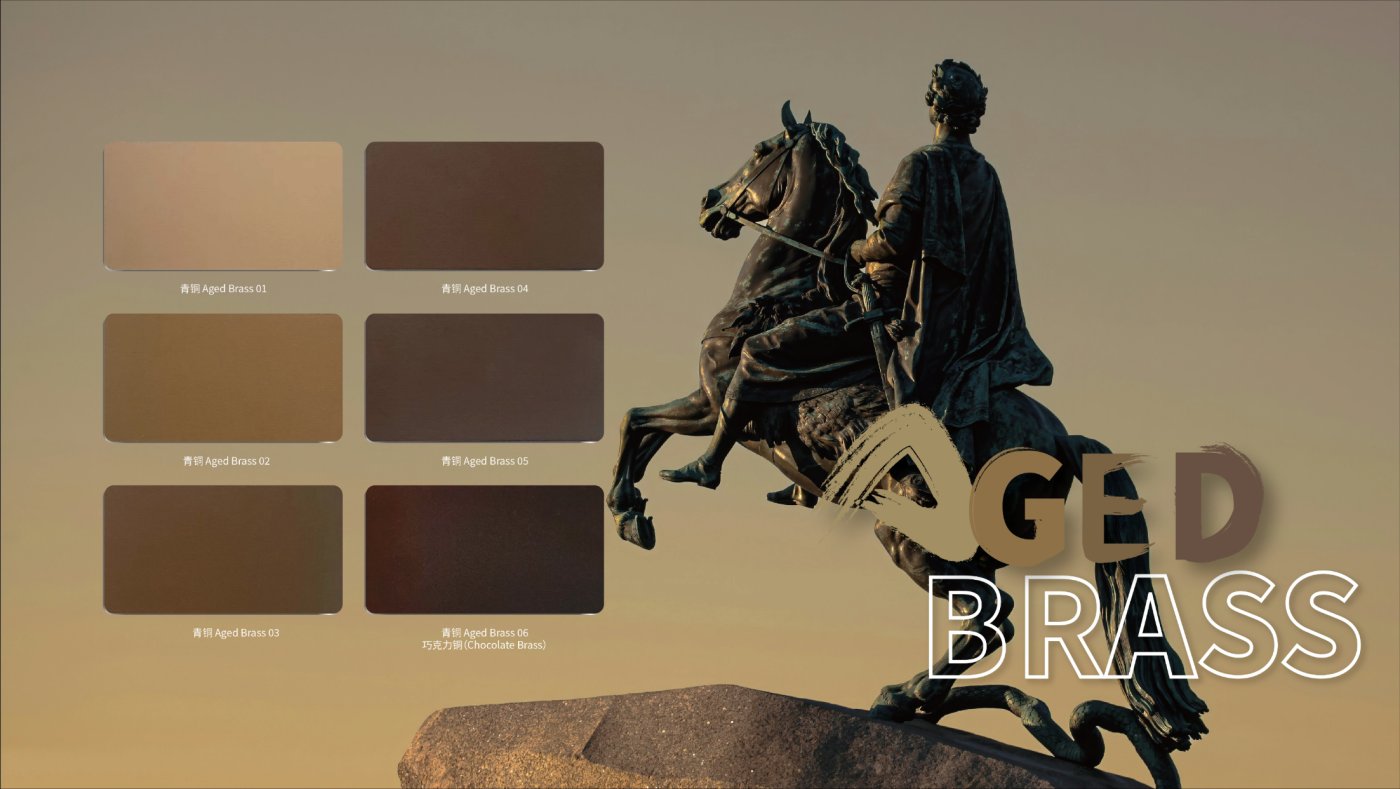
Grey is the one he dwells on, because it had not been available to the façade industry at all. The only other producer he knows of works in batches, and batch anodising varies in shade from panel to panel, which is precisely the problem on an elevation. Their process runs in coil form, which holds colour consistently across a run. Gloss is a separate axis, from 10 gloss units up to 800, where 800 is effectively a mirror. Work on a stable white is still in progress.