


William Ti argued that a façade belongs to the people outside more than to the people it shelters, and set out the method his practice uses to give the ground plane back: cut the stadium open, make the lobby public, let the route run through.
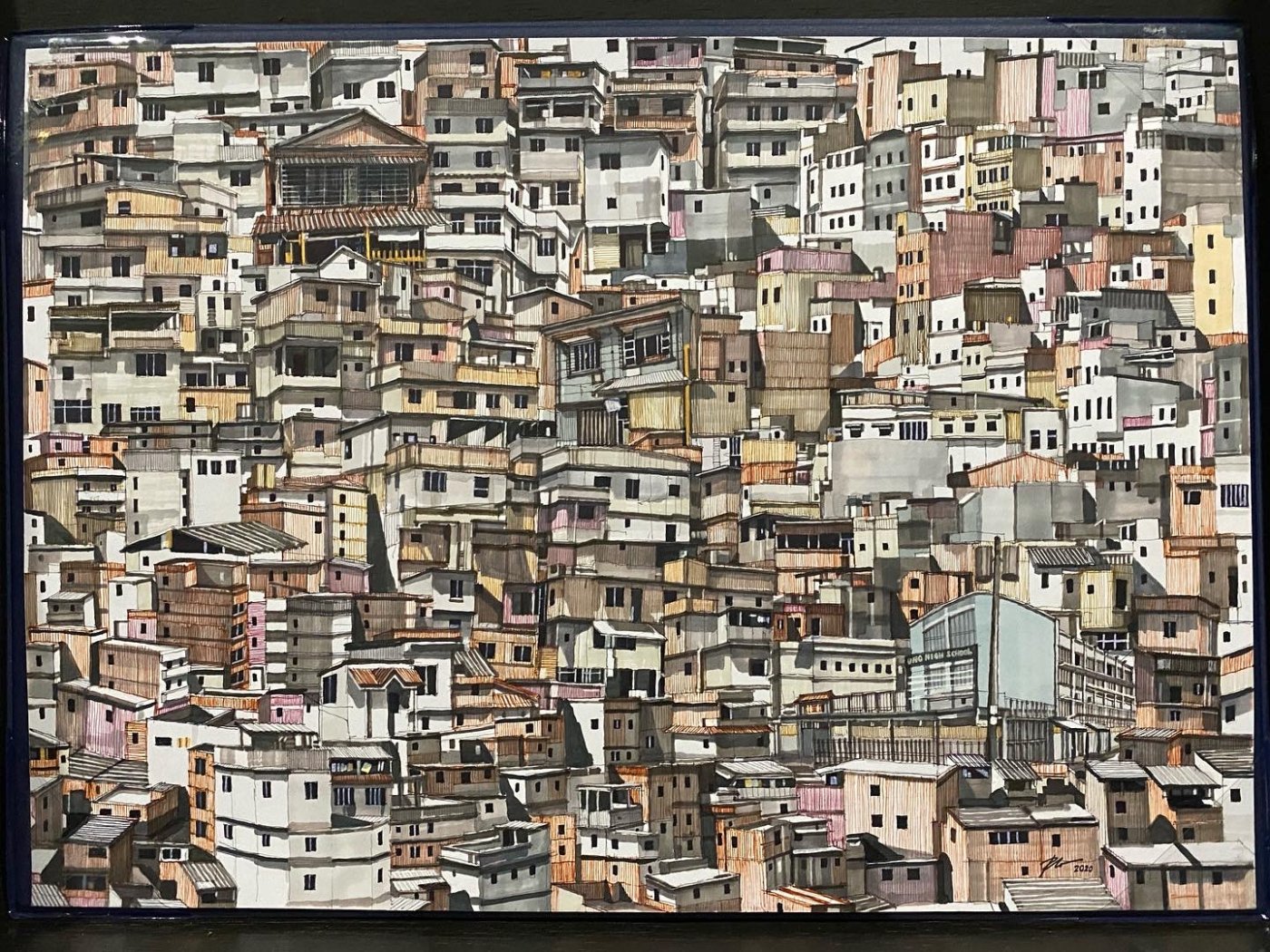
Ti works in a city of 27 million people and treats it as a laboratory. He grew up in Tondo, with his home, his office and his school within walking distance, and credits that density with the habit of noticing small things at street level. It is also where his argument starts. Most building here is done to minimums: minimum setbacks, maximum heights, the baselines a code will accept. Design to those and it allows you to create a minimum city, so if a practice wants to do more than comply, it has to figure out new metrics for us to be able to measure social impact.
His test for whether something qualifies as architecture at all is blunt. Buildings only become architecture once they are shared, once they become public, once they are accessible to everyone. Against that, the default in Philippine development is exclusion: public gardens walled off until they are deserted, a guard on every entrance whose actual job is to keep out anyone without the right shoes. And the façade sits inside that habit, usually discussed as protection for the people behind it, when the façade has more of a relationship with people outside the building. It shapes the walk of far more people than it shelters. Which is why he spends his attention on the first ten metres, the touch point, rather than on the upper elevation nobody stands beside.
A library nobody is asked to leave
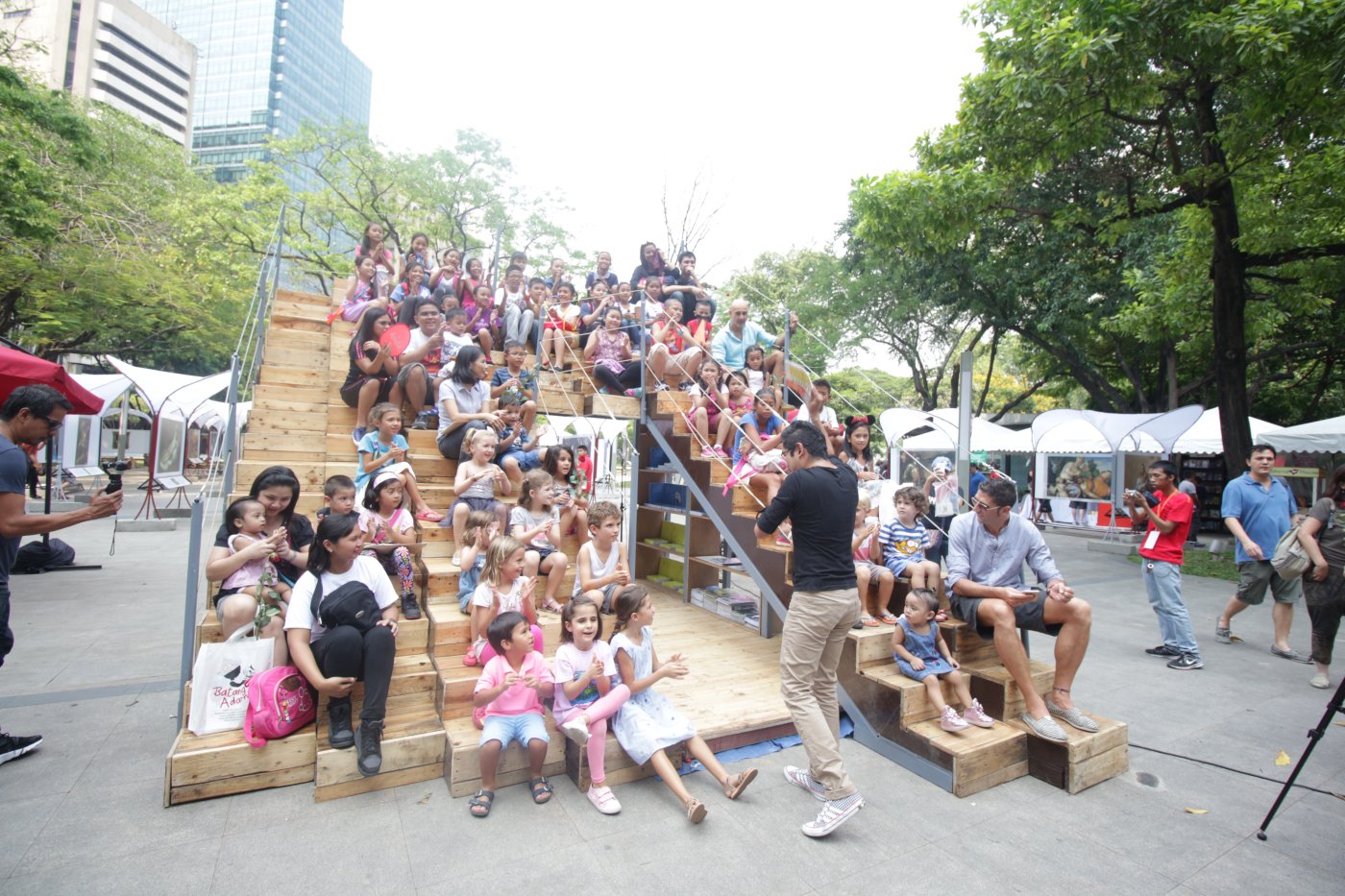
The project that set the method was the Book Stop, built in 2016 in a plaza in Intramuros. The proposition was a library placed in a park, open on all sides, with nothing to pass through to reach it. What the practice learned was not about reading. The children who most needed the place, the ones with no shoes and nobody to vouch for them, stayed, because no one was positioned to move them on. Architecture should not discriminate, he said, and the highest form of architecture is when we build for the city.
Porosity as a plan move
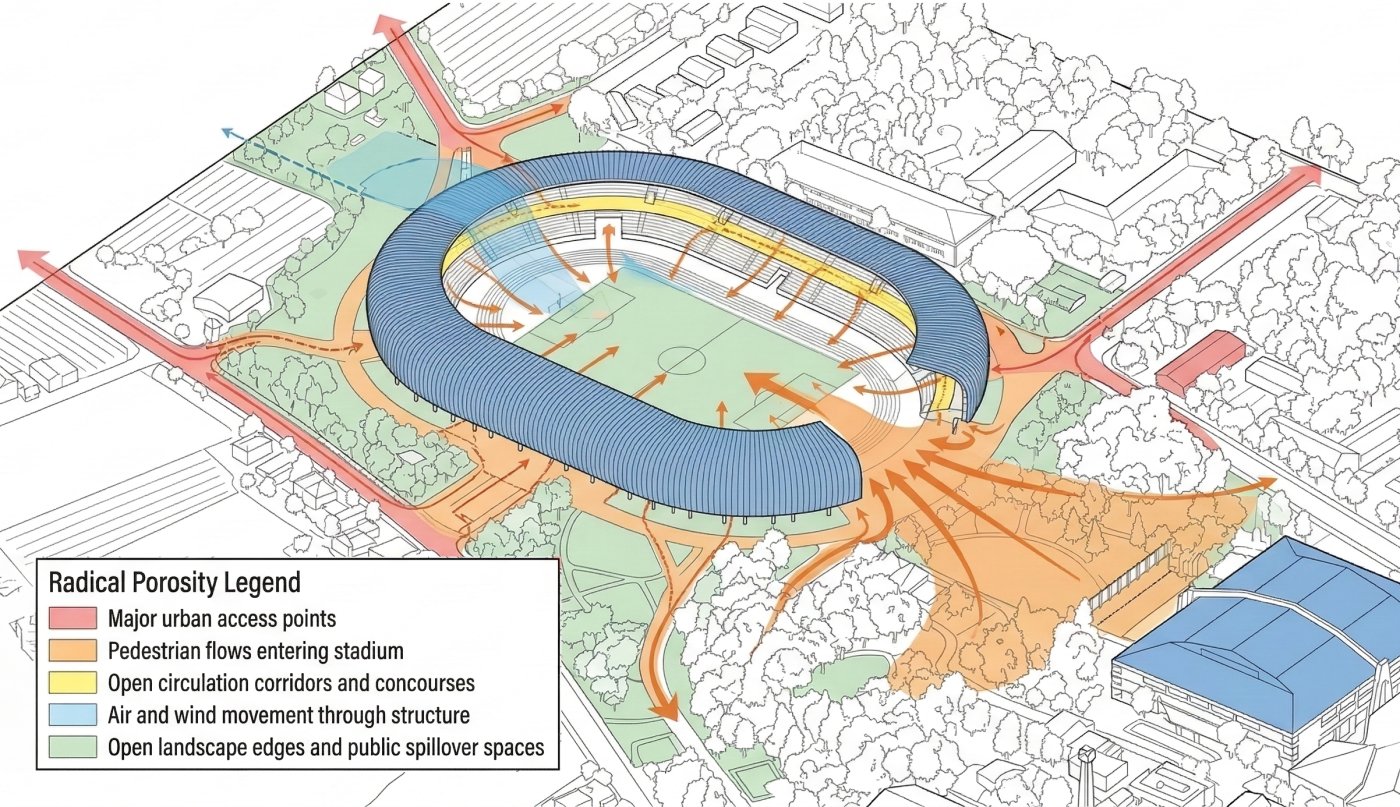
The method has a name, open civic urbanism, and its first rule is radical porosity: a building should not force the city to walk around it. The stadium is the clearest case. Worried that a football venue would sit empty in a country that does not much play football, the practice cut one side of the bowl away and let the park in front run straight through into it. The adjoining road became a pedestrian route to the university next door. The effect he cares about is not the architecture but the ordinary hours: something is now happening there when there is no event, and it inserts life into the stadium, daily life into the stadium. The façade doing this is not expensive. It is PVC sheet, the material used for chicken coops.
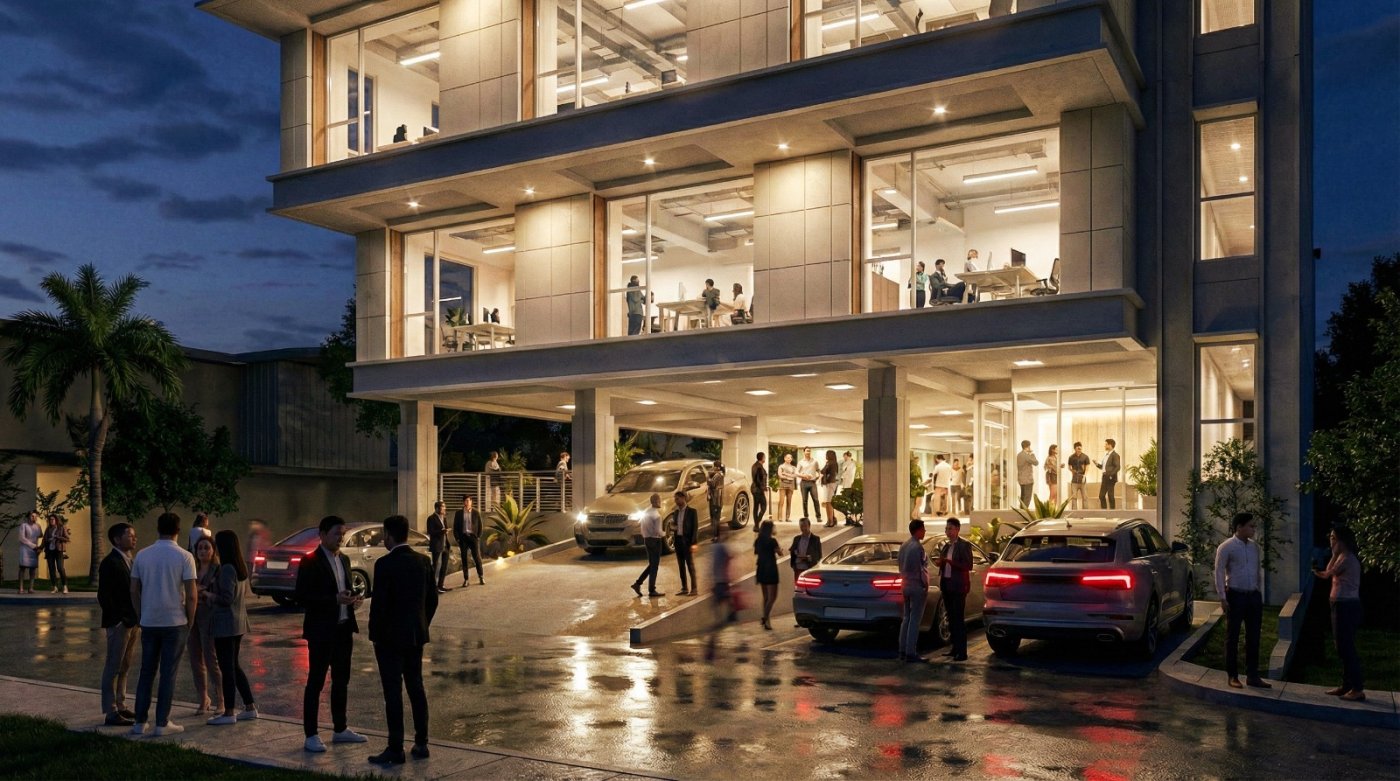
The same rule is going into the practice's own new building, where the first three floors are public and the deck sits on the upper ground, usable once the cars have gone. At the Tagaytay city hall, public space was inserted on every floor: galleries, a library, another Book Stop, a viewing deck onto the caldera ridge. Its fenestration comes from the pine trees around it, vertical lines set at angles so the building reads at a different density from every approach, which also makes a civic building that is not the neoclassical default.
A convention centre you can walk through
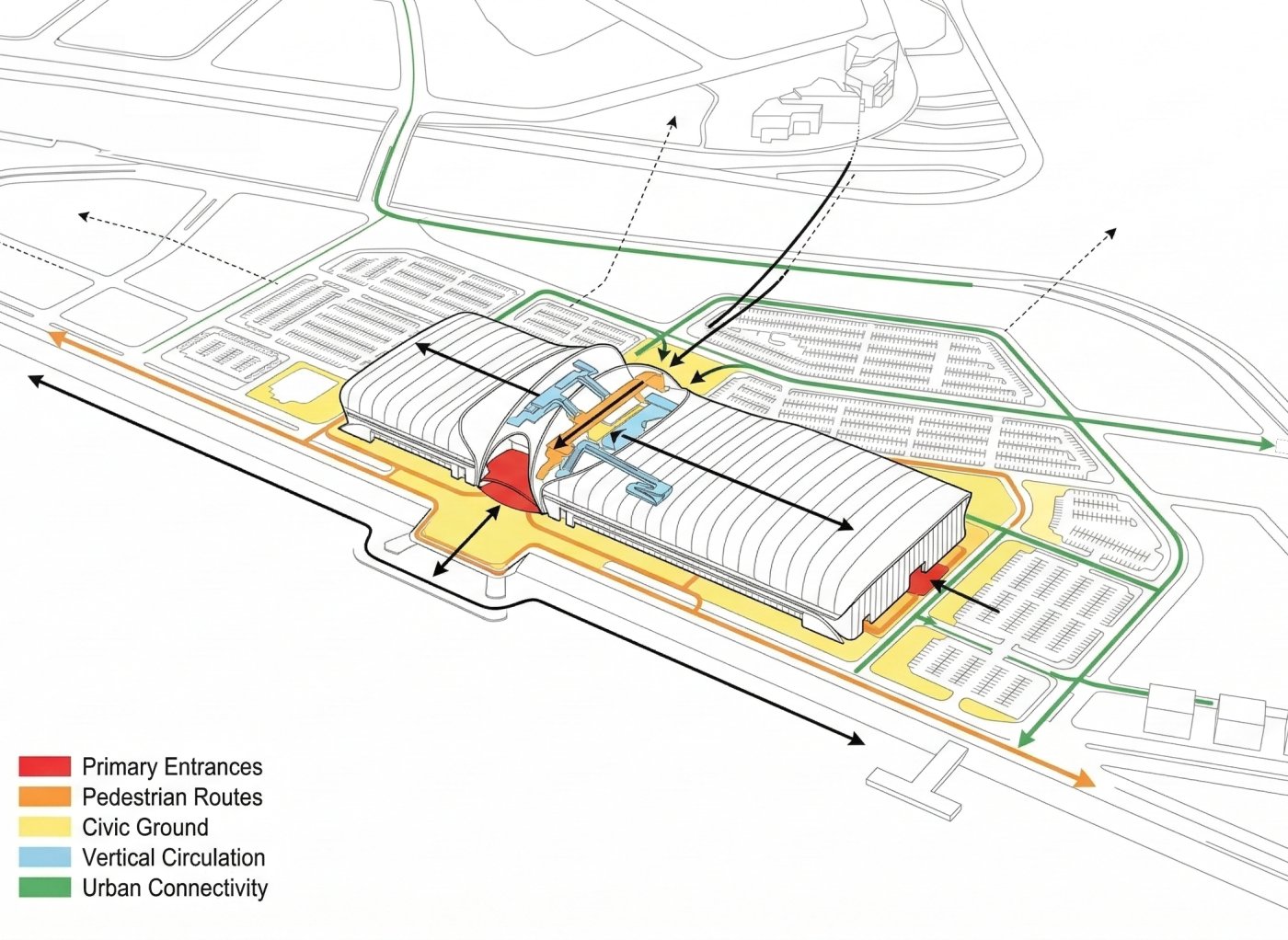
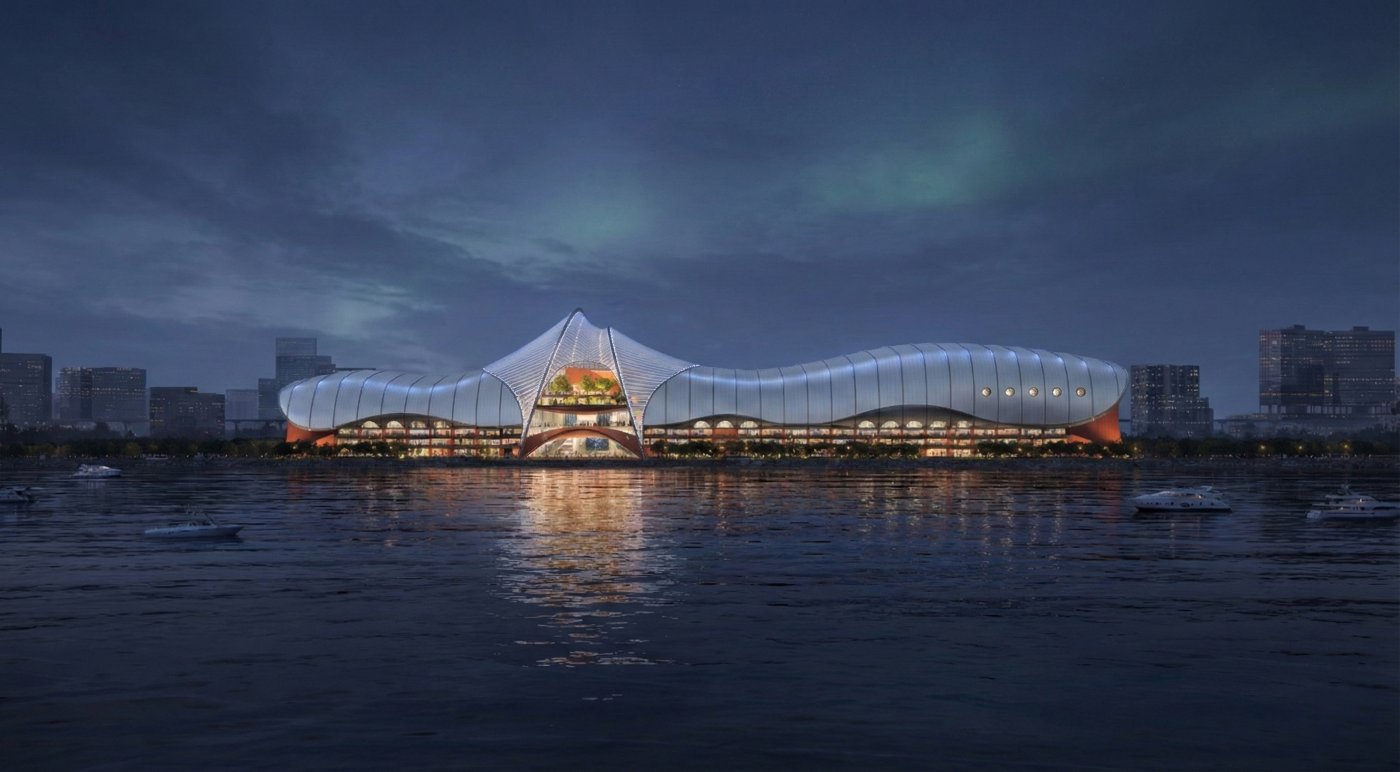
The largest test is under construction on reclaimed land at Manila Bay: a 300,000 square metre exhibition centre, its 150 metre arches carrying ETFE forms drawn from unfurled sails on a terracotta base referring to the palayok. What matters to his argument is the edge. Left alone, a building that size presents roughly half a kilometre of wall to the street. Instead the route runs through it, under a tropical biome the public can cross, so the entire façade is activated rather than defended.
The practice measures all of this against six lenses: access, interaction, activity, identity, comfort and social impact, which is its attempt to put numbers on shared ground. The same frame reaches the 26 kilometre Pasig River esplanade now under way across six cities, where 1.5 million people live within 500 metres of the water. A linear park the size of Rizal Park, he pointed out, is worth more than one big park somewhere else, because we wanted to bring the public space to the people rather than asking them to travel to it.