


Pegs Elumba traced a façade back through installation, freight, the factory and the test slot to the moment a coating was specified, and argued that the drawing has to be made inside what the market can actually manufacture and ship.

What a reader sees in a finished façade is the glass, the precision of the aluminium and a clean line. What they do not see, Elumba said, is the journey behind it, and his case is that the journey is where the performance is won or lost. A façade does not simply appear because of good design, nor does it succeed because the contractor installed it well; it succeeds on hundreds of interconnected decisions taken by architects, consultants and developers, most of them long before anyone is on site. He has spent thirty years in engineering, twenty-five of them on façades, and gave the sequence from a consultant's side of the table.
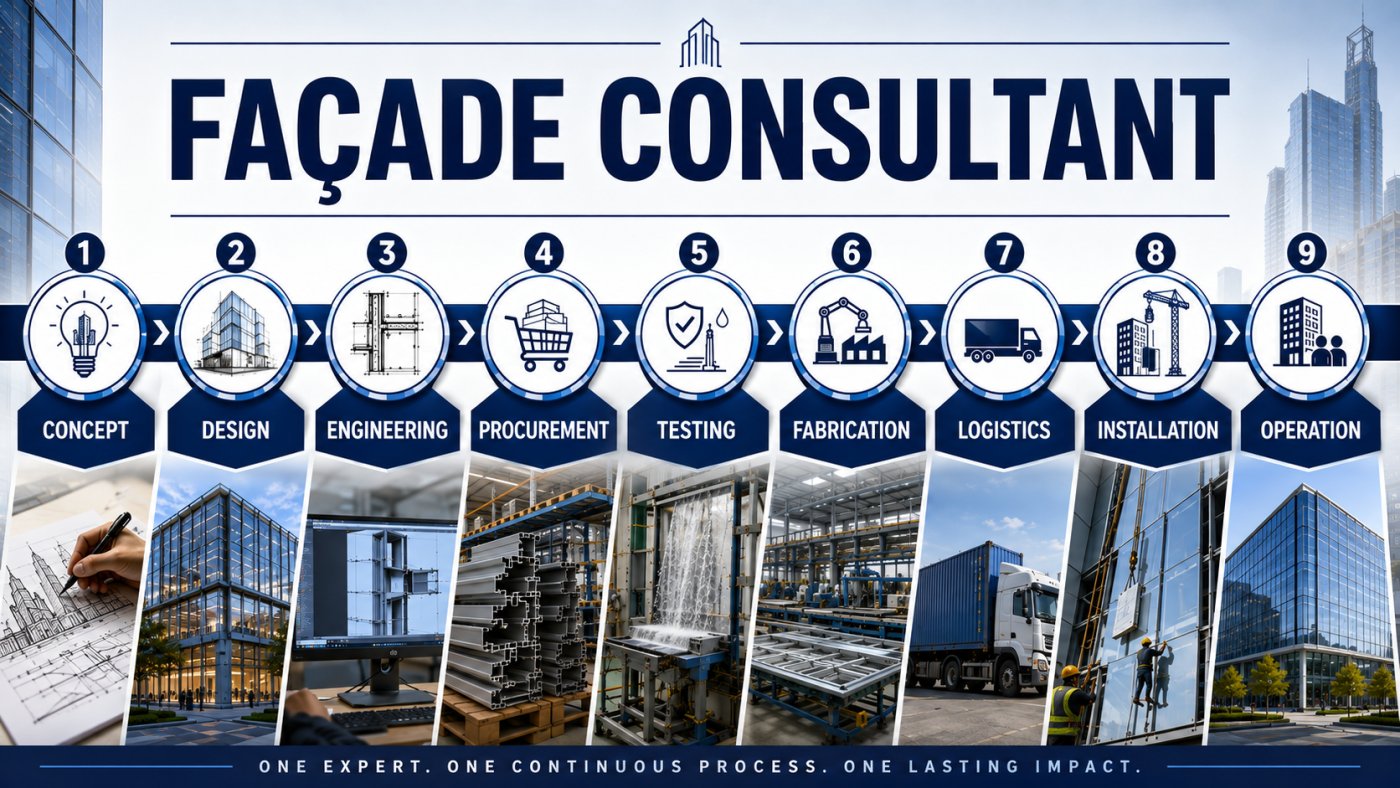
Designing inside what the market can make
The first decision that matters is whether the thing specified can be bought. Can that glass be manufactured, in that length, at that weight, in that composition, with that coating, and can it be shipped here? He described a project that wanted glass at a size the market could not coat, a discovery that costs nothing at concept and a great deal at procurement: we have to design within the capabilities of the market.
What follows from that is her sharpest line. One of the biggest misconceptions, he said, is that design ends before performance begins, when in fact design and supply chain have to happen together. A low-E coating from a single overseas supplier can satisfy the design intent and still be the wrong answer, if the production run is thirty weeks, or the manufacturer stops making it, or the trade between two countries changes while the building waits. The consultant's job at that point is not to narrow what an architect can imagine but to keep it buildable.
Procurement as risk, not paperwork
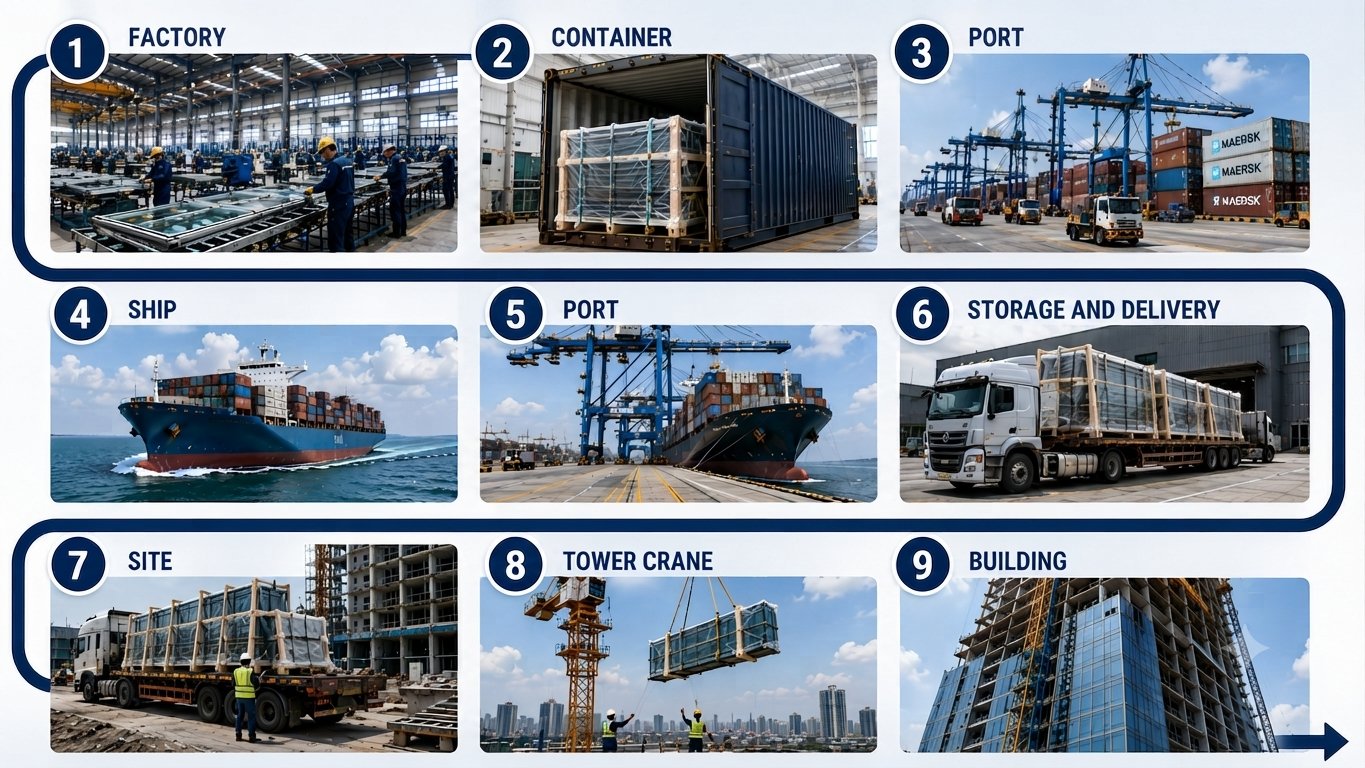
His framing of procurement is that every purchase carries uncertainty. The glass comes from one country, the aluminium from another, and the building is here: it is volatile, uncertain, complex and even ambiguous, because it comes from different manufacturers in different countries. Some of the risk is natural, some is man-made, and some is what he called a black swan, an event beyond anyone's control, the pandemic being the one everyone in the industry now measures from. The conclusion is unglamorous and specific: a delay in one component can stop the entire package, so the chain is planned before it is needed rather than after something has gone wrong.
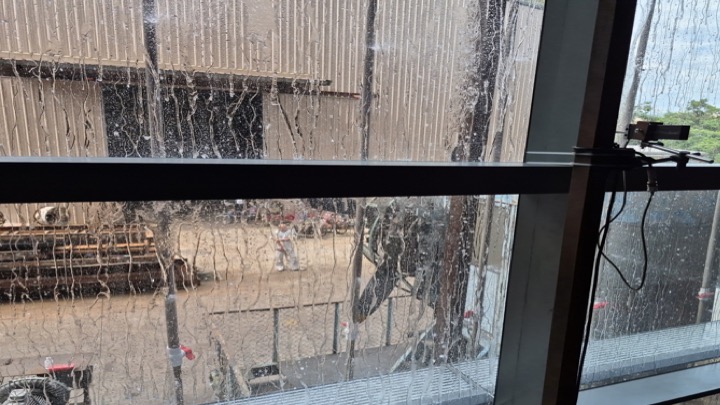
Testing belongs in that plan too, which is not where most people file it. The Philippines has two major façade testing facilities, so a slot has to be booked early or the programme waits, and work that cannot be tested locally goes abroad. He would rather the country built more of them, to save the time and to grow the industry that uses them. The mock-up itself he treats as an investment in certainty: a visual and a performance mock-up surface problems while they are still cheap, down to the handle fitted the wrong way round, which nobody wants to discover once it is installed across a tower.
Consistency, then the journey
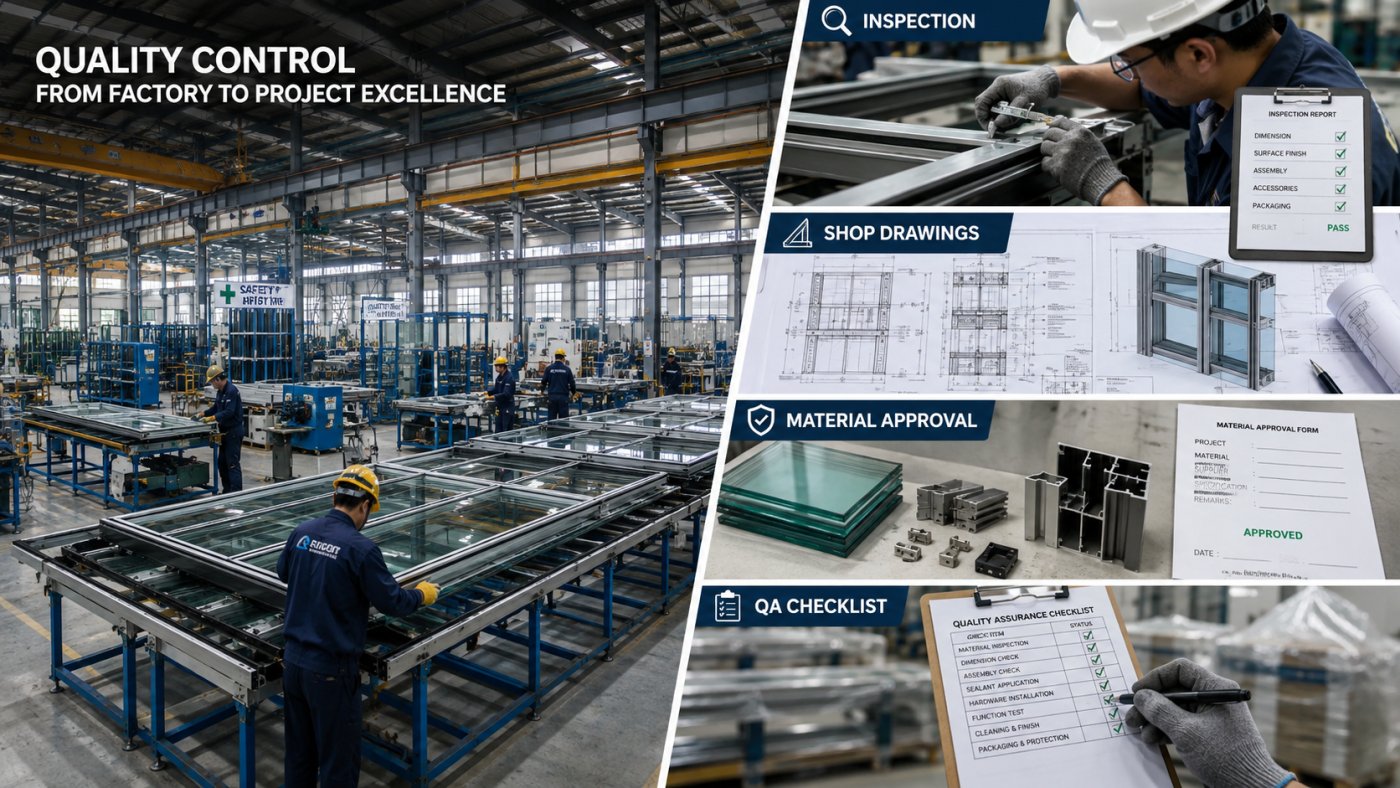
A factory does not simply manufacture curtain walling, in his account; it manufactures the same curtain walling repeatedly. Every panel leaving the production line should perform exactly like the previous one, and the consultant's role is therefore not only to inspect components but to verify the manufacturing produces consistency. One good panel proves very little about the eight hundred behind it.
Then comes the part she called the forgotten link. Panels travel thousands of kilometres through ports, warehouses, vehicles and government requirements, and each is a chance to damage what the factory got right: the façade is only as good as the care taken throughout its journey. Which is why he ends where most people think the work ends. Installation reveals the quality already built in, and in reality installation reveals every decision that came before, including the ones made in a procurement meeting nobody minuted.
His closing argument is about when the consultant is brought in. Settle the requirements, test the items a performance mock-up will never cover, coordinate with every stakeholder, and be part of the design team and the procurement stage rather than arriving after both. The payoff she described is measured in years of quiet: a façade that is finished properly stops asking for attention, and one that arrives with problems at handover keeps them for the life of the building.