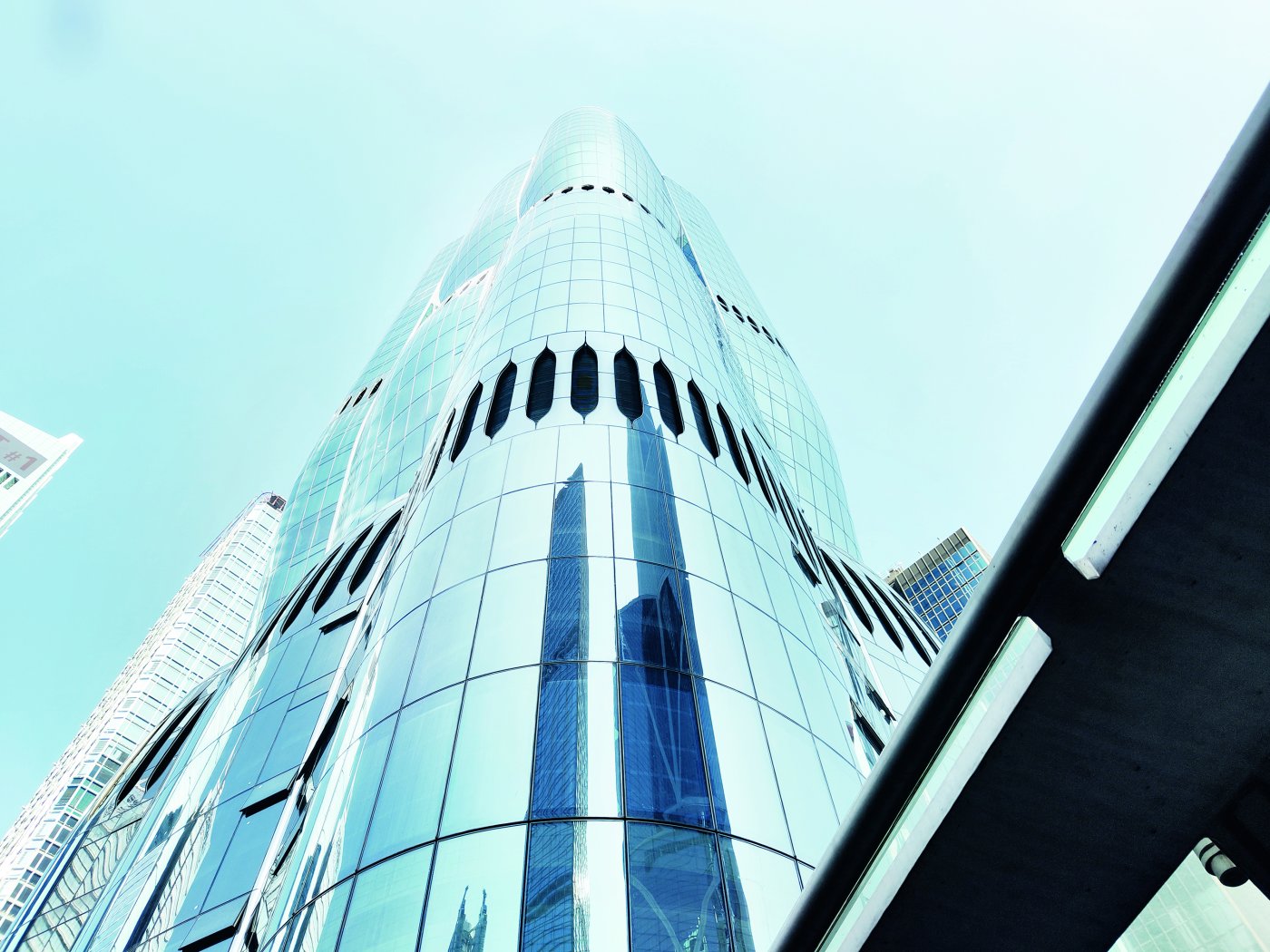
Joan Tarrús went through The Henderson's glass one composition at a time, and the line that matters runs through the plant rather than the drawing: a cylindrical curve leaves the tempering oven every twenty minutes, while a mirror coated triple takes eight hours over a bespoke steel mould.
All the flat and curved glass on one tower. The work was split between two façade contractors, with the banquet hall at the top and the ground floor level delivered separately from the main curtain wall.
sedak makes oversized glass, flat and curved, up to 20 metres, against a European jumbo size of six. Tarrús is clear about why the whole process sits under one roof: they buy in large stock sheets and then cut, grind, print, temper, bend, laminate and make up the double and triple units themselves, and at these sizes controlling quality means controlling every step. The firm was founded in 2007, and one of its first orders was the Apple campus in Cupertino, where 14 metre curved panes were bent cold during lamination rather than with heat.
The Henderson, composition by composition
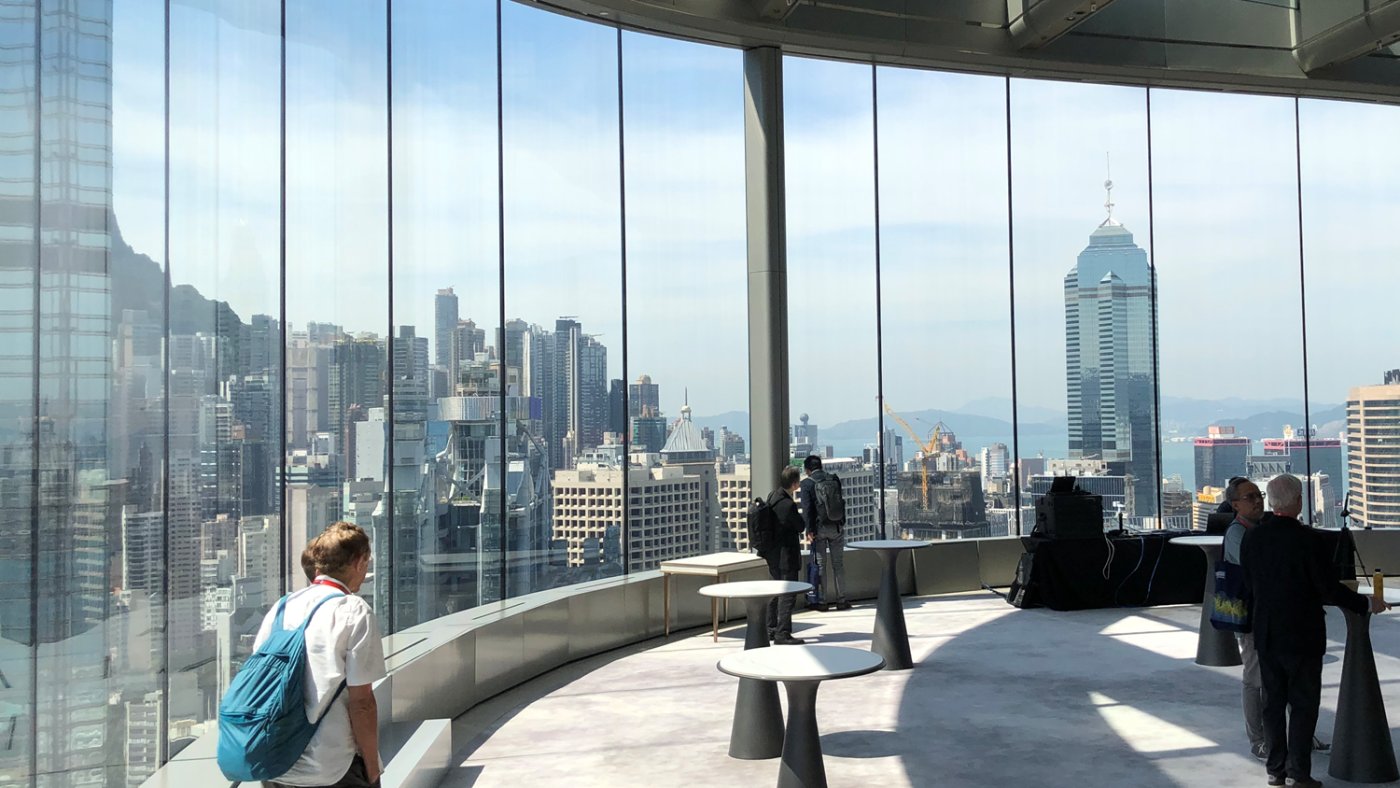
Six layers, and no distortion. The vertical wall at the banquet hall is structural glass with nothing behind it, six plies of 12 mm fully toughened glass bonded with five structural interlayers.
The banquet hall roof is a double glazed unit combining solar control and high selectivity coatings, with an anti-reflective coating on the inside face because the client cared about double reflection. The vertical wall there is the striking piece: structural glass with no mullions, no glass fins and nothing at all behind it, engineered by Eckersley O'Callaghan as six plies of 12 mm fully toughened glass with five structural interlayers between them. Tarrús anticipates the obvious objection, that so many plies and interlayers should produce haze and distortion, and answers it from the inside: the view out is clean.
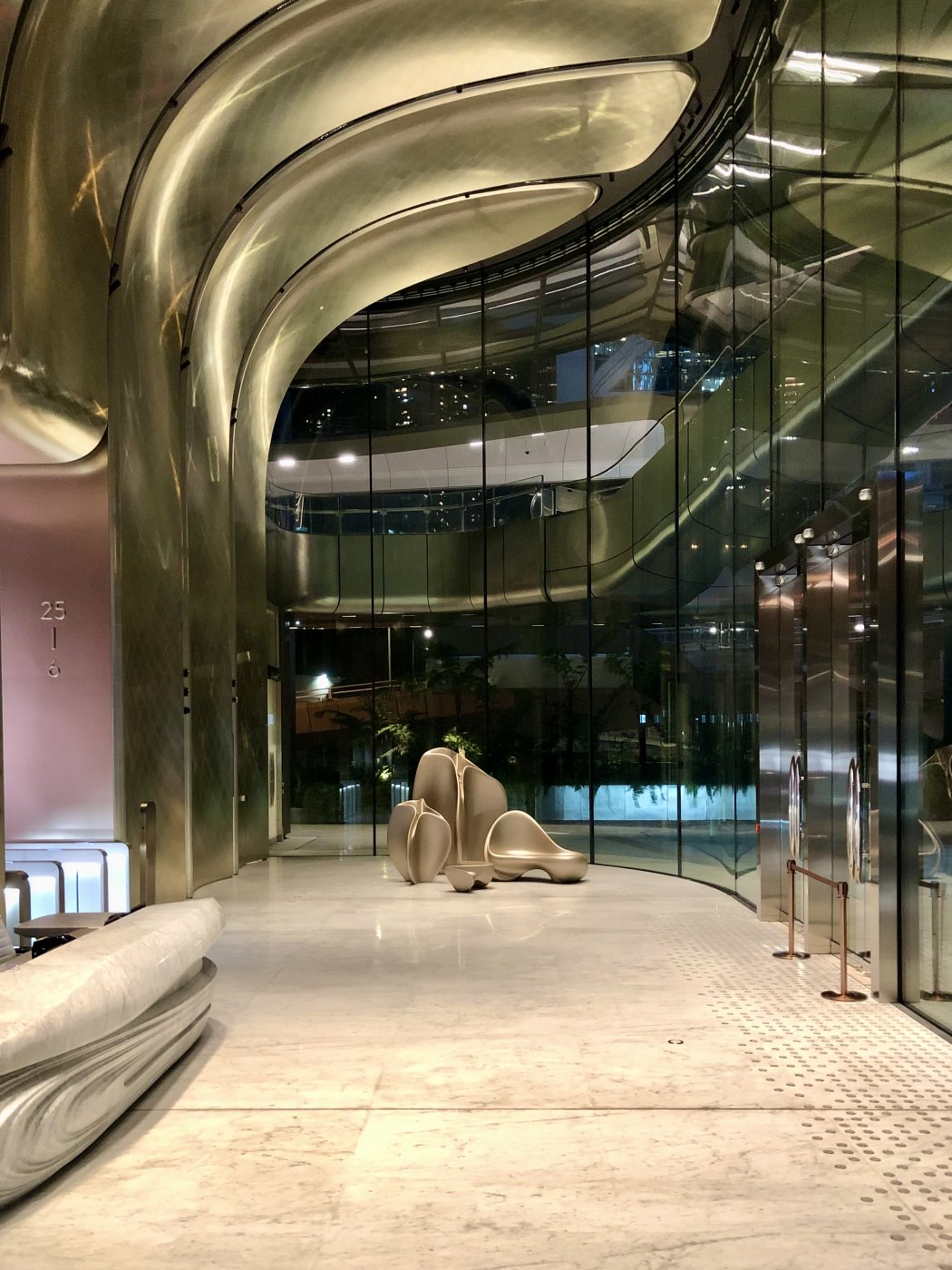
Eleven metres, unsupported. At the ground floor the panels rise to eleven metres against seven at the banquet hall, and the build-up goes to seven layers of 15 mm.
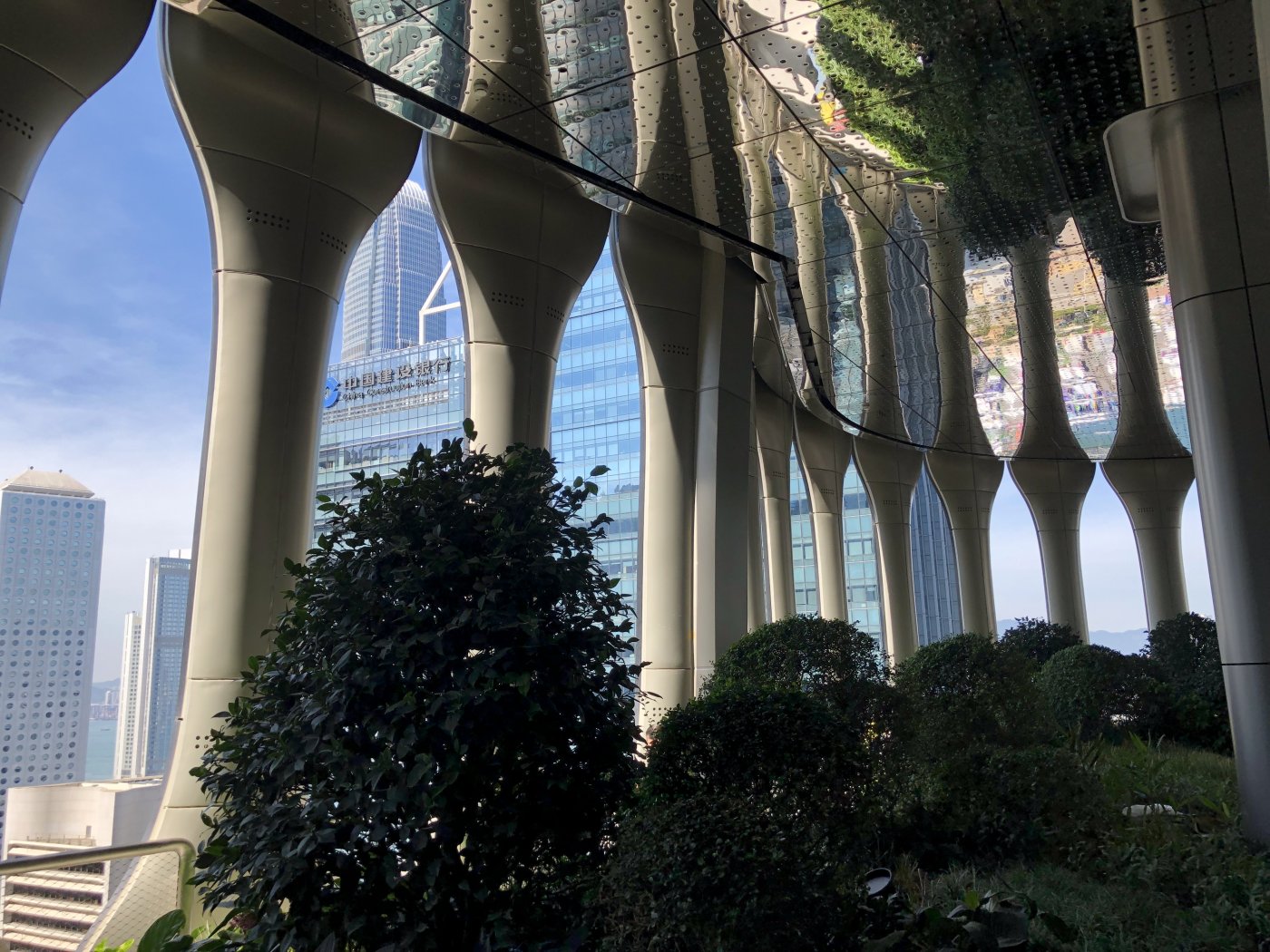
The ground floor repeats the idea and raises it. Where the banquet hall panels are seven metres, these are eleven, still with nothing supporting the glass, which took the build-up to seven layers of 15 mm. The main curtain wall is more conventional, double glazed with selectivity coatings for the U and g values, though again with very low internal reflection at the client's insistence, which is a night-time concern rather than a daytime one. The sky garden is the reverse case: complicated shapes, simple glass, a double 10 mm heat strengthened unit.
Where the machine stops
The pane that took eight hours. A mirror coated triple of 8 mm could not go through the tempering oven, so it was slumped gradually over a bespoke steel mould and then annealed slowly.
Most of that curved glass comes off an oven that toughens or heat strengthens cylindrical curves up to 18 metres, turning out a lite every 20 to 30 minutes. Its constraint is physical and worth understanding, because it explains a great deal about what curved glass costs. The centre of the oven bed is fixed to the chassis; the sides lift on chains. So it produces cylindrical geometry, up to a 3.6 metre arc length on panels up to 18 metres, and nothing else.
The restaurant glass fell outside that. A triple of 8 mm with a mirror coating was made the old way: bespoke steel moulds, three or four plies laid over the mould together, and the glass slumped little by little under its own weight. That takes eight hours rather than twenty minutes, followed by a long controlled cooling so the glass ends up strong and stable, and then lamination. The precision demand moves from the oven to the mould, and it is unforgiving.
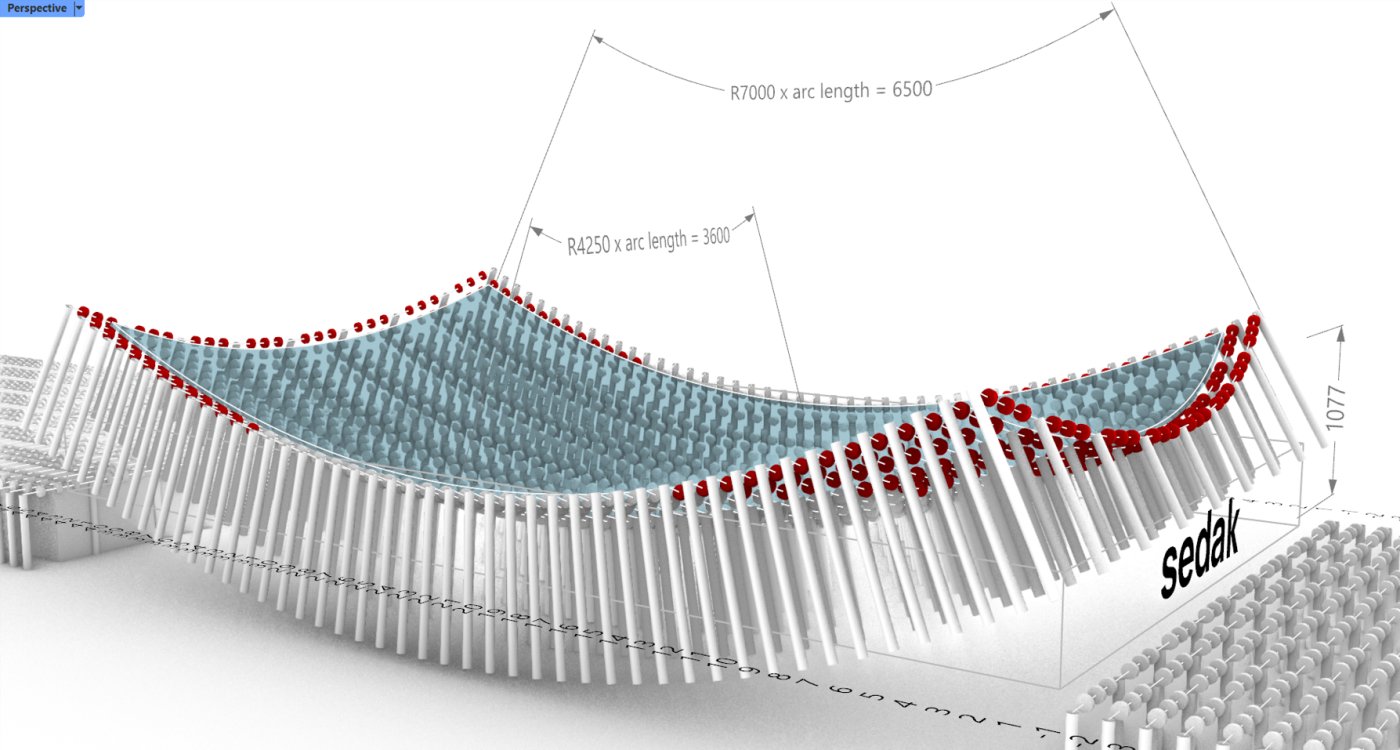
The soffit that turns into the building needed something else again, a double pane heat strengthened unit with a highly reflective mirror coating, machine bent, whose reflection Tarrús rates above flat toughened glass. That required new equipment bought specifically for the order, capable of a 7 metre radius over a 6.5 metre arc in one direction and 4 metres over 3.6 in the other. Its centre, too, is fixed to the bed, so it bends one way only.
What multi-curved tempering changes
The saddle, in toughened glass. Anticlastic geometry is among the hardest things to bend, and multi-curved tempering brings it within reach of a machine.
The conclusion Tarrús draws from his own plant is that it was good enough for this building and not good enough for the next one, which is why the firm went after multi-curved tempering, first shown as a prototype from a bespoke oven configuration and since refined. Concave and convex in one panel. Which face carries the coating or the ceramic frit stops being a design constraint, because the oven resolves it.
What it removes is a list of familiar compromises. Concave and convex can appear in the same panel, so a designer no longer has to decide which face the coating or the ceramic frit can live on. Conical and J shapes, the sort that recur in tower design and until now meant annealed and laminated glass, can be toughened. So can horse saddle, anticlastic geometry, which is about as hard as glass bending gets.
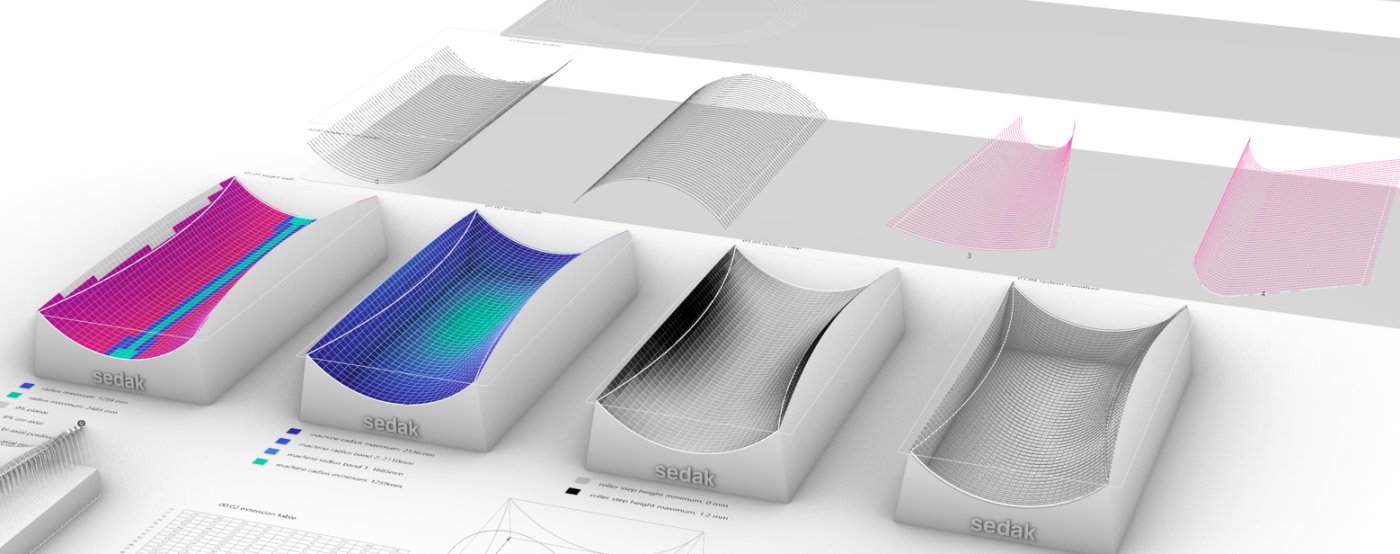
Alongside it they built software to answer the feasibility question quickly, so that a geometry can be confirmed, refused or adjusted while it is still a drawing. Tarrús offers a measure of how much has moved: the Elbphilharmonie in Hamburg, delivered by the group about a decade ago, used annealed glass because a double glazed unit with two coatings and a dark ceramic frit simply could not be tempered then. The same building could be toughened today.