Jennifer Schneider set out the case for treating the interlayer as a structural material in its own right, comparing stiffness, creep and edge stability across PVB and ionoplast, and showing what happens when a specified product is quietly substituted.
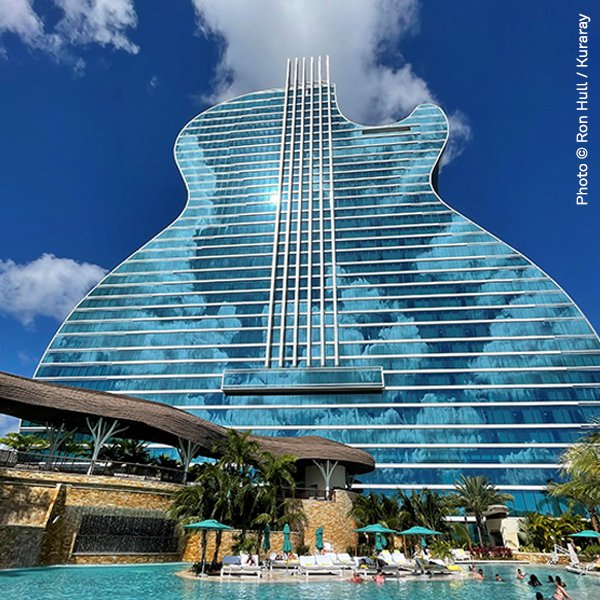
Structural interlayers have changed what designers can ask of glass, and Jennifer Schneider opened by pointing to buildings where the material is doing more than glazing an opening. She cited The Edge in New York, the Steve Jobs Theater in Cupertino as an example of curved structural glass, the Vessel in New York, the glass slide at U.S. Bank Tower that carries visitors from the seventieth floor to the sixty-ninth, and the Hard Rock Hotel and Casino in Miami. What these have in common, in her account, is that the glass is asked to carry load, resist impact and stay in place after breakage, and none of that is possible without an interlayer chosen for mechanical performance rather than simply for lamination.
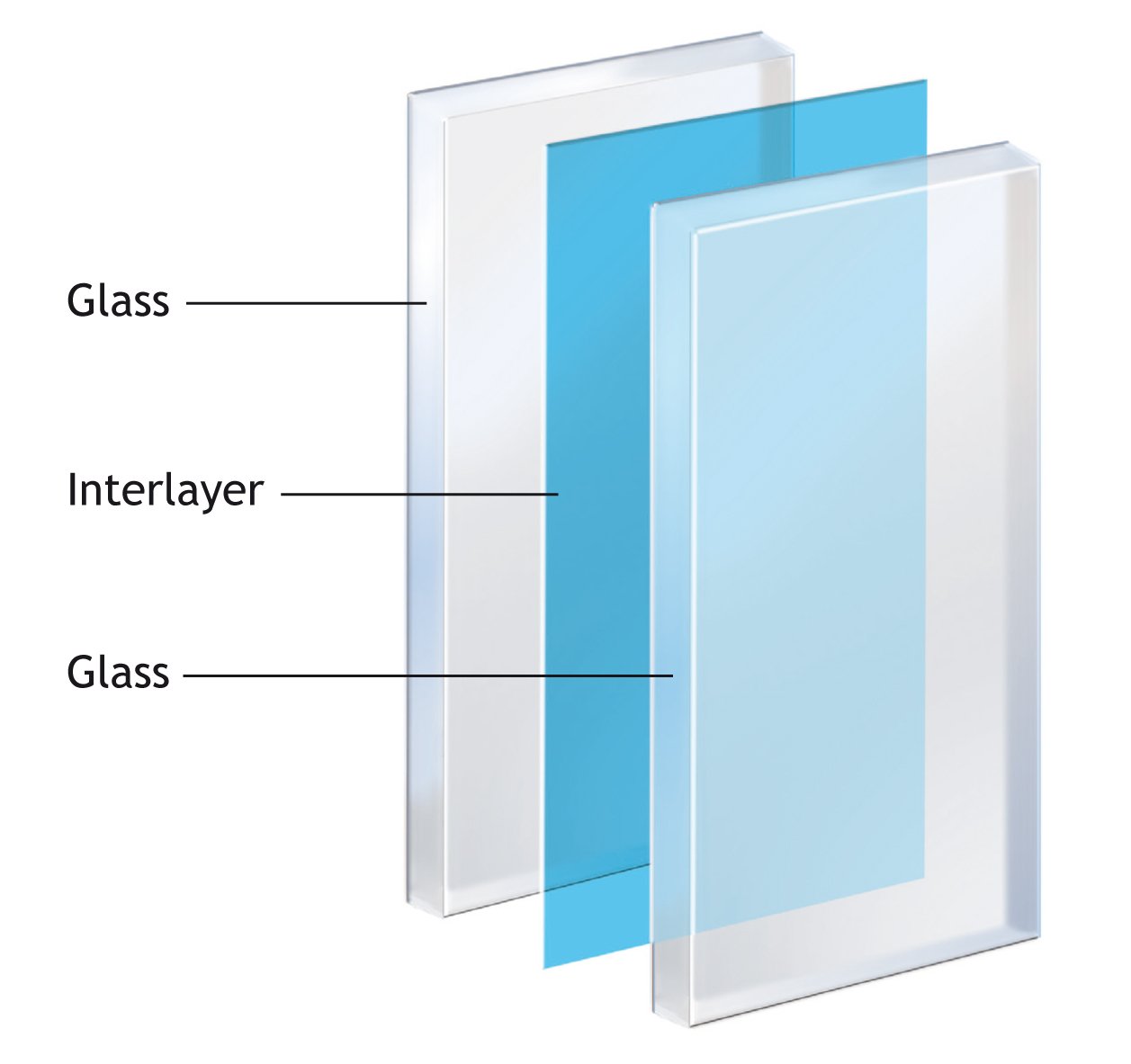
Schneider took a step back to define the material. Laminated glass, she explained, is glass with an interlayer bonded between the plies, and PVB is the oldest of these, the same family found in every car windscreen. From there she drew a clear line between standard PVB, which she was emphatic is not a structural interlayer, and the structural family, which in her account covers the stiffest PVB grades and the ionoplast SentryGlas products. The distinction is not a marketing gradient but a difference in modulus, and it is what determines whether a balustrade, a fin or a floor panel behaves as a composite section or as two independent sheets sliding past one another.
Measuring stiffness, creep and edge behaviour
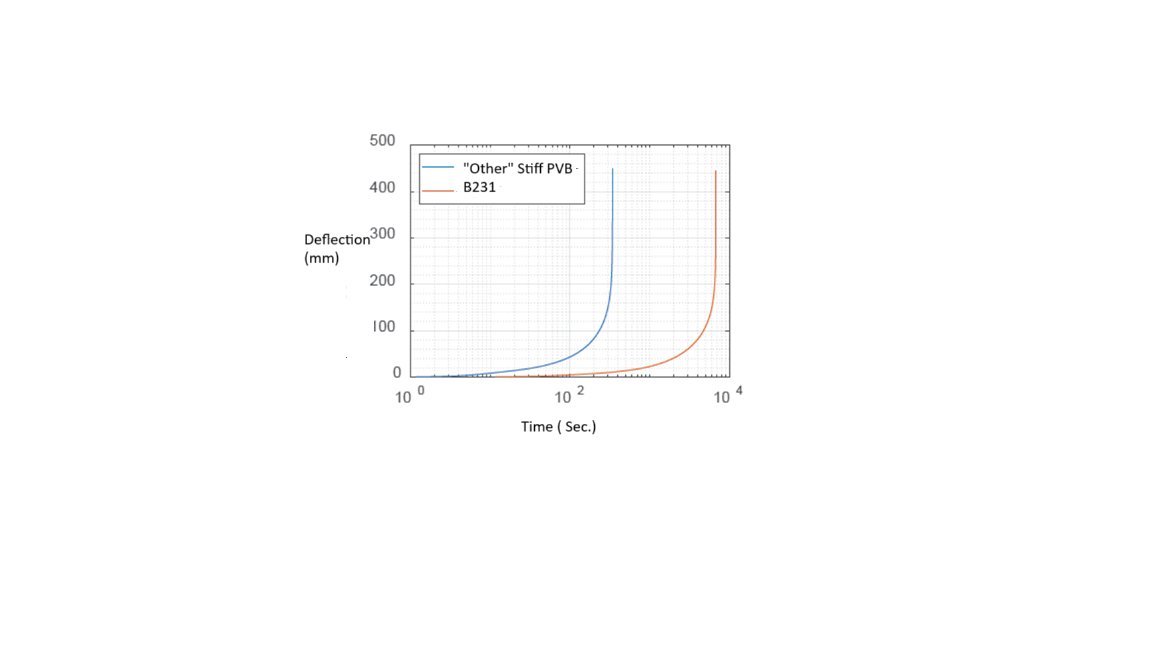
The new development Schneider brought was Trosifol Extra Stiff Pro, which she described as the stiffest PVB interlayer available. She illustrated the gain with a standard balustrade case: an imposed line load of 1.5 kN, a design temperature of 30 degrees C, and load durations of ten minutes and one minute. Under the longer duration, deflection fell from 33.39 to 29.61, roughly 13 per cent lower than other stiff PVBs, and at the one-minute duration the improvement rose to about 22 per cent. She supported this with four-point bend testing on broken glass beams to show post-breakage strength, and with creep data plotting deflection against time, where the newer grade held its shape longer than the comparison products.
Edge behaviour received equal attention, because open-edge balustrades expose the interlayer directly to the environment. In a 5,000-hour salt spray test, Schneider said the conventional stiff PVBs began to show edge cloudiness while the Extra Stiff Pro remained much clearer, with an open-edge appearance closer to that of an ionoplast. She then placed the products on a single comparison, quoting Young's modulus figures of 413, 187 and 78 for SentryGlas at the various temperatures assessed, with Extra Stiff Pro sitting below the ionoplast but above competing stiff PVB grades. The point was ordering rather than superlatives: designers should know where their specified product falls on that scale before they size a panel.
The carbon argument for stiffer material
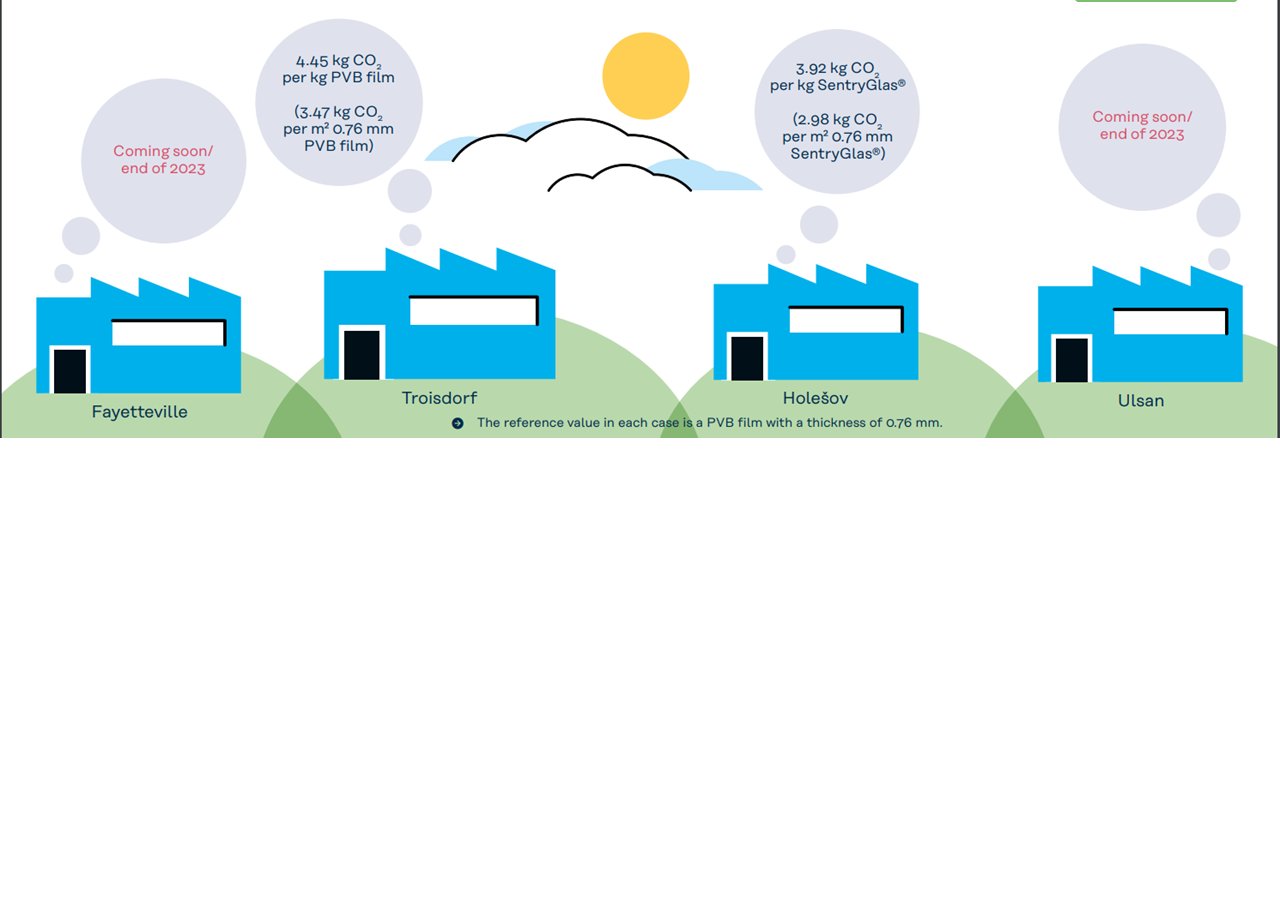
Schneider linked stiffness directly to embodied carbon. Kuraray, she said, has a target of net zero carbon emissions by 2050, and on a per-kilogram basis SentryGlas comes in at about 3.92 kg CO2 against 4.45 kg for standard PVB film. The larger saving, though, comes from what the stiffer interlayer allows elsewhere. In her worked example, a build-up requiring 8 mm glass with PVB could be reduced to 6 mm with the ionoplast for the same deflection, cutting the total from 55 kg CO2 to 41.8 kg, a saving of around 24 per cent. Less glass also means less metal in the supporting structure, and she noted that a Trosifol R3 product combined with low-carbon glass can reduce the footprint by as much as 44 per cent.
Getting what was specified
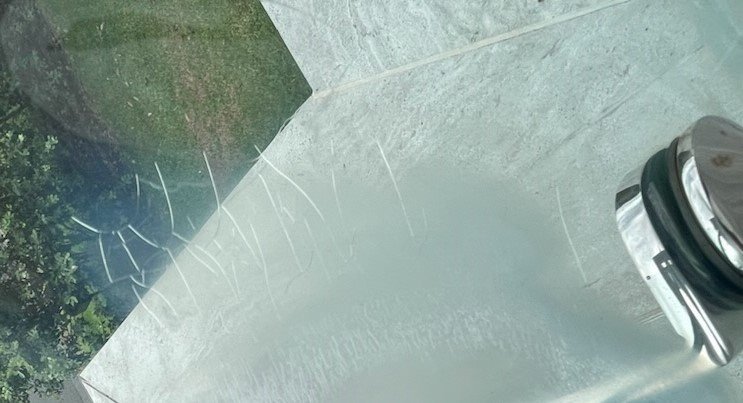
The final part of Schneider's argument concerned substitution. SentryGlas has been on the market for more than 25 years and carries approvals including Miami-Dade for the Florida hurricane market, DIBt in Germany and CSTB in France, but products sold as SGP are not necessarily the same chemistry. She showed failures attributed to such substitutes: a glass fin with iridescence, high haze and eventual breakage, an airport project in China where the interlayer itself cracked between the plies under stress, and impact tests where the laminate did not remain in place after breakage. To close the gap between specification and installation, she introduced CertiPly, a blockchain-based tracking system that gives each interlayer a unique digital identifier recorded from factory to site, so that the material reaching the building can be verified rather than assumed.