


Mourad El Garci traced the honeycomb panel from aerospace, marine and military engineering into the building envelope, lighter, stiffer and larger-format than solid plate, and showed how, on a fast-track World Cup stadium in Rabat, parametric design generated some 19,000 unique panels automatically to clad it in a single year.
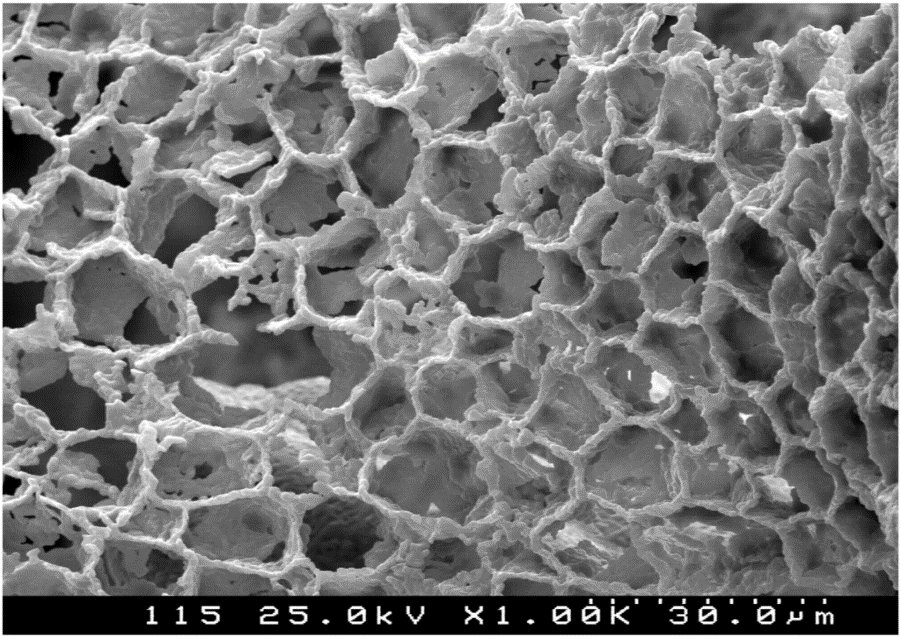
El Garci at Alucoil, a Spanish company in the Alibérico group making aluminium composite and honeycomb panels for the building envelope, introduced the honeycomb panel as a product that migrated into architecture from elsewhere. Its logic is the honeycomb core, found in nature in cork and bird bone and long used in aerospace, then carried through military, railway and marine industries for one reason: a lighter panel.
Made in a continuous process rather than laminated, the honeycomb panel reaches larger spans and bigger formats than a plate system; it is all-aluminium and easy to recycle, with a glue content, El Garci noted, about the same as a paint layer, leaving essentially a pure aluminium product. Across façade typologies he showed it as a rainscreen (a Renzo Piano project in Paris), as unitised panels (Toronto), as curtainwall infill and soffit on projects here in Vancouver, and as fins shaped directly from the honeycomb panel.
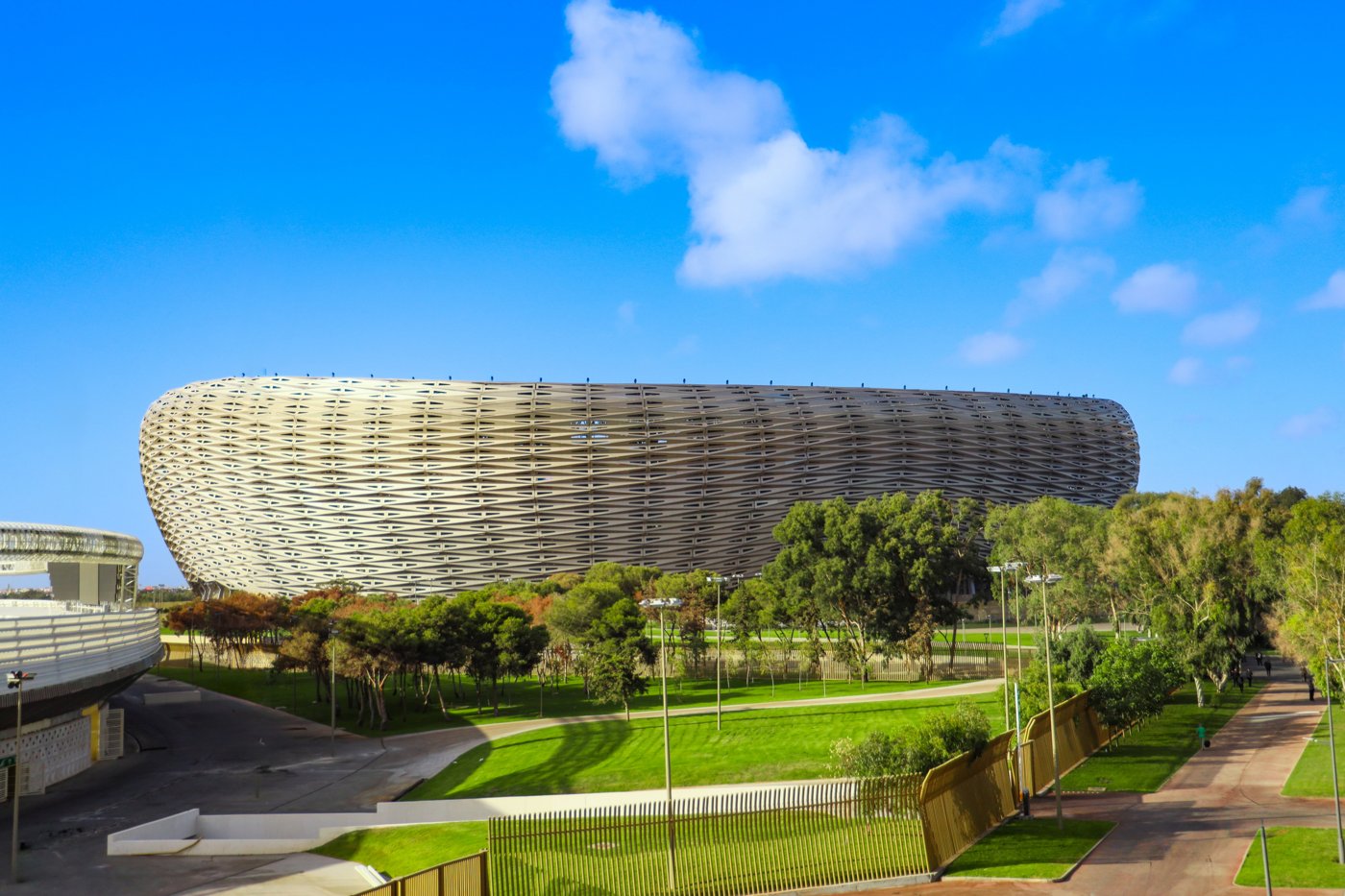
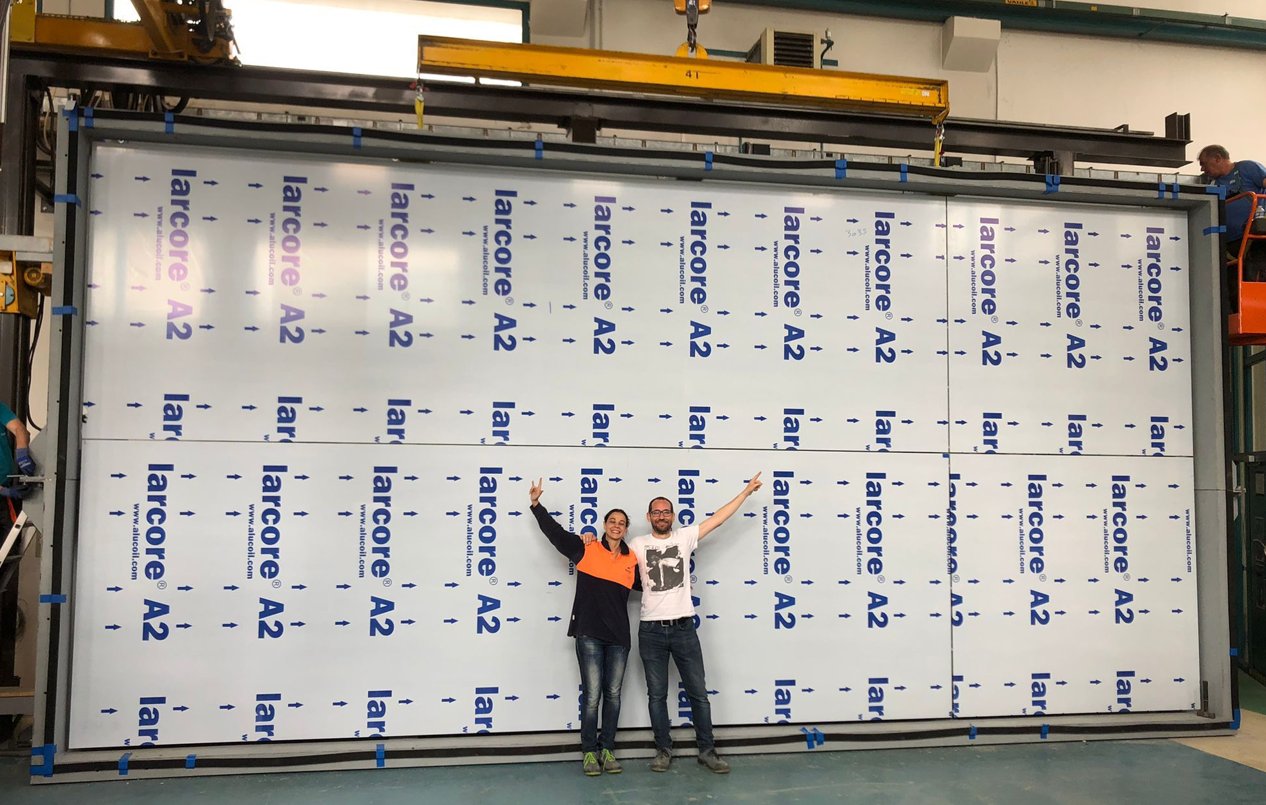
The centrepiece was the Moulay Abdellah Stadium in Rabat, a World Cup stadium by Populous, and a fast-track job with roughly a year from concrete to envelope. Alucoil’s role began on day one, working with the architects to define the geometry, and exploited the panel’s core advantage: very large sizes, up to two metres by eight, even ten. That let the design use fewer, bigger panels, but the form still demanded around 19,000 different panels, each unique.
Parametric design made that buildable. Working in Grasshopper, the team wrote the equations and criteria, driven by finite-element calculation and the maximum span each panel allowed, to deploy across the whole stadium and generate every panel automatically, along with roughly 19,000 shop drawings and 90,000 machine drawings produced by algorithm rather than by hand. The timeline was brutal, from December 2024 to August 2025, and the parametric workflow, El Garci argued, was the key to hitting it.
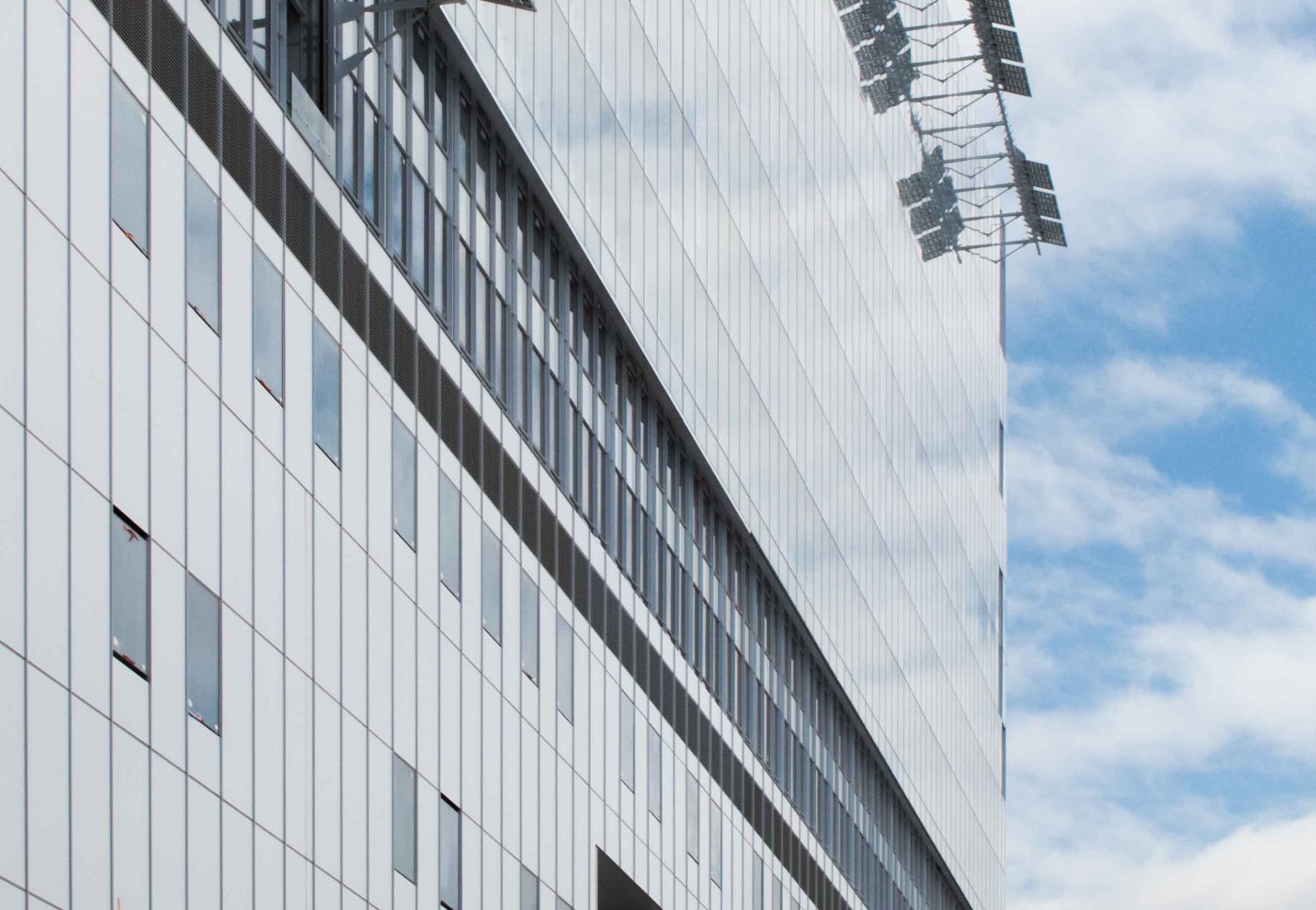
The engineering sat in the details: managing thermal expansion across panels whose fixing clips rotated to a different angle at every position on the stadium, and coordinating the geometry against the subframes, in one case joining two panels to read as a single sixteen-metre run with a very thin gap. It was, he said, among the most complex projects Alucoil has supplied, and a demonstration of how far large-format honeycomb panels can go when combined with parametric design under real time pressure.