


Ahmad Fuad Marrwa argues that a façade is decided long before it is drawn. Bringing architects, structural and MEP engineers, contractors and material suppliers together from the first sketch, he contends, is what turns an ambitious envelope into a building that can actually be delivered to budget and to performance.
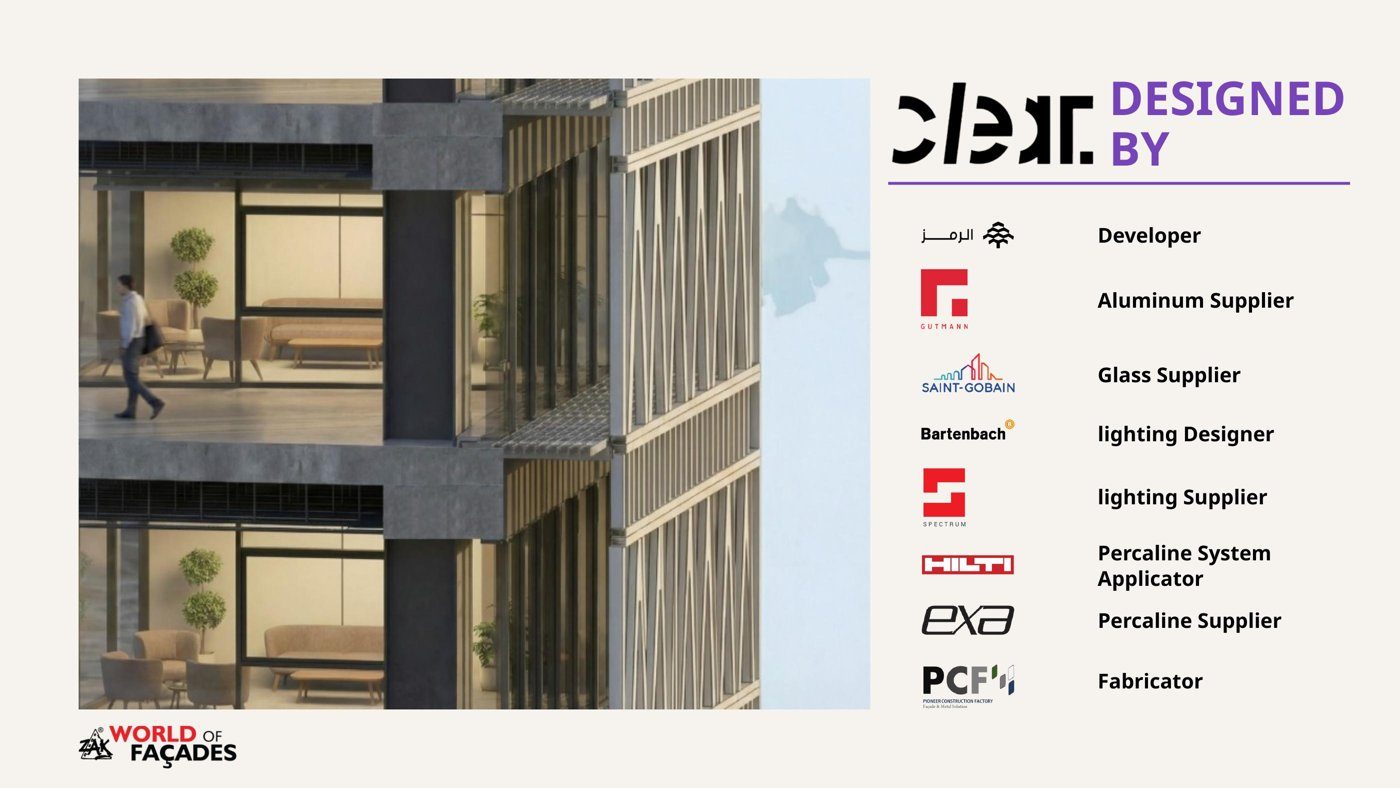
A façade accounts for only a fifth to a quarter of a building's construction cost, yet it governs somewhere between 40 and 60 per cent of the energy and operational cost that follows. For Marrwa that asymmetry settles the matter: the envelope is not a finish added at the end but an engineering and investment decision, and the only place to take it is at the start, with every discipline involved. His term for it is early integration, architect, structural and MEP engineers, the façade contractor, the aluminium, glass and stone suppliers and the lighting designer all working in parallel from day one rather than in sequence.
The four players who decide a façade
Marrwa builds the argument around four parties who each carry responsibilities and each stand to gain. The designer leads like a maestro: by resolving clashes between façade, structure and MEP internally before any drawing is issued, the practice releases coordinated packages that cut requests for information and site problems to near zero. The developer, as client, gains cost certainty and speed when the investment goal and budget are stated transparently at the outset, and protects return by treating the façade as an asset rather than a line item to be squeezed.
The façade contractor, brought in early, can offer constructability and value engineering, alternative systems and materials that hold the architectural intent at a better cost, instead of blind pricing, protecting margin and moving from a squeezed subcontractor to a strategic partner. The supplier, engaged as a partner rather than an order-taker, secures a specification, plans production months ahead and delivers right first time, avoiding the rejections and returns that quietly erode a project.
What sits behind the glass
A façade, Marrwa insists, is never only glass and aluminium; the choices made behind the surface decide how the building performs. Improving the solar heat gain coefficient cuts cooling demand, low-emissivity coatings save energy, and a better U-value reduces heat loss, each worth low double-digit percentages across the envelope. Set against roughly a fifth of construction cost and a maintenance bill that runs higher over a thirty-year life, those gains are what make the façade, in his framing, the most impactful part of the building in performance, cost and operation.
Al Ramz Tower, worked in parallel
The Al Ramz Tower is his worked example of the method. Instead of a sequential hand-off, the team developed the envelope alongside the structure from the first sketch, fixing load points, fixing paths, movement allowances and connection points so the façade and frame met with no conflicts. The same discipline applied to services: thermal insulation and ventilation interfaces were resolved against the HVAC design, and access for the building maintenance unit was planned into the geometry rather than discovered later.
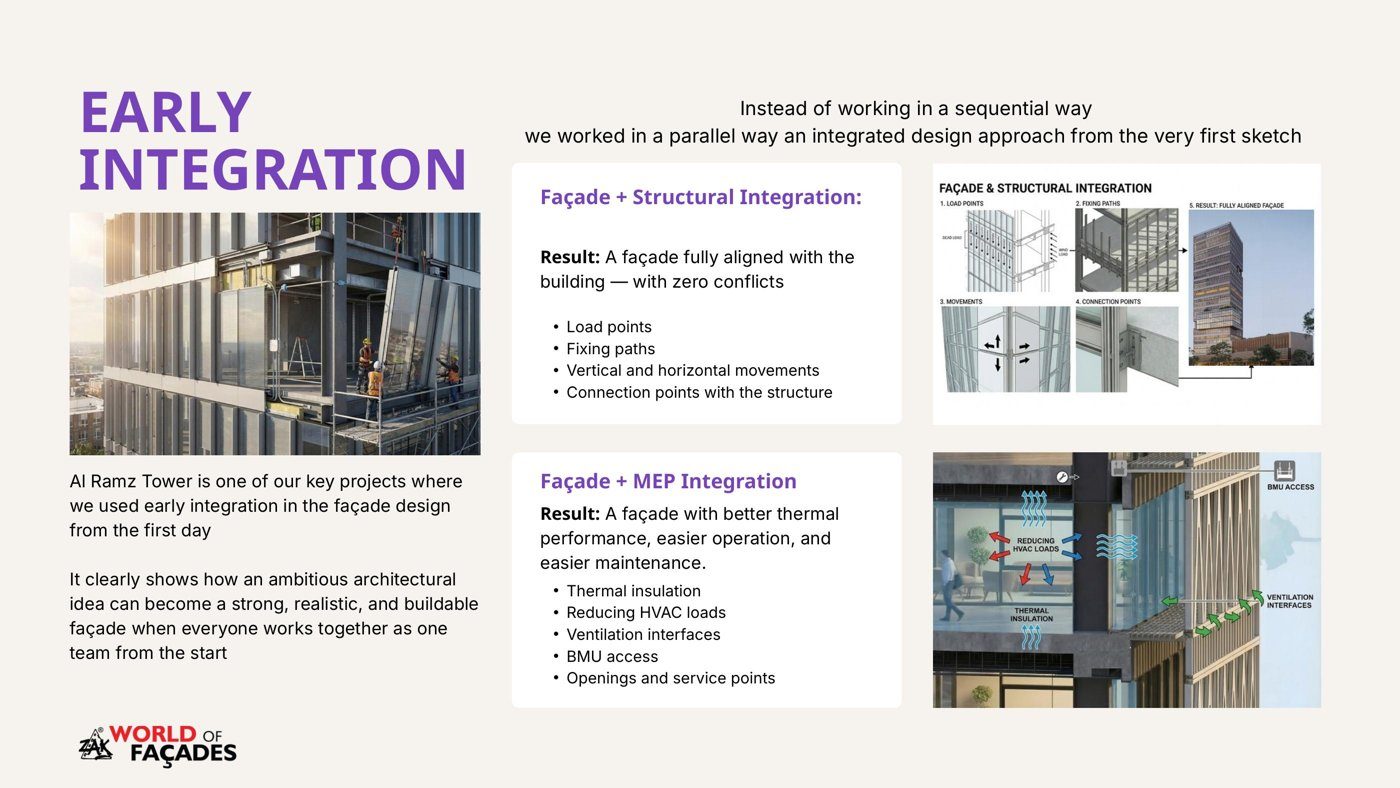
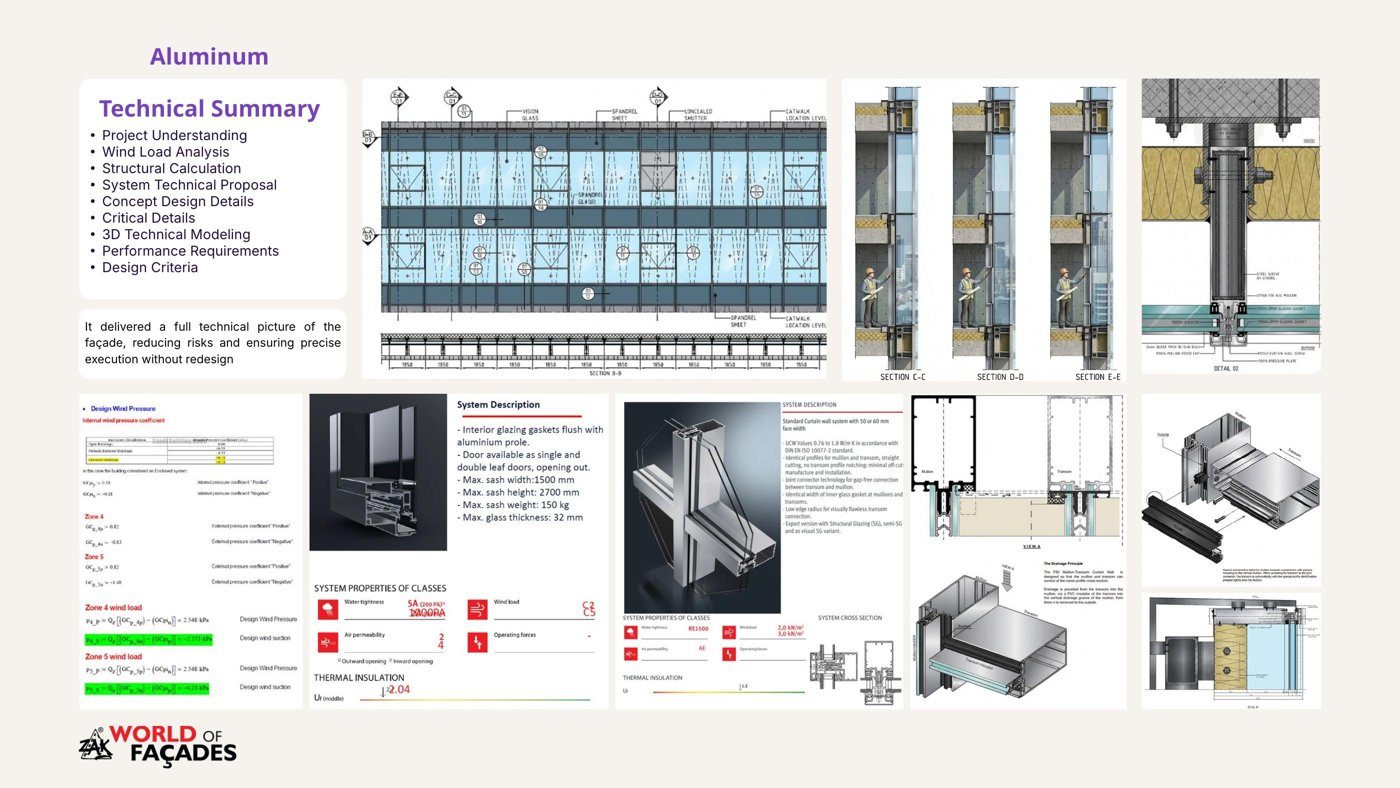
Suppliers contributed technical reports from the beginning. The aluminium supplier worked from the designer's wind-load and wind-tunnel data to set the system and its specification, tying geometry and interfaces back to the façade design rather than treating them as a separate package.
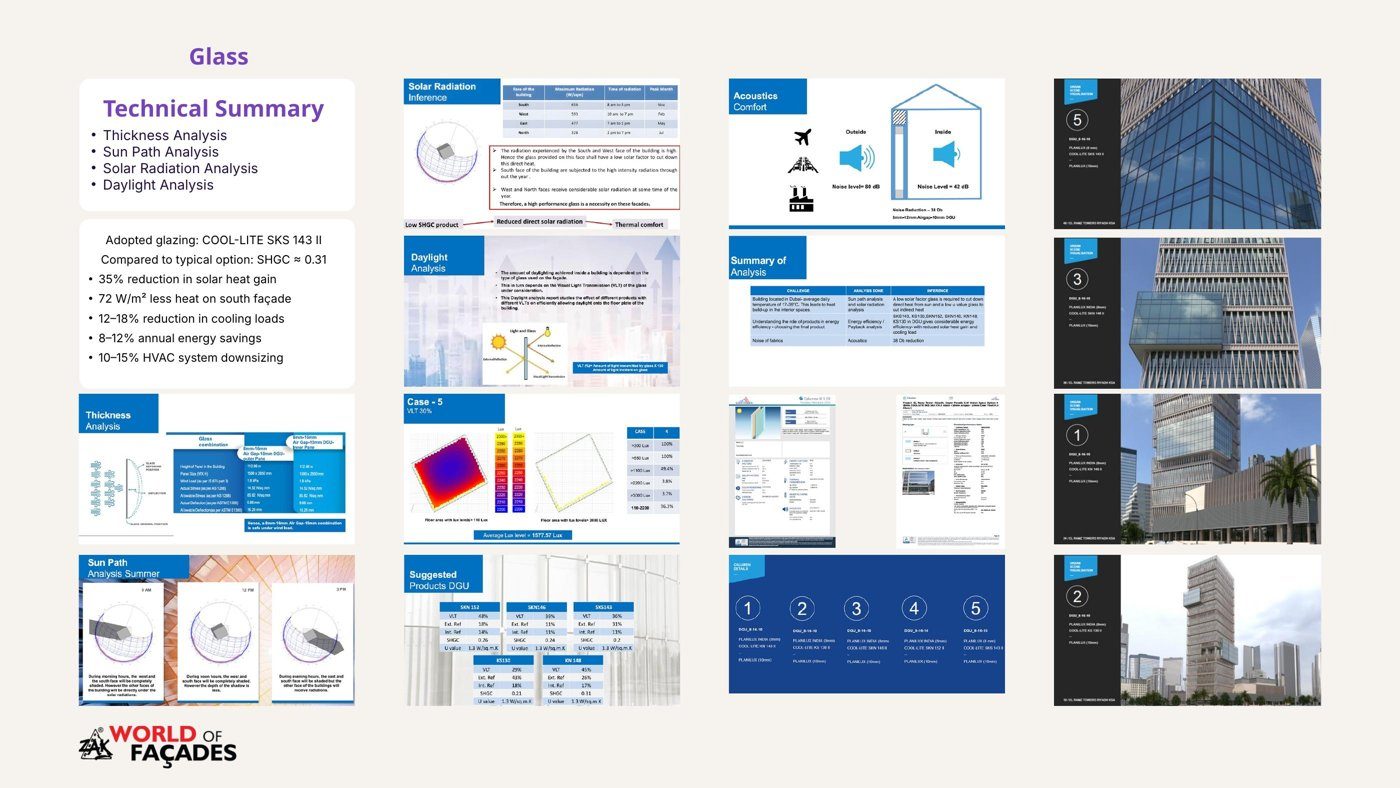
The glass supplier returned solar-radiation, daylight and shading analysis against the target U-value, so the performance consequences of a specification were visible while the design could still change.
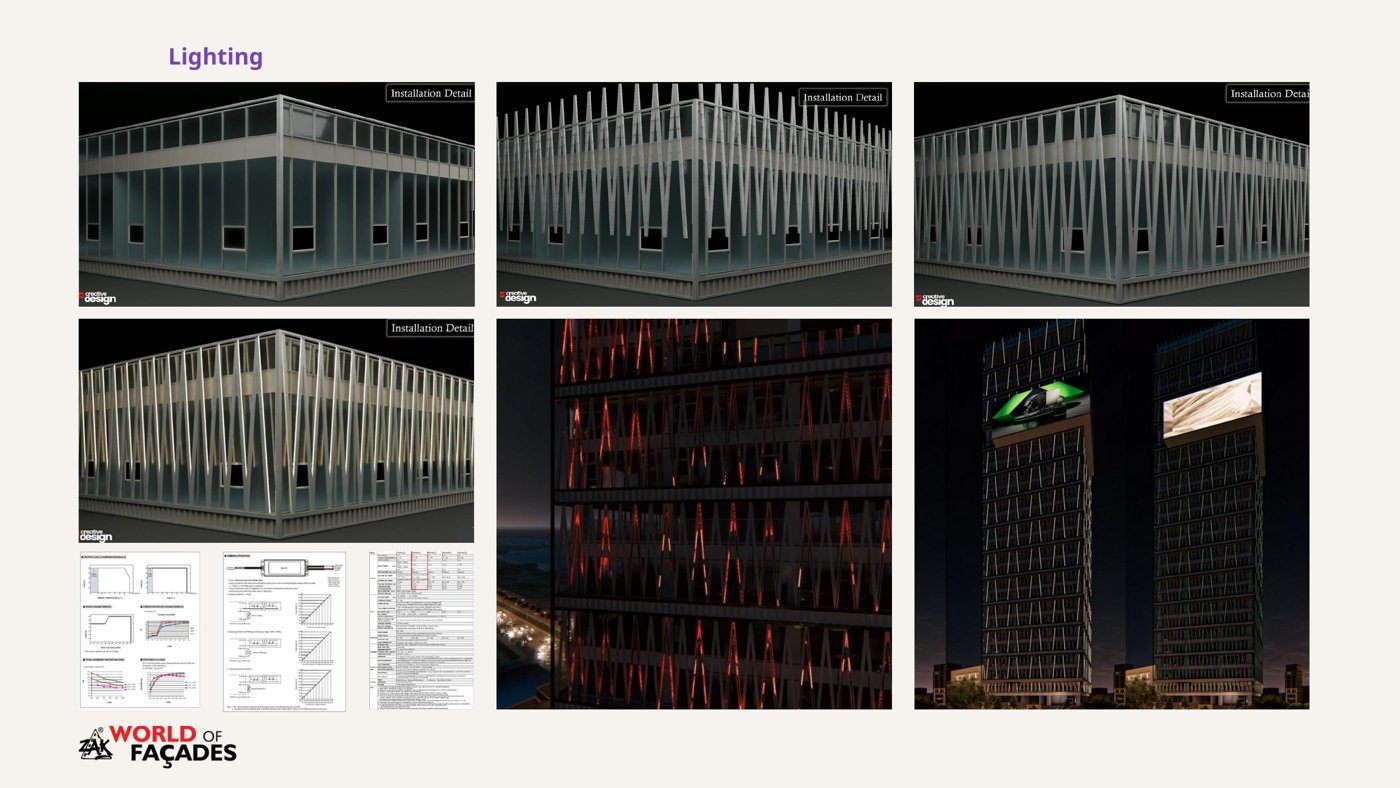
Lighting was built in from the outset too, its routes and details coordinated with the other disciplines instead of being added once the architecture was fixed.
From project method to national standard
Marrwa closes with recommendations aimed beyond a single project. He would require a complete façade study before any drawing is approved, create a national system for approving façade materials and systems, and link building permits to a façade performance certificate, so that performance is proven rather than assumed. Formal early integration, through design-assist, is the fourth. His own practice has gone further, forming what it calls a façade committee to combine supplier materials into a single best-practice catalogue that developers can build from. In a market building at Saudi Arabia's scale, his conclusion is blunt: world-class cities demand world-class façades, engineered with precision, coordinated across every discipline and integrated from the first day.