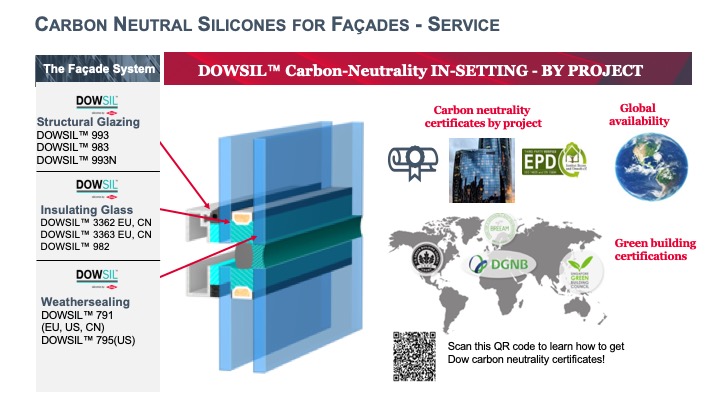
Valeriya Chernikova makes the case that a joint most people overlook can move a façade's carbon figure. Structural silicone, she argues, cuts energy and material in new buildings, and, increasingly, lets the glass and sealant of old ones be reused rather than scrapped.
Buildings account for about 34 per cent of global carbon emissions, Chernikova notes, roughly 13 per cent embodied in construction and 21 per cent operational, and both are under pressure from net-zero targets such as Saudi Arabia's 2060 goal and from certification schemes like LEED and Mostadam. Against that, she points to a component few think of as decisive: the silicone in the façade. Her framing is material efficiency across a hierarchy of reduce, reuse and recycle, applied to structural silicone glazing.
Reduce: air-tightness and durability
Silicone earns its place first by reducing. As a weatherproof sealant with strong climatic resistance, movement capability and adhesion, it creates the air-tightness that underpins energy efficiency; and because it is inorganic and highly UV-stable, it lasts, improving a façade's carbon balance over its lifetime many times over. Chernikova draws on a long record, the company pioneered structural silicone glazing in 1971 and its sealant is specified in eighteen of the world's twenty tallest towers, from the Makkah clock tower to the Jeddah Tower now under construction. Comparing a structurally glazed system, where silicone bonds the glass, with a captive system held by aluminium and gaskets, she puts the structurally glazed option's thermal improvement at 10 to 25 per cent and its aluminium saving at up to 15 per cent, with smaller profiles and no gasket replacement compounding the effect. A free online tool, she adds, will size the sealant bite from a submitted drawing.
Reuse: a Zurich college's red glass
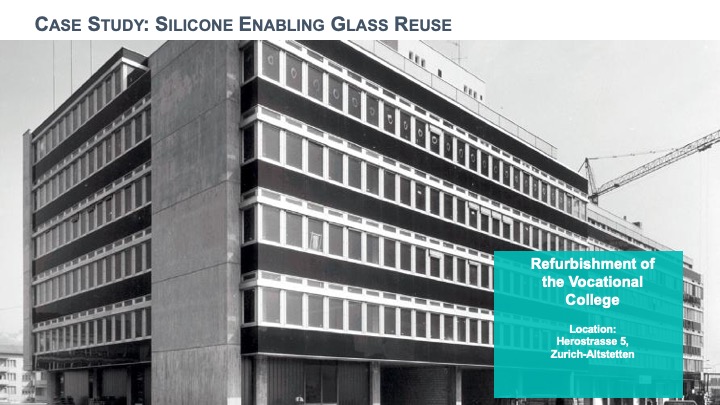
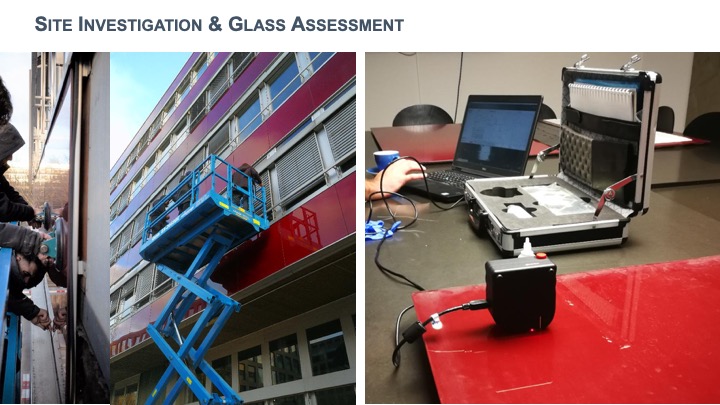
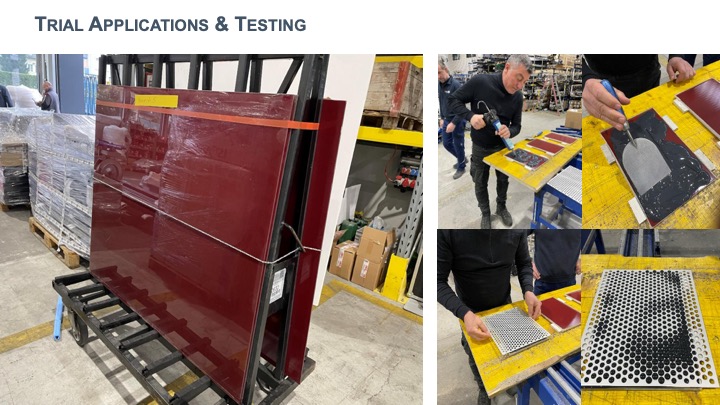
If material cannot be reduced, the next step is reuse, and here she turns to the refurbishment of a 1970s vocational college in Zurich whose energy and acoustic performance had fallen short. The city wanted to keep as much material as possible, including a distinctive enamelled red glass, but the glass was no longer structurally sound on its own. Working through its portfolio, the team arrived at a solution in which a perforated metal sheet was bonded to the glass with a chosen silicone sealant, then lab- and impact-tested; the project completed in 2024.
Recycle: debonding the silicone
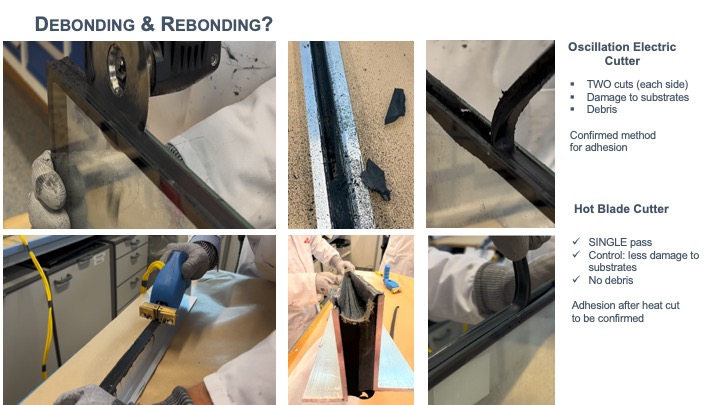
Recycling is harder, and rests on a misconception Chernikova is keen to correct: that silicone is difficult to debond. With the right blade it can be cut cleanly and separated, she argues, which is what makes recovery possible. Silicone-metal production is energy-intensive, so the material is worth reclaiming, but there is as yet no infrastructure to collect silicone as a waste stream. The company is watching advances in separating glass from metal, she points to a machine developed by Hegla and AGC that preserves the glass, and could in turn free the silicone, and is building the recovery side through partnerships, including one in North America and another in India that already recycles its own production and customer waste. The obstacle, she says, is volume: the ecosystem has to be established.
A carbon-neutral sealant
Finally she introduces a carbon-neutral silicone sealant, which the company says it was first to offer and which is third-party certified. Being backward-integrated, from silicone metal to polymer to finished sealant, lets it target the largest source of emissions, the silicone metal itself, produced in Brazil using hydropower and certified natural inputs such as quartz, wood chips and charcoal. It can go further with carbon insets from a company-owned, third-party-verified eucalyptus plantation, offered as a premium, project-level service that can return carbon credits to a project. The numbers give a sense of scale: a standard silicone sealant carries roughly 8 to 12 kg of CO₂-equivalent per kilogram, about 20 kg per square metre of façade, so on a building with some 30,000 square metres of façade the saving can approach 600 tonnes.