


Allan Gibson connected structural laminated-glass performance with down-gauging, durability, product authenticity and supply-chain traceability.
Structural laminated glass is often specified for what happens after breakage, but Allan Gibson argued that the interlayer can influence far more than residual strength. Stiffness, edge durability, glass thickness, embodied carbon and even supply-chain authenticity can all change with the material between the panes. The design decision therefore cannot be reduced to choosing a generic “structural interlayer”. If the calculation depends on the behaviour of a particular product, the project needs to understand both the performance benefit and how that product will remain identifiable from factory to installation.
Stiffness can reduce material elsewhere
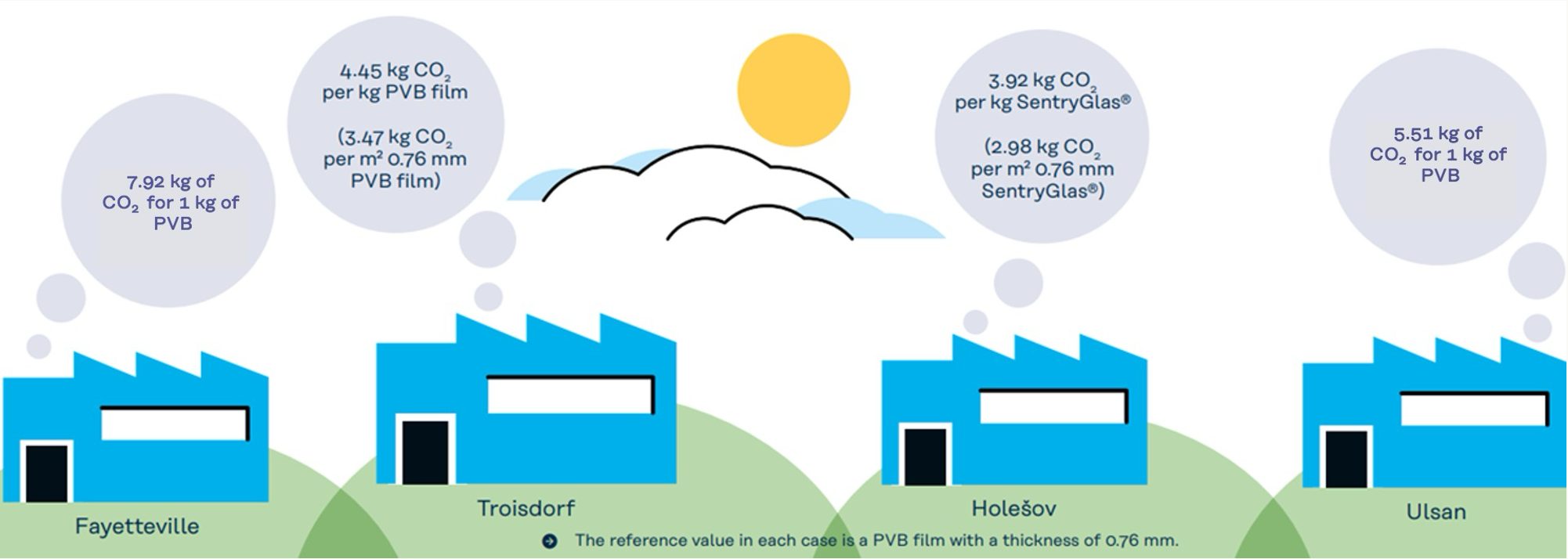
A stiff structural interlayer allows multiple glass plies to work together more effectively under load, including horizontal and point-supported applications where post-breakage behaviour is critical. Gibson's sustainability argument was based on that structural effect. Although the interlayer itself has an embodied-carbon value, higher composite stiffness can allow the glass to be down-gauged in suitable applications. He cited an example in which the overall glass reduction could produce a carbon saving of about 24%. The correct comparison is therefore not kilograms of interlayer against kilograms of interlayer, but the complete assembly that each option makes possible.
Durability includes the exposed edge
Clear structural glazing often celebrates its edges, which makes long-term appearance part of performance. Gibson discussed accelerated weathering and extended exposure testing intended to show whether interlayers remain clear and stable under heat, moisture and ultraviolet exposure. In low-iron glass, edge discolouration or deterioration is especially visible because the design is paying for transparency. The same concern applies structurally: an interlayer chosen for stiffness and post-breakage capacity has to retain those properties over the service life assumed by the engineer, not simply at the point of manufacture.
Generic acronyms can hide substitutions
Gibson warned about specifications that refer only to an acronym such as SGP rather than a named product with defined properties. Once the description becomes generic, an alternative interlayer can enter the supply chain even though its stiffness, weathering behaviour or temperature response may differ from the material used in the structural calculation. He showed failure examples associated with substituted products to make the risk concrete. Performance-based substitution is possible, but only if the alternative is tested against the same requirements; a similar-looking film is not evidence of equivalent behaviour.


Traceability can follow the material
The final development was a blockchain-based system intended to create a verifiable chain of custody for SentryGlas. Tokens are associated with material as it moves through the supply chain, creating a digital record that can help distinguish the specified product from an unverified substitute. Gibson presented the idea as a practical answer to a recurring façade problem: the engineer may design around a particular interlayer, while procurement and fabrication occur several tiers away and months later. Traceability links the physical product back to the performance assumption.
The carbon example made the distinction between product impact and system impact particularly clear. A structural interlayer may have a relatively high impact per kilogram, yet its stiffness can allow a thinner laminated glass build-up; Gibson showed an example in which that down-gauging reduced the total glass-related carbon by about 24 per cent. That benefit disappears if an unspecified “equivalent” interlayer is substituted without matching structural and durability behaviour. Traceability, including the blockchain-based approach he described, is therefore not administrative decoration but a way to preserve the performance assumptions behind the calculation.

The argument connects sustainability and quality control in a useful way. A high-performance interlayer can reduce glass mass, extend design possibilities and improve residual strength, but those benefits disappear if durability is misunderstood or the product is substituted. Carbon savings are credible only when the thinner assembly performs for the intended life and the supply chain can prove what it delivered.