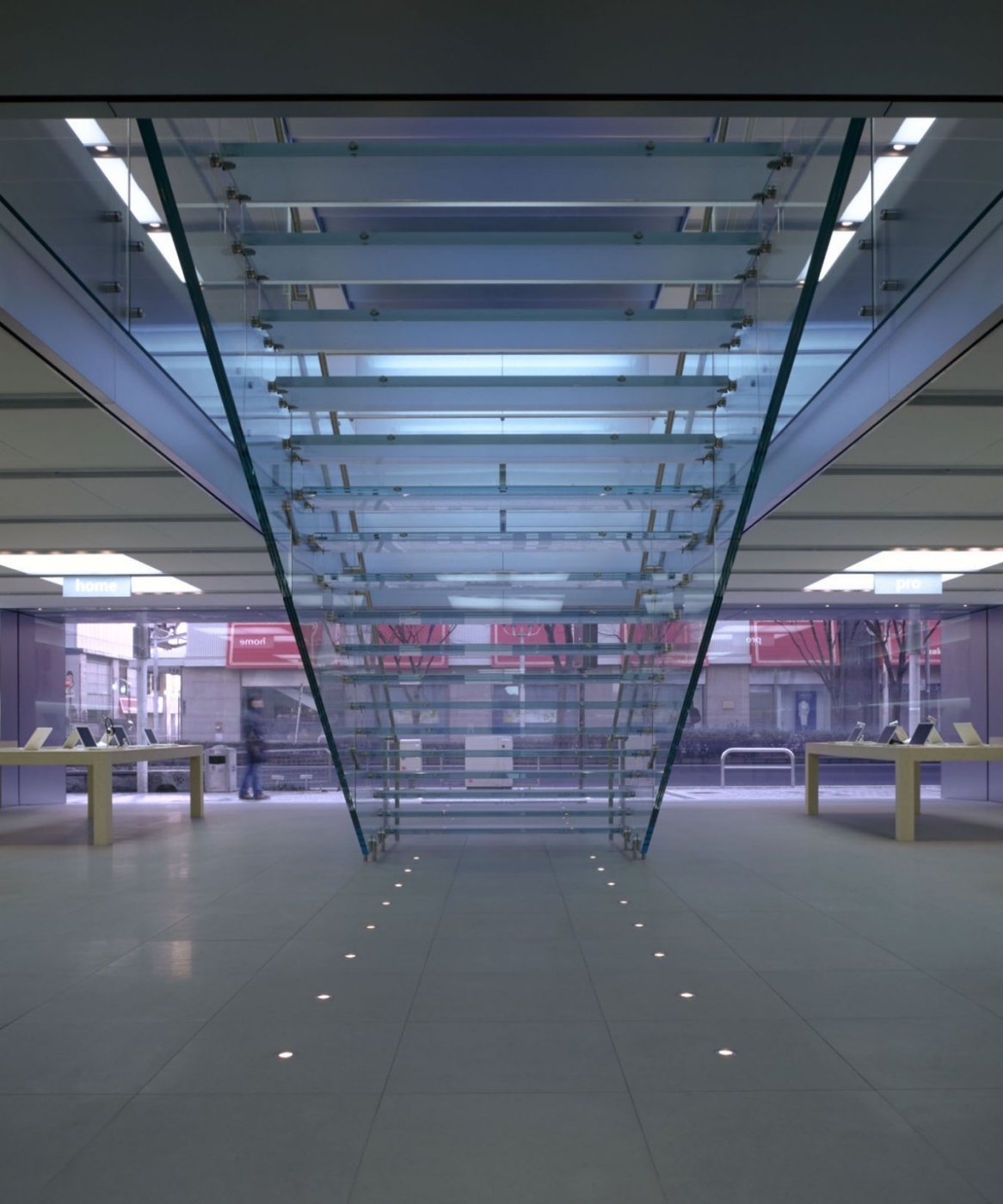
Anton Novozhilov made the case that laminated safety glass lives or dies by its interlayer – that in Georgia’s heat, coastal salt and at exposed edges the common PVB softens and delaminates where a stiffer ionoplast holds broken glass in place, thinner and lighter, from balustrades to glass bridges.
Glass is a beautiful material with one flaw: it is fragile, and when it fails it can be dangerous. Even toughened glass is not a guarantee – it can still break under impact or from a nickel-sulphide inclusion – so real safety comes from lamination, bonding the broken shards to an interlayer so they stay put. And a laminate, Anton Novozhilov argued, is only as good as that interlayer. In Georgia’s heat and coastal salt, the choice of what goes between the panes is the safety decision.
The interlayer is the safety
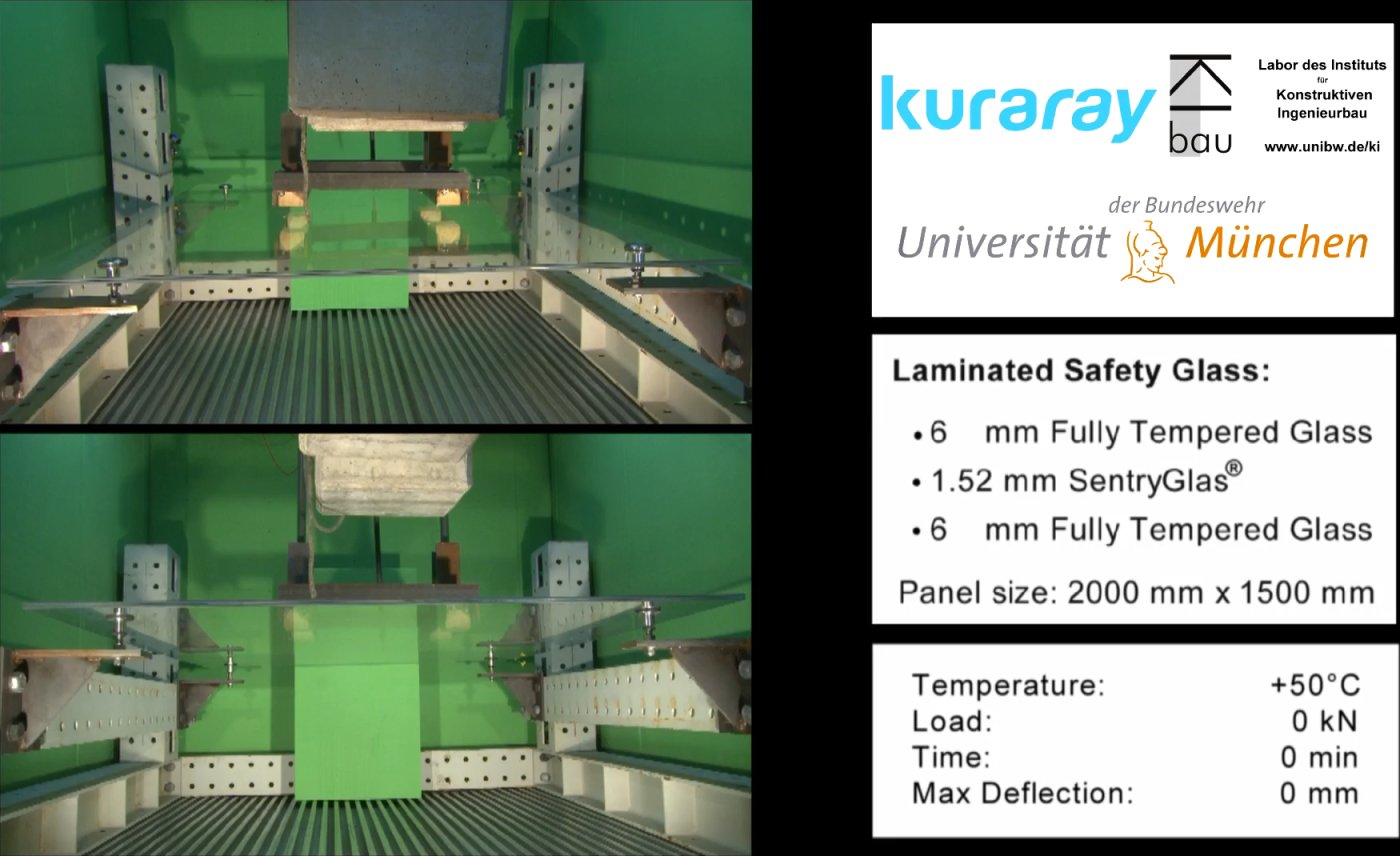
A laminated pane is a sandwich: glass, interlayer, glass. The panes are identical, so everything the laminate does after breakage depends on the layer between them. Two families dominate – flexible PVB, the common choice, and stiff ionoplast, roughly a hundred times stiffer and several times more tear-resistant. In structural glazing the stiff interlayer lets the laminate keep carrying load even after both panes have cracked. Heat widens the gap between them: at +50°C – an ordinary August afternoon in much of Georgia – a PVB laminate can sag under its own weight, while in the manufacturer’s own tests a stiff-interlayer panel at the same temperature still held a 100-kilogram load for more than half an hour.
Edges, salt and staying put
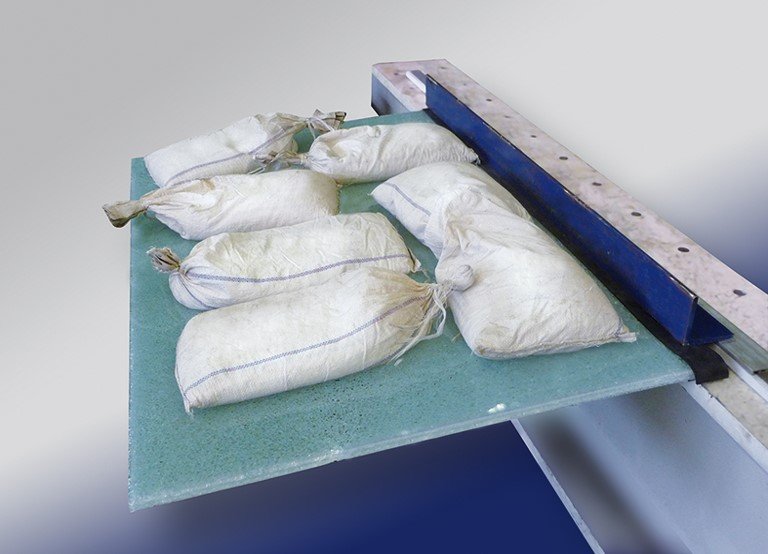
The second weakness is at the edges. PVB is moisture-sensitive, and where edges are left open it can discolour and delaminate – as Novozhilov had seen on a balustrade in Batumi, a fine sea view spoiled by peeling lamination, and a safety risk rather than a cosmetic one. Such failures often trace back to the lamination itself – edge lift and surface waviness beyond tolerance, mismatched glass pairs, or edge clamps that lock in stress. On the Black Sea the problem is not only damp but salt; stiff ionoplast interlayers, he noted, came through three thousand hours of salt-spray testing. Post-breakage behaviour matters most on a balustrade, and here the difference is stark: in a pendulum impact standing in for a human body, and in a shot-bag test, a stiff-interlayer barrier holds after a pane is deliberately broken, where PVB or decorative EVA would not.
Thinner, lighter, cheaper
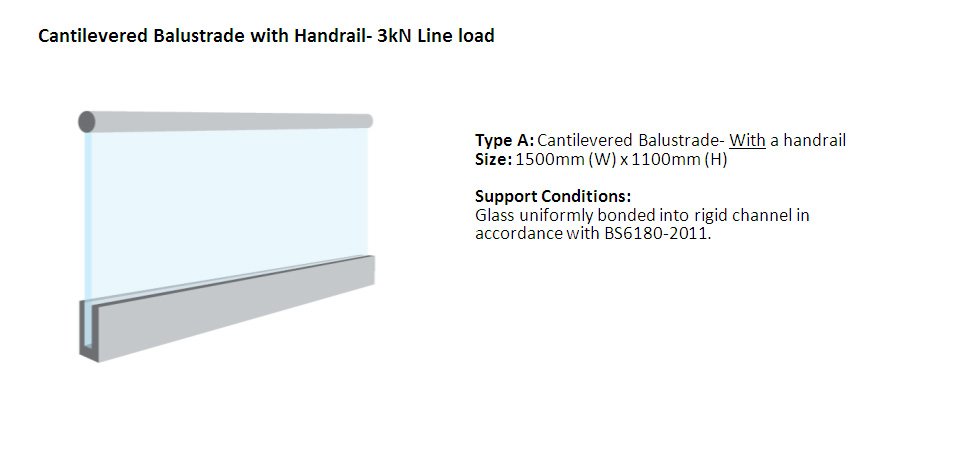
The counter-intuitive part is cost. Because a stiff interlayer carries more load with less deflection, the glass itself can be thinner and the panels larger, often fixed only at the base with no metal connectors – a frameless, open-edged barrier for a sea or mountain view. Changing the interlayer can take a balustrade from fifteen-millimetre to twelve-millimetre glass; the interlayer costs more, but the whole assembly ends up lighter and, once the supporting structure is counted, cheaper. Novozhilov was blunt about what that saving invites: the SentryGlas name has been taken up by manufacturers who test less carefully, and at an airport in China he showed a crack running not through the glass but through the interlayer inside it.
Proven at scale
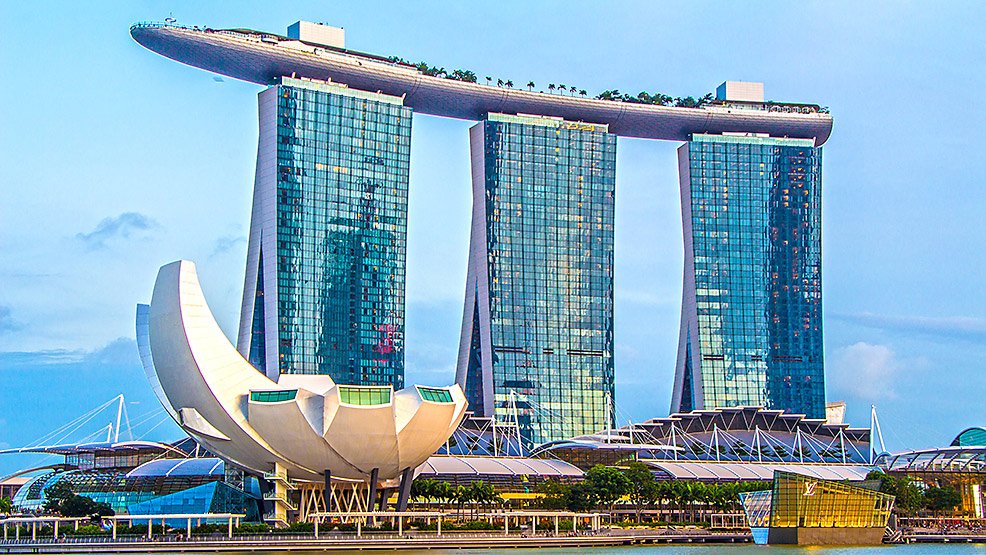
Pushed further, the material carries buildings on glass alone – glass floors and roofs, an eighty-tonne roof resting on seven-metre glass fins. The famous glass bridge in China spans on three sixteen-millimetre plies over interlayers a millimetre and a half thick, rated for five hundred people. The world’s largest balustrade, at Marina Bay Sands in Singapore, stands up to both load and aggressive salt without a single connector. And on a Zaha Hadid project where wind and static loads vary across the façade, the interlayer’s stiffness had to be justified zone by zone. The same material does quieter work too: a soundproofed façade with no extra glass thickness, and an invisible ultraviolet filter for the archaeological glazing he had seen in Georgia. In heat, in salt and at an open edge, Novozhilov’s point held: the safety is in the interlayer.