


Cory M. Ticktin pressed Phaithaya, Assawin and Andrew Snalune on what high performance really means in a hot, humid and budget-driven market, and drew out a shared view that the largest gaps in Bangkok are between specification and expectation, and between drawing board and site.
Asked what a high-performance façade means in Bangkok, Phaithaya put weathertightness first, arguing that Thailand's climate makes weatherproofing a top-priority criterion that no Bangkok design can be separated from. Assawin questioned the framing itself, suggesting that performance is also a matter of value, of aesthetics and of how a building communicates with its users, and warning that technical data can crowd out everything else in the discussion. Snalune agreed but came at it technically: requirements in the city are rising year by year, with lower U-values, better acoustic performance and tighter aesthetic demands from architects, while geometry grows more sophisticated as Revit, Rhino and Grasshopper become standard tools.
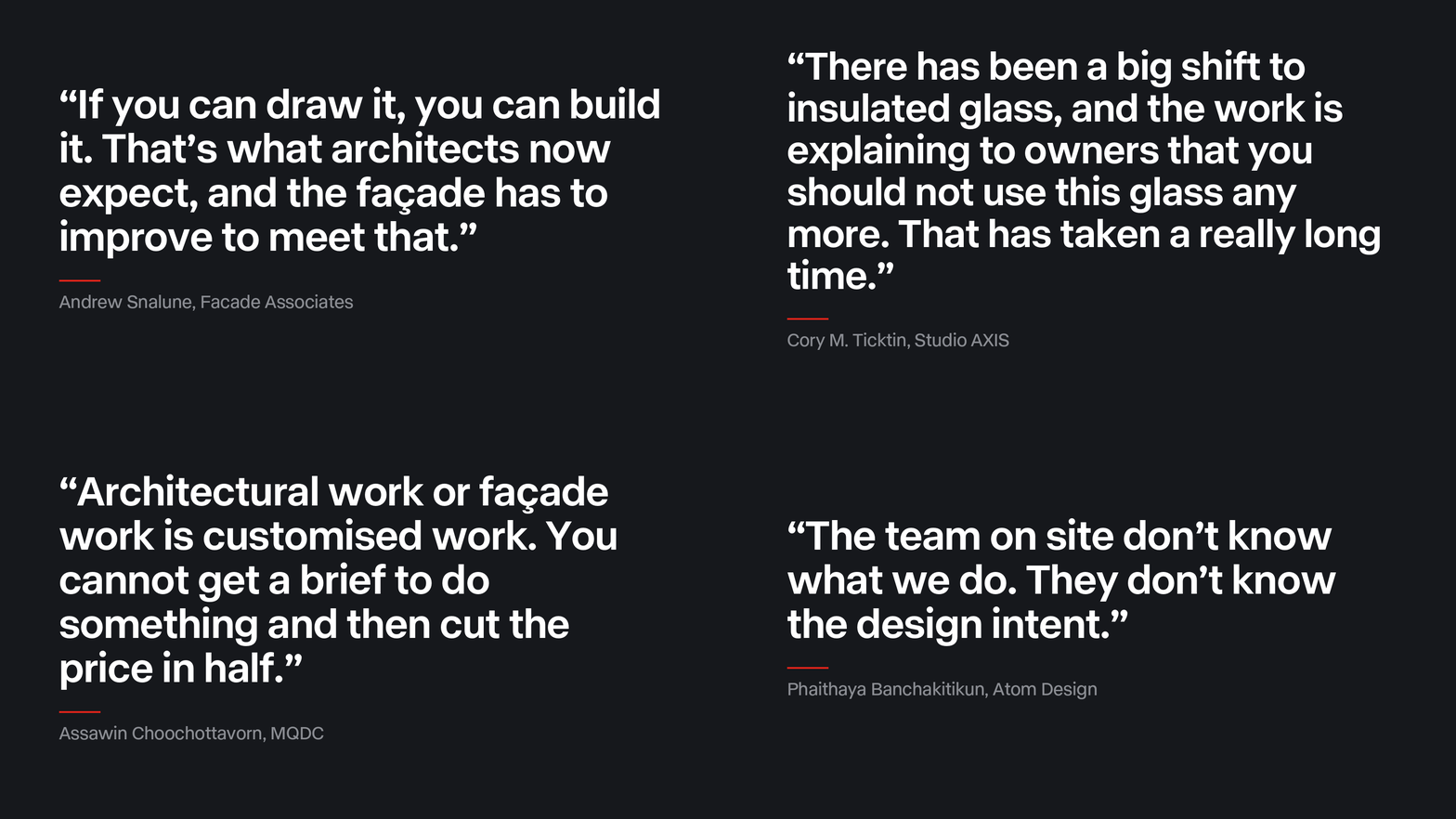
If you can draw it, you can build it. That's what architects now expect, and the façade has to improve to meet that.
Andrew Snalune, Facade Associates
Ticktin set that shift against a longer view, describing a market that has moved from single glazing as the norm to insulated glass. Energy performance, he said, remains the defining issue in a climate that is always hot, and particularly the problem of mitigating heat gain on east and west elevations.
There has been a big shift to insulated glass, and the work is explaining to owners that you should not use this glass any more. That has taken a really long time.
Cory M. Ticktin, Studio AXIS
Balancing aesthetics, performance and constructability
Phaithaya argued that the three cannot be separated in design, but that in Thailand perhaps 80 per cent of the work is budget management, and always in the downward direction. Her practice therefore begins with the proportion of solid to void, because glass has consistently been one of the most expensive materials in the Thai construction market; the area can be compromised, the performance of the system should not. Assawin, answering from the owner's side, put constructability and the sequence of construction first, noting that a building may be drawable without anybody wanting to build it, but ultimately identified the availability of the technology in the region as the decisive constraint. Ticktin added that on projects across Asia the team routinely compares imported and local glass, and that imported product is sometimes both cheaper and better performing.
Where specification and expectation part company
Snalune's principal concern was a mismatch that he felt is not recognised often enough: the expectations of buyers and owners sit outside the contracts the façade contractors have signed. Defects that are allowable under a specification may be entirely unacceptable to a purchaser, and Bangkok now has ultra-high-end residential buildings whose buyers expect perfection. Acknowledging that gap as early as possible, he argued, is what makes it manageable. Beyond that he pointed to sequence planning, now supported by 4D tools that let a façade be planned in time as well as in three dimensions, and to coordination between main contractor and façade contractor as a recurring difficulty. Technically he rated the market well, noting that very few façade problems followed the earthquake and that the anticipated wave of remedial work never materialised.
Value engineering, and what it is not
Assawin, who has sat on all three sides of the exercise, set out rough thresholds and warned that the outcome depends heavily on who in the client organisation runs the process: procurement teams may see the façade as parts assembled, construction teams may pursue efficiency without regard to appearance.
Architectural work or façade work is customised work. You cannot get a brief to do something and then cut the price in half.
Assawin Choochottavorn, MQDC
Phaithaya described designing with value engineering in mind from the outset, knowing which areas carry fat and running the exercise through the design stages rather than leaving it to the end, so that perhaps less than 10 per cent remains to be found at bid stage. Where cost pressure runs beyond that, she said, the line that should not be crossed is the basic criteria of safety, weatherproofing, sealant and detailing. Snalune drew a distinction of his own.
More than 50 per cent of the time when we say value engineering we mean cost cutting. Real value engineering is moving money around the project to where it has the most impact.
Andrew Snalune, Facade Associates
Getting the intent to site
The largest gap identified was between design intent and execution. Phaithaya was blunt about its origin and now sends her team to site as often as possible to explain why panels are divided as they are.
The team on site don't know what we do. They don't know the design intent.
Phaithaya Banchakitikun, Atom Design
She also described shop drawings reaching her office after the work had been installed, and not always matching what had been built, and estimated that only around 20 per cent of Thai projects assemble the full team capacity needed to do this well. Snalune pointed to shop drawings carrying flashing or sealing details that are impossible, or so difficult that an experienced reviewer can assign them a percentage chance of being installed correctly at a glance. Both saw early collaboration as the remedy, with the quantity surveyor and the façade consultant brought on at design development and a contractor capable of working in BIM appointed before the package is complete. Asked what one thing they would change, Snalune said the processes in Bangkok are already good and settled for faster meetings; Assawin proposed borrowing the method statement from superstructure work, since a drawing cannot capture sequence in time but a method statement can.