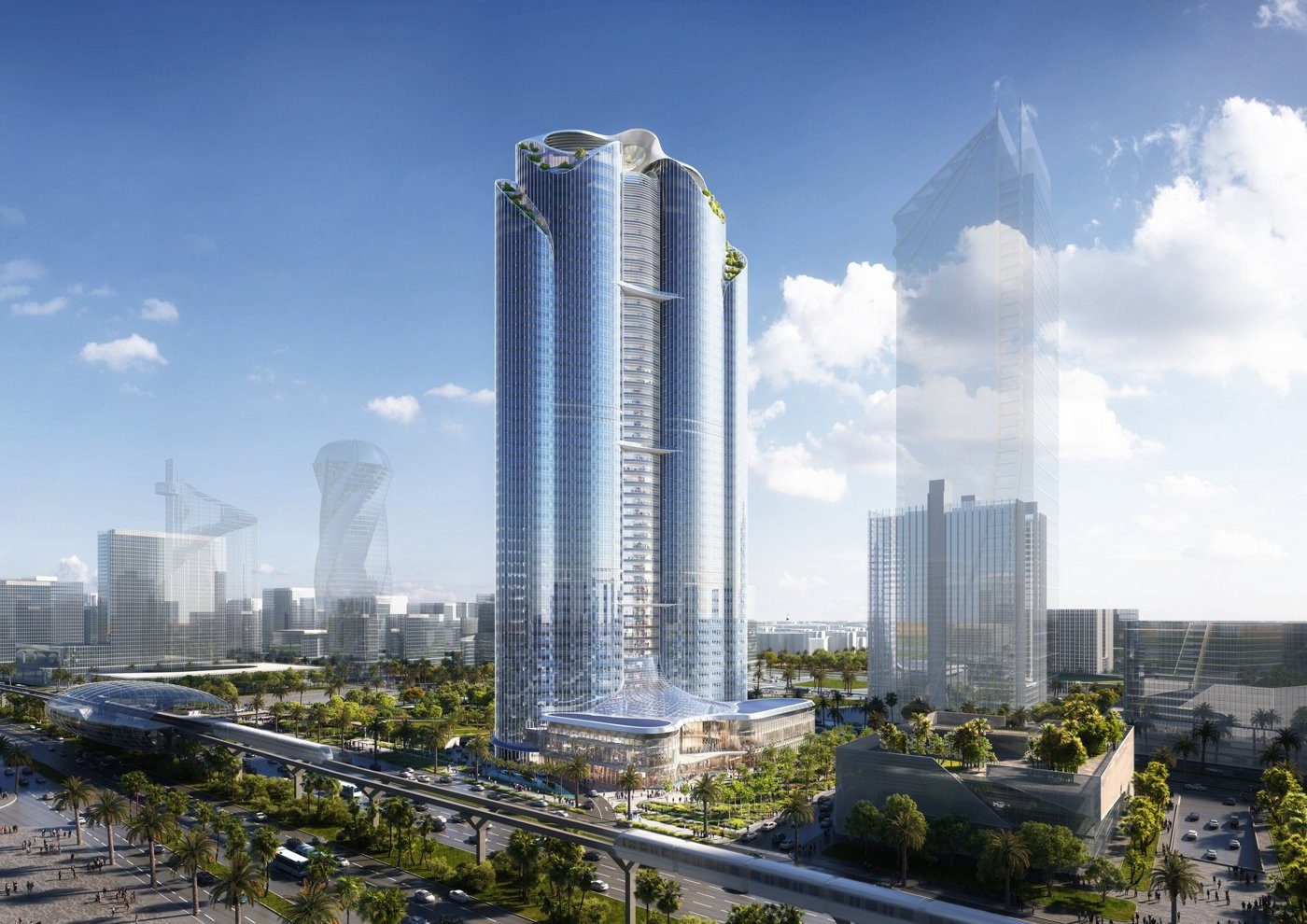
Luis Palacio traced one façade idea across three towers and nineteen years, a Seoul headquarters whose photovoltaic skin was driven by energy policy, a Toronto tower that dropped the PV where the grid was already clean, and a Cairo tower designed to run on hydrogen and feed surplus power back to the city, arguing that façades can now shape policy, not just follow it.
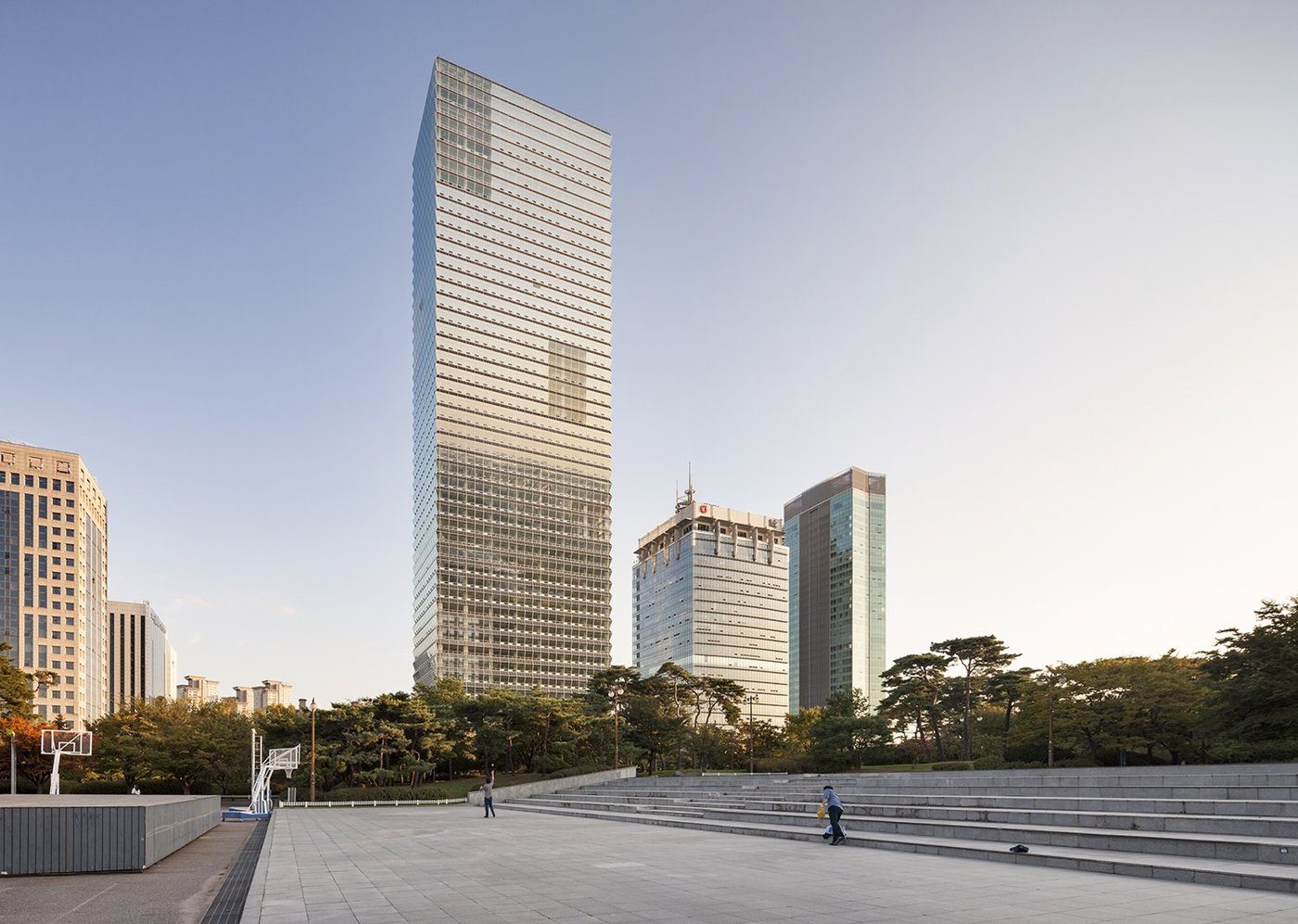
Palacio framed his account as a timeline: a single façade typology, developed early in the practice's nineteen years, followed through three towers as policy and technology reshaped it. The through-line is a photovoltaic envelope, and the argument is that the relationship between a building skin and the rules around it runs in both directions.
A façade driven by policy
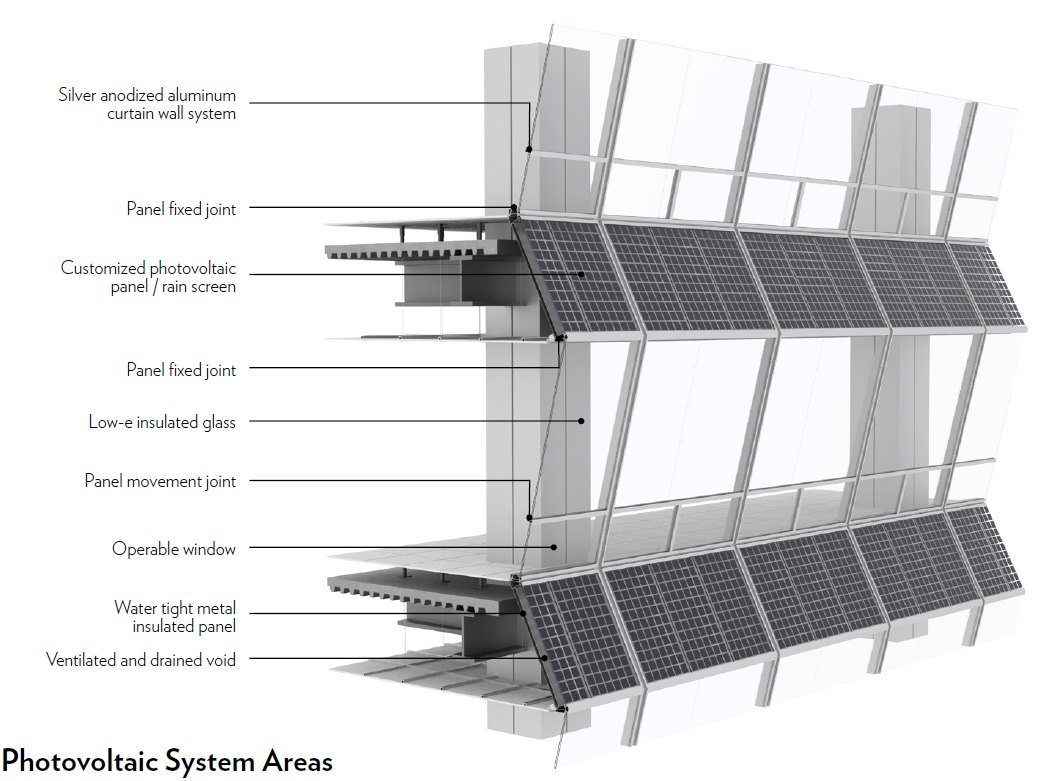
The first tower, the Federation of Korean Industries headquarters in Seoul, was designed to generate energy, possible because the city offered strong economic incentives for buildings that produced renewable power. The team studied the sun path, confirmed photovoltaics made sense, and optimised the geometry into a tilted wall: clear glass raked at around fifteen degrees to control glare, the spandrel turned over to PV. Across roughly 20,000 square metres of integrated cells, the building targeted about 17 per cent of its energy from the façade, and is reported to run consistently near 20 per cent.
The same idea, a cleaner grid
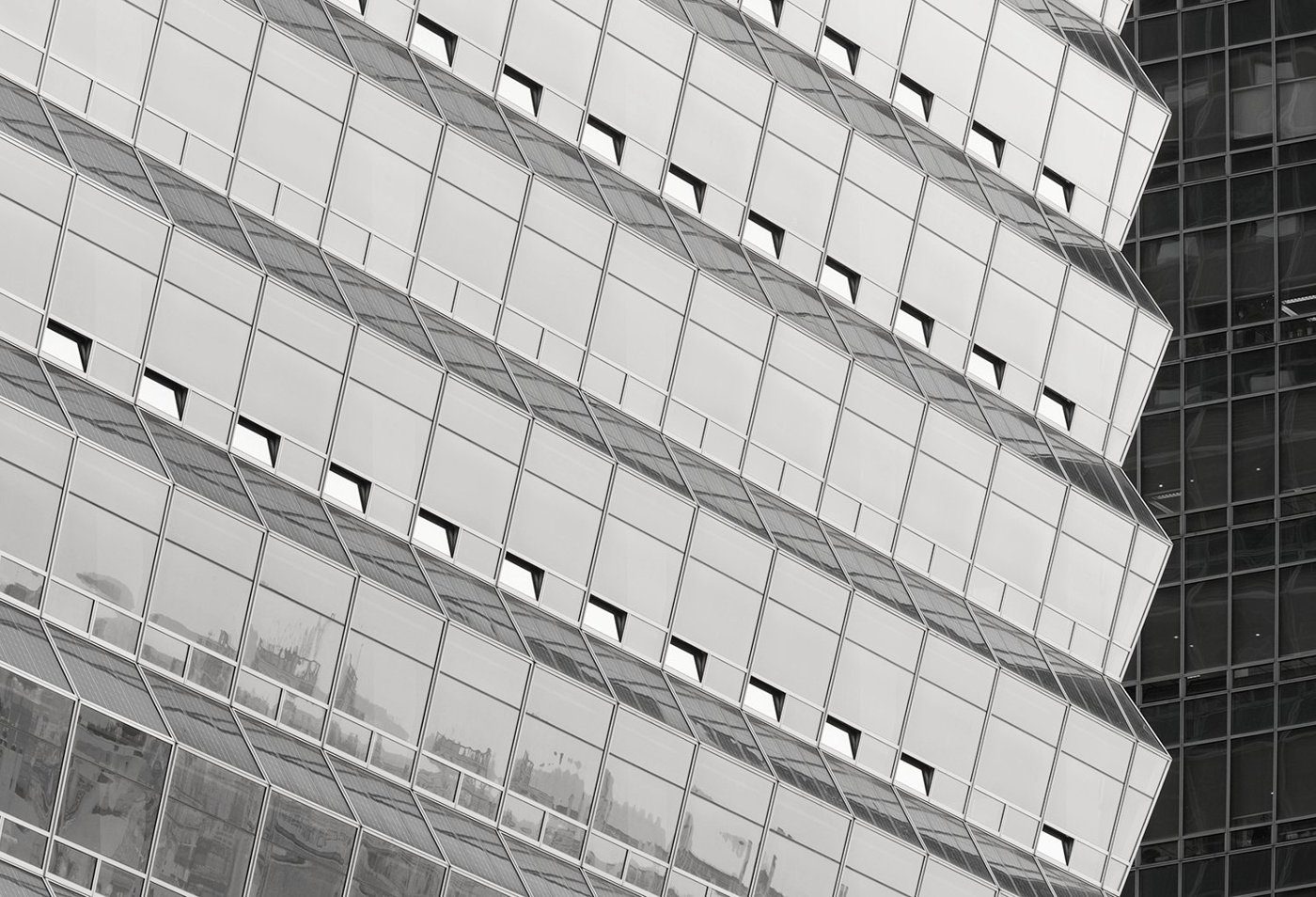
160 Front Street in Toronto took the same façade and asked what changes when the grid is already clean. Because Ontario runs largely on hydro and nuclear, the economic case for PV disappeared, so there is none. Instead the tower leans on the geometry for glare and solar-gain control, with the tilt eased to ten degrees after the client worried fifteen might feel uncomfortable, and a repertoire of moves that give it character: corner fins that resolve the form, amenity inlets with balconies, and a bow at the base that deflects wind downdraught, widens the sidewalk and frames a preserved heritage building.
Designed to run on hydrogen
The third tower, Forbes International Tower in Cairo, pushes the idea furthest. Sited in a very sunny latitude and aimed at life-cycle net-zero carbon, it is designed to run entirely on hydrogen while its façade generates a 25 per cent surplus fed back into the city. Six façade types do the work, five of them producing power, with cells embedded into the glass in culturally specific patterns, densest near the core where daylight matters least and clear at the back where the sun never reaches.

From following policy to shaping it
The reversal is the point. Where Seoul's incentives drove the architecture, Cairo's surplus power is prompting the city to draft policy in return, an increase in allowable output in exchange for feeding the grid. That reframes a building as a piece of infrastructure: if a tower can export clean energy, Palacio argued, networked buildings might sit alongside transport, data and power as part of a city's infrastructure, and the façade is central to getting them there.