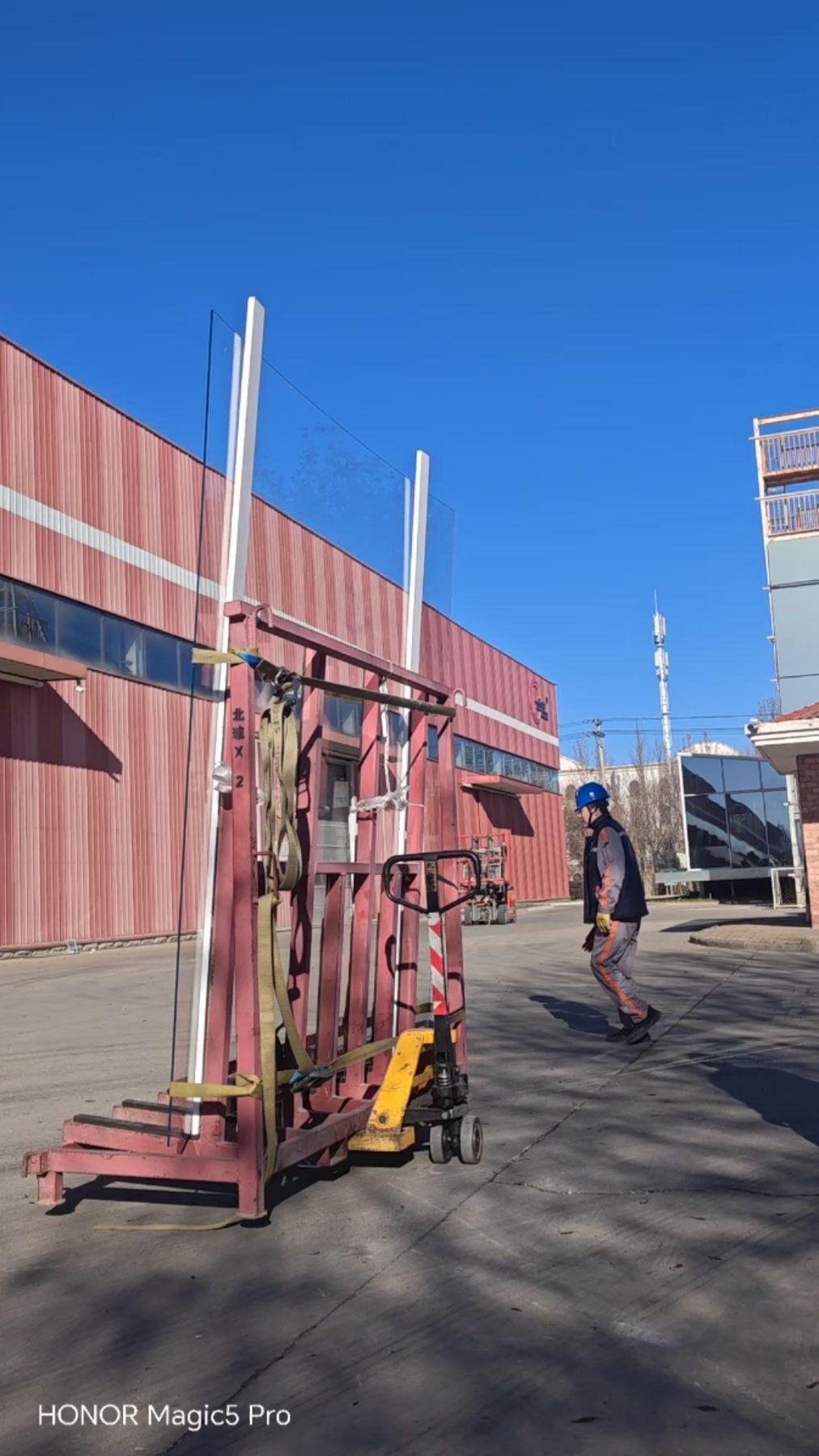
Bob Zhang shows how multi-curved architectural glass moves from digital geometry to fabrication, using project examples to explain why panel size, bending direction, coatings and quality control have to be resolved together.
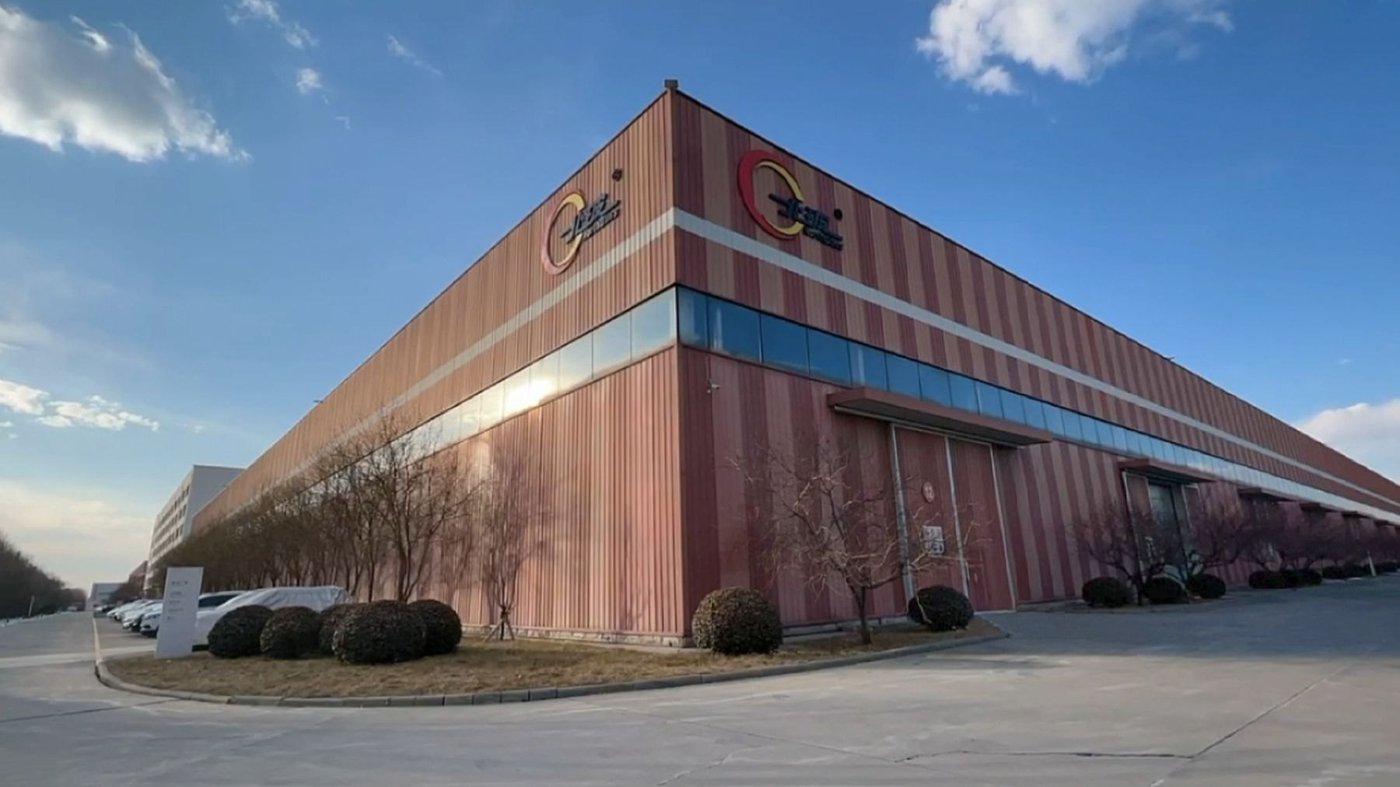
Double curvature needs control
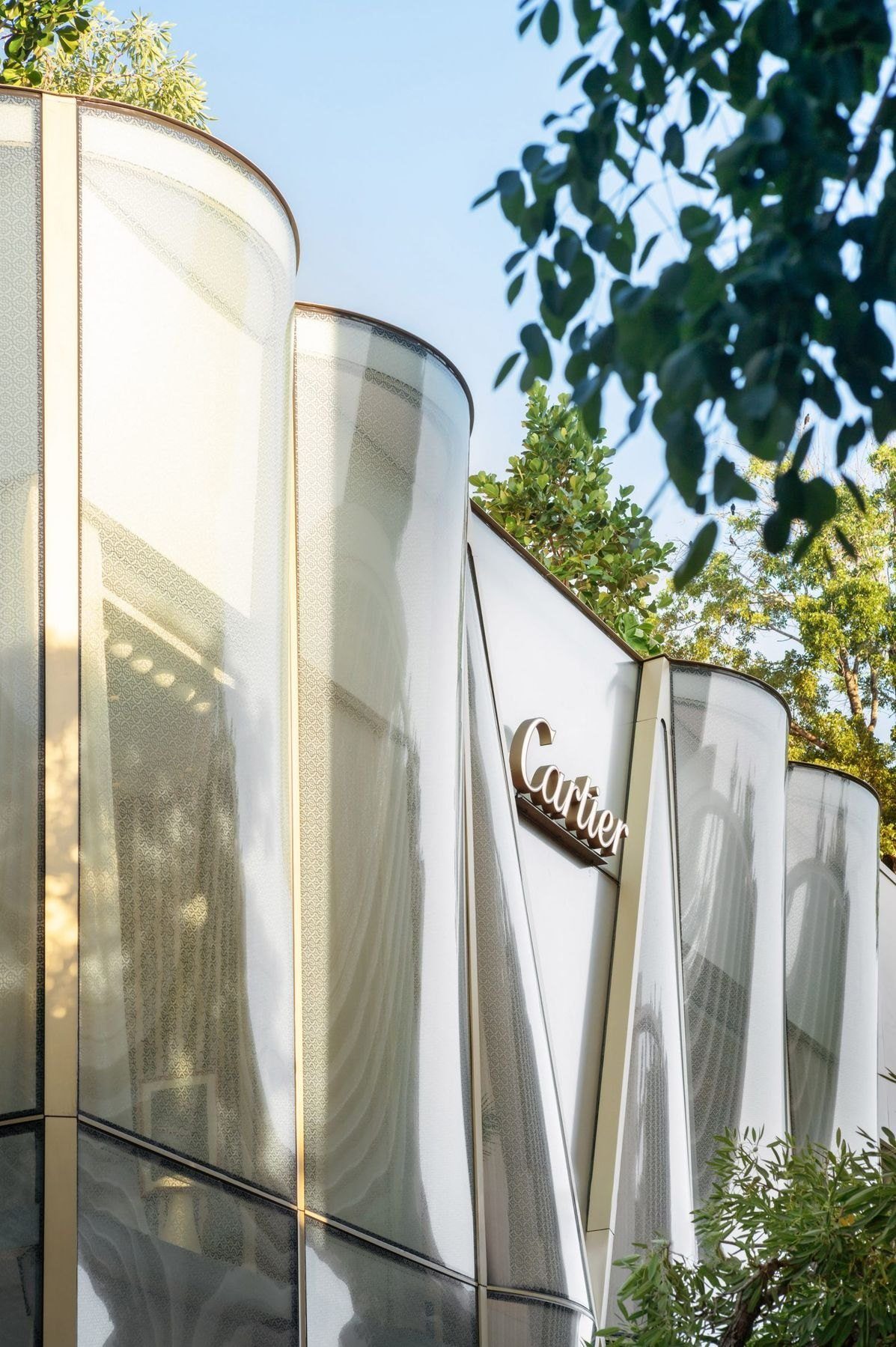
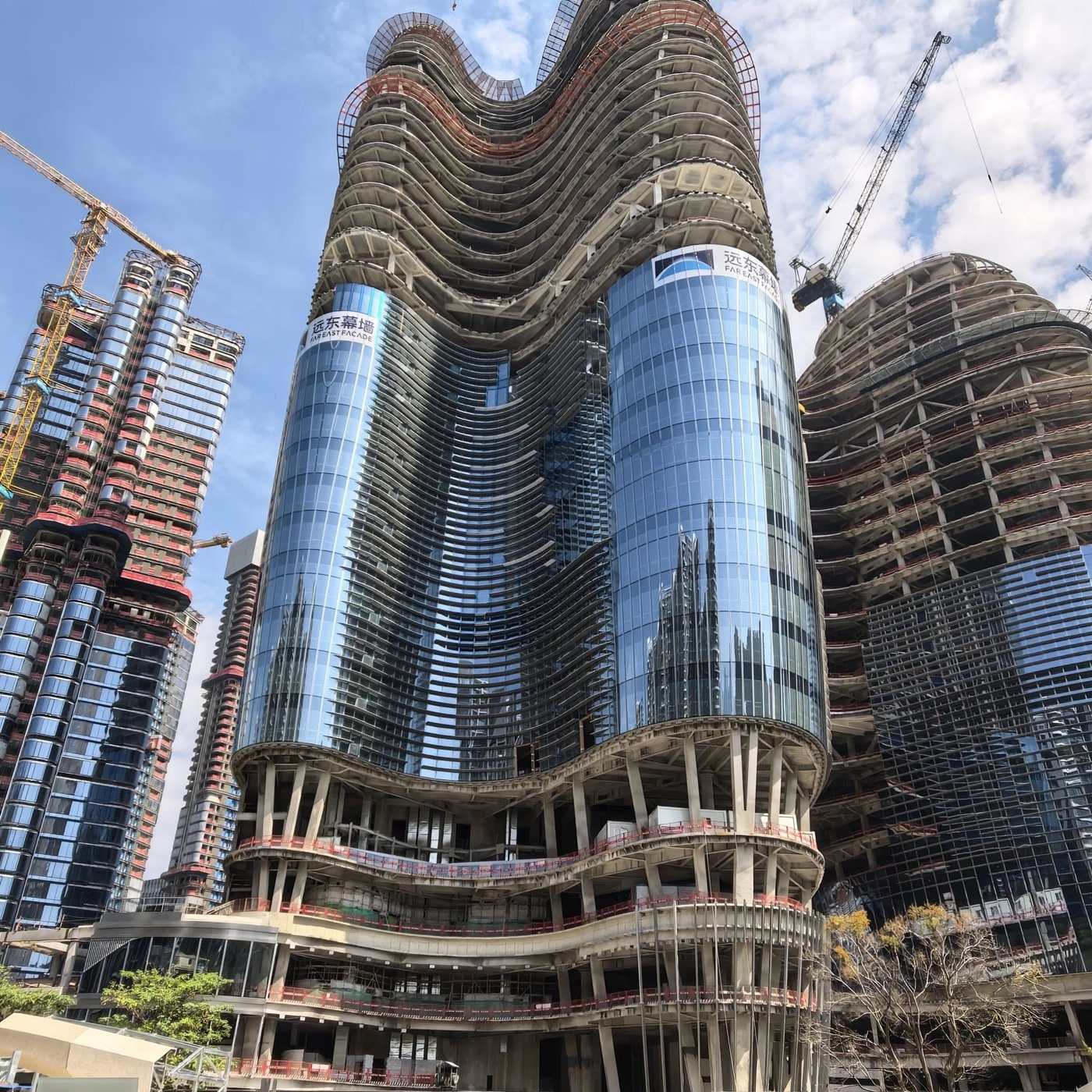
Curved glass is often described by radius, but complex projects quickly move beyond a single cylindrical bend. Zhang’s examples include panels that transition between concave and convex conditions and surfaces whose radius changes across the façade. In one flagship retail project, the upper and lower portions of the elevation curve in different directions and gradually approach a flatter central zone. That creates a continuous architectural form, but it also means each lite has to be understood as part of a coordinated three-dimensional surface rather than as an isolated bent panel.
Coatings must survive bending
The glass make-up remains part of the architectural expression. Zhang describes projects combining curved substrates with ceramic frit and high-performance low-e coatings. Applying these layers successfully is not simply a matter of repeating a flat-glass specification: heating, bending and tempering can change appearance, stress and coating behaviour. The sequence of printing, coating and forming has to be coordinated with the required curvature.
Mock-ups reduce geometry risk
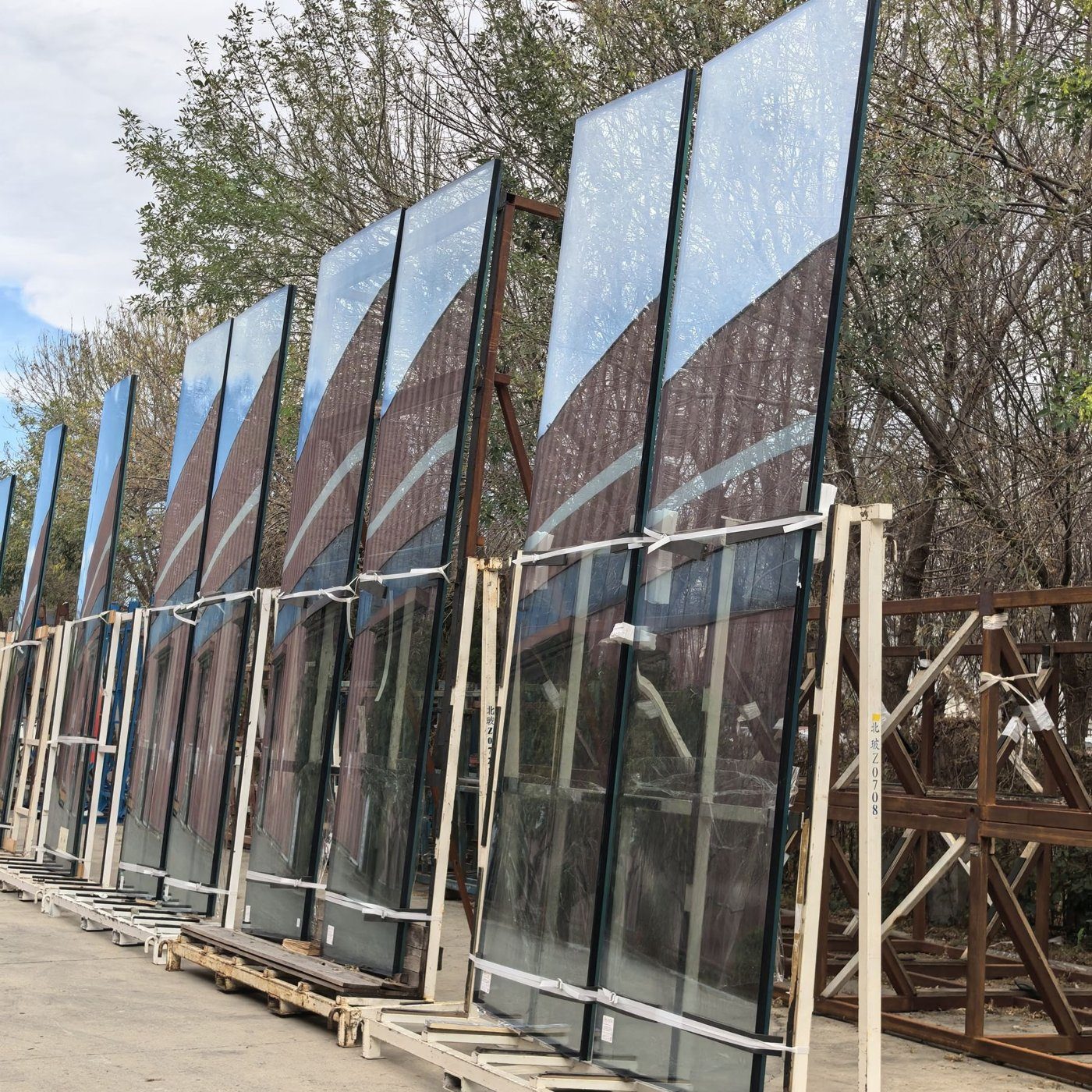
Complex glass rewards early fabrication trials. Full-size samples allow the team to test whether the chosen radius, build-up and coating can be produced repeatedly, and they reveal how tolerances accumulate at joints. For multi-curved panels, this evidence is often more valuable than increasingly detailed drawings because it tests the actual manufacturing route.
Bending follows manufacturing
Curved glass begins with geometry, but the relevant geometry is the one the furnace and tooling can actually reproduce. A designer may describe a free-form surface mathematically, while fabrication requires decisions about panel boundaries, bending direction, radius, edge shape and whether curvature is produced through hot bending, cold bending or another controlled process. Zhang's project examples emphasise that these choices should be made before the glass schedule is finalised. Otherwise, the façade can arrive at procurement with panel shapes that are technically possible only at high cost or with unacceptable optical variation.
Panelisation is therefore an architectural decision. Larger pieces reduce joints and can make a curved surface read more continuously, but they also increase weight, transport constraints and the sensitivity of the finished pane to small geometric deviations. Dividing the surface into more pieces can simplify fabrication while making joints more visible. The productive design process is an iterative one in which the digital model is tested against furnace size, bending capability, heat treatment and installation tolerance until the visual intent and production method converge.
Optics survive the process
The challenge is not only making the glass curved. Coatings, frits and laminates may respond differently to heat and deformation, and their position in the build-up affects both appearance and performance. A coating that looks uniform on flat glass can reveal variation after bending if process control is poor. Likewise, tempering and heat strengthening can introduce optical effects that become more noticeable on large or reflective curved surfaces. Zhang's emphasis on mock-ups is therefore practical: the sample has to prove geometry, colour, reflection and distortion together.
This is why visual quality criteria need to be agreed before production. Curved glass will never behave exactly like a flat mirror, and unrealistic expectations can create disputes after installation even when the pane is structurally sound. Full-size samples allow the architect, engineer, fabricator and client to establish acceptable viewing distances and conditions while adjustments are still possible. The broader lesson is that custom glass should be specified as a process with defined checkpoints, not as a drawing of the final shape alone.