


Sammy Hui brought NorthGlass’s production limits: flat tempered glass 24 metres in one piece, curved glass down to a 100 mm radius, and the Brisbane performing arts venue whose 7.5-metre curved units needed a furnace built for the job. Behind them sits the quality control, roller wave held five times tighter than the European standard, that decides whether jumbo glass reads as a mirror or as a wobble.
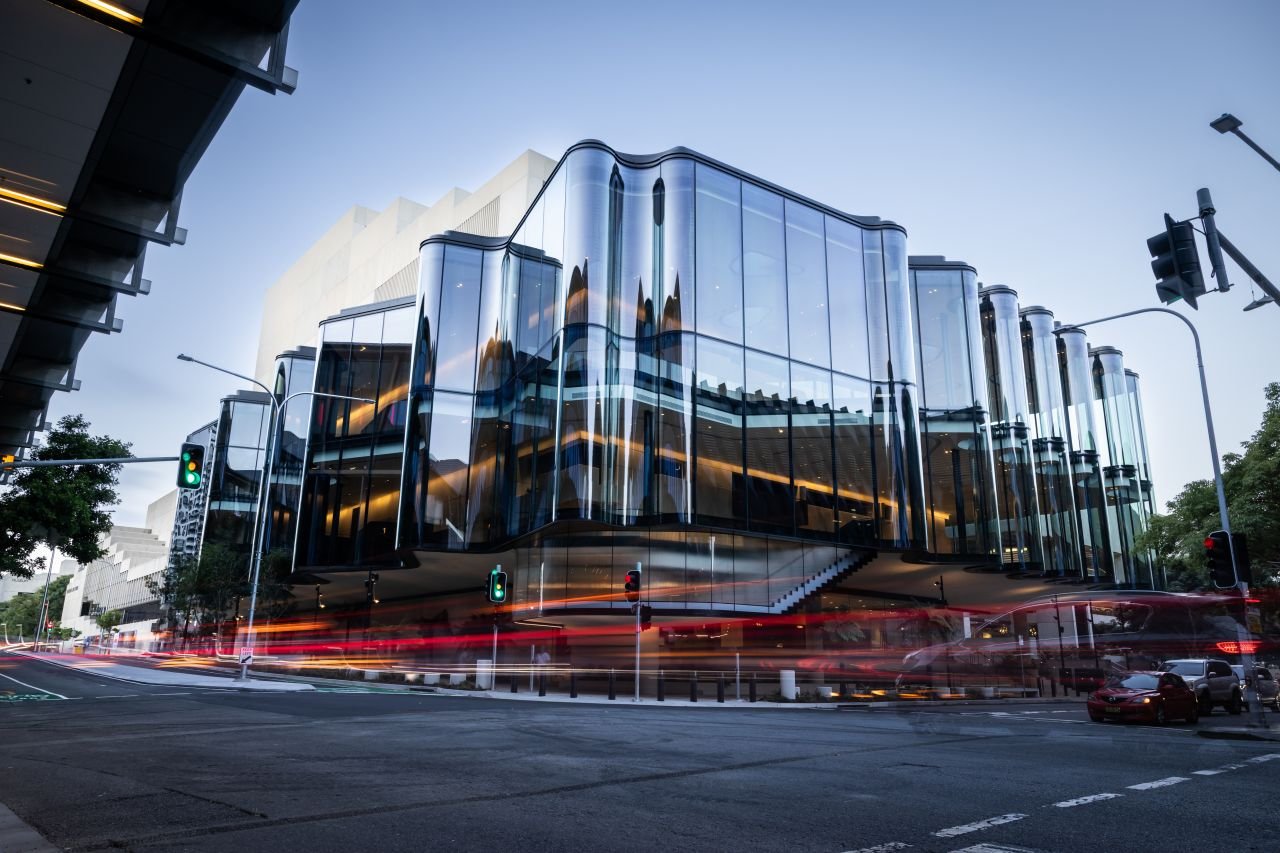
DYM Australia represents NorthGlass in this market, alongside other façade products, and Hui came with a snapshot of what the factory can now make. NorthGlass is thirty years old, employs more than two thousand people across three plants, mostly in China, and has supplied glass into over a hundred countries. Its own account of itself is not as a glass merchant but as a partner to designers who have a form in mind and need someone to make it exist.
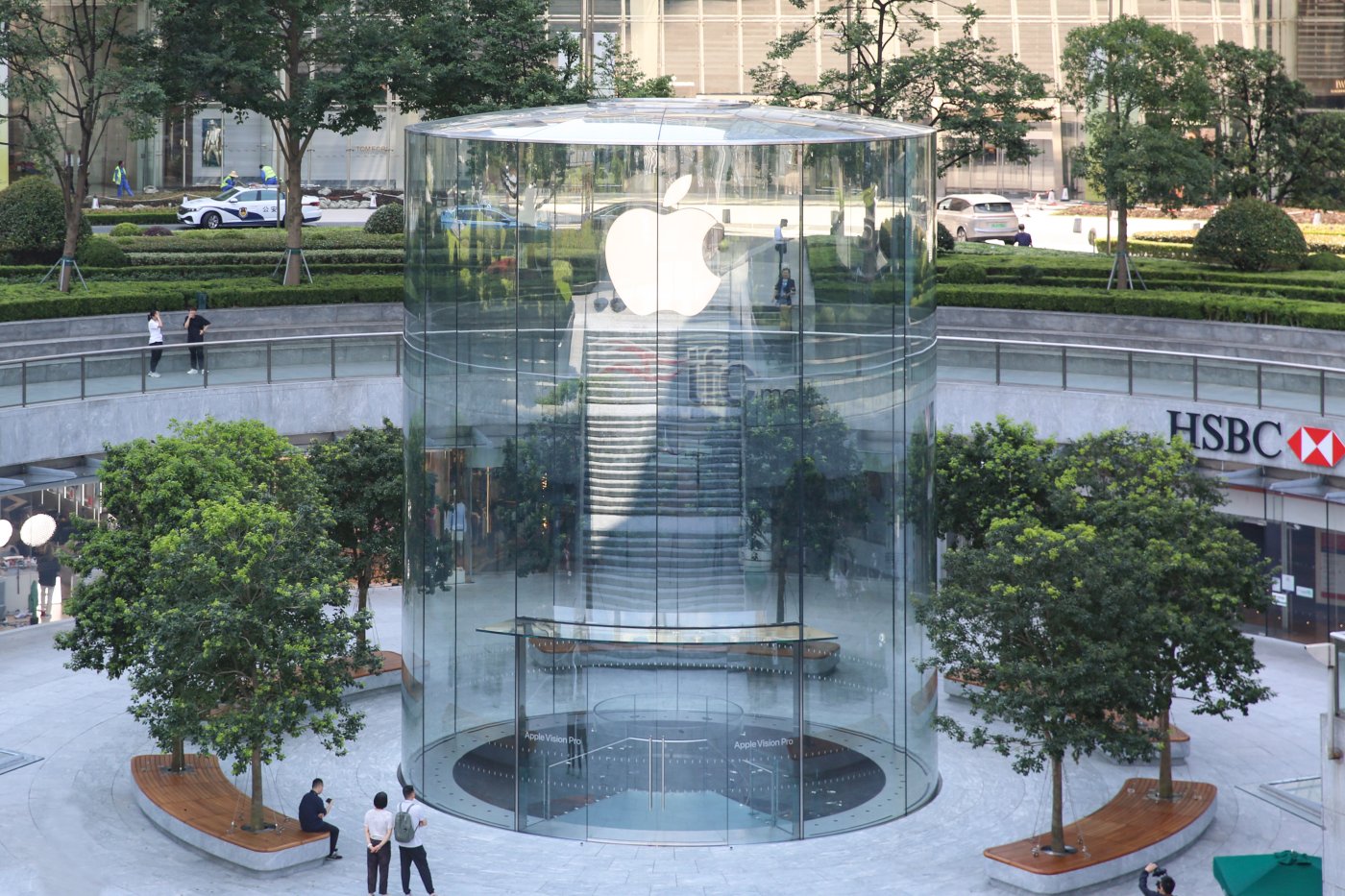
Apple has been the proving ground: around 150 stores, each pushing something. At Shanghai’s IFC, designed with Foster + Partners and engineered by Eckersley O’Callaghan, the 2010 concept had to be split into three pieces because nothing larger could be made; rebuilt on the same site three years ago, the cylinder is one piece, twelve metres tall, with no frames, no ribs and no metal attachments, and it still performs thermally. The rooftop that once needed a cage of steel now carries none. Inside, the staircase is laminated glass integrated with stainless steel and carries the public load itself. Another store runs a mirror coating through a multi-laminate with digital print, the frit giving privacy to an office floor above while the reflection stays flat enough to read as a mirror. And the Steve Jobs Theater door is ten pieces of twelve-metre glass in one moving frame, about ten tonnes of glass per frame.
The capability behind that is specific. The longest flat tempered glass is 24 metres by 3.3, in one piece. Two curved lines run at 24 metres and 18. The minimum radius is 100 mm, a very tight circle, with an arc length to 2.5 metres, single and 3D curved, and insulated units to seven metres by 3.3.
Then the projects. Brisbane’s new performing arts venue took curved insulated units 7.5 metres tall, arc length 3.3 metres, on a one-metre radius. No machine existed that could make them, so NorthGlass, which began as a machine builder, built the curved tempering furnace and delivered in nine months. Elsewhere: the Apple store at Dubai Mall; a Shanghai store with a 15-metre lens-curved laminated unit; a Washington DC project taking both concave and convex curves at a 2.9-metre radius; the Cartier shop in Miami, curved at the bottom and flattening towards the top; Louis Vuitton at Osaka airport; and the national speed skating hall for the Beijing Winter Olympics on very tight radii.
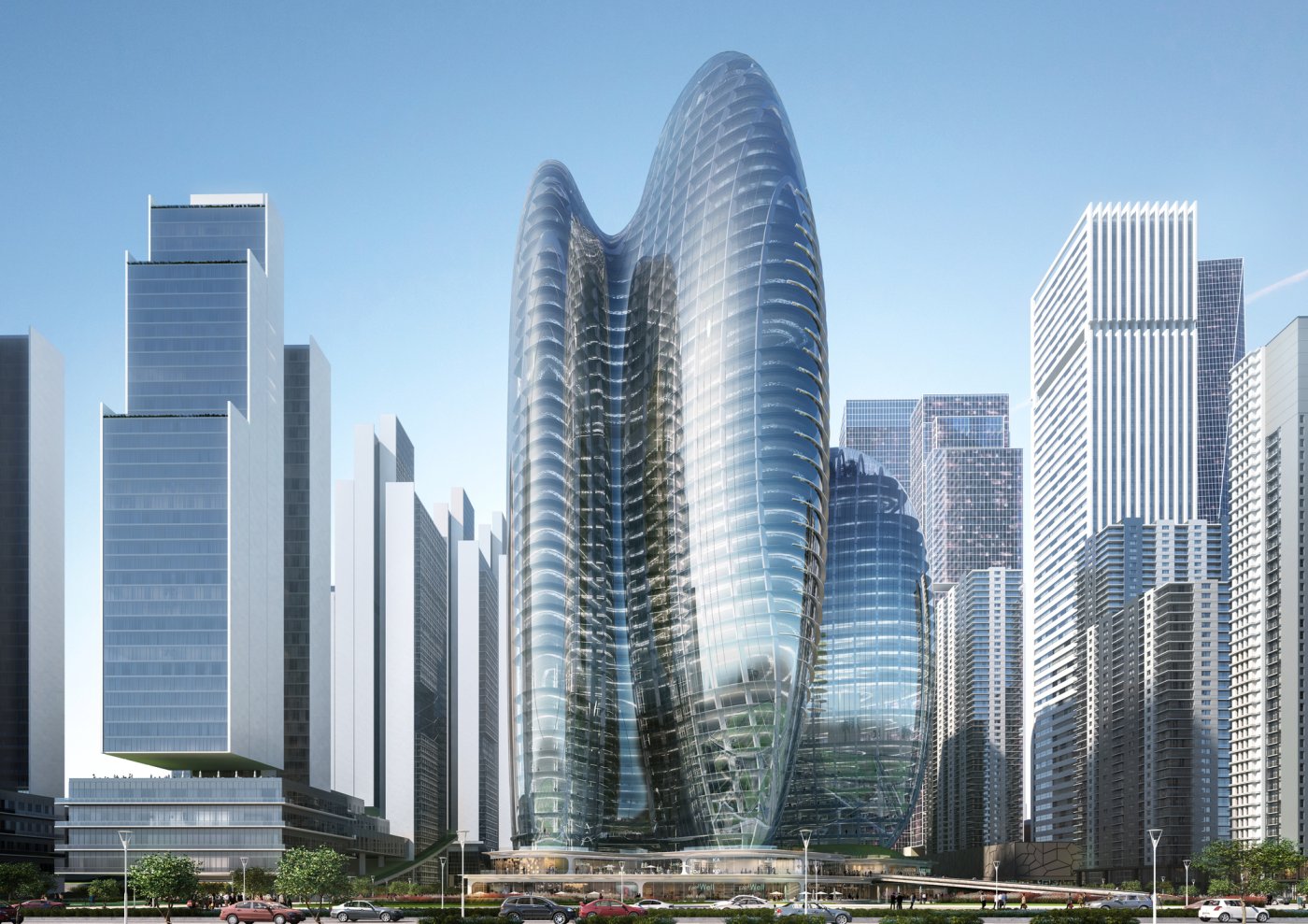
The one under construction is the largest. OPPO’s headquarters in Shenzhen, designed by Zaha Hadid Architects, carries more than 40,000 square metres of 3D curved glass, and almost every piece is a different geometry and size. It is about half built. For sheer scale there is the Beijing Library with Snøhetta: over 10,000 square metres of glass wall, 16 metres high, five laminated layers on the exterior and two 12 mm plies with a structural interlayer inside.
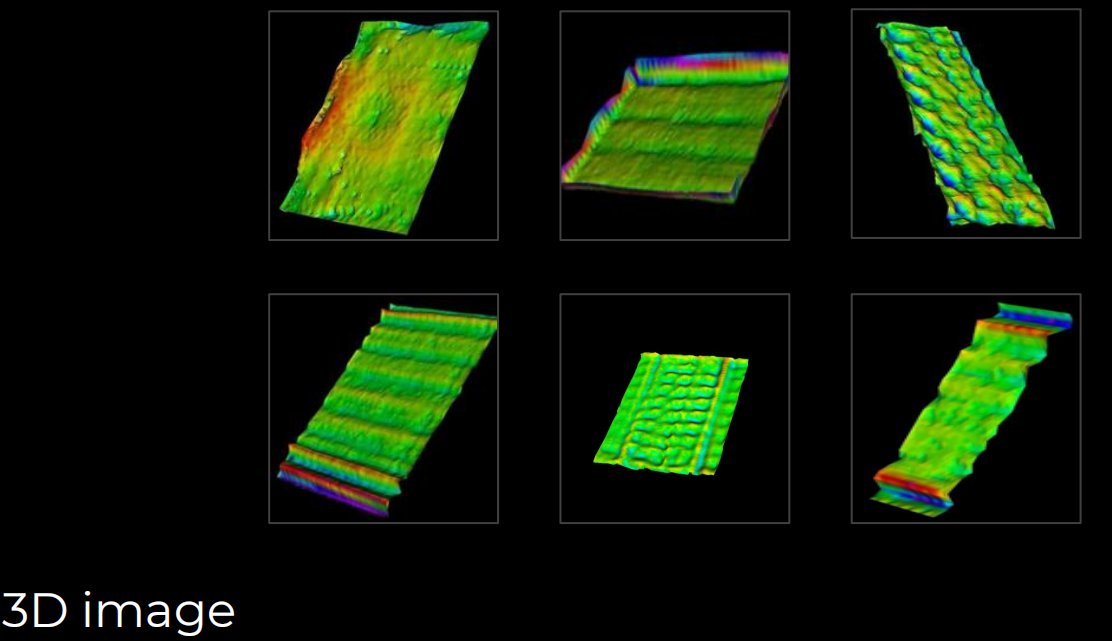
Quality control is where he spent the most time, because on this kind of glass it is the product. Flatness and anisotropy are checked with a holographic film that makes the rainbow effect visible, and with a 3D scan run live against the engineering model. Roller wave is held five times tighter than the European standard and ten times tighter than the Chinese national one. Every piece carries an identity, an inline scanner watches the line, and when something drifts the tempering is corrected while the glass is still in the furnace. Side by side in a visual mock-up, he noted, other glass reads wobbly, and anisotropy is exactly what an owner will not accept once they have seen it.
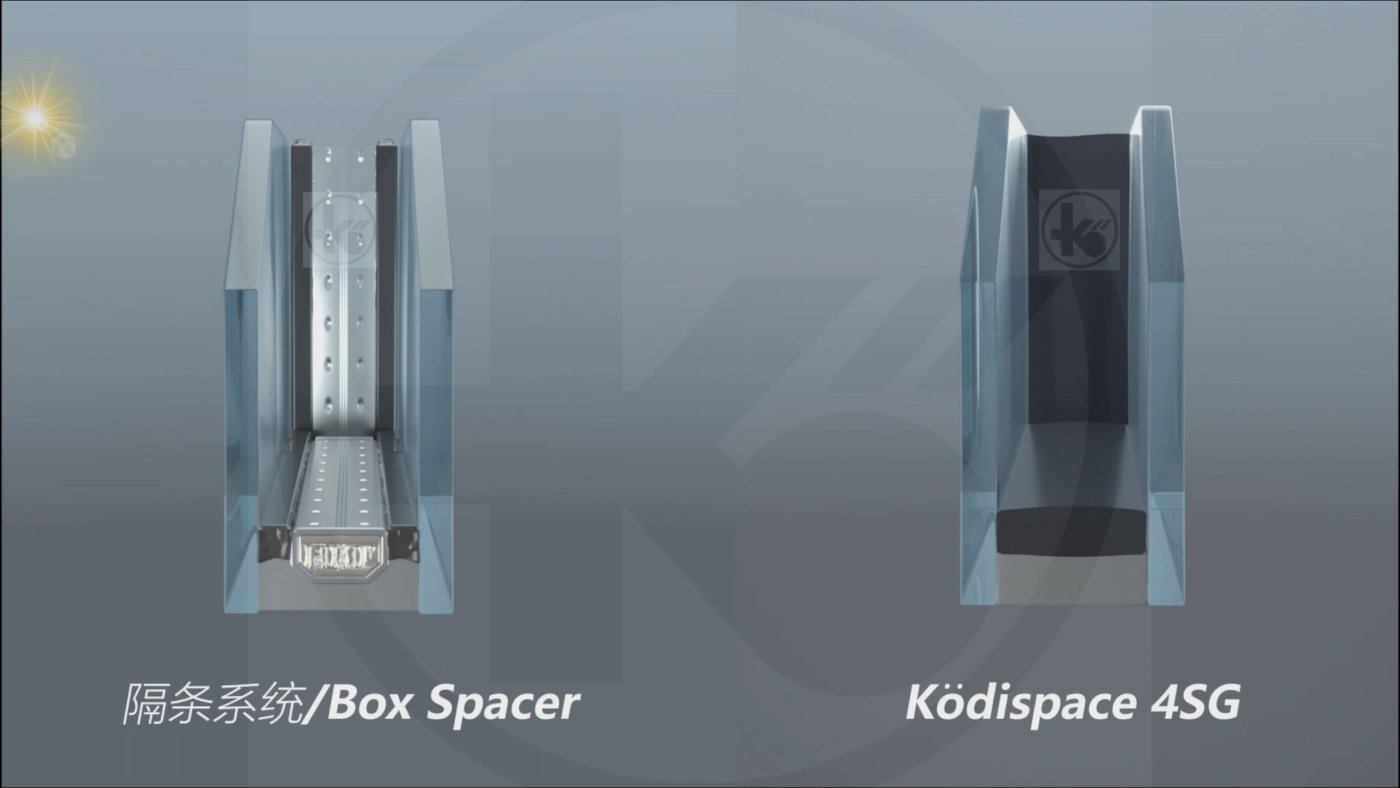
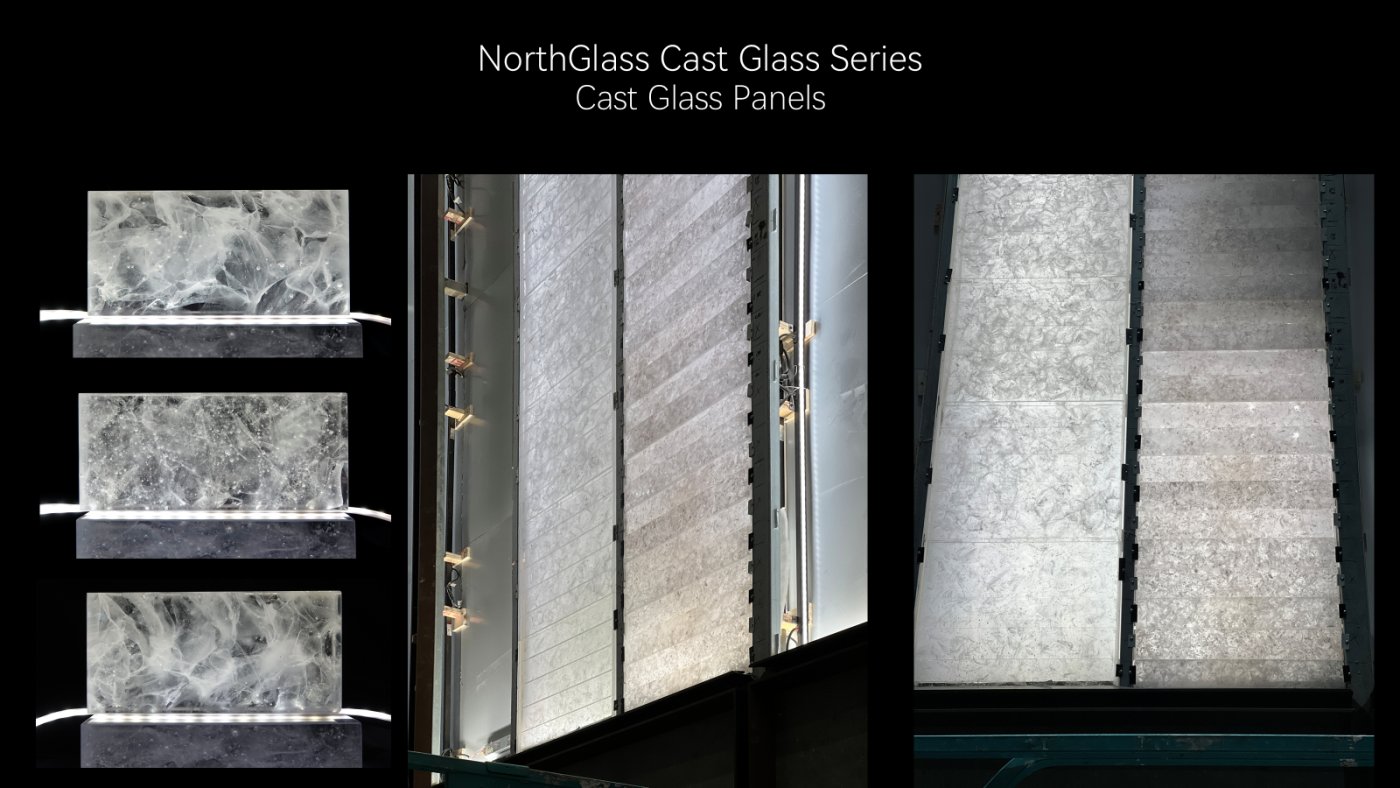
Two newer lines complete the picture. The first is a thermoplastic spacer for insulated units, which goes in as a single piece with no polyisobutylene or silicone secondary seal behind it, holds the fill gas roughly ten times better, improves thermal performance by around 15 per cent, and is warranted for 25 years where the industry standard is ten. The second is cast glass, a new plant at the headquarters that he claims among the largest in the world, using lead-free K9-grade crystal and moulds able to hold above 800 degrees, producing close to 300 square metres a day in a range of surface textures and colours that light up when backlit.
Transport, he acknowledged, is the question everyone asks about a 17-metre wall. The answer is packing and method: one such glass wall went into a narrow Hong Kong street with its insulation intact and no damage, which is the part of the capability that never appears on a specification.