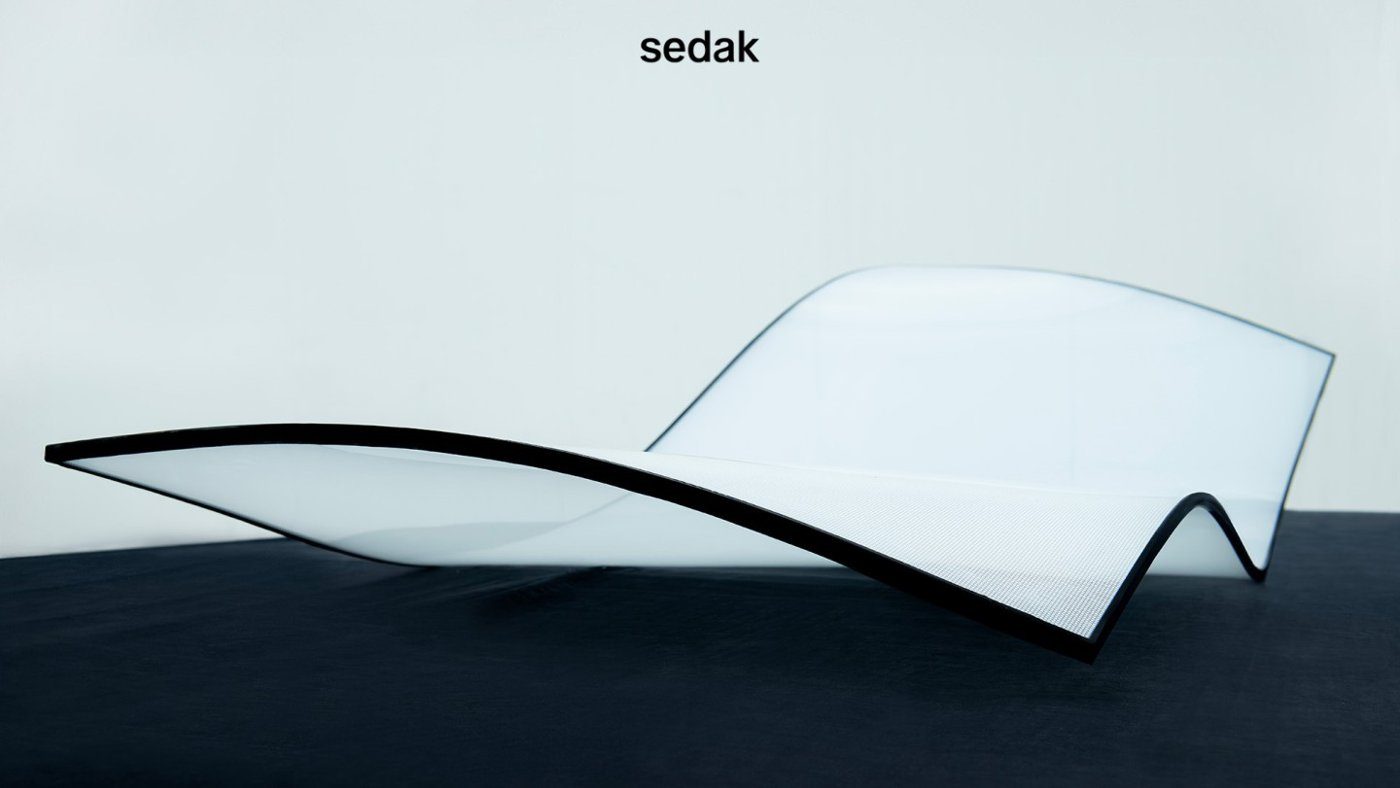
Derek Losi traced the evolution of curved architectural glass from slow gravity-bent moulds through machine bending, and set out a mould-free furnace process that shapes fully tempered glass into multicurved and even spherical forms, opening free-form geometries that were previously impossible to temper.
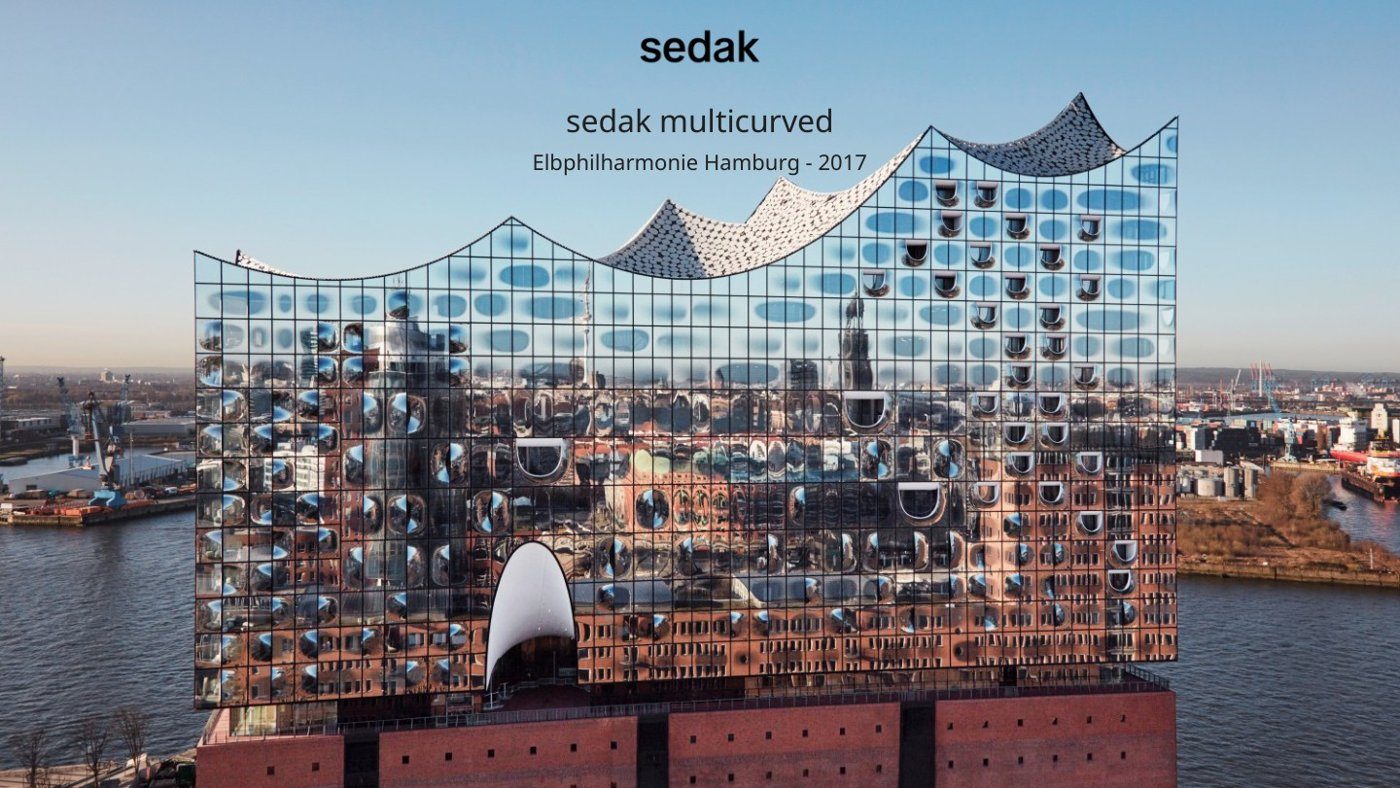
The case for curved glass, as Losi put it, is really a case against boredom. He borrowed the argument from Thomas Heatherwick, whose book *Humanize* holds that much contemporary architecture has become too flat, monotonous and sterile, that flatness fails to capture emotion or engage people, and that we owe ourselves better buildings to live, work, learn and heal in. Animals, he noted, build with more artistry than that: the caddisfly assembles its home from local materials, the snail grows its shell from within, and the bird constructs its nest with real skill.
The limits of bending
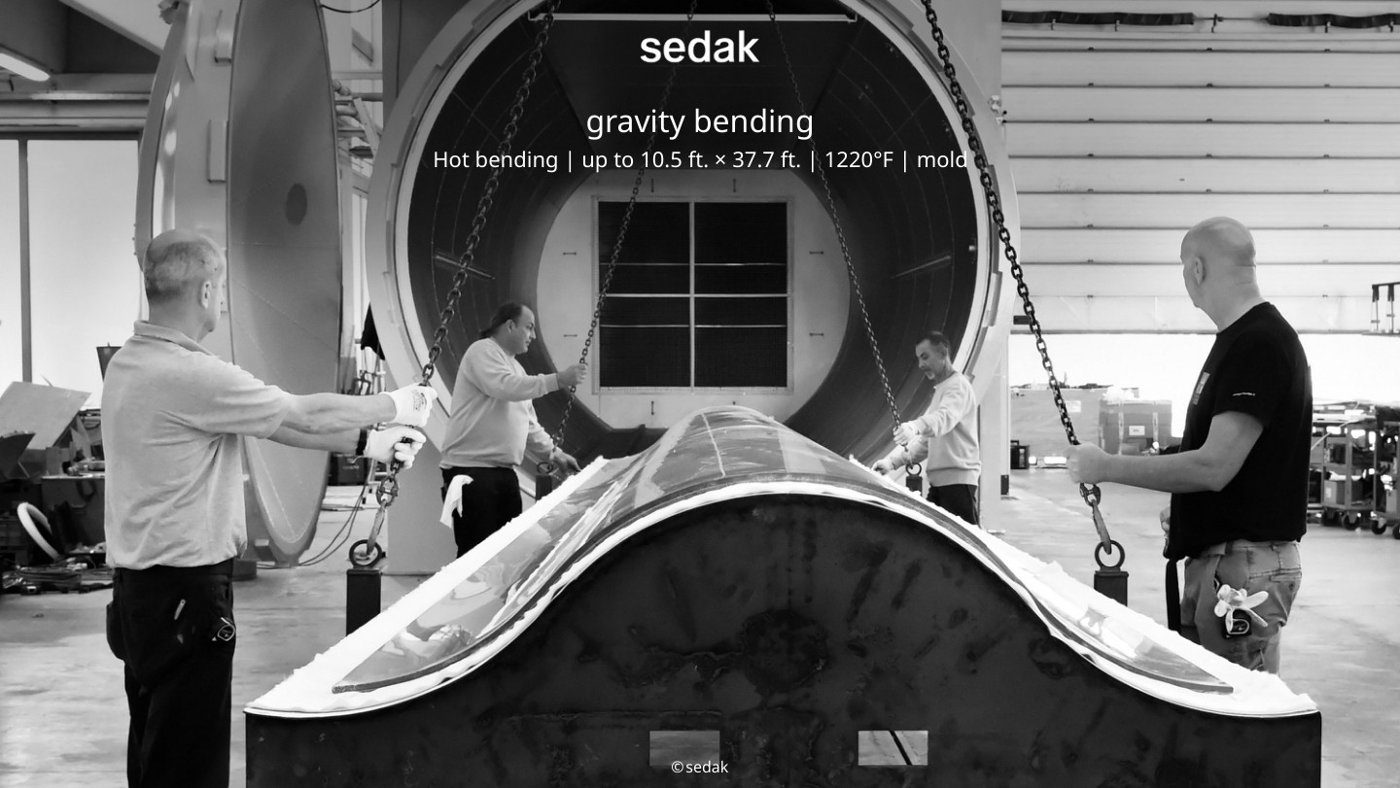
Two established methods get glass to curve, each with a catch. Gravity bending slumps a sheet over a bespoke steel mould, geometrically efficient and capable of tight free forms, but slow and expensive; a double-curved façade many New Yorkers have walked through sits at Penn Station. Machine bending is the commercial workhorse: the base rollers stay fixed at the centre while the sides are pulled up to form a cylinder, which yields fully tempered or heat-strengthened glass but is confined to cylindrical geometry. A recent airport mock-up in Dallas showed the range it can reach, combining sixty insulating units in flat, convex and concave forms up to roughly 2.5 by nearly 10 metres.
Pushing past a single axis
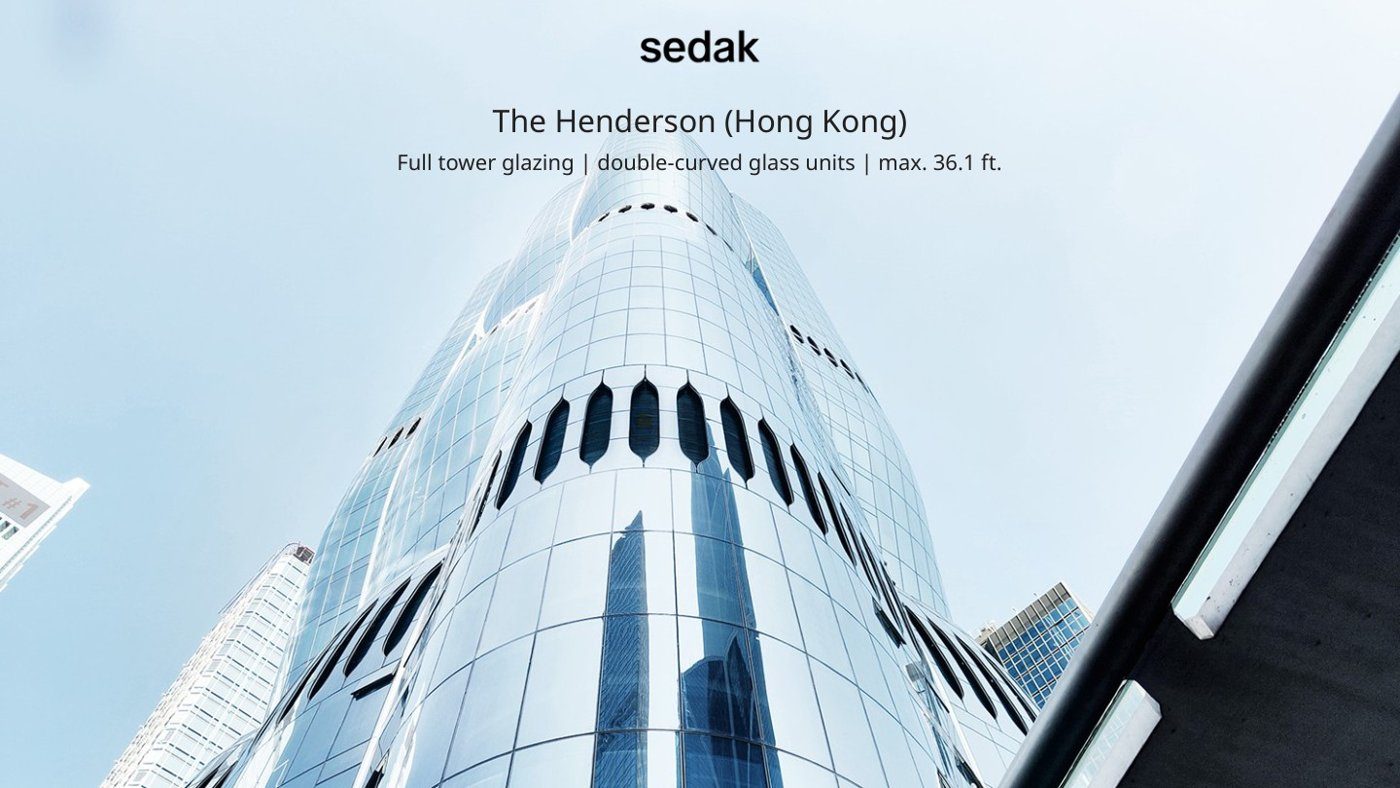
The frontier is where designers push machine bending beyond a single axis. The Henderson in Hong Kong expresses its tower as a bulb in bloom, its smooth organic skin made of multicurved oversized units bent on both axes by pulling the corners up. Projects like it became feasible only through the steady evolution of machine bending, but the centre point stays fixed, which still caps how far the geometry can go.
A mould-free furnace
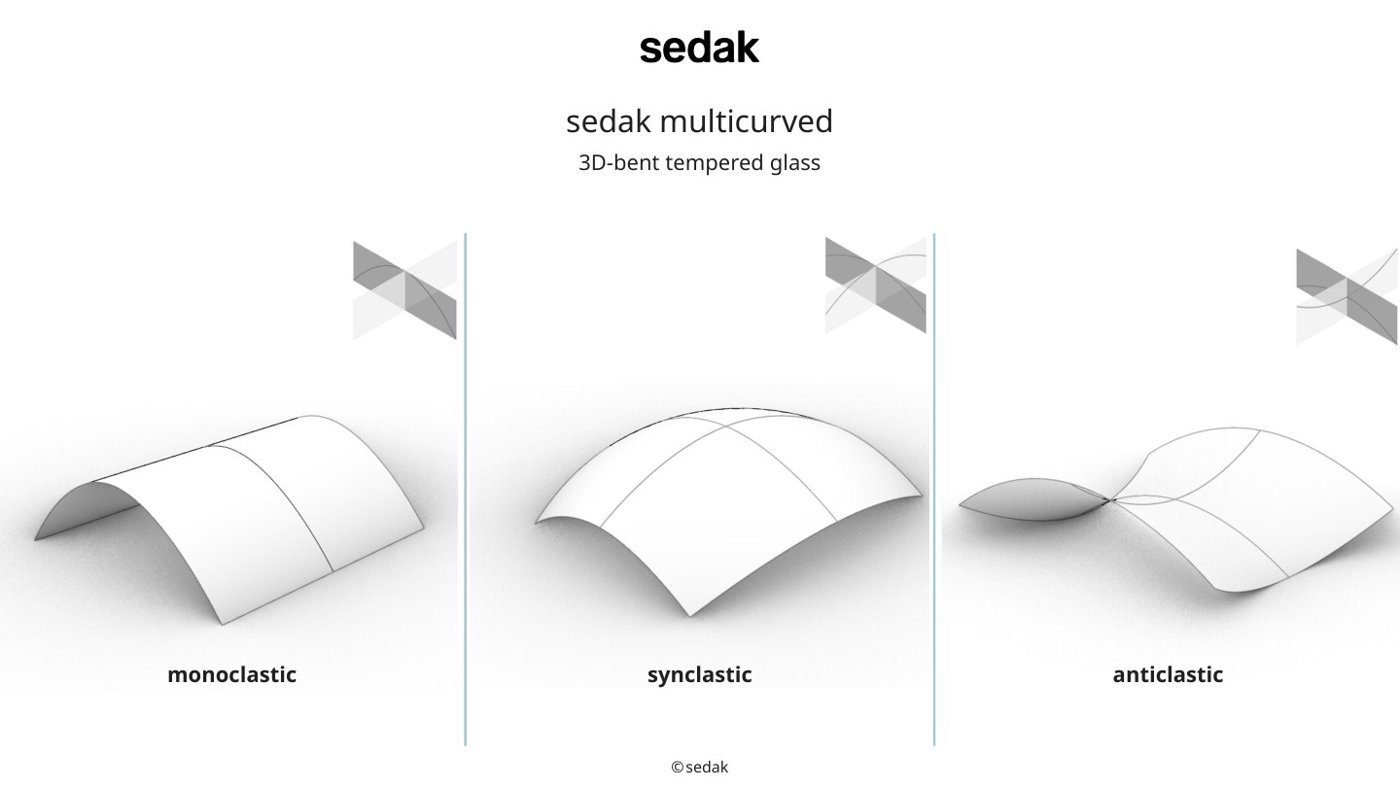
What if glass could be freely shaped and still tempered? That, Losi said, is exactly the process the company has been developing and has shown at recent industry fairs in Düsseldorf and Munich, a bespoke furnace configuration that needs no moulds at all. Furnace-controlled shaping produces multicurved, cylindrical and even spherical geometries, in free forms up to roughly 8.5 by 3.6 metres, delivered fully tempered or heat-strengthened with fast production and high optical quality. Every temperable coating remains available, including solar-control and double- and triple-silver low-E.
Scale, and what it opens
The point of removing the mould is not only speed; it is that the tempering constraint, long the reason free-form glass stayed out of reach, largely falls away. The firm already works at an unusual scale, where a standard North American jumbo sheet runs about 3.2 by 6 metres, its glass reaches up to 3.6 by 20 metres, and one of the largest insulating units ever installed, at a UK museum, spans some 20 metres long by 2.8 metres tall. The mould-free route now extends that scale into genuinely three-dimensional shapes.