


Guillaume Nijdam and Filip Van Mieghem of Reynaers argued that a building’s sustainability should be judged across its whole life, where operational carbon still dominates and renovation matters most, and warned against an obsession with embodied carbon when aluminium profiles are only about 3% of a building. Their example: TimberWall 50, a hybrid aluminium-and-timber façade, backed by full material traceability.
Nijdam, the Reynaers group’s sustainability manager, opened with the macro picture, construction uses about 50% of resources, generates 35% of waste, consumes 50% of energy and emits 39% of global greenhouse gases, and two pending revolutions: a circular economy (about 30% of the carbon problem) and energy efficiency and renovation (about 70%), since 75% of Europe’s buildings remain inefficient.
Coming down to the individual building, the point was the full life cycle. Sustainability has to span construction, operation, renovation, disassembly and recycling, not just the initial build. And at building level, operational carbon (the energy to heat, cool and power a building over its life) still accounts for about 70% of emissions, and embodied carbon (extraction, manufacture, construction, demolition) about 30%. Because most of today’s buildings will still be in use decades from now, renovation is critical, and efficient doors, windows and façades are central to it; pre-1990 buildings, with their large operational problem, should remain target number one.
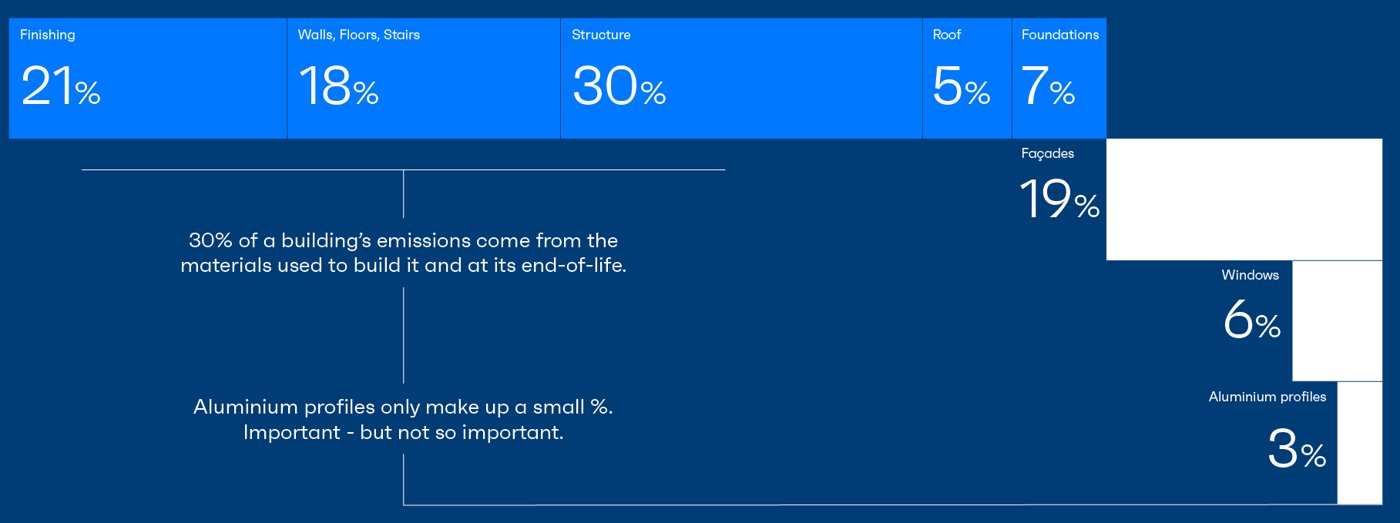
Hence Nijdam’s warning: the industry focuses too much on embodied carbon, even when the biggest gains for the planet lie in the energy efficiency of existing buildings. There is still no legislation capping embodied carbon at building level, but it will come, and, when architects reduce it, they should target the elements that contribute most. A study Reynaers ran with Sureal, in Belgium, found that aluminium profiles account for only about 3% of a modern building; important, but far less than concrete and brick, where the real embodied-carbon debate lies.
That said, Reynaers keeps decarbonising its own materials. Eco-design means wall thickness optimised for the real loads, smarter design with less aluminium, rationalised components shared across systems, and designing for disassembly and prefabrication, so materials can be recovered at renovation. On energy, slim sections, SlimLine 38, SlimWall 35, HiFinity, increase the glass area for passive solar gain, and Reynaers offers window and façade systems certified by the Passive House Institute and Minergie. And aluminium itself is one of the most circular materials on Earth, 75% of all aluminium ever produced is still in use, 95% is recycled, with a service life over 50 years, so more than 80% of Reynaers’ aluminium portfolio is now low-carbon, averaging 3.31 kg of CO2 per kg (20% less than in 2019, against 9.3 for European primary aluminium), heading for 2.81 by 2030.
With sustainability calculations carrying up to 30% margin of error in some supply chains, and ‘carbon cowboys’ in every industry, Nijdam stressed traceability: Reynaers’ DigiTrace digital product passport, product and project EPDs, an EPD generator, BIM-based decisions in design, and CO2 simulations shared at tender.
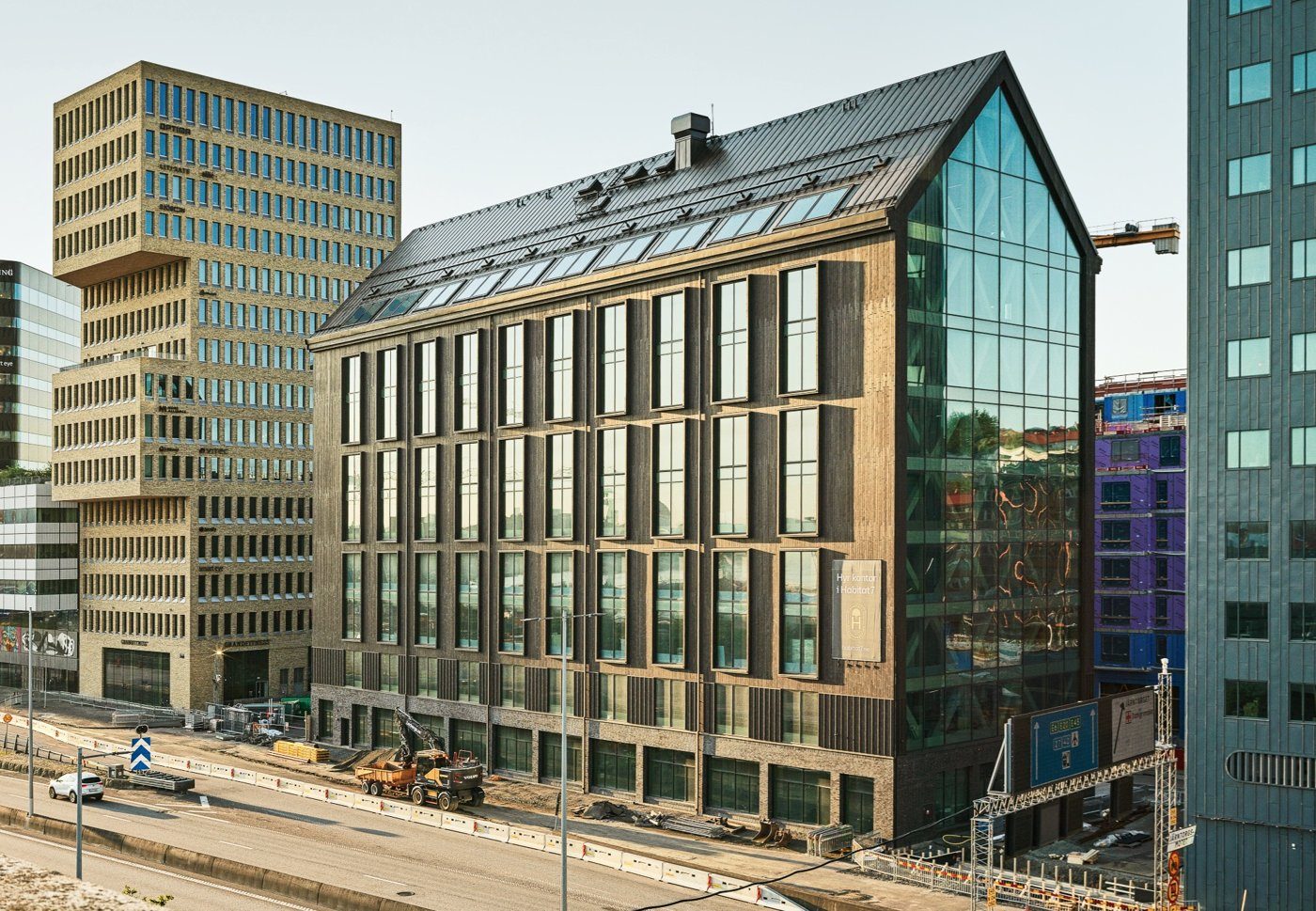
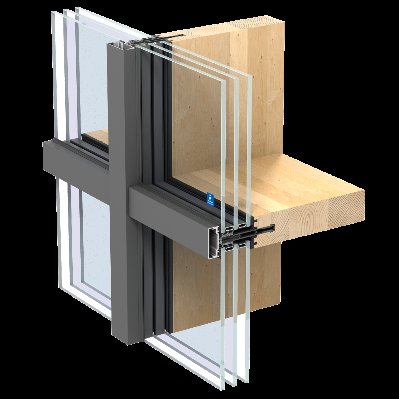
Van Mieghem then took an example that puts the principles into practice: TimberWall 50, a hybrid aluminium-and-timber façade system developed with the Swedish partner bARK. It combines the durability and performance of aluminium with the low embodied carbon of timber and, true to the traceability theme, comes documented, so its environmental credentials can be verified rather than assumed. His conclusion was characteristically open: there are no simple answers, only better questions, and sustainability starts with asking the right ones.