


Jörn Teipel set out what makes stainless steel durable, what a rolled texture does to the way a façade reflects light, and why the grade is a question about the site rather than about the steel.
Jörn Teipel's case for stainless steel on a façade rests on three things that turn out to be the same thing seen from different angles: it can be recycled without loss, it can be textured to change how a building reads, and it lasts – but only if the grade matches where the building is. The last of those is the specification decision, and it is the one that goes wrong.
Recyclability first, because the claim is stronger than the one usually made for it. Plenty of materials are recyclable; what stainless and carbon steel do is return without degrading. Melt it and it goes back into any product – white goods, transport, kitchenware – and at the end of that life it goes back again, with no loss of quality and no need to keep alloys separate, provided the chemical composition is right at the remelt. Outokumpu's recycled content averaged 95 per cent in 2024, which on roughly two million tonnes of production means two million tonnes of recycled material, and makes its mill in northern Finland the largest recycling company in Europe rather than merely a steel producer.

Where the material is made then decides its footprint, and the spread is wide. Mills in China and Indonesia run at 8.8 tonnes of CO2 per tonne of stainless; the global industry mean is 7; the European average is 2.8; Outokumpu's own figure across all its mills, the Alabama site included, is 1.6, with a lower-carbon product below one. The practical point for a specifier is that the carbon figure now appears on the material certificate alongside the chemical composition and the mechanical values.
What texture does to a façade
The linen finish is a pattern-rolled texture imitating linen fabric – rows of small ovals with the heavier threads running through them – and it comes with those lines, without them, or rotated to run vertically where a building wants emphasising upward. What the texture does is easiest to see with coloured lamps: reflected off a smooth surface they stay separate, and off the linen they mix into white and cannot be resolved. The reflection becomes diffuse, and light appears to come from the whole sheet rather than one point.
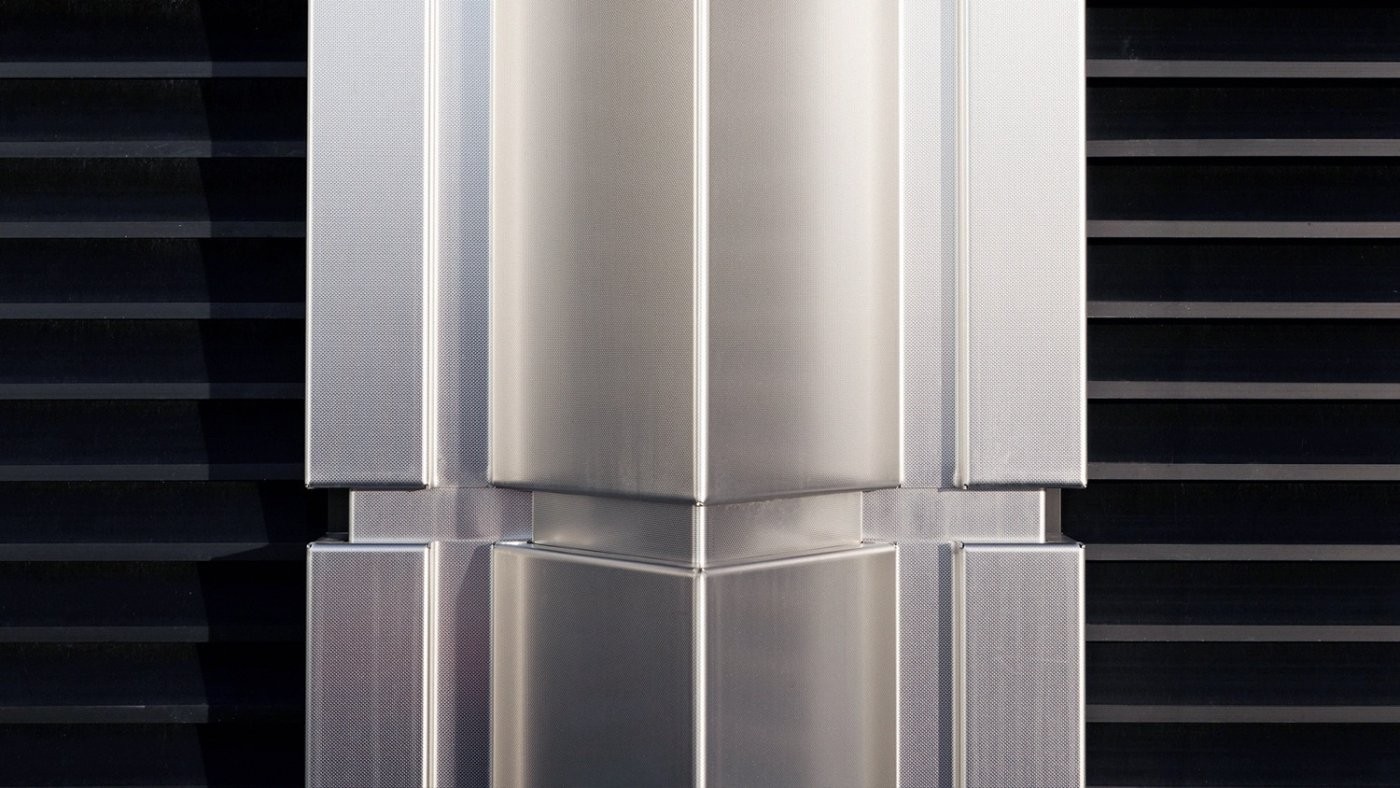
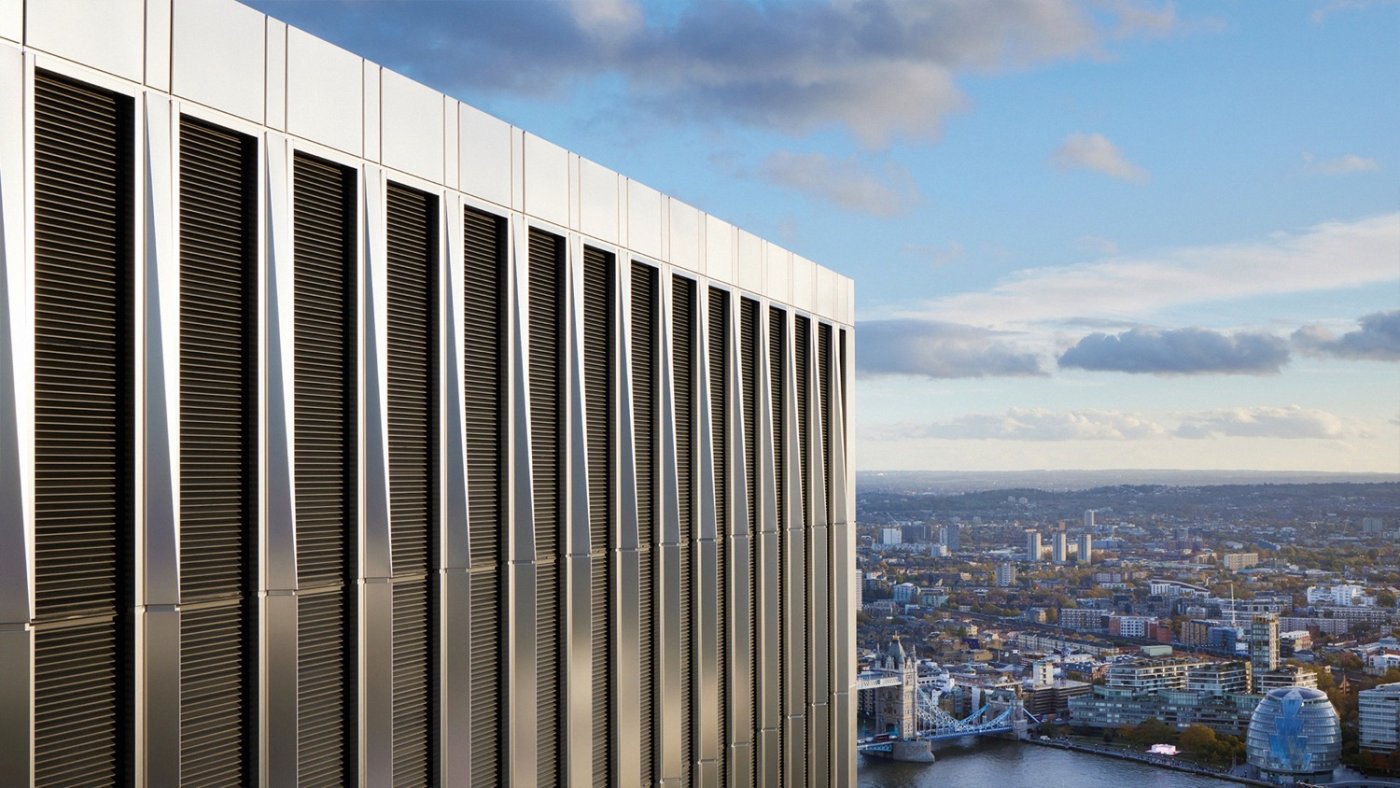
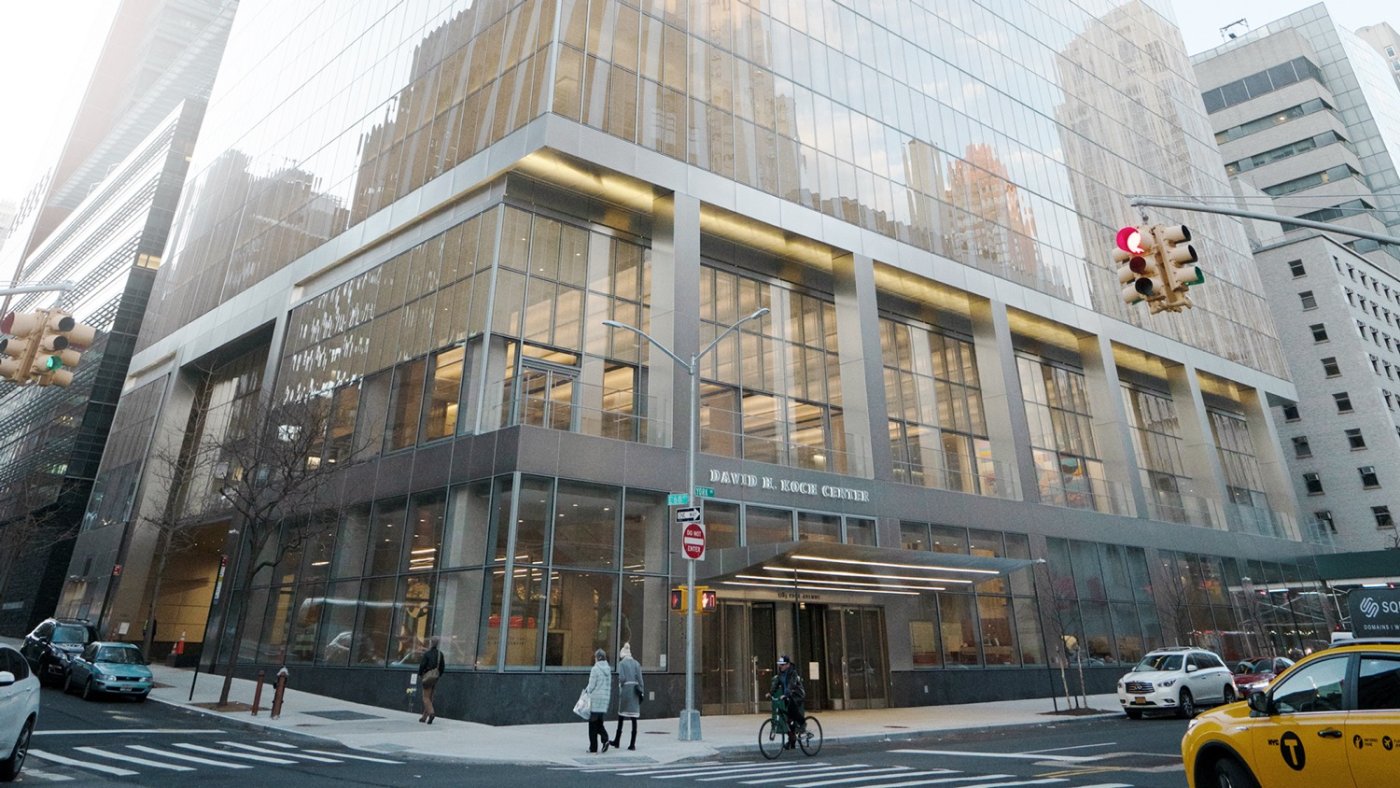
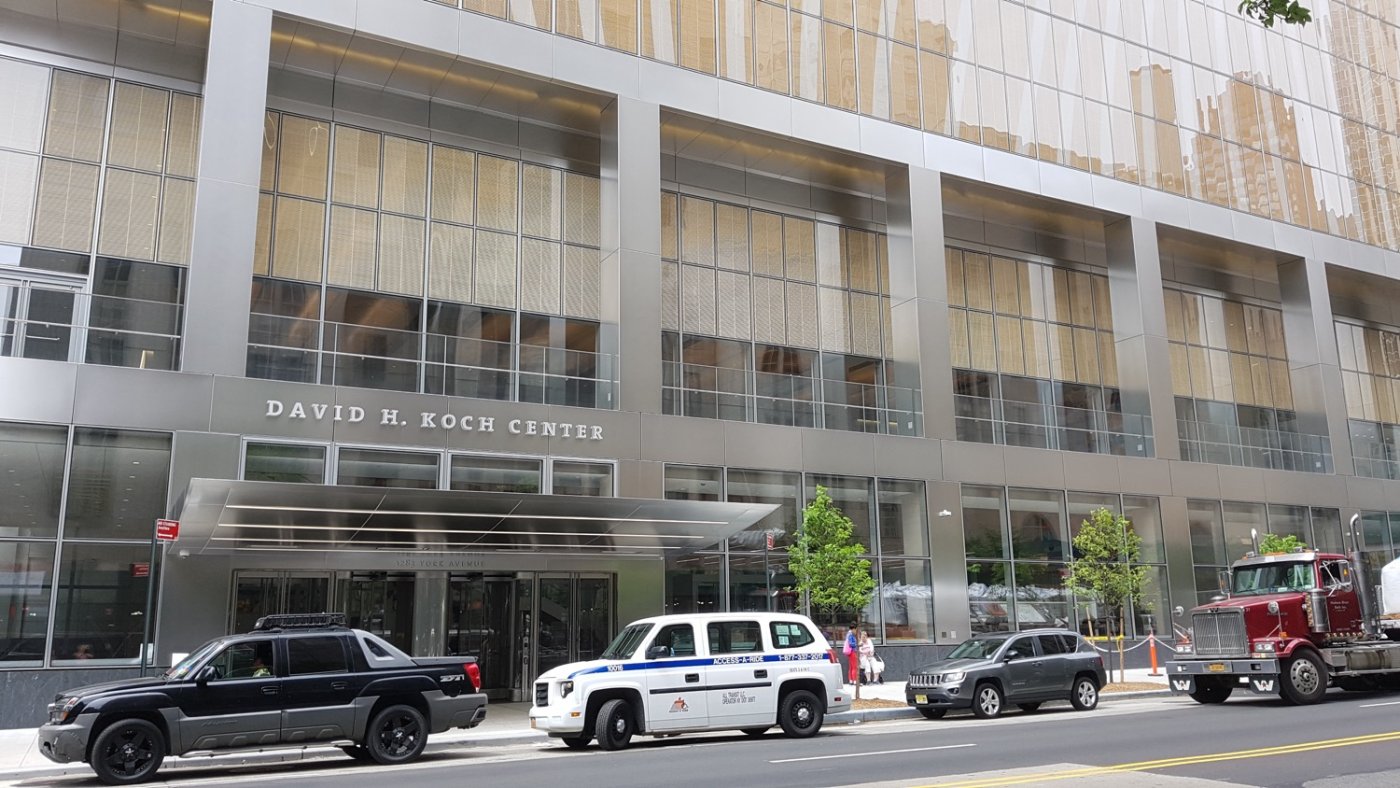
On a building the difference is legible from the street. Teipel showed a Manhattan podium where the glass above reflects the building opposite sharply while the stainless below diffuses it – the colours mixing into a consistent, silky metallic surface. A San Jose project used the version without the heavy threads, and 40 Leadenhall in London used it across 460 tonnes of grade 316L, where the finish takes on a golden tone in evening light. Teipel was as interested in the fabrication as the design: on these projects the flatness and colour consistency are, in his assessment, a level above earlier work.
The grade is the durability
Stainless does not need painting, which is why maintenance is cleaning and nothing else, no repainting at fifteen or twenty years. That rests entirely on corrosion resistance, and corrosion resistance rests on chromium: it oxidises at the surface into a chromium oxide layer that stops the iron atoms reaching oxygen and becoming rust. The threat to that passive layer is chloride – which means salt, whether from the sea or from de-icing in cities – so a more aggressive location needs more chromium in the alloy to keep the layer stable.
Which makes the specification a question about place rather than about steel. ISO 9223 sorts locations into corrosivity classes: Toronto is a C3, leaning slightly to 3.5, where 316L is the usual answer. Dubai near the sea is a CX, where Teipel said 316L does not work under any circumstances. Where the class is not known, it is established by field testing – racks of different alloys left exposed for a year or two and then examined.
Their own field test produced one result they cannot explain. Bangkok came back very mild at C2; Berlin beside a motorway was C3, as expected; Genoa near the sea was 3.5, also as expected. A Thai industrial site near the sea came back CX – far more severe than anything predicted, which Teipel suspects has to do with the neighbouring industry and sulphur dioxide, while being straightforward that it is a suspicion rather than a finding. That is the argument for testing rather than assuming: the class is a property of the site, and a site can surprise you.