


With Dan Gleeson unable to speak, Stephen Tanno delivered their joint Schüco session on repurposing buildings through survey, retention, façade adaptation and lower-carbon material choices.
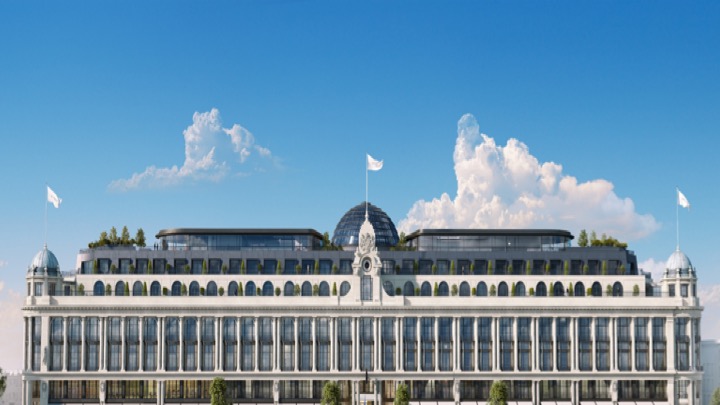
Refurbishment is becoming a larger part of the façade market, driven by carbon targets, constrained project economics and the simple fact that many existing buildings still contain useful structure and material. Stephen Tanno used the joint Schüco presentation prepared with Dan Gleeson to describe “value-up” as a practical process: survey the building accurately, retain what still works, upgrade only what needs improvement and keep checking whether the carbon promised in design survives procurement and construction. The method treats the existing envelope as a resource before it is treated as waste.
Start with evidence, not assumptions
The first step is to understand the building that is actually there. Tanno showed how drone surveys can combine thermal imaging with rapid dimensional capture, providing information on joint widths, window sizes, façade tolerances and geometric deviation. One example survey took 37 minutes to collect a substantial external dataset. That speed matters because retrofit decisions often begin while the building is occupied and while commercial teams are still testing options. Better survey information lets designers distinguish local defects from system-wide problems and compare replacement against targeted intervention before a full strip-out has become the default brief.
Retention can happen at component level
Reuse is not limited to keeping an entire façade untouched. Tanno described adaptations that retain existing stick-system frames while replacing vulnerable parts around them: new adapter profiles, gasketry and upgraded glazing can turn a serviceable frame into the basis of a much higher-performing envelope. The engineering has to account for the weight of new glass and the capacity of the retained members, but the approach preserves aluminium already embedded in the building. That is particularly relevant when new aluminium can range from conventional material at roughly 4 kg CO₂ per kilogram to ultra-low-carbon grades below 2 kg CO₂ per kilogram with high recycled content.
Early engineering protects cost and carbon
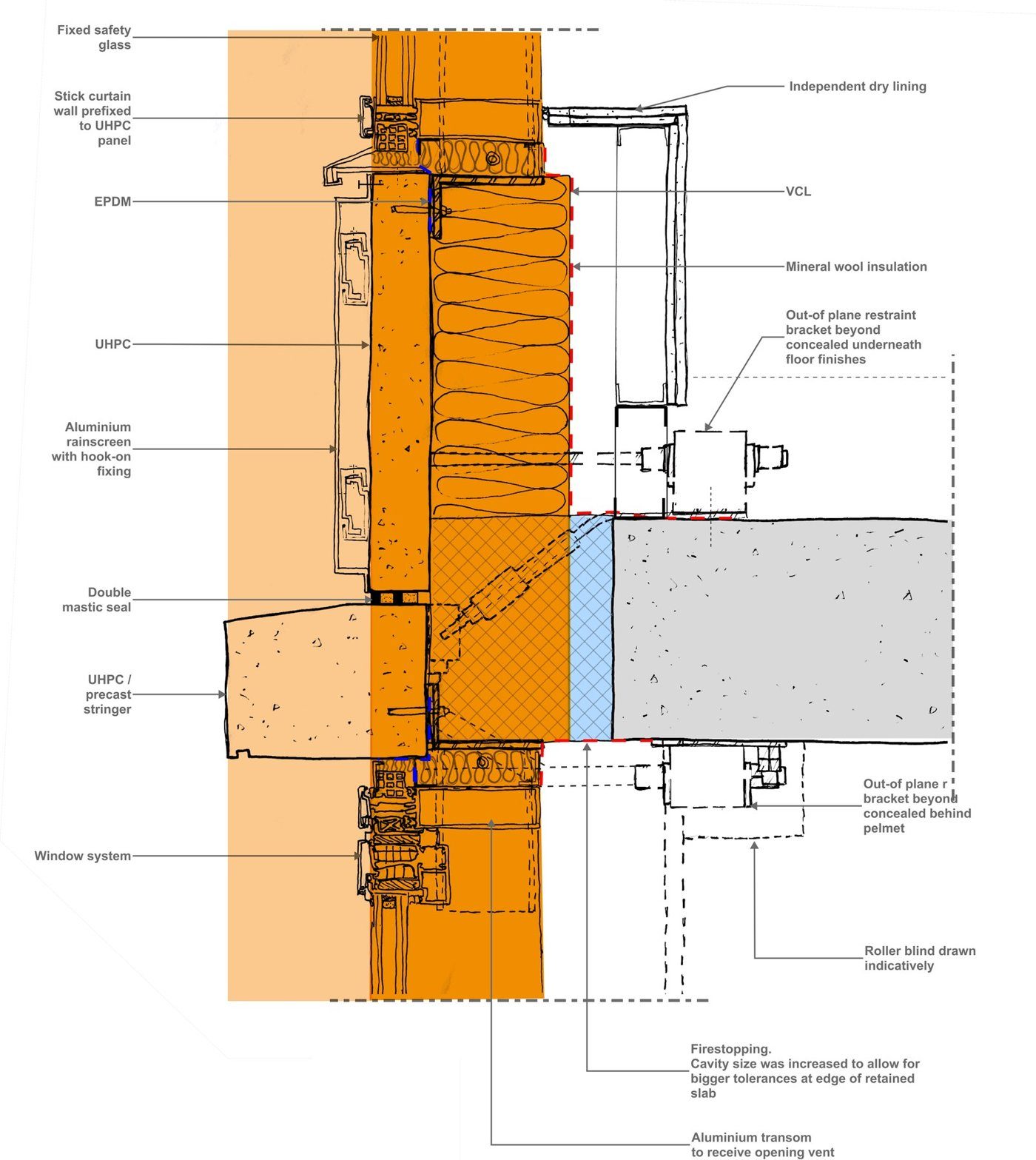
The case studies showed that retrofit becomes more predictable when façade contractors and system suppliers enter before the geometry and specification are fixed. At Angel Square, the project team used early technical development to stitch retained and new structure together and resolve the façade typology while commercial decisions were still being made. Elsewhere, GRC was selected for stone-like external features because its lower weight simplified bracketry, installation and weathering compared with heavier precast alternatives. These are not isolated product substitutions: weight, access, programme, structure and embodied carbon all move together when the façade strategy changes.
Measure what was actually delivered
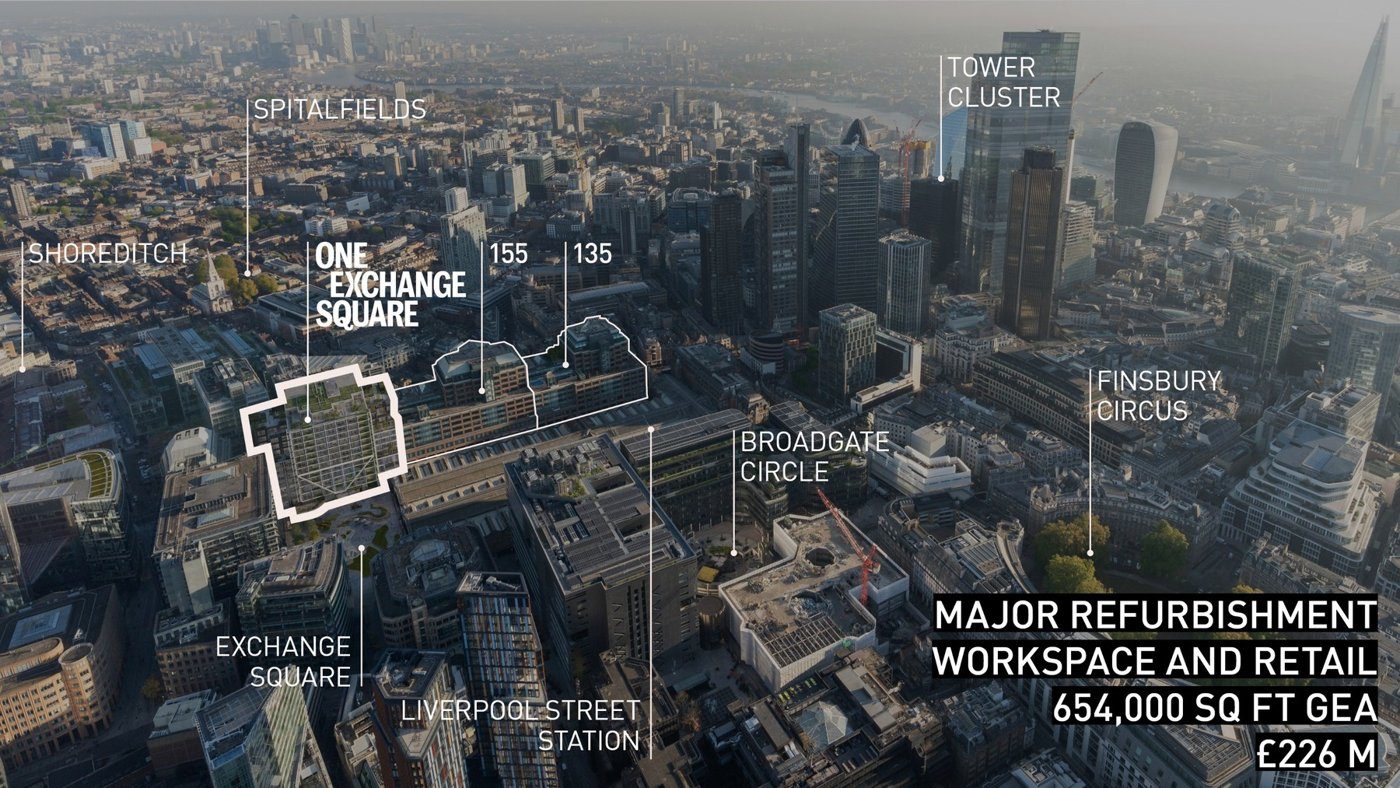
Tanno closed the loop by comparing embodied-carbon estimates from PCSA stage with the as-built result on a case study. The overall correlation was close, but individual categories moved: aluminium extrusion performed better than predicted, aluminium sheet was higher, and transport emissions fell after fleet changes. That variance is exactly why design-stage carbon cannot be treated as a final answer. Procurement route, supplier choice, recycled content and logistics determine whether the strategy survives delivery. The value-up method depends on evidence before a retention promise is made. Drone survey work can establish thermal patterns, geometry and tolerances quickly, one example was completed in about 37 minutes, so the team can see which frames are worth keeping and what adapters, gaskets or new glazing are required. Gleeson and Tanno also compared predicted and as-built carbon through PCSA. Extrusions performed better than forecast on one scheme while sheet material was worse and transport improved, showing why carbon has to be reconciled against actual procurement rather than left as a concept-stage estimate.
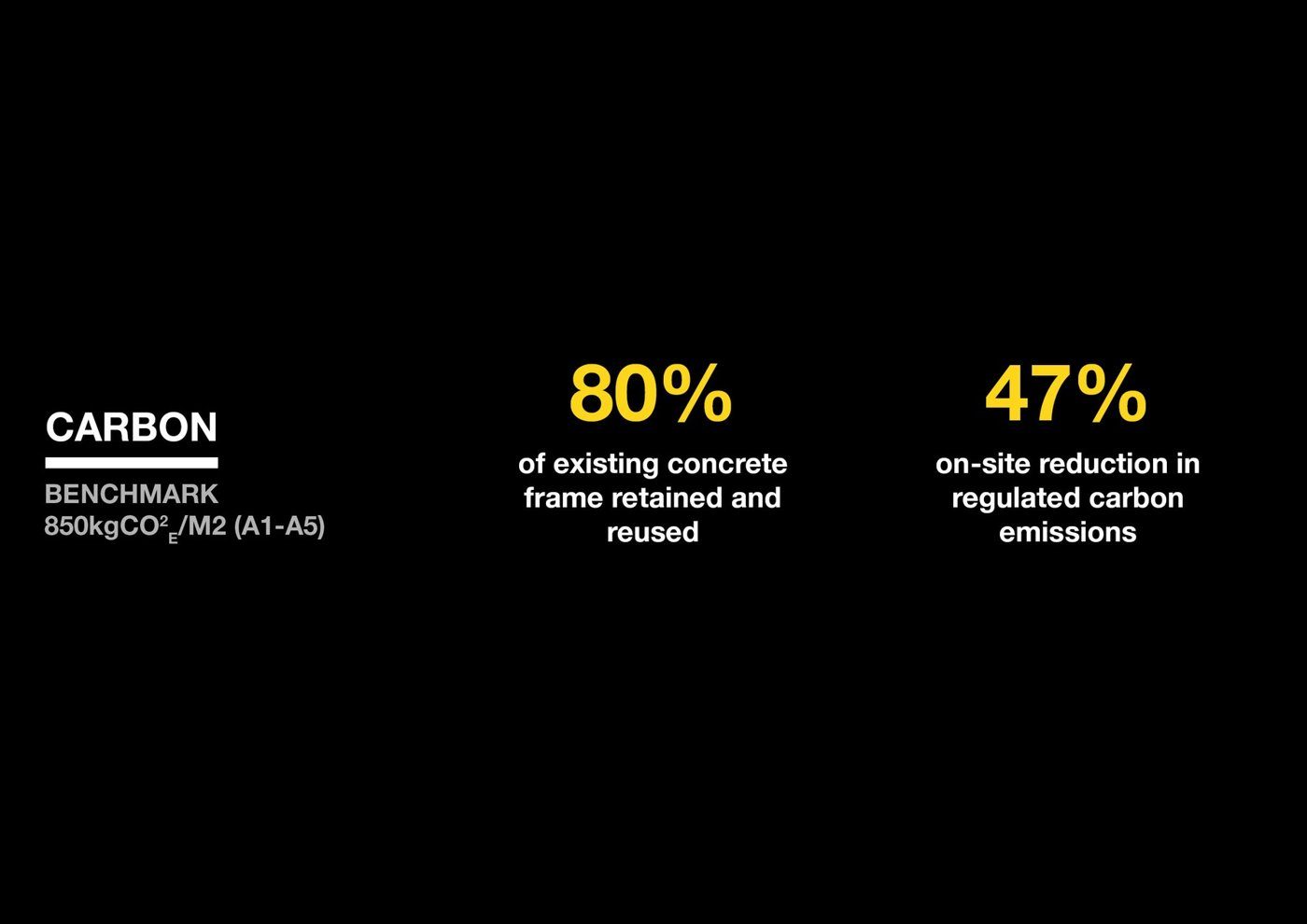
Value-up therefore reframes retrofit from a compromise into an engineering discipline. It asks what can remain, what can be adapted, what must be replaced and how each decision affects cost, carbon and warranty. The strongest outcome is not the project that retains the most at any price, but the one that uses evidence to preserve useful value and directs new material only where it produces a measurable improvement.