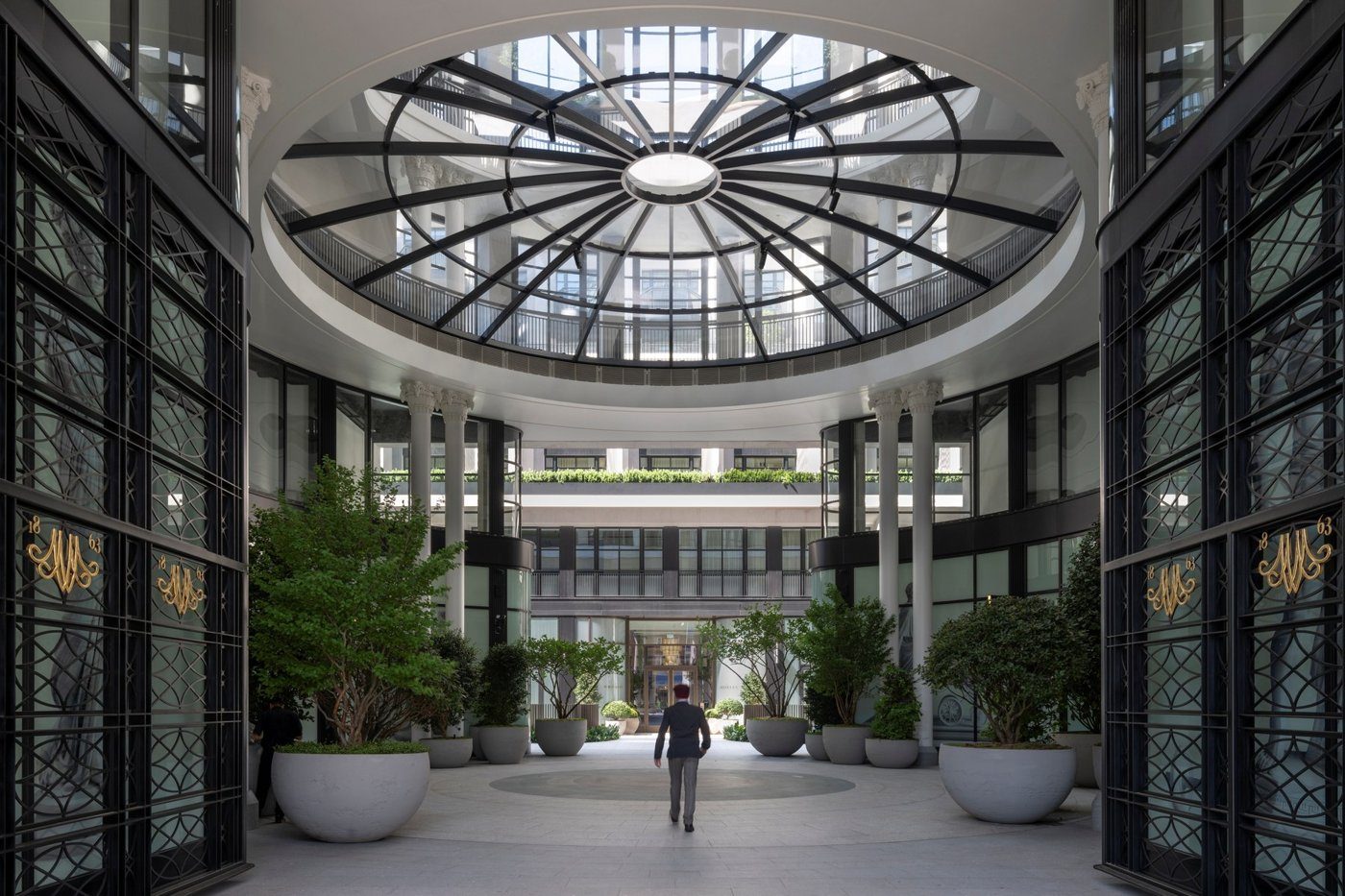
Ana Araújo’s panel explored why central London retrofit is becoming an evidence-led negotiation between planning policy, technical discovery, commercial viability and the realities of existing fabric.

Retrofit in central London is no longer a binary argument between keeping a building and demolishing it. Ana Araújo, Ivan Kaye, John Meredith and Laurence Brooker described a much harder negotiation in which planning policy, façade condition, commercial viability and the future quality of the asset have to be tested together. The panel’s recurring message was that successful retention depends on evidence early enough to influence acquisition and design, not on discovering the real condition of the envelope after a planning position and financial model are already fixed.
Planning is asking a different first question
Circular-economy and whole-life-carbon policies increasingly require teams to explain why existing fabric cannot be retained before replacement is accepted as the default. Brooker welcomed the direction but cautioned against policy becoming so prescriptive that it ignores genuine constraints. A building can retain a great deal of physical material and still fail commercially if floor-to-floor heights, servicing or façade performance prevent it from supporting a viable next use. The panel therefore argued for a more nuanced test: understand what is valuable, what can realistically be upgraded and what degree of intervention is needed to make the asset useful for another long cycle. Planning, carbon and viability have to be discussed at the same time.
Survey evidence can reverse assumptions
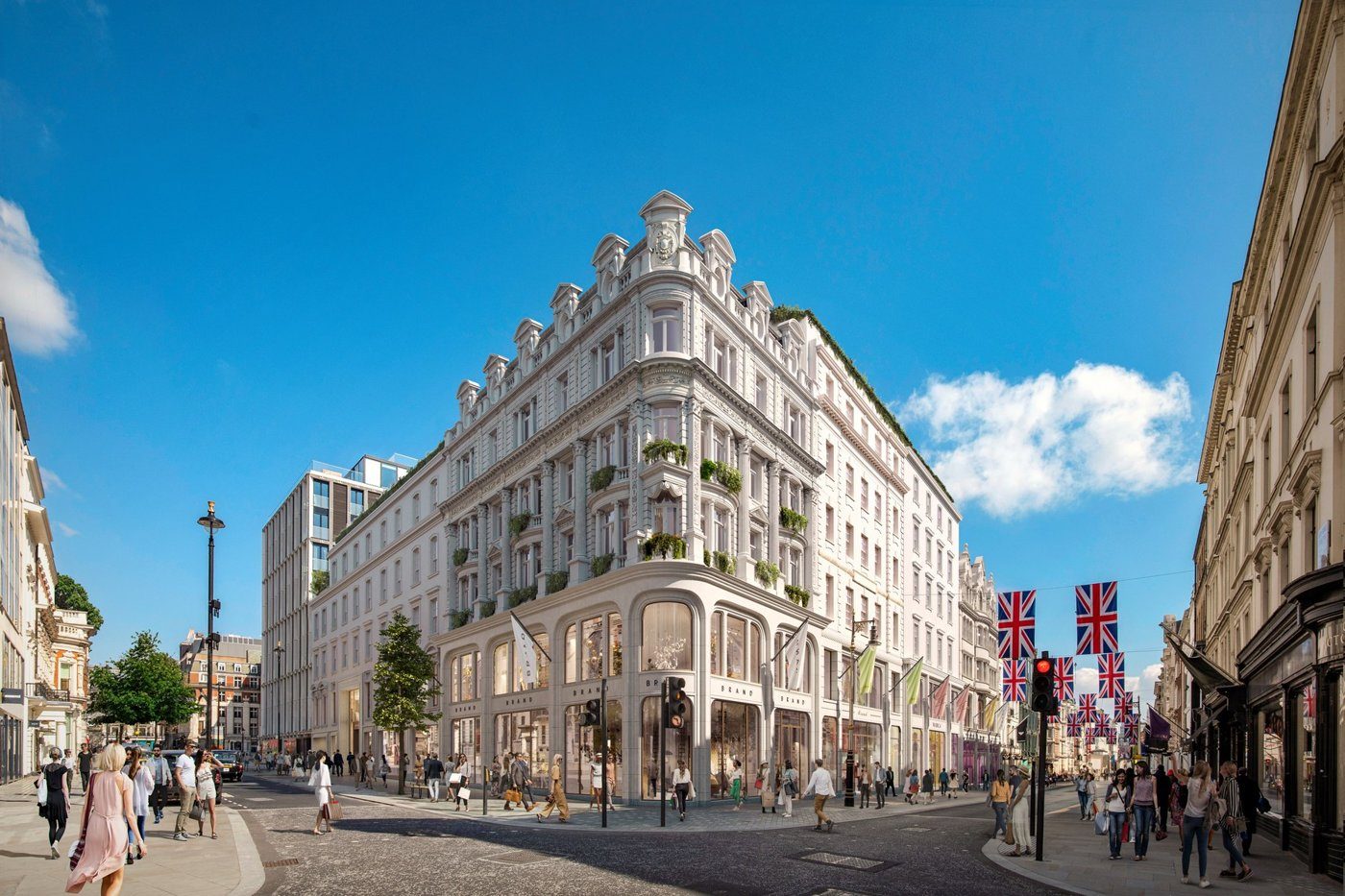
Existing façades rarely arrive with complete, reliable records. Araújo stressed the importance of intrusive work and specialist surveys early enough to establish construction, thermal continuity, fixings, water management and the real condition of retained components. A drawing from the original project is evidence of intent, not necessarily evidence of what is still on the building. The panel referred to New Bond Street as an example of planning discussion changing once investigation revealed limitations in the original fabric. That kind of evidence gives both designers and planners a firmer basis for deciding where retention is credible and where replacement or substantial reconstruction is justified.
Façade specialists need to arrive before the solution
A repeated frustration was late supply-chain engagement. Complex retrofit details depend on tolerances, sequencing, testing and proprietary systems that cannot always be resolved from consultant information alone. Bringing façade contractors, manufacturers and specialist engineers into the project earlier exposes those constraints while the architecture can still respond. Kaye linked this to design time. Rushing an existing building through early stages creates false certainty and pushes risk downstream. A longer period of discovery can shorten later decision cycles because the team is no longer designing around assumptions that will be disproved on site.

Unknown conditions need a fair risk position
Commercial structure matters because not every hidden condition can be priced. The panel distinguished between risks that a competent team can investigate and control, and genuinely unknown conditions concealed within an existing building. In the latter case, pushing unlimited liability down the supply chain can inflate bids without removing the uncertainty. A more workable arrangement may leave the employer carrying defined unknowns while designers and contractors remain responsible for what could reasonably be surveyed, designed and priced. That question is becoming sharper as construction costs rise. The panel cited increases in the order of 20–30 per cent on some work compared with several years earlier, making apparently small changes to retention scope capable of moving a project from viable to unviable.
The best retrofit decisions happen before purchase
The closing ambition was to move technical advice further upstream. If owners understand façade condition, planning constraints and likely intervention before committing to an asset, they can price risk rather than discovering it after acquisition. More consistent planning approaches would help, but so would a market that values early engineering evidence. Retrofit then becomes neither preservation at any cost nor demolition by habit. It becomes a coordinated choice about carbon, performance and value, with enough evidence to explain why each part of the building is being kept, changed or replaced.
The panel also returned to the acquisition stage, where the largest commercial decisions are made with the least physical information. A façade specialist reviewing an asset before purchase can identify likely intrusive surveys, heritage constraints and high-risk interfaces, giving the buyer a more realistic allowance for retention. That will not remove uncertainty, but it can stop the business plan being built on an assumed “light-touch retrofit” that the fabric cannot support. Better consistency between boroughs would help too: teams can tolerate a demanding planning test more easily than a different interpretation of retrofit value on every site.
That is also why the panel resisted simple retention percentages as a proxy for good retrofit. Keeping more fabric can be the right answer, but only if the retained element has a credible technical life and supports a useful building. In some cases a selective replacement may enable much greater retention elsewhere. The decision needs to be explained through whole-life carbon, planning significance, constructability and the future income-producing use of the asset.