


Francine Houben used the transformation of De Nederlandsche Bank to show how reuse can recover architecture, public life and material value at the same time.
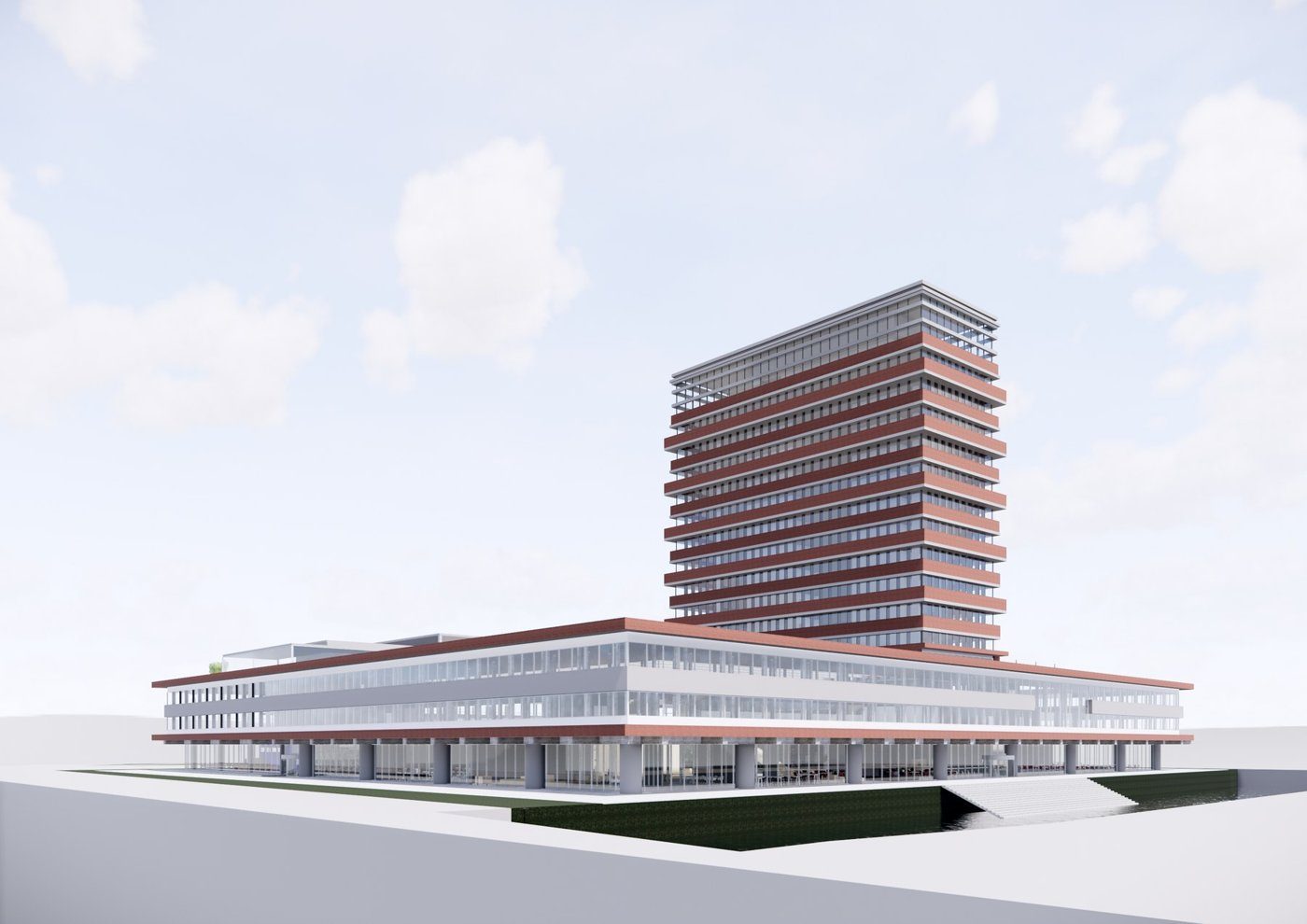
Francine Houben presented the transformation of De Nederlandsche Bank as more than an exercise in upgrading a 1960s envelope. The project had to recover a civic relationship that had been lost as the central bank became more defensive, more secure and more detached from Amsterdam around it. Her framework of “people, place, purpose, poetry” turned that challenge into a series of architectural decisions: remove later additions that obscured the original composition, make the ground more public, reuse what still carried value and let technical renewal support a new social role for the building.
Transformation begins with purpose
Houben's starting point was the building's place in the city. The bank sits within Amsterdam's canal structure on a site once associated with the Palace of Industry, remembered as a kind of people's palace before it was destroyed by fire. Rather than imitate that lost building, the transformation asks how the central bank itself could become less introverted. The main entrance was moved to the centre of the composition and connected more directly to Frederiksplein, which is treated as a greener public setting rather than a leftover forecourt. A secure institution still needs boundaries, but those boundaries no longer have to define the public face.
Remove what blocks the original idea
One of the most consequential moves was taking away the later circular tower. Houben showed how that intervention had altered both the skyline and the internal organisation, while the renewed project uses the cleared area to create a garden. The decision is a useful example of selective demolition within reuse: preservation does not mean keeping every phase equally. The design team judged which elements carried architectural value and which additions were preventing the building from working socially and spatially. The result is a transformation that is substantial without pretending the existing fabric is untouchable.
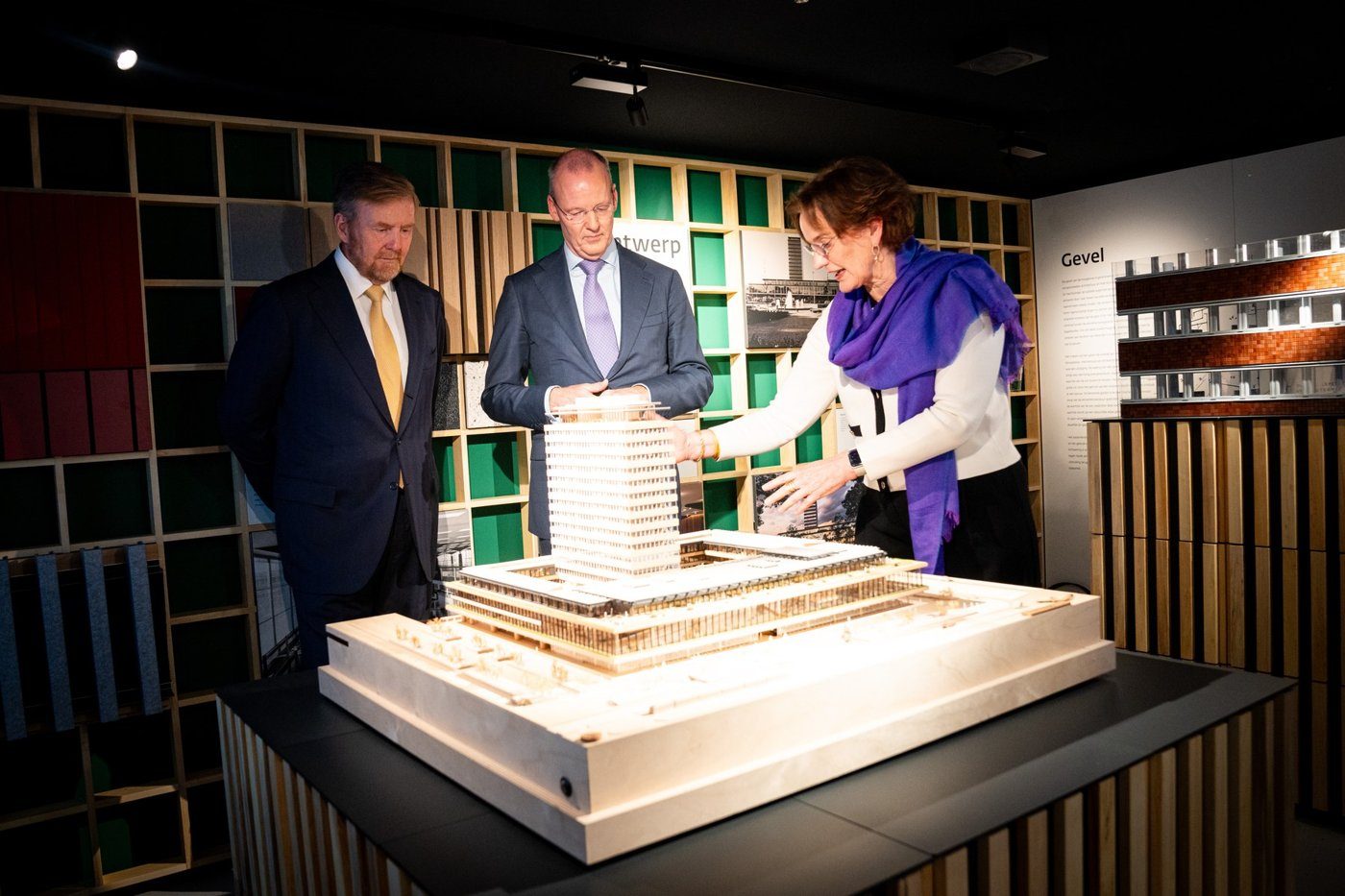
Security and public life can overlap
The bank's programme creates an obvious tension between access and control. Houben described a sequence in which public and staff spaces can coexist without erasing the secure zones needed by the institution. Areas that were once among the most secret parts of the building are reinterpreted as places for meeting, learning and public engagement. Horizontal circulation is reinforced so people on different parts of the large floor plate encounter one another, while new stairs encourage movement through the building rather than dependence on lifts. The architecture becomes more social by changing routes as much as by changing façades.
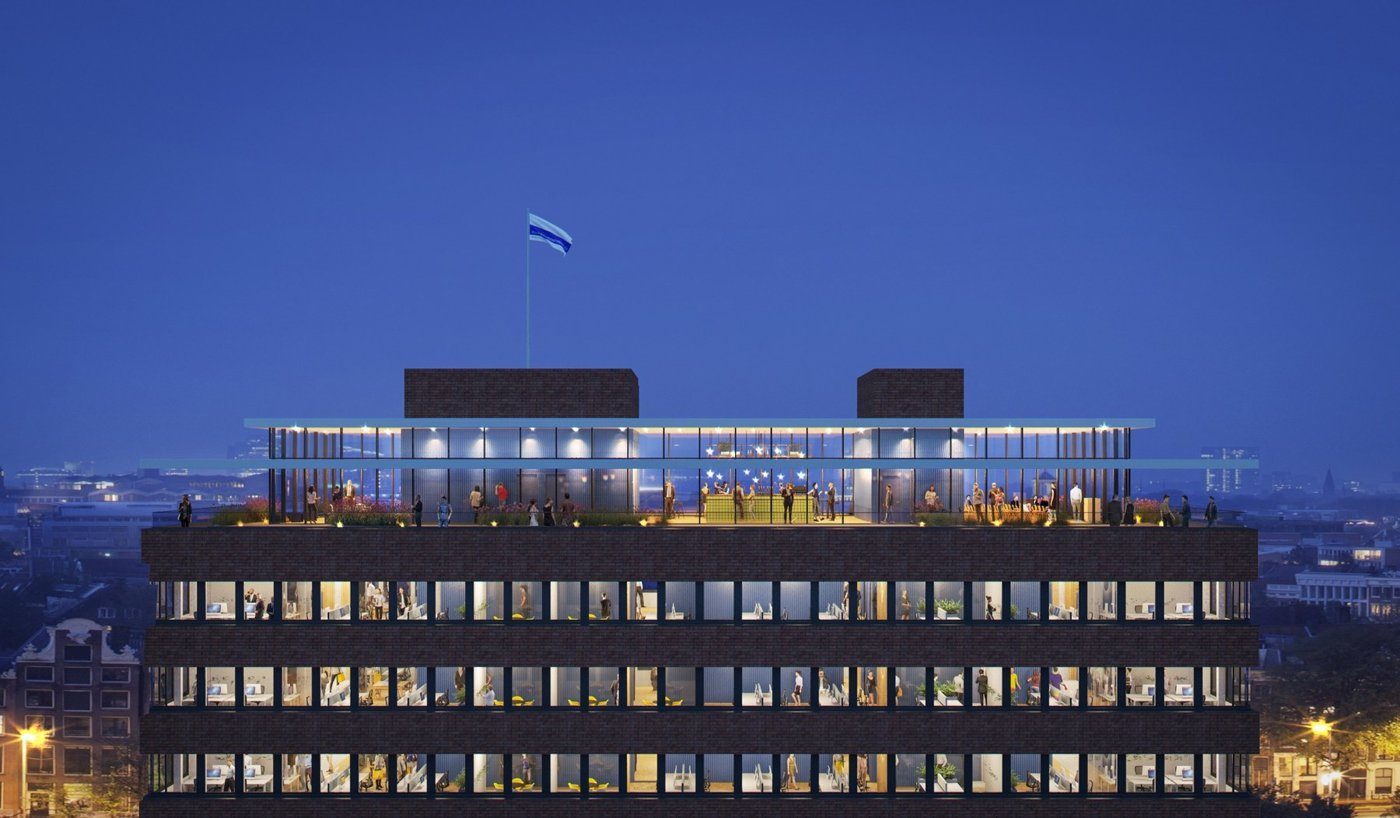
Material detail carries memory
Technical upgrading was used to preserve the character of the original design rather than flatten it. Houben highlighted the changing horizontal bands, the ceramic qualities of the façade, retained columns and original staircases as elements worth celebrating. The renewed wall has to provide contemporary insulation and glazing performance, but it also needs to keep the proportions and material richness that made the building recognisable. That approach extends inside, where art, planting and existing architectural elements remain part of the experience instead of being cleared away for a generic corporate interior.
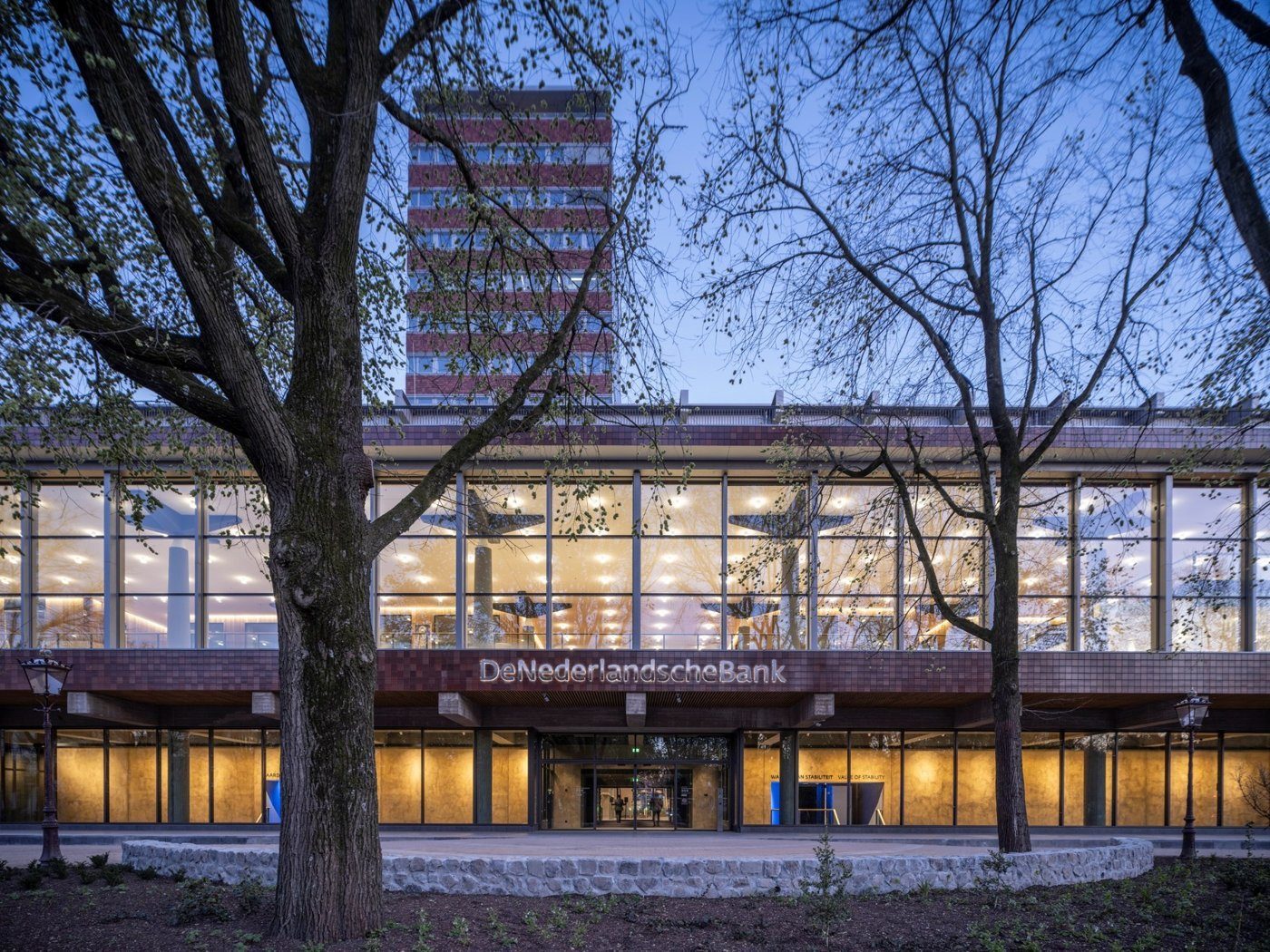
The transformation also had to reconcile openness with the bank’s continuing security obligations. Public routes, workplaces and protected zones are organised so the building can welcome visitors without pretending its institutional requirements have disappeared. Houben’s emphasis on “people, place, purpose and poetry” is therefore practical: circulation, garden space, retained materials and new public rooms all carry the civic idea. Removing the circular tower created room for landscape, while new stairs and horizontal connections made the surviving complex easier to understand and use.
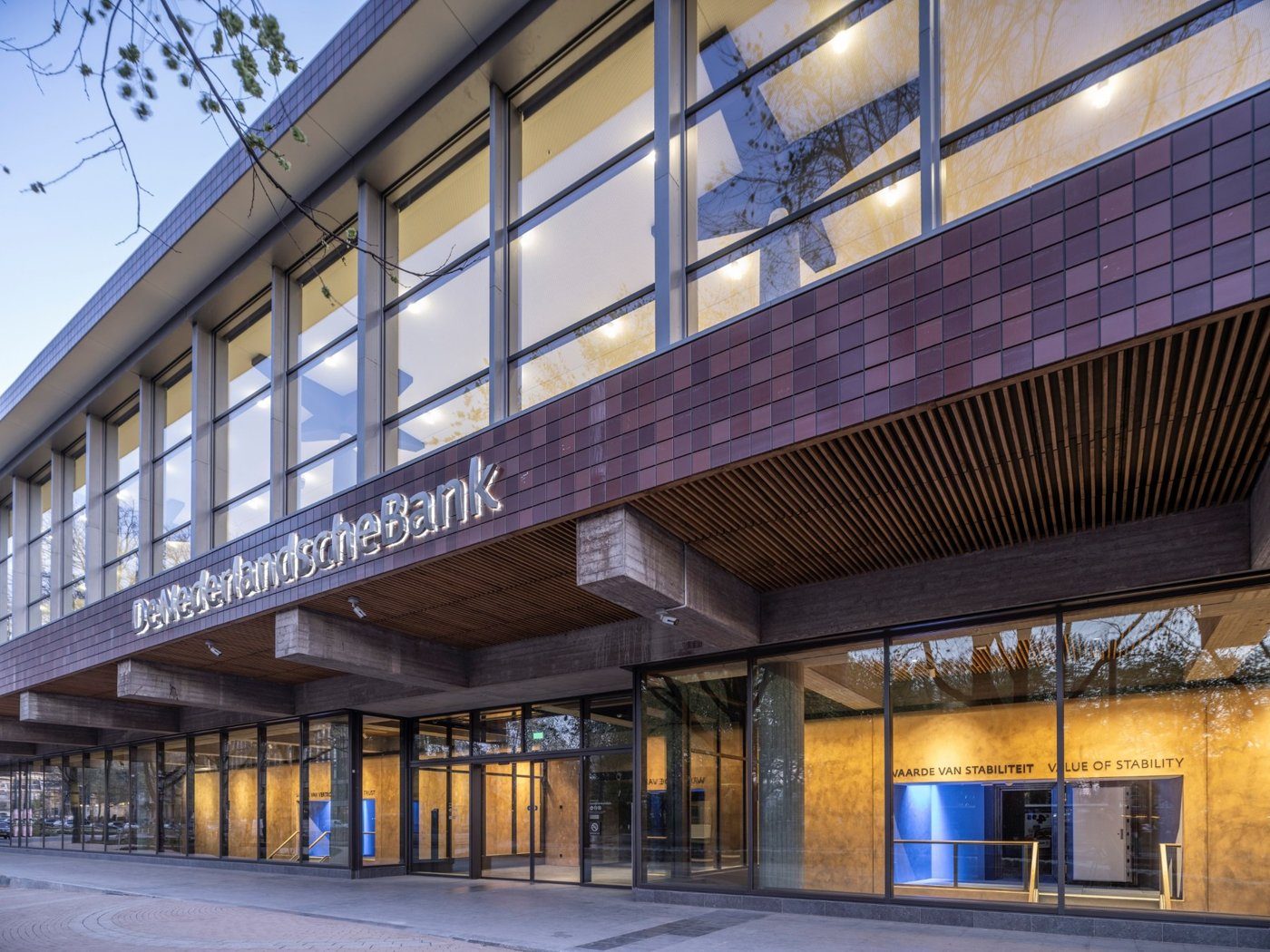
Houben's point is that reuse succeeds when it changes meaning as well as performance. De Nederlandsche Bank remains a highly controlled institution, but the transformed building can again participate in Amsterdam as architecture rather than infrastructure hidden behind security. The project preserves memory by deciding carefully what to keep, what to remove and what new public life the retained fabric can support.