Davide Malizia frames Saudi Arabia's building boom as two pressures on glass at once: cities growing louder, and large rural projects rising along bird-migration routes. Laminated interlayers, he argues, can answer both, damping traffic noise and making glass visible to birds, while lowering the carbon of the build-up.
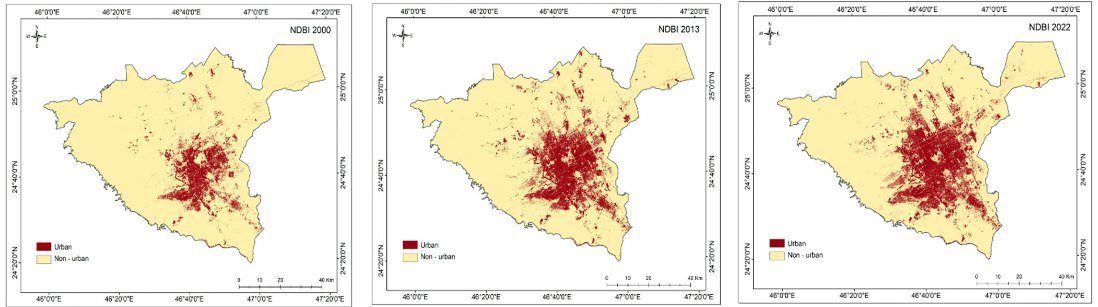
Between 2000 and 2022 Riyadh's built area grew by 106 per cent, it roughly doubled, and its population doubled with it. That expansion is one of two forces Malizia says are reshaping what a façade must do. Growth pulls people into cities, where 86 per cent of Saudis now live and where traffic noise rises; at the same time the largest projects are appearing in rural areas that carry wildlife and migration routes. One pressure is acoustic, the other environmental, and both land on the glass.
The façade as an acoustic shield
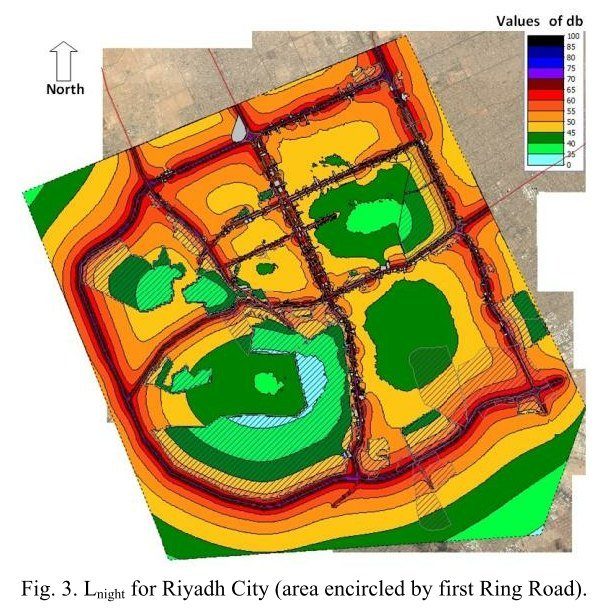
Riyadh's average noise sits above 50 decibels and climbs toward 70 near major roads, while the World Health Organization recommends as little as 30 to 35 decibels inside bedrooms. The envelope, Malizia argues, has to act as an acoustic shield across that gap. There are three ways to improve it: add glass thickness, which buys insulation at the cost of mass, weight, installation time and money; or laminate with a soft interlayer that damps sound; or go further with a dedicated acoustic interlayer. Kuraray offers a monolayer and a multilayer version, and because the monolayer performs better in hot climates it is the one sold in the Middle East.
How much the interlayer buys
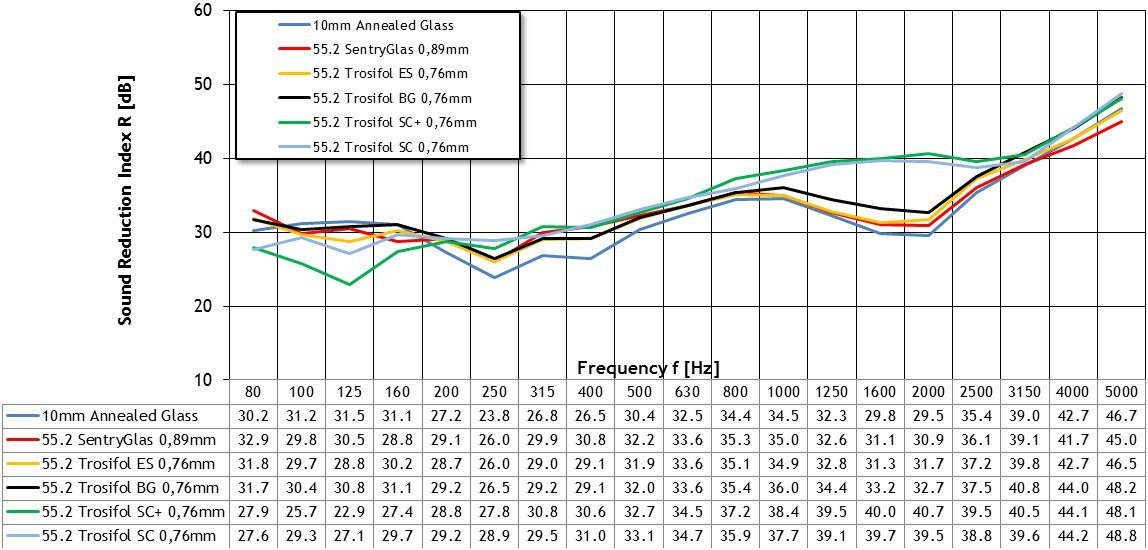
The gains are large. A 10 mm monolithic glass reaches an Rw of 33; standard PVB comes close to a 36-decibel target but falls short; a sound-control interlayer jumps to 38, comfortably clearing it. Because the interlayer does so much, the glass can be asked to do less, in Malizia's example, thinned to 3 mm while still meeting the 36-decibel requirement. He also flags the coincidence dip: between roughly 1,000 and 2,000 hertz, the frequency of car traffic, monolithic glass resonates with the sound and its insulation collapses, much as a structure resonates under a rhythmic load. Where a bridge uses viscous dampers, the acoustic interlayer plays the same role, holding performance where plain glass loses it.
Glass birds can see
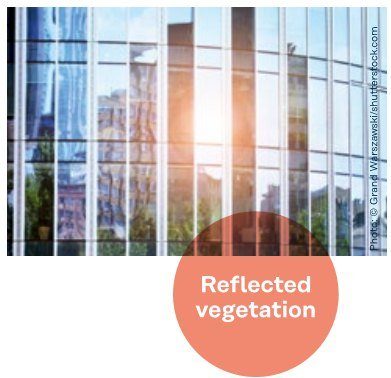
The second challenge is collisions. Birds do not read reflection: a mirrored sky, a reflected tree or a light beyond the glass all read as open air, and the Arabian Peninsula sits under migration routes that pass over exactly the rural sites where large projects are planned. Regulation is catching up, the LEED version issued in April 2025 awards additional points for bird-friendly glazing with a threat factor of 30 or below. The remedy Malizia shows is an interlayer printed with dots, laminated into the glass; its threat factor is measured in a tunnel test in which birds, given a clear pane and a treated one, veer toward the transparent side. On carbon, he adds that Trosifol R3 is the lowest-footprint interlayer in the industry.
What comes next
Safety is the reason interlayers exist, Malizia notes; decorative, acoustic, structural and UV-control performance are added on top. Two products are in development. The first is a structural-acoustic interlayer: structural interlayers let glazing span very wide, useful for airports, but are too stiff to damp sound, so the aim is to combine reach and quiet in one layer. The second, adapted from the company's automotive work, is SkyViera, an interlayer carrying an invisible print that appears only when perimeter lighting is switched on, a skylight that can read as clear glass by day and as graphics at night.