


Erwin ten Brincke focuses on the engineering that allows glass to move from transparent infill toward structural participation. Curvature, laminates, supports and redundancy determine whether a visually minimal system can carry load safely and remain buildable.
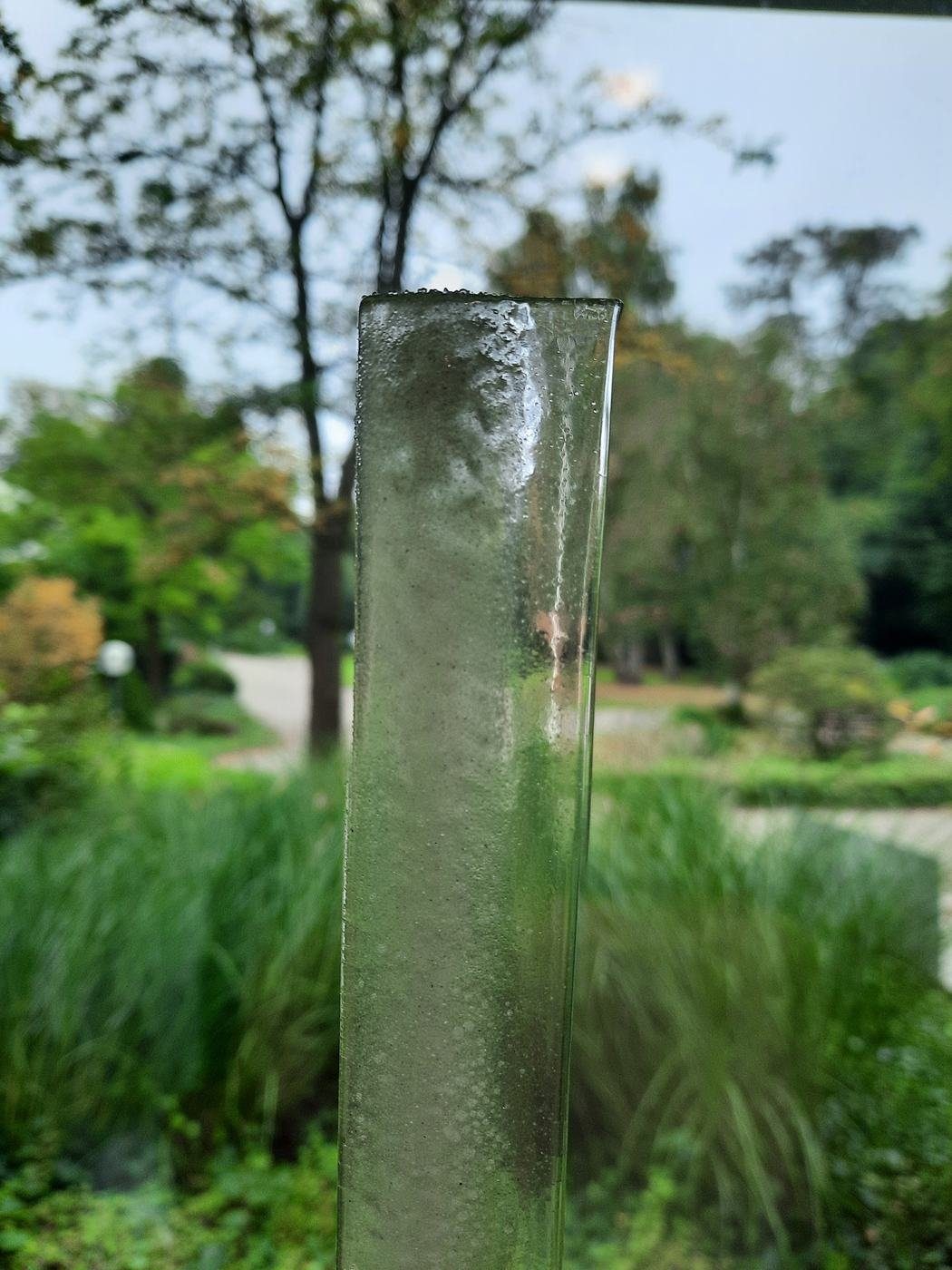
Ten Brincke’s approach to structural glass is based on a simple habit: when the obvious solution stops working, change the way the problem is framed rather than forcing the same calculation harder. That mindset connects experimental research with built projects. Glass is brittle and sensitive to surface flaws, yet its transparency can make structure appear almost absent. The engineer’s job is to make the load path no less rigorous simply because it is visually quiet.
Carbon data changes familiar glass choices
Ten Brincke compares the embodied impact of common processing routes rather than treating “glass” as one material. In the EPD data he examined, lamination added about 14% carbon for the same glass thickness and toughening about 40%. Those percentages are not an argument against processing, because stronger glass may allow a thinner make-up. His example puts the break-even between 6 mm toughened glass and roughly 8 mm annealed glass. The useful comparison is therefore not “annealed versus toughened” in isolation. It is the complete make-up required to meet the same load and safety condition. Low-carbon glass can reduce the baseline further, but good engineering still has to minimise unnecessary mass. A process that looks worse per kilogram can produce the lower-impact solution if it lets the assembly use materially less glass.
Research can add glass only where it is needed
Float glass leaves production with microscopic surface flaws that govern tensile strength. Ten Brincke asks whether damaged material could be strengthened locally rather than discarded. His research with academic partners explores spraying glass powder at about 600°C, far below the temperature of a float furnace, to build reinforcing material onto an existing surface. The experiments have included different substrates rather than assuming glass will bond equally well everywhere.
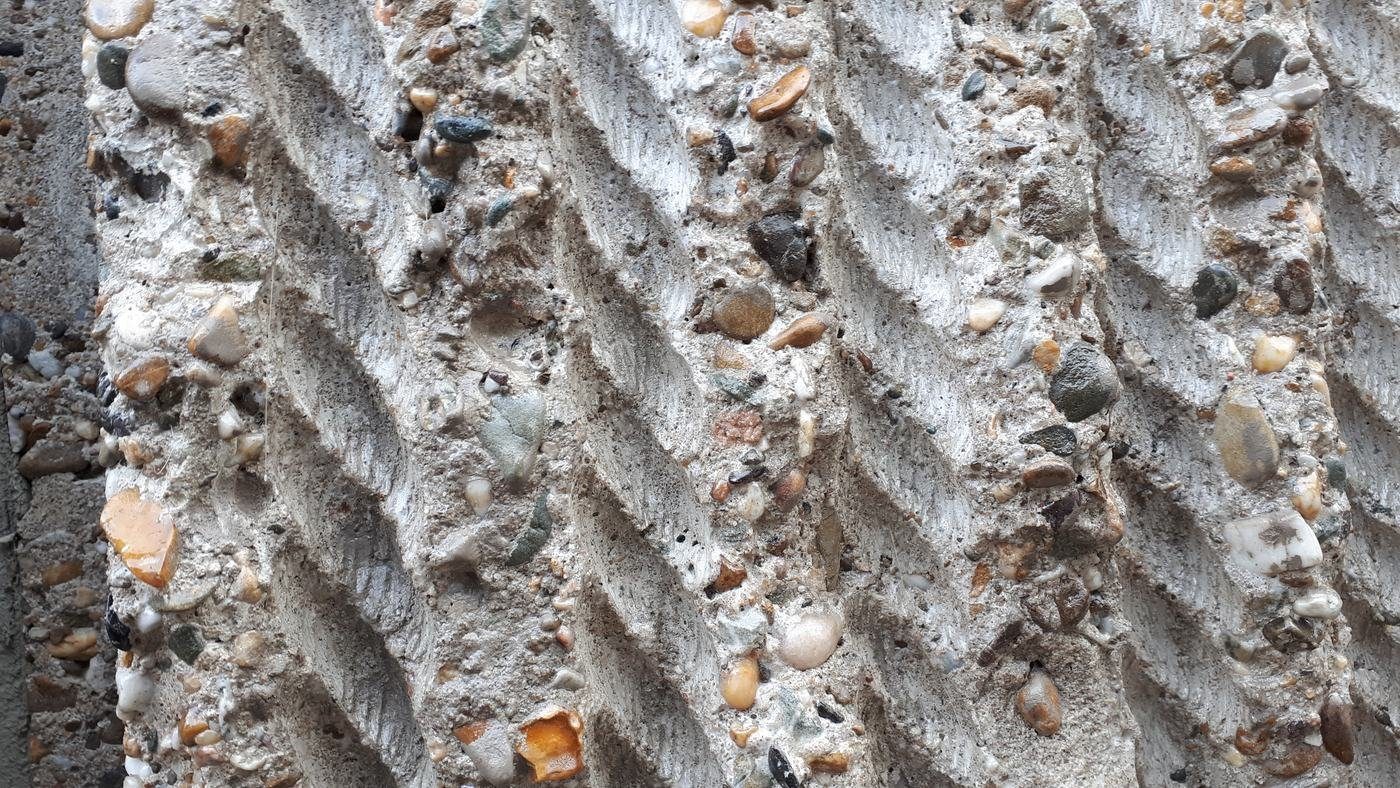
The work is not yet a façade product. Its value is the question it opens: could a future repair or new component place glass only where strength or geometry is required, reducing both material mass and high-temperature furnace energy?
Hybrid structures can make each material work harder
A separate stair prototype combines ultra-high-performance concrete with glass. The concrete provides the primary load path, while the glass contributes stiffness to an otherwise flexible system without letting large visible bolts dominate the architectural detail.
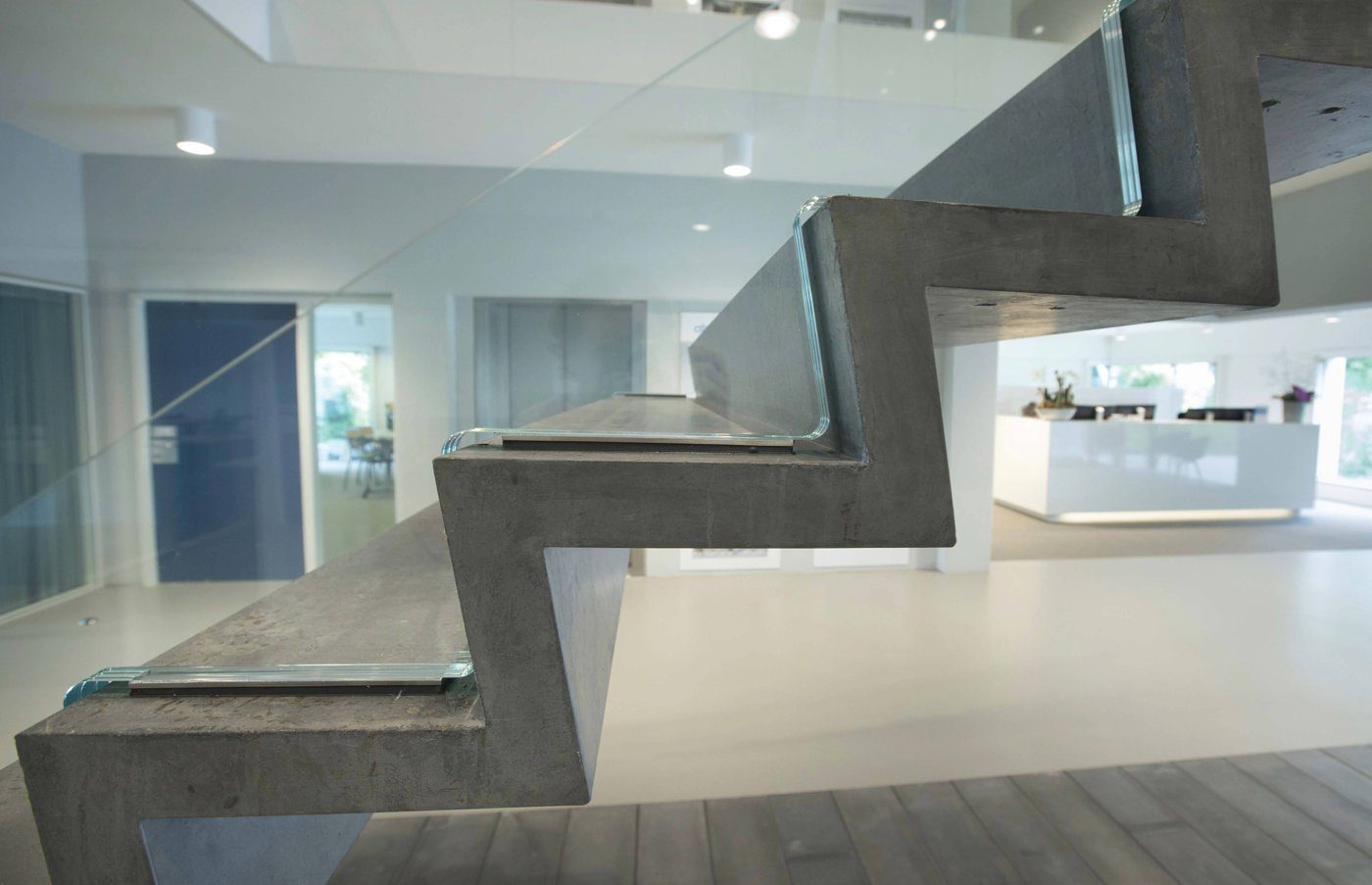
That principle also supports reversibility. Ten Brincke develops material-independent connections that can be adapted to glass, aluminium or steel, making parts easier to inspect, replace or separate in a future intervention.
Large glass boxes need an honest load path
A built case in Eindhoven began with UNStudio’s concept for enormous illuminated glass boxes, about 5.5 by 7 metres and weighing around 3,000 kg. A single pane at that size was not available, so the façade had to be divided without losing the intended visual calm.
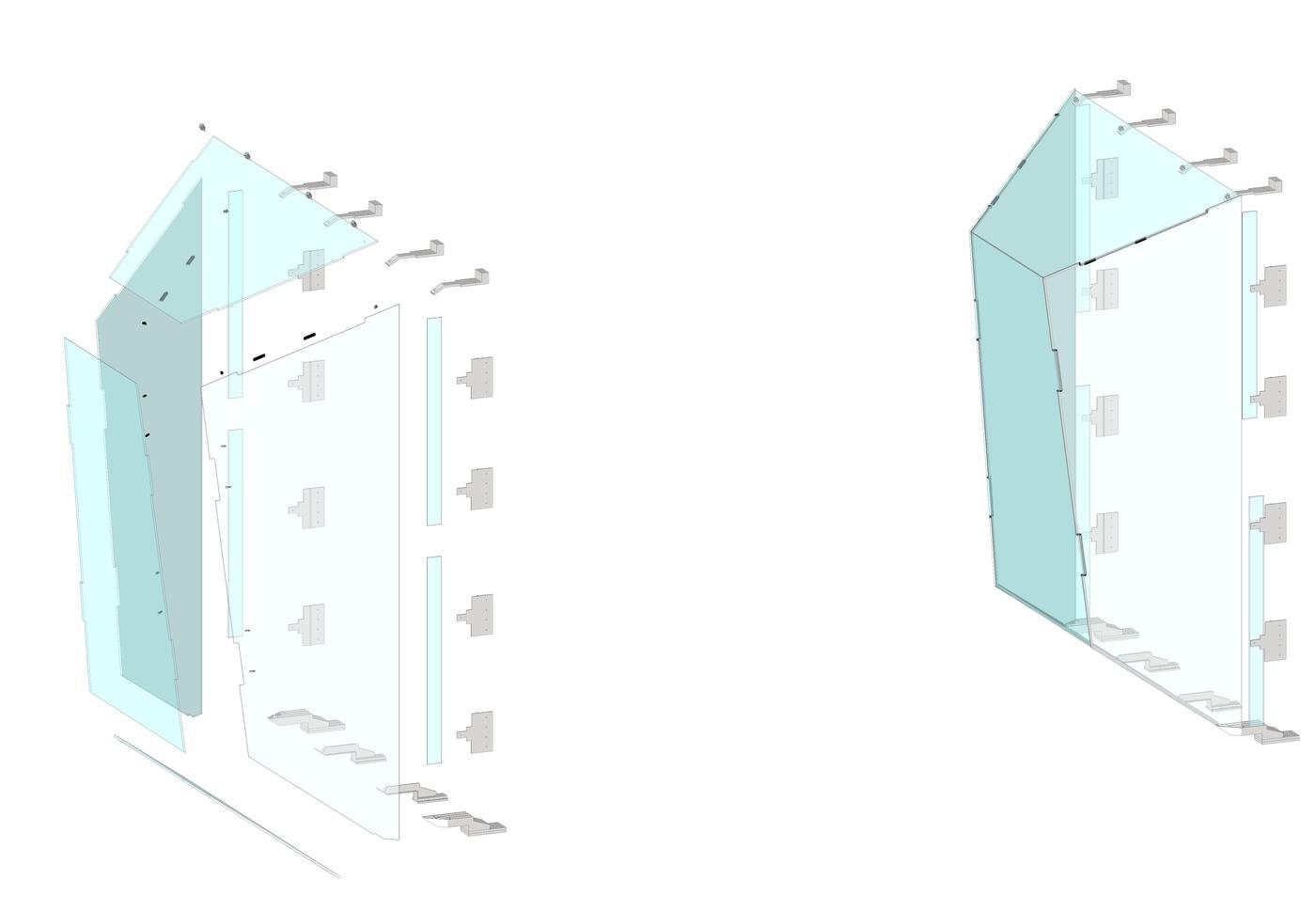
The first strategy relied on adhesive connections. Finite-element analysis revealed stress concentrations at the corners, and a stronger adhesive option introduced unacceptable creep. The project only moved forward when the team abandoned glue and developed a notched, puzzle-like mechanical connection in the glass. The roof panel carries the sides, and the sides in turn support the large front face. The recurring lesson is persistence with a method. Start with the simplest load path, test whether it actually converges, and change perspective when the model shows that the premise is wrong. Transparent architecture becomes convincing when its engineering is explicit enough to survive that scrutiny.
Research is useful when it changes a design decision
Across the examples, Ten Brincke treats research as a way to revisit assumptions rather than as a separate laboratory activity. Carbon data changes the thickness comparison; additive-glass trials challenge the idea that damaged material must be fully remelted; the stair tests hybrid action; and the Eindhoven boxes show when an adhesive concept has to become a mechanical one. Each investigation earns its value only when it changes the load path, material quantity, connection or repair strategy of a real assembly.