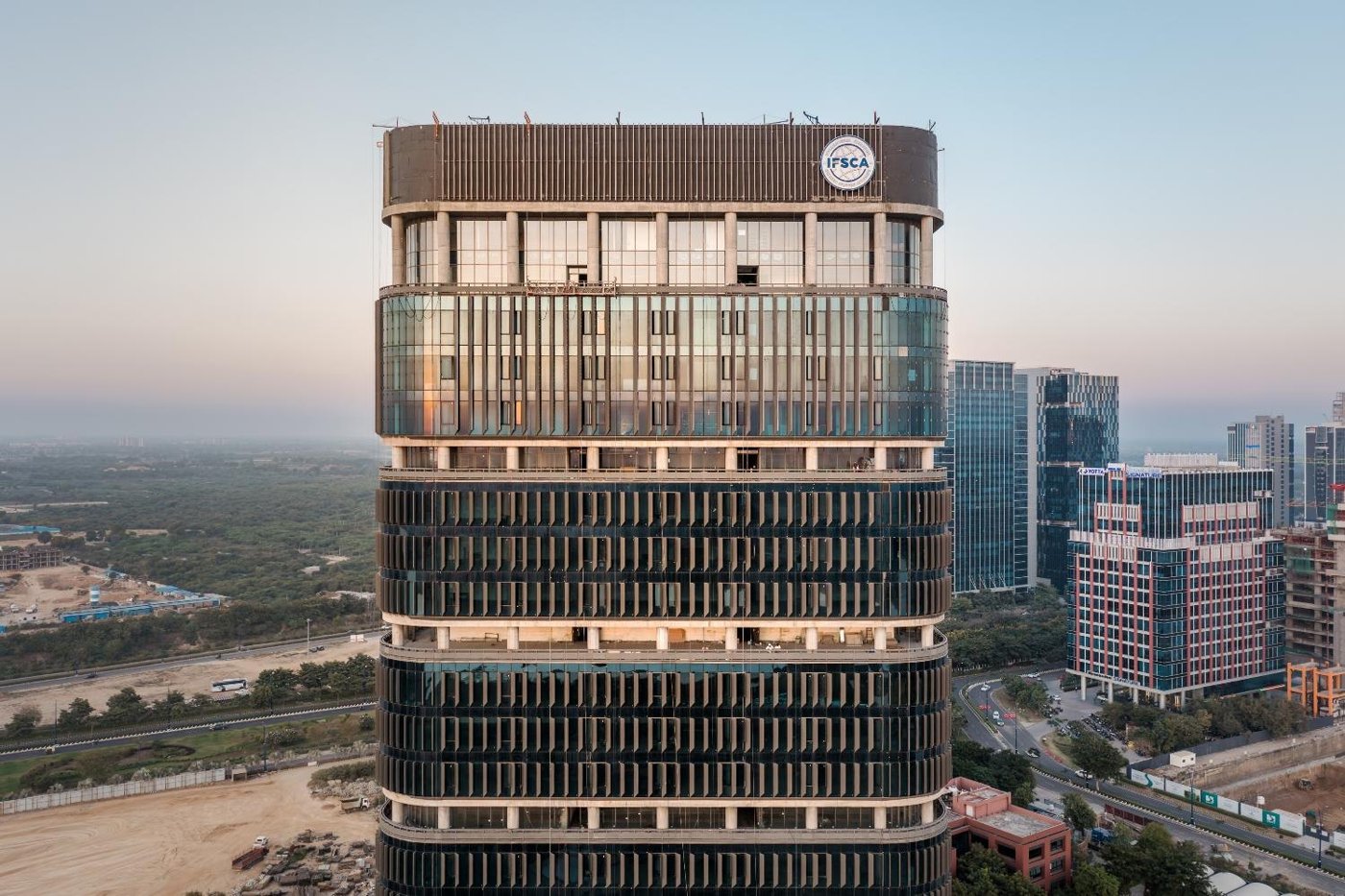
Vrutul Panchal, of HCP, ran the Indian shading device from jali and chajja to the post-independence fin and shelf, and then to the choice a fully glazed building forces: heavy tint, or glass set back behind something that shades it.
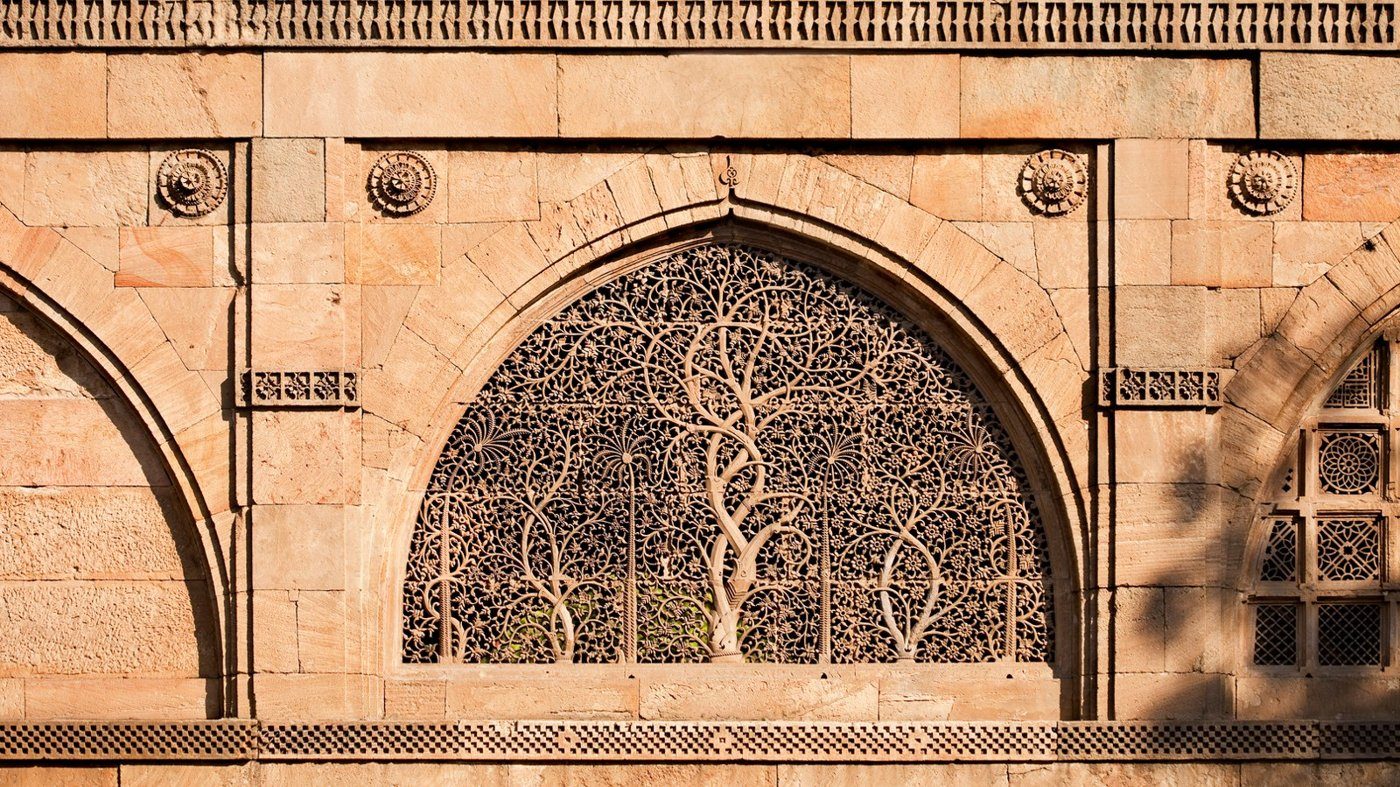
Vrutul Panchal, senior architect and studio lead at HCP, set the present against a longer record. Shading was part of the Indian wall long before it was a calculation. Colonial buildings hung two shutters: a wooden one outside to cut the sun and a glass one inside to let the light in. Overhangs did the same job more cheaply, verandas and chajjas did it in plan, and jali filtered what got through to the room behind.
What the post-independence buildings did with it
Independence brought rapid development, which wanted buildings that were cost-efficient and quick to put up. The work that lasted took the Indian principles into that constraint. The Reserve Bank of India in Ahmedabad shades itself with a deep shelf at the opening. Dena Bank uses narrow windows with a lot of solid wall between them, as does the State Bank of India nearby: a reading of Ahmedabad's climate rather than a style.
Newman Hall is the landmark case. It runs east to west, with hostel rooms and prayer halls, which puts rooms on both the north and the south, and the south is where the suffering is. The answer was a thin extra layer in front of the wall, a fin and a shelf, which shades those rooms across the day. It is a civil element rather than an engineered product, designed without software to test it.
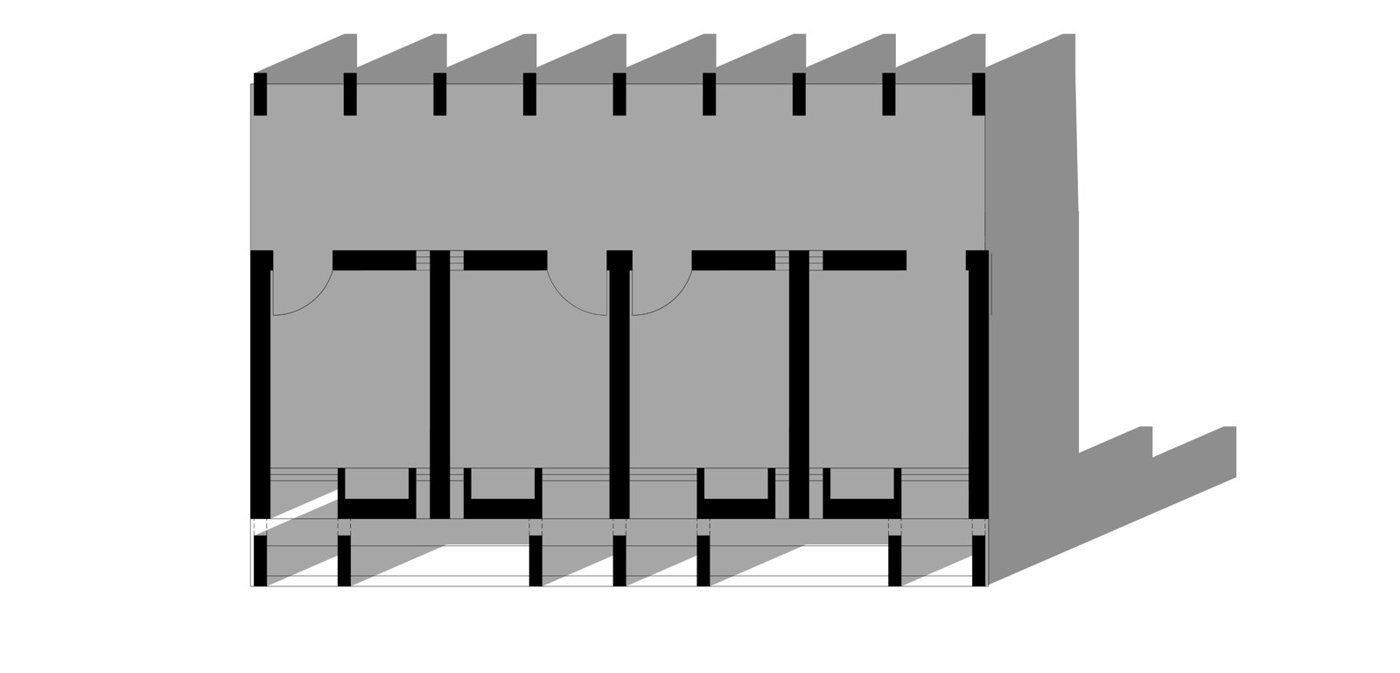
The test itself is a convention: take 21 June, the hottest day, at nine in the morning, noon and three in the afternoon. Nine is not the problem, because the sun is not yet harsh. Noon is, when the most light enters and the room heats up.
Then the glass arrived
Through the early 2000s it stayed straightforward: a deep-set façade with clear or wired glass, as at the Aga Khan Academy in Hyderabad, or a hostel with minimal windows and double-glazed units, the rooms small enough that the opening did the work. The roller coaster starts with the fully glazed façade, one of which the practice built in 2006. Once the glass surface is large, energy consumption and a green rating come with it.
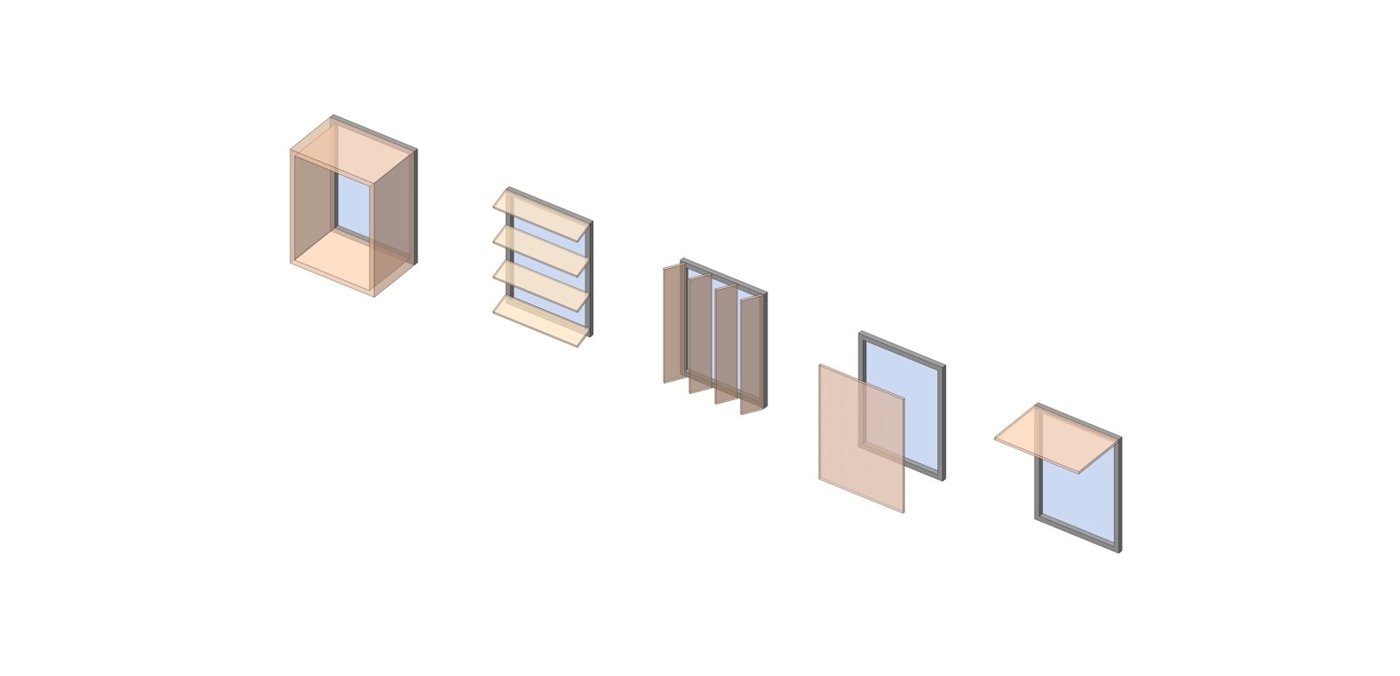
Two components now define the envelope: the glass, and the shading device. The devices are a short list, a recessed window, a horizontal shelf, vertical fins, an overhang, a double skin. The glass is a long one, single, double and triple units, reflective and high-performance products among them, with high-performance units at the Common Central Secretariat and at IFSCA.
The trade-off nobody avoids
Four numbers decide the glass: visual transmission, which is the daylight that gets through; the U-value, set by the thickness and composition; solar heat gain, which the shading device and the building's orientation decide as much as the glass does; and reflectivity, which produces a mirror on both faces.
The heavier the tint, the lower the heat absorption, and the lower the transmission with it, until the glass reads as tinted from both sides. Set the glass back behind generous shading instead and a light tint will do, which keeps transmission high and the connection to outside intact. On a courtyard of 100 by 60 metres the shading is an engineered perforated metal canopy, and the consultant was talked into a higher transmittance so that from an office or a conference room you can still see the tree outside. At an innovation hub it produced perforated operable louvres. A dining hall in constant use through the day got a veranda with a GRC jali, which cuts the sun so the glazing behind it can be less tinted, and throws a pattern across the floor while it does.